


Primary sourceArtifact39–40 AD
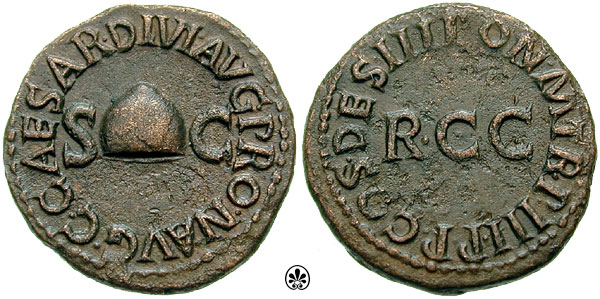
Quadrans of Caligula with Pileus
Roman imperial mint under Caligula · 39–40 AD
A small bronze coin minted under Caligula marking his abolition of a sales tax, showing the liberty cap given to ordinary Romans.
Minted by Caligula himself to announce his abolition of a sales tax early in his reign.
About this source
What it is
This bronze quadrans was issued by the Roman imperial mint under Caligula, probably in 39–40 AD. One side shows a pileus, the cap symbolising liberty, between the letters S and C, with Caligula's name and titles around the edge; the other side bears large letters referring to the tax it commemorates. Examples survive in collections including the British Museum.
Why it matters
The coin marks Caligula's abolition of the ducentesima, a half-percent tax on sales, one of several early populist measures aimed at ordinary Romans. Coins like this were a direct way for an emperor to broadcast his policies and image across the empire. Caligula's precious-metal coinage was minted in limited quantities, making surviving pieces relatively rare today.
Look closer
- Why would an emperor put a symbol of liberty on a coin celebrating a tax cut?
- What does this coin suggest about how Caligula wanted to be seen early in his reign?
- How might small, everyday objects like coins have shaped ordinary people's view of their ruler?
This artifact is part of the curated material that grounds the AI version of Caligula on Humy.ai — when students ask about related events, the AI can quote it and cite it.
More Caligula sources
Browse all 88 →

Ready when you are
Start chatting with Caligula now.
20 messages free · No credit card · Available in 50+ languages.