


Secondary sourcePaintingbetween 1518 and 1519
Raphael Loggia Fresco Decoration, Vatican Palaces
Raphael's workshop · between 1518 and 1519
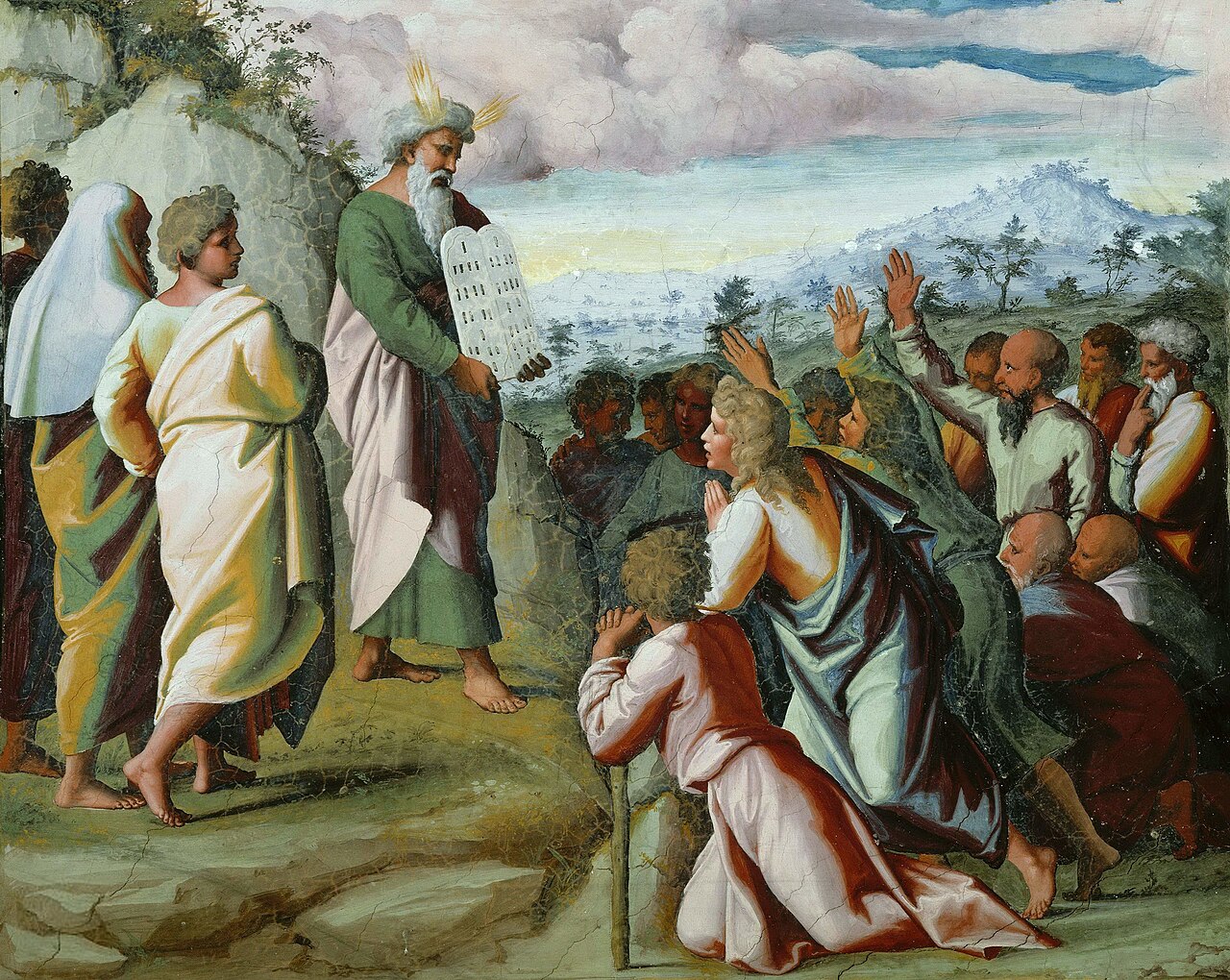
A fresco panel from the Vatican Loggia, made in 1518 and 1519 by Raphael's workshop, showing Moses on a hillside holding stone tablets with golden rays around his head.
Shows Moses receiving the tablets with a crowd kneeling before him, a Renaissance treatment of the lawgiver.
About this source
What it is
This is a fresco panel from the Loggia decoration of the Vatican Palaces, dated between 1518 and 1519 and attributed to Raphael's workshop. It shows Moses standing on a grassy, rocky hillside, holding stone tablets, with golden rays around his head. To the left, a woman in a white veil and a young man in a yellow robe look on. To the right, a crowd of bearded men kneel and raise their hands, and a figure in pink kneels in the foreground. The curator notes that it may be the same Moses panel as another candidate, so the identification should be checked.
Why it matters
The Vatican Loggias were painted for Pope Leo X, and the scenes drew on the Bible. Raphael himself designed the work, but workshop assistants often painted large commissions. The panel shows how Renaissance patrons and artists pictured Moses as a lawgiver who received divine light, and it shows how a papal setting used biblical history to express authority.
Look closer
- Who does the artist show as the leader, and how do the kneeling figures show their response?
- Why would the golden rays matter to people who saw this decoration in a papal palace?
- Whose point of view is shown, and what parts of the Exodus story does the panel leave out?
This painting is part of the curated material that grounds the AI version of Moses on Humy.ai — when students ask about related events, the AI can quote it and cite it.
More Moses sources
Browse all 85 →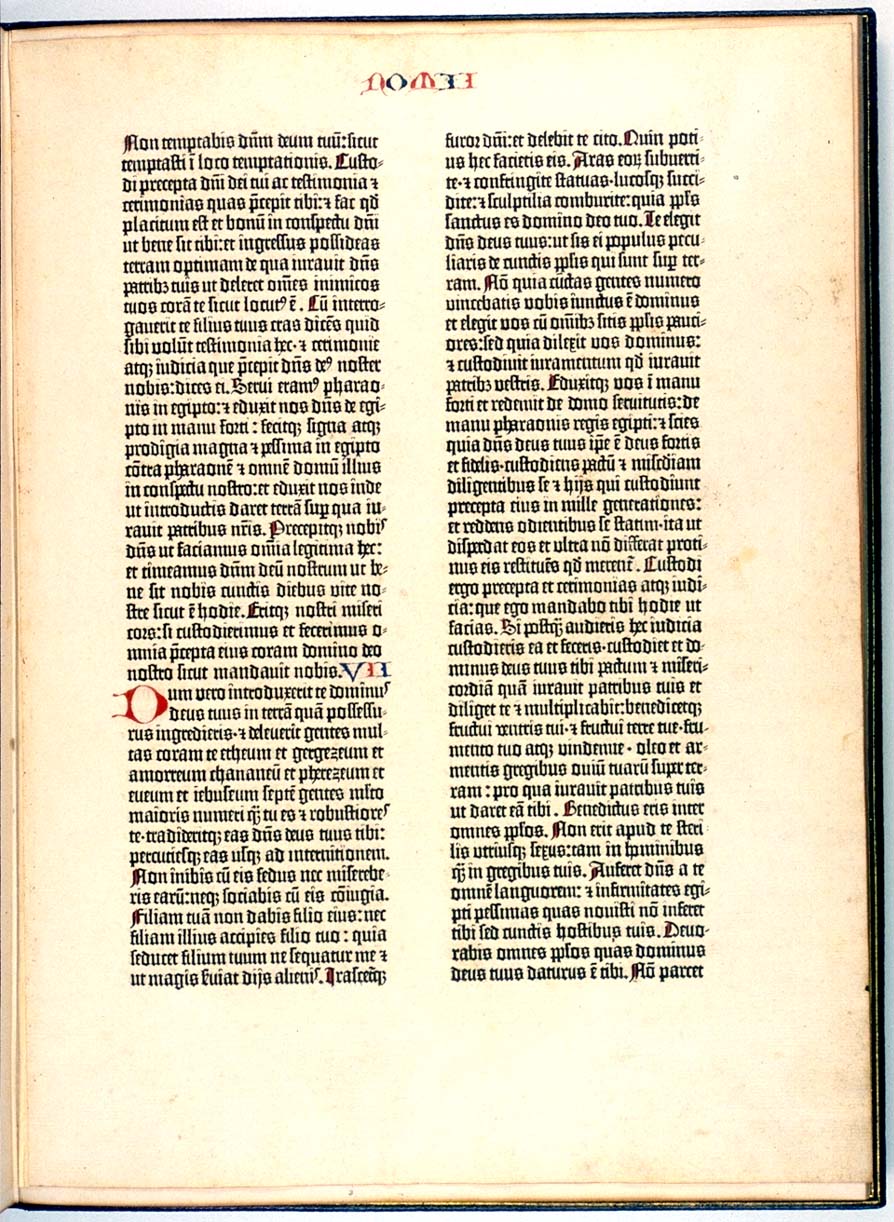 Book
Secondary source
Deuteronomy
Deuteronomist · 7th–5th century BCE
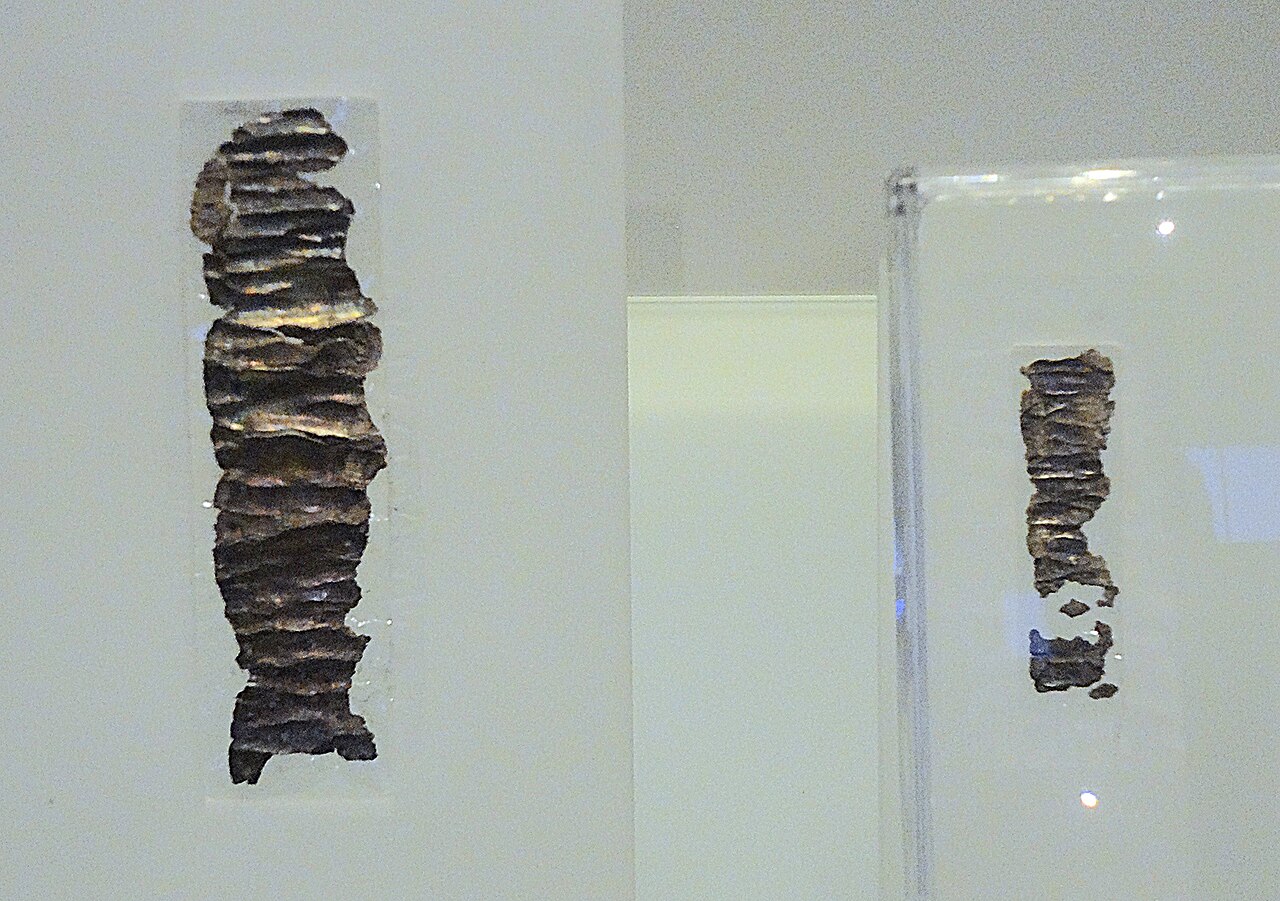 Artifact
Primary source
Ketef Hinnom scrolls
c. 600 BCE
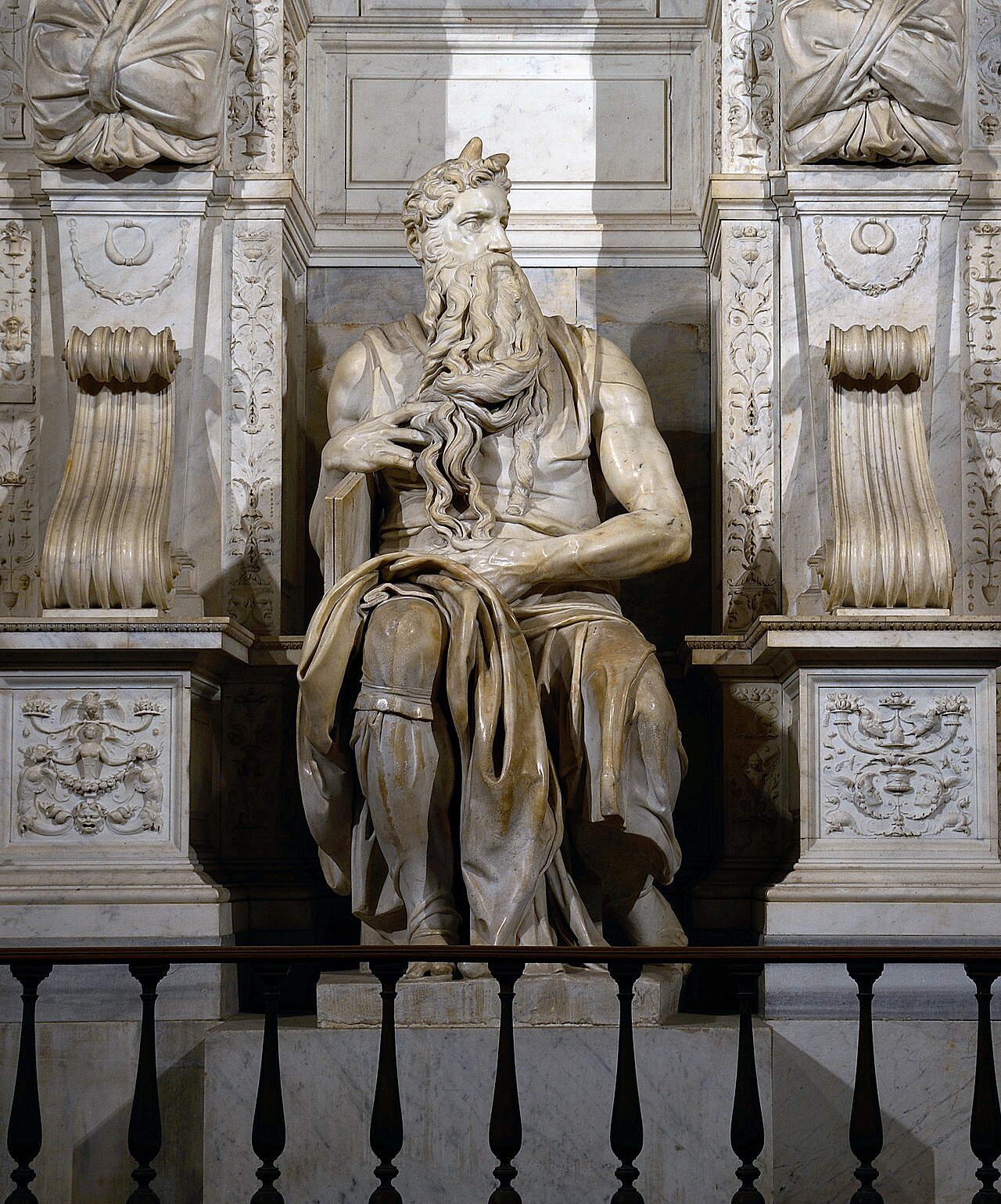 Sculpture
Primary source
Moses
Michelangelo · c. 1513-1515
 Painting
Secondary source
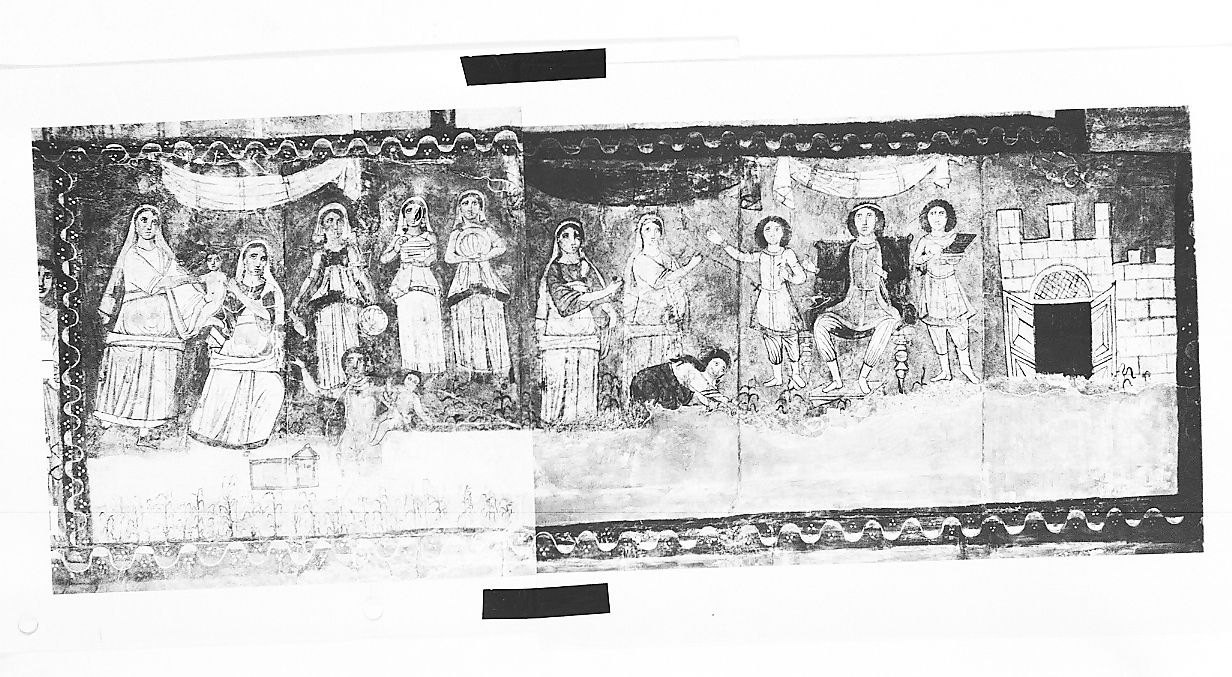
Iconographic Scene WC4, Dura-Europos Synagogue
240 CE
Free account
Read every Moses source
Sign up free →
Ready when you are
Start chatting with Moses now.
20 messages free · No credit card · Available in 50+ languages.