


Primary sourceArtifactc. 440-430 BC
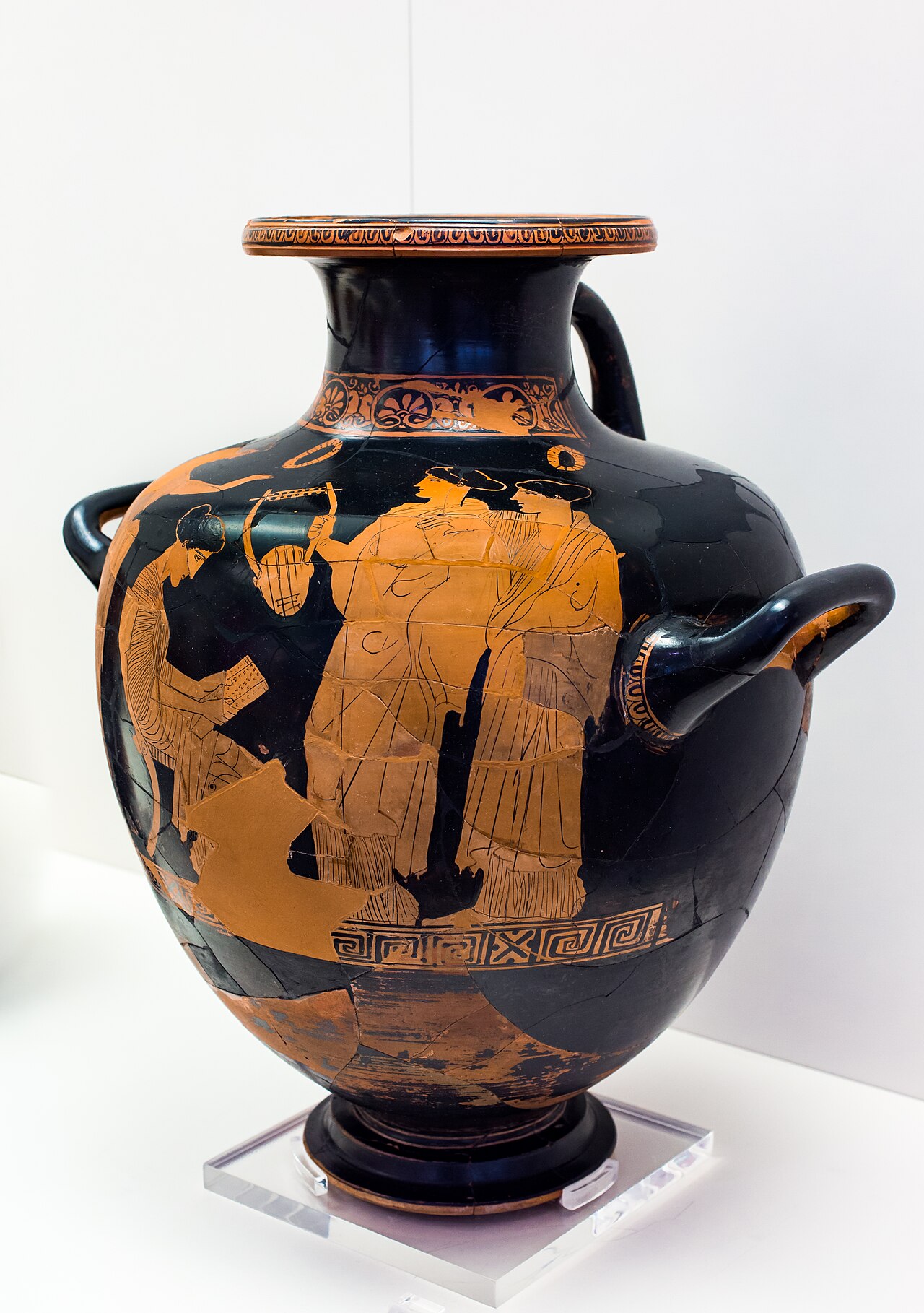
Red-figure hydria showing Sappho reading to women
Group of Polygnotos (attributed) · c. 440-430 BC
An ancient Athenian red-figure vase from around 440-430 BC showing Sappho seated reading from a bookroll, surrounded by other women.
An ancient Athenian vase depicting Sappho by name, reading from a scroll, offering direct evidence of how she was pictured in antiquity.
About this source
What it is
This is an Attic red-figure hydria (a type of water jug) made in Athens around 440-430 BC, attributed to the Group of Polygnotos. It shows a seated woman labelled with the inscription ΣΑΠΠΩΣ (Sappho) reading from an open bookroll, with other women nearby, one playing a lyre. The vase is held at the National Archaeological Museum in Athens.
Why it matters
This vase is rare physical evidence of how ancient Greeks imagined and portrayed Sappho, created centuries after she lived but much closer to her own time than later artworks. The names inscribed beside the figures — Sappho, Nikopolis, Kallis — show that ancient painters depicted her as a specific, recognisable figure surrounded by other women, reading and engaging with poetry.
Look closer
- Why might the painter have chosen to show Sappho reading from a scroll rather than, say, singing or playing music?
- What does the inscribed text on the bookroll tell us, and why might it be
This artifact is part of the curated material that grounds the AI version of Sappho on Humy.ai — when students ask about related events, the AI can quote it and cite it.
More Sappho sources
Browse all 89 →


Ready when you are
Start chatting with Sappho now.
20 messages free · No credit card · Available in 50+ languages.