


Secondary sourceBook
Regel van Benedictus (Middle Dutch fragment)
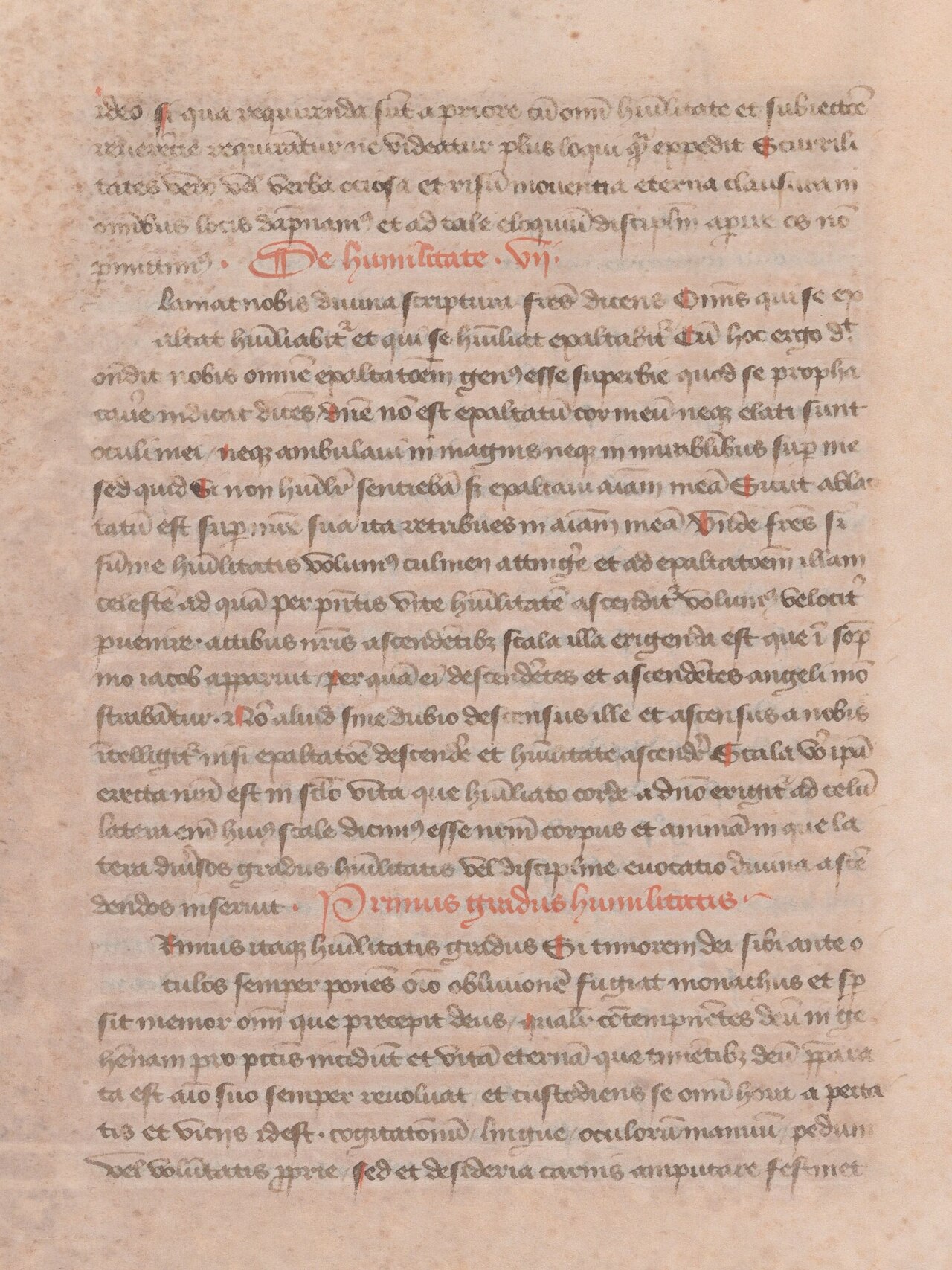
A fragment of a medieval manuscript containing a Middle Dutch translation of Benedict's Rule for monks.
A vernacular translation of Benedict's own Rule, showing how his writing continued to shape monastic life long after his death.
About this source
What it is
This is a fragment of a handwritten manuscript (numbered 256) containing a Middle Dutch translation of the Rule of Saint Benedict, the set of guidelines Benedict wrote for monastic life. The author of this particular translation is unknown.
The page shown includes a chapter heading, 'De humilitate' (On humility), written in Gothic script with decorated red initials.
Why it matters
Benedict's Rule, originally written in Latin in the 6th century, became the basis for monastic life across Europe. This Dutch translation shows how, centuries later, the Rule was still being copied and translated so that it could be read and understood by monks and nuns who did not read Latin easily.
Look closer
- Why would someone translate a Latin religious text into a local language?
- What does the careful decoration of the page tell you about how this text was valued?
- What parts of the text are illegible, and what does that tell us about how manuscripts survive?
This book is part of the curated material that grounds the AI version of Saint Benedict on Humy.ai — when students ask about related events, the AI can quote it and cite it.
More Saint Benedict sources
Meet the AI Saint Benedict →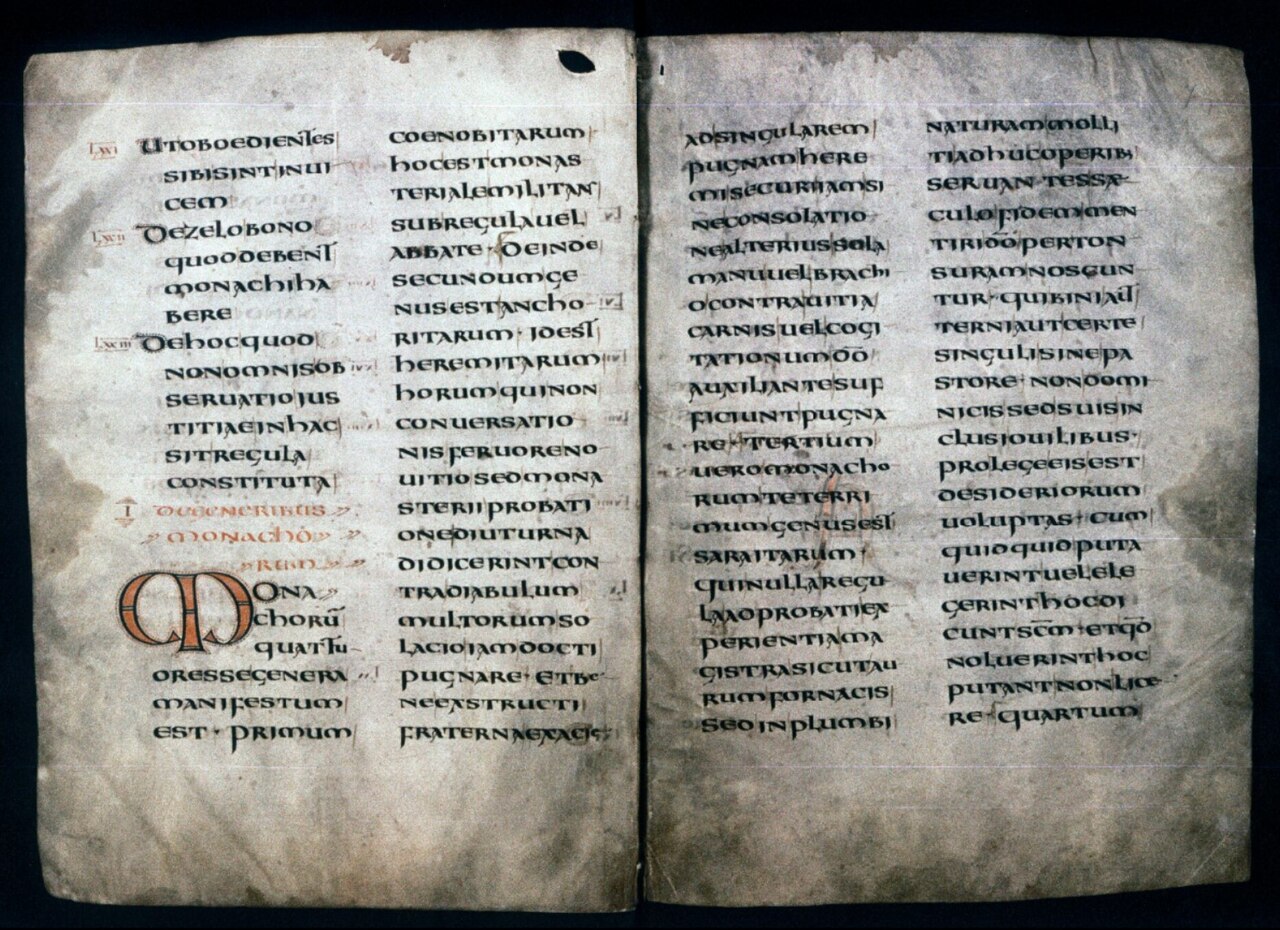 Book
Primary source
Rule of Saint Benedict
Benedict of Nursia · c. 600
 Artifact
Secondary source
Monte Cassino
founded c. 529/530
 Painting
Secondary source
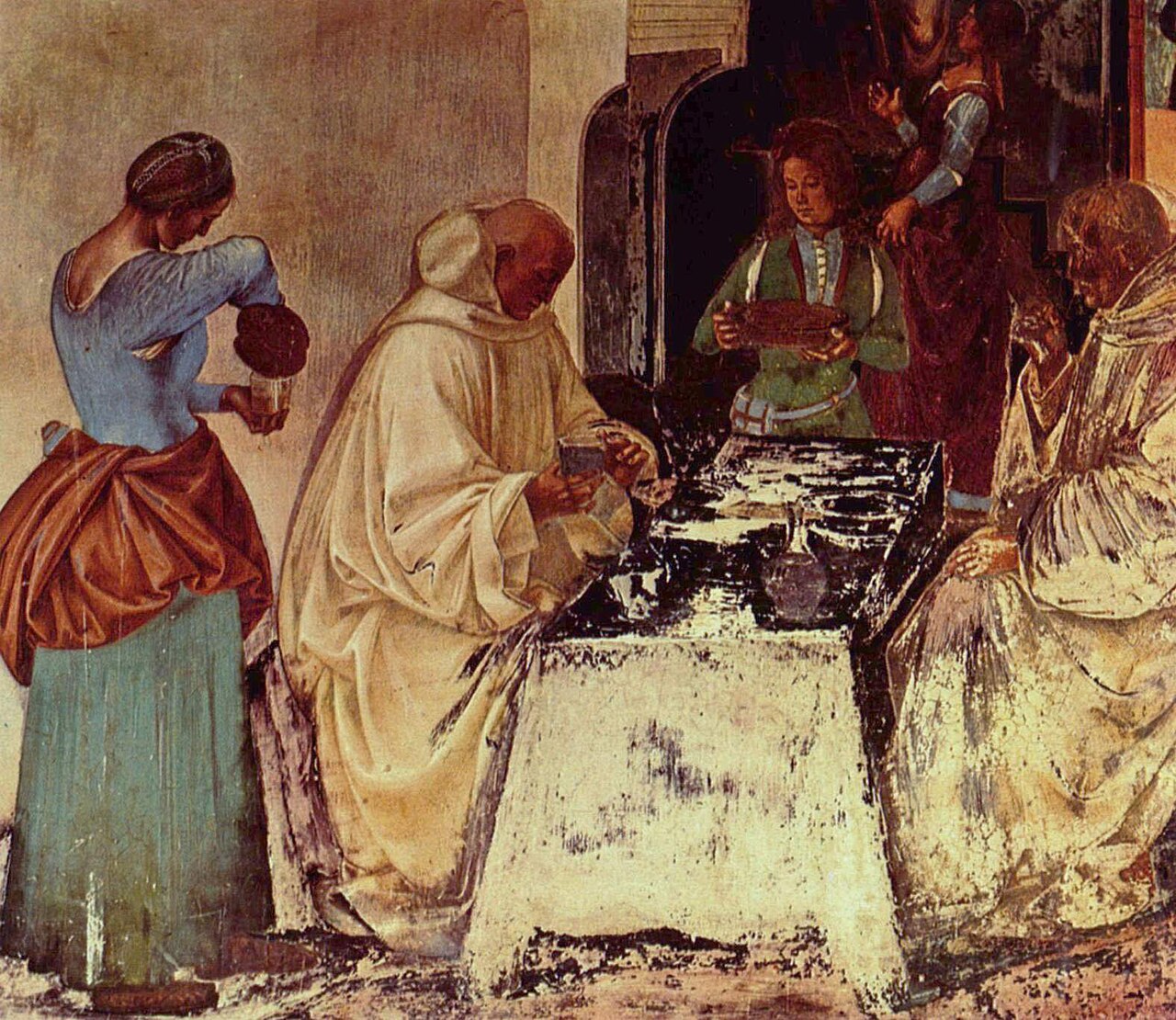
Fresco Cycle of the Life of St Benedict at Monte Oliveto Maggiore
Luca Signorelli and Sodoma · 1497-1505 (fresco cycle); abbey founded 1313
 Artifact
Secondary source
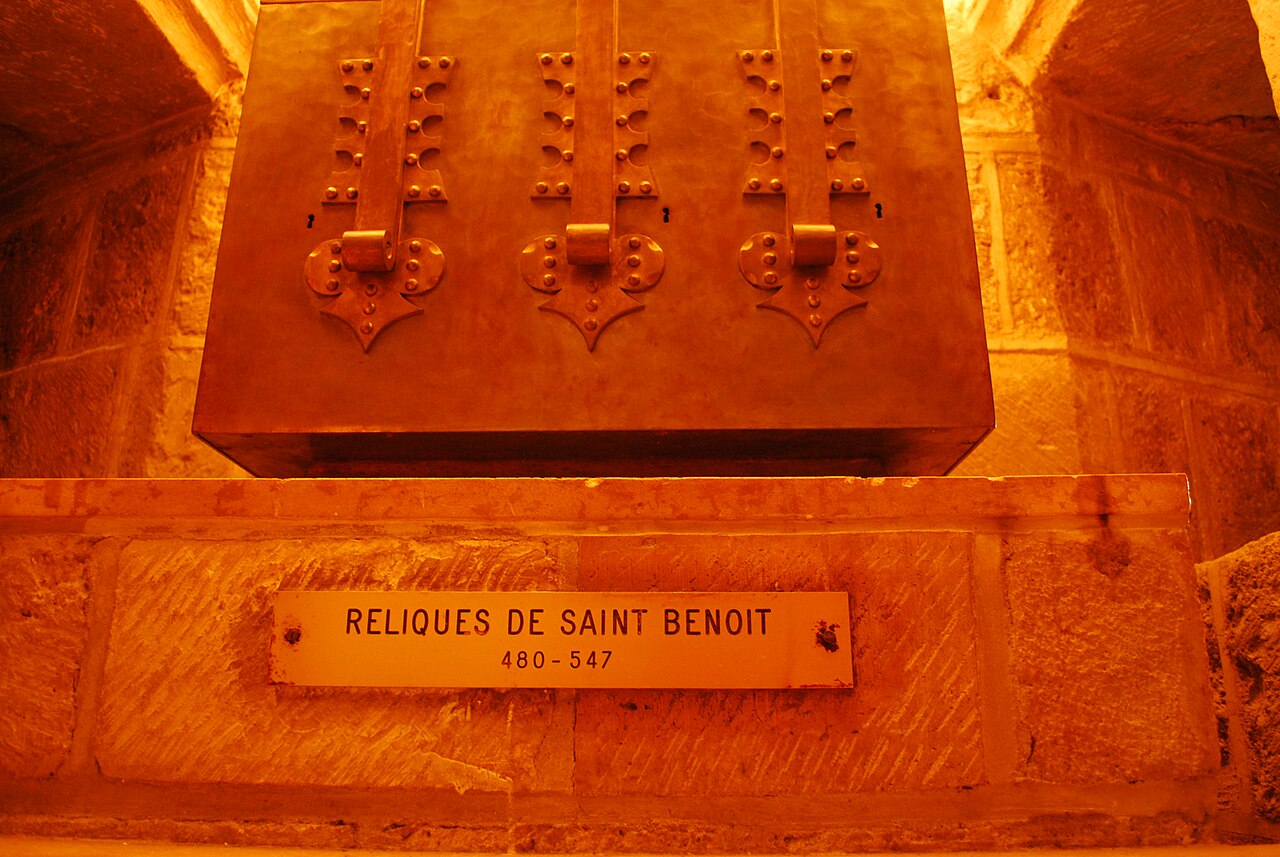
Reliquary of Saint Benedict at Fleury
 Artifact
Secondary source
Plan of Saint Gall
c. 820-830
Ready when you are
Start chatting with Saint Benedict now.
20 messages free · No credit card · Available in 50+ languages.