


Primary sourceSculpture486–465 BCE
Relief Fragment of a Guardsman from Xerxes' Palace
486–465 BCE
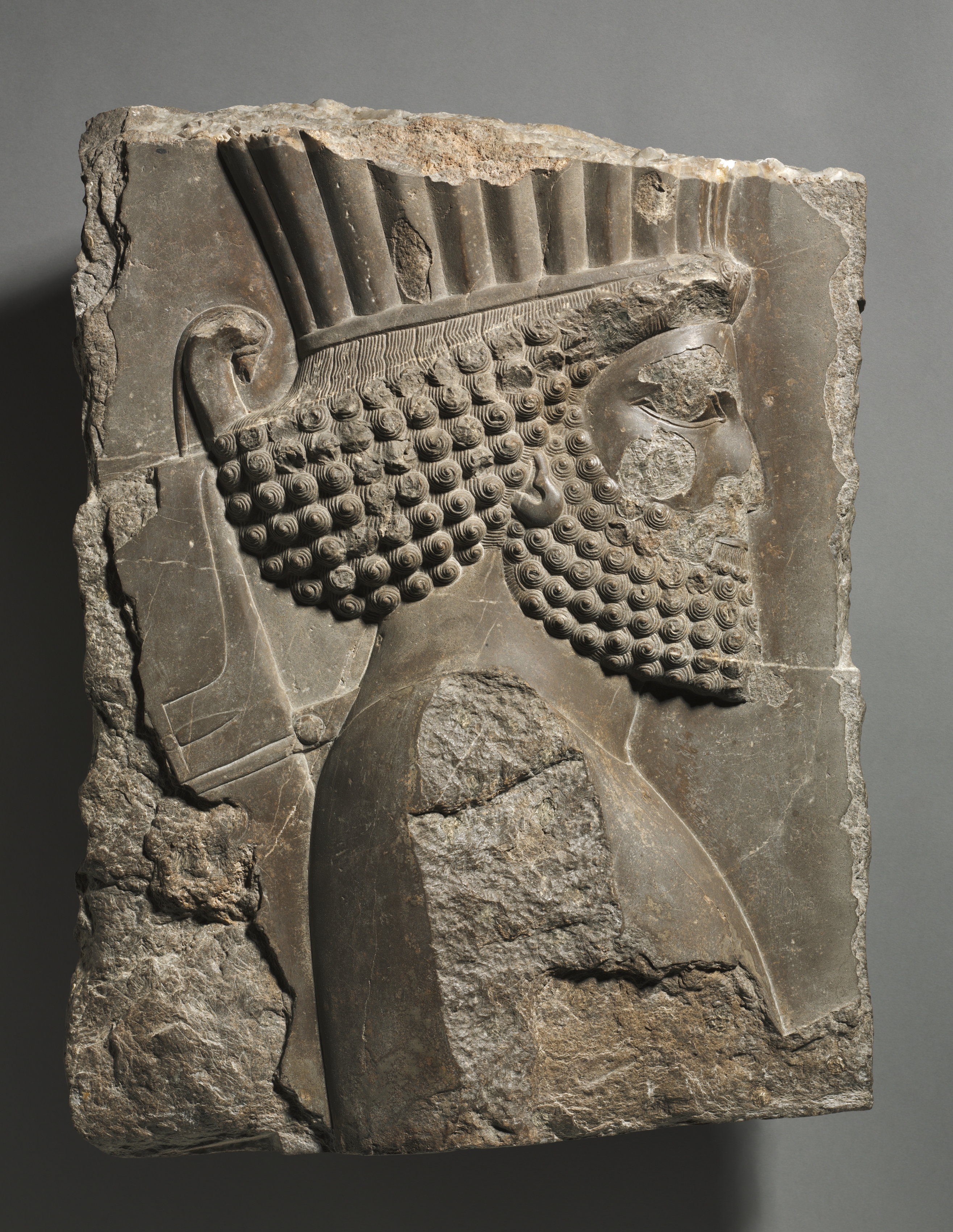
An original stone relief fragment showing a royal guard from the stairway of Xerxes's palace at Persepolis, built during his reign.
This relief comes from the palace Xerxes built at Persepolis, likely from its stairway, as material evidence of his reign.
About this source
What it is
This gray limestone relief fragment shows a guardsman in profile, wearing a tall pleated cylindrical headdress and curled ringlet hair and beard, with the edge of a shield visible. It probably comes from the west stairway of Xerxes's enormous palace at Persepolis, dated 486–465 BCE. It is held by the Cleveland Museum of Art.
Why it matters
In 486 BC Xerxes succeeded his father Darius I as king of what was then the world's largest empire, stretching from Libya to western India. This relief of one of his guards is physical evidence of the palace he built to project that power. The museum's own note links this relief to Herodotus's account of the Greek victory over Xerxes, a clash often described as democracy against monarchy.
Look closer
- What details in the guardsman's dress suggest his importance or role?
- Why would a king decorate his palace stairway with images of his guards?
- How might a Greek account like Herodotus's shape our view of this Persian artifact?
This sculpture is part of the curated material that grounds the AI version of Xerxes I on Humy.ai — when students ask about related events, the AI can quote it and cite it.
More Xerxes I sources
Browse all 97 →
Ready when you are
Start chatting with Xerxes I now.
20 messages free · No credit card · Available in 50+ languages.