


Primary sourcePhotographcirca 470 BCE
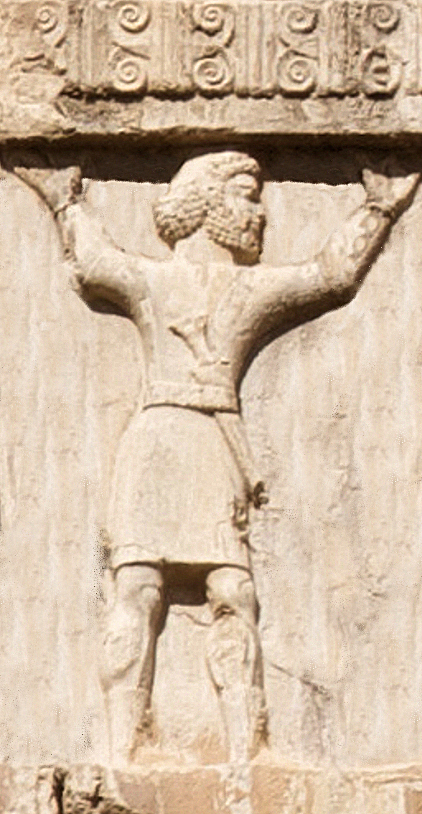
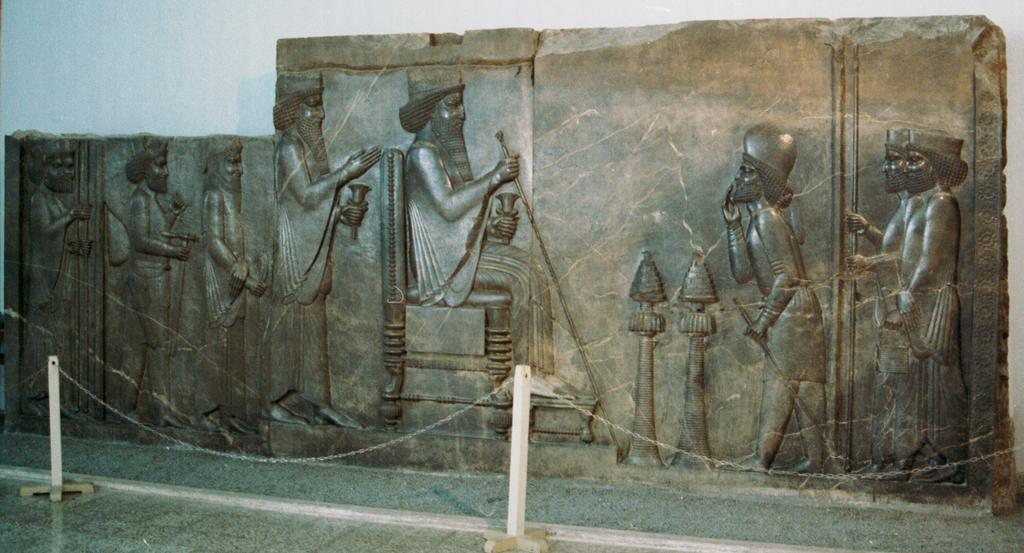
Relief from the tomb of Xerxes I, c. 470 BCE
circa 470 BCE
A carved relief at the tomb of Xerxes I showing a bearded man in a short tunic who supports an architectural element, made around 470 BCE.
It is a relief in Xerxes' own tomb, made in his reign, and it shows the court figures meant to honour him.
About this source
What it is
This is a photograph, taken on 17 October 2018 by dynamosquito from France, of a carved relief at the tomb of Xerxes I. The collection record dates the relief to circa 470 BCE. It shows a bearded man in a short tunic and belt, with his arms raised to support a carved architectural element above him, under a decorative spiral band on light sandstone.
Why it matters
The relief was made during Xerxes' reign and reflects the Persian court's visual language. Its figure is described as a royal guard, a sign of the king's protection and status. Such carvings show how Persian kings wanted to be remembered and how their attendants were shown in service.
Look closer
- What is the man doing with his arms, and what does that suggest about his role?
- Why would a king include guards or attendants in his tomb?
- What does this carving leave out about the people who were not shown in royal art?
This photograph is part of the curated material that grounds the AI version of Xerxes I on Humy.ai — when students ask about related events, the AI can quote it and cite it.
More Xerxes I sources
Browse all 97 →
Ready when you are
Start chatting with Xerxes I now.
20 messages free · No credit card · Available in 50+ languages.