


Primary sourceSculpture485-465 BC
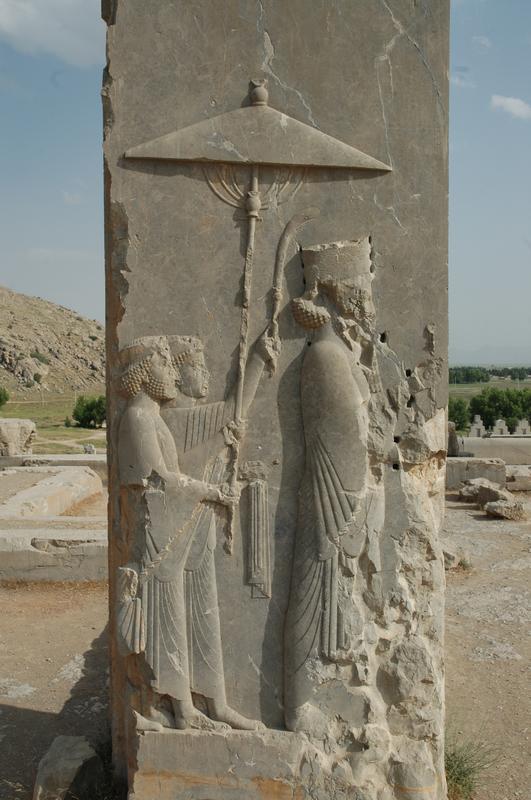
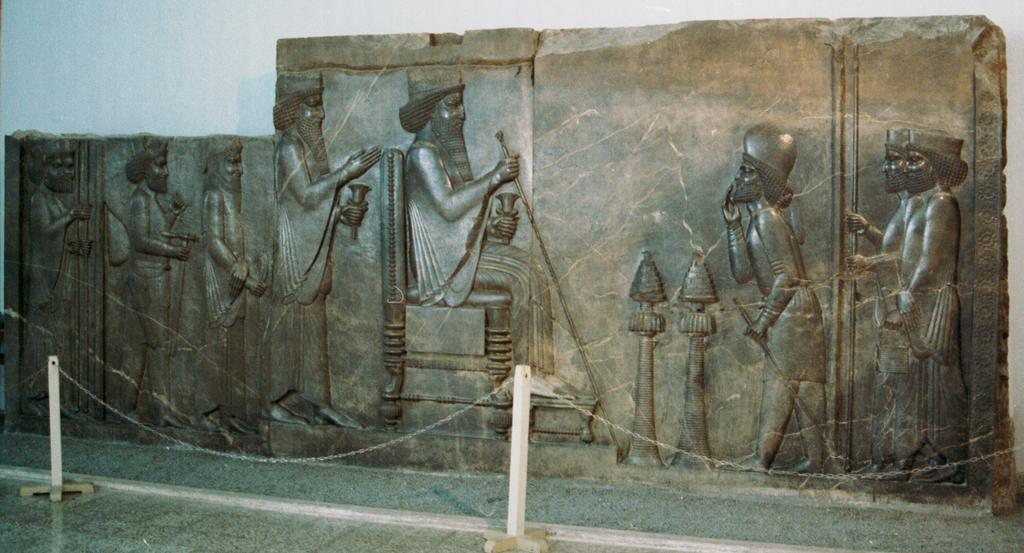
Relief of Xerxes at the Doorway of His Palace, Persepolis
485-465 BC
A stone relief carved during Xerxes's reign showing the king with attendants at his palace in Persepolis.
This relief, carved during his reign, shows Xerxes himself as a ruling monarch attended by royal servants.
About this source
What it is
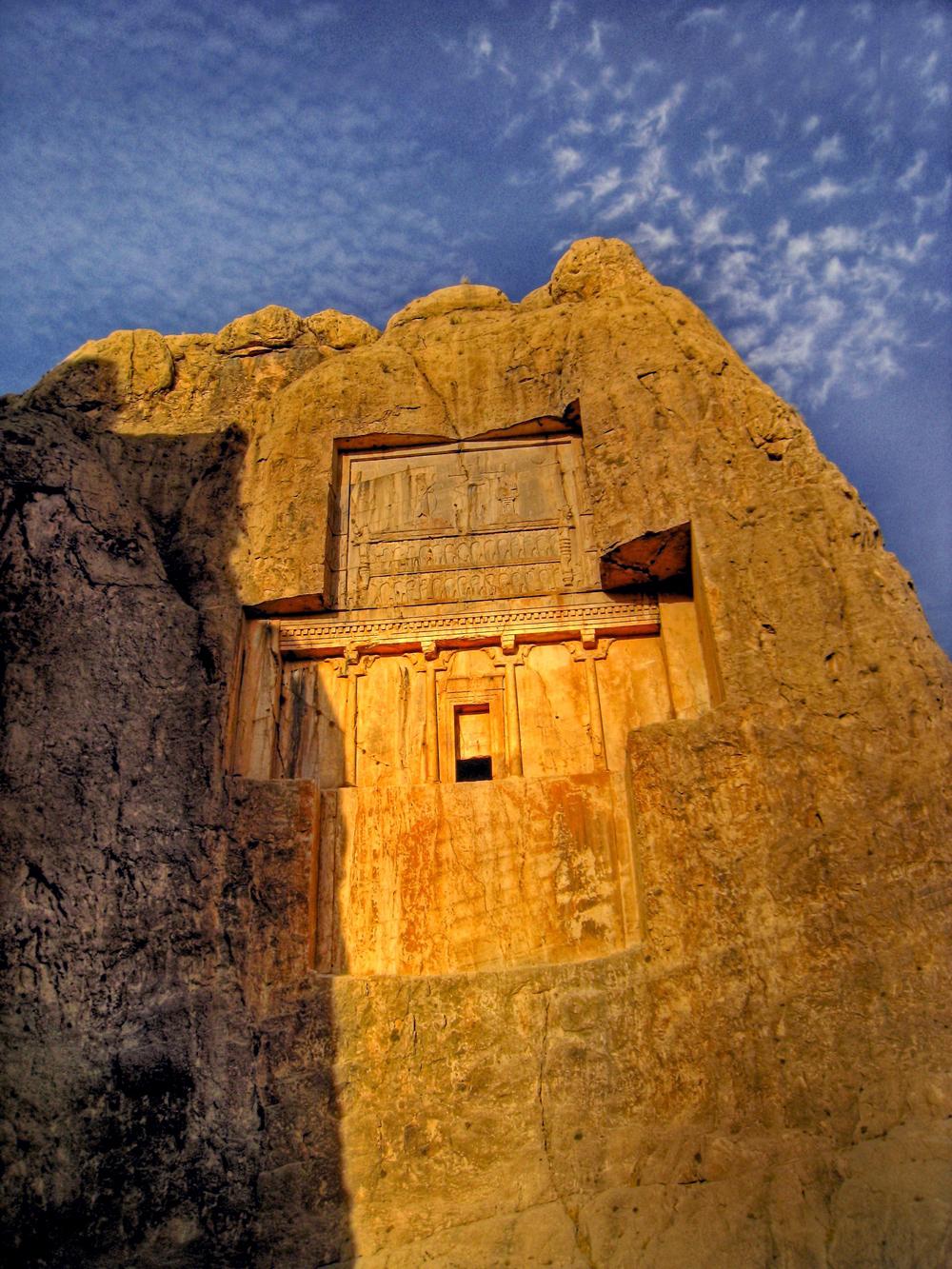
This stone relief was carved at Persepolis, the Achaemenid ceremonial capital, during the reign of Xerxes. It shows the king standing with attendants at the doorway of his palace, including a bearer holding a parasol above him.
Why it matters
Because it was carved during Xerxes's own lifetime, this relief is a primary source showing how the king wanted to present his power and status. The parasol, towel, and flywhisk carried by attendants were symbols of royalty, reflecting the strict hierarchy and grandeur of the Achaemenid court.
Look closer
- What details mark the king as more important than the attendants around him?
- Why would a ruler choose to be shown at a doorway rather than in battle or at court?
- What does this image not tell us about how Xerxes actually governed his empire?
This sculpture is part of the curated material that grounds the AI version of Xerxes I on Humy.ai — when students ask about related events, the AI can quote it and cite it.
More Xerxes I sources
Browse all 97 →
Ready when you are
Start chatting with Xerxes I now.
20 messages free · No credit card · Available in 50+ languages.