


Primary sourceArtifactc. 1550 BC
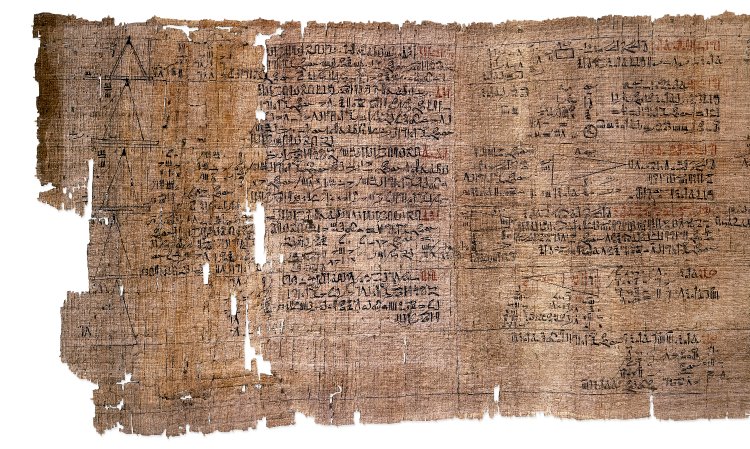
Rhind Mathematical Papyrus
Ahmes · c. 1550 BC
An ancient Egyptian mathematical text showing the kind of practical geometry Thales was said to have learned during his travels in Egypt.
Shows the Egyptian mathematical tradition that Thales is said to have drawn on during his travels in Egypt.
About this source
What it is
The Rhind Mathematical Papyrus is an ancient Egyptian document copied by the scribe Ahmes, containing arithmetic and geometry problems, including ones about the slopes of pyramids. It dates to around 1550 BC and is now held mainly by the British Museum, with fragments at the Brooklyn Museum.
Why it matters
Ancient tradition says Thales traveled to Egypt and brought back geometric knowledge to Greece. This papyrus shows the kind of practical, problem-based mathematics that existed in Egypt long before Thales' time, giving context to the stories about where his geometric learning may have come from.
Look closer
- What kinds of real-world problems does this papyrus try to solve?
- Why might practical mathematics like this have been useful to builders and travelers?
- How might ideas like these have traveled from Egypt to Greece?
This artifact is part of the curated material that grounds the AI version of Thales of Miletus on Humy.ai — when students ask about related events, the AI can quote it and cite it.
More Thales of Miletus sources
Browse all 76 → Book
Secondary source
Metaphysics
Aristotle · c. 400 BCE
 Book
Secondary source
Histories
Herodotus · c. 440 BCE
 Book
Secondary source
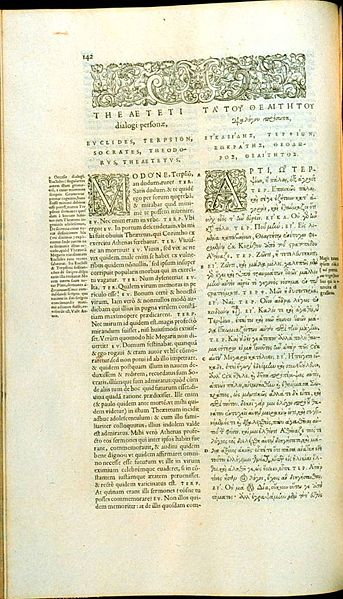
Theaetetus
Plato · early-to-middle 4th century BCE (this edition 1578)
 Book
Primary source
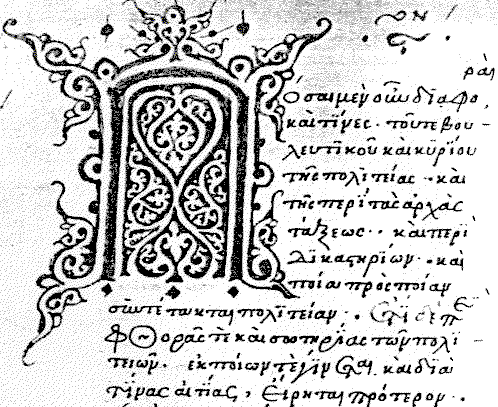
Politics
Aristotle · 4th century BCE
Free account
Read every Thales of Miletus source
Sign up free →
Ready when you are
Start chatting with Thales of Miletus now.
20 messages free · No credit card · Available in 50+ languages.