


Secondary sourceBookearly-to-middle 4th century BCE (this edition 1578)
Theaetetus
Plato · early-to-middle 4th century BCE (this edition 1578)
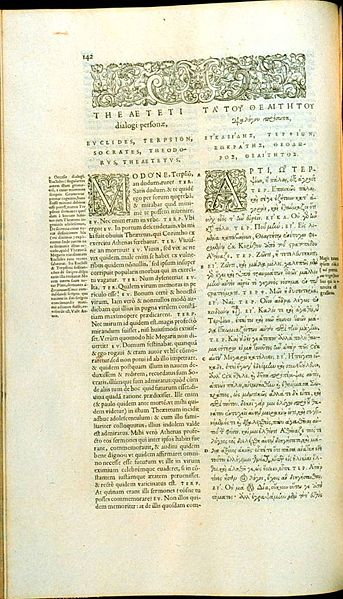
A dialogue by Plato in which Socrates and the young mathematician Theaetetus try to define knowledge, ending as Socrates leaves for his trial.
Socrates is the main speaker, describing his method as midwifery of ideas before leaving for his impiety trial.
About this source
What it is
The Theaetetus is a philosophical dialogue written by Plato in the early-to-middle 4th century BCE. It stages a conversation between Socrates, the mathematician Theaetetus, and his teacher Theodorus of Cyrene. The page shown here is from a 1578 printed edition edited by Henri Estienne, with Greek text and a Latin translation.
Why it matters
The dialogue is one of the founding texts of epistemology, the study of knowledge. In it, Socrates compares himself to a midwife, helping others give birth to ideas, as his mother Phaenarete had helped women give birth to children. The dialogue ends without a final answer, and Socrates leaves to face the hearing that led to his trial and execution. It shows how Plato remembered his teacher's method of questioning and the drama of his final days.
Look closer
- Why might Plato have chosen the image of a midwife to describe how Socrates helps others think?
- What does it mean that the dialogue ends without a clear answer?
- How does the printed page differ from how the dialogue would originally have been read aloud?
This book is part of the curated material that grounds the AI version of Socrates on Humy.ai — when students ask about related events, the AI can quote it and cite it.
More Socrates sources
Meet the AI Socrates →Secondary source
Apology
Plato · c. 395 BC
 Painting
Secondary source
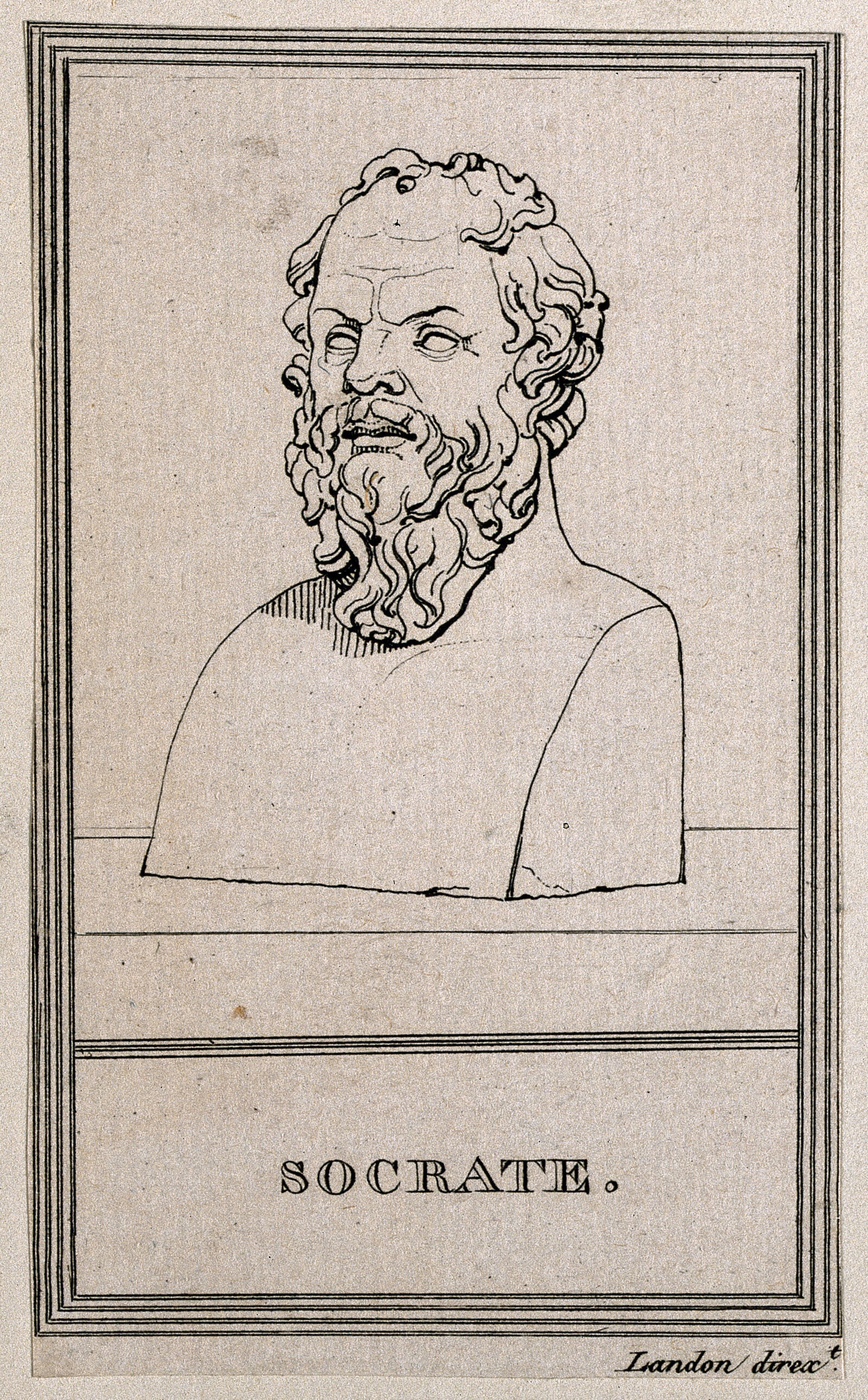
Line Engraving of Socrates by Landon
Charles Paul Landon
 Book
Secondary source
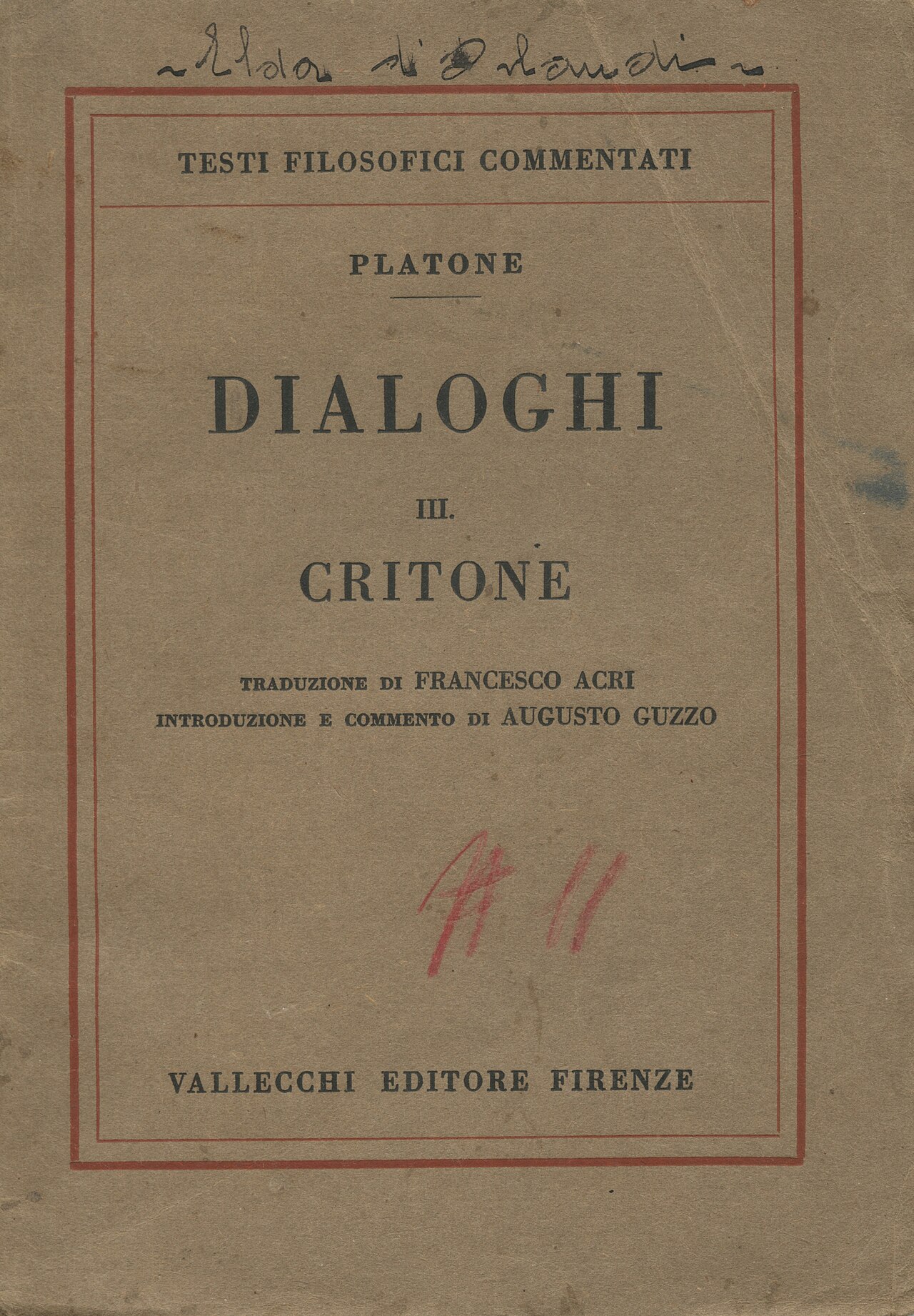
Crito
Plato · c. 400 BC
 Painting
Secondary source
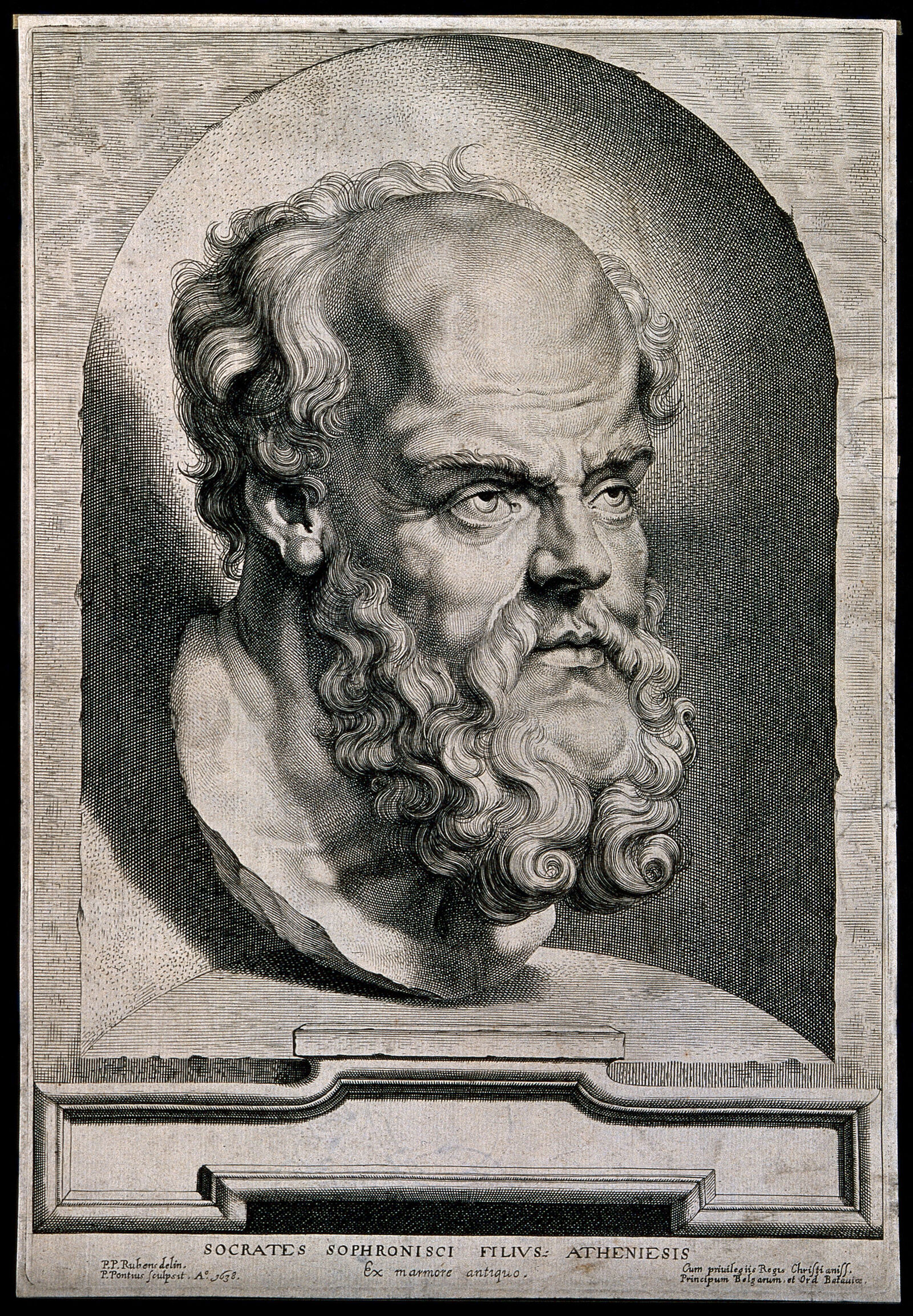
Socrates Engraving after Rubens by Pontius
Peter Paul Rubens · 1638
 Photograph
Secondary source
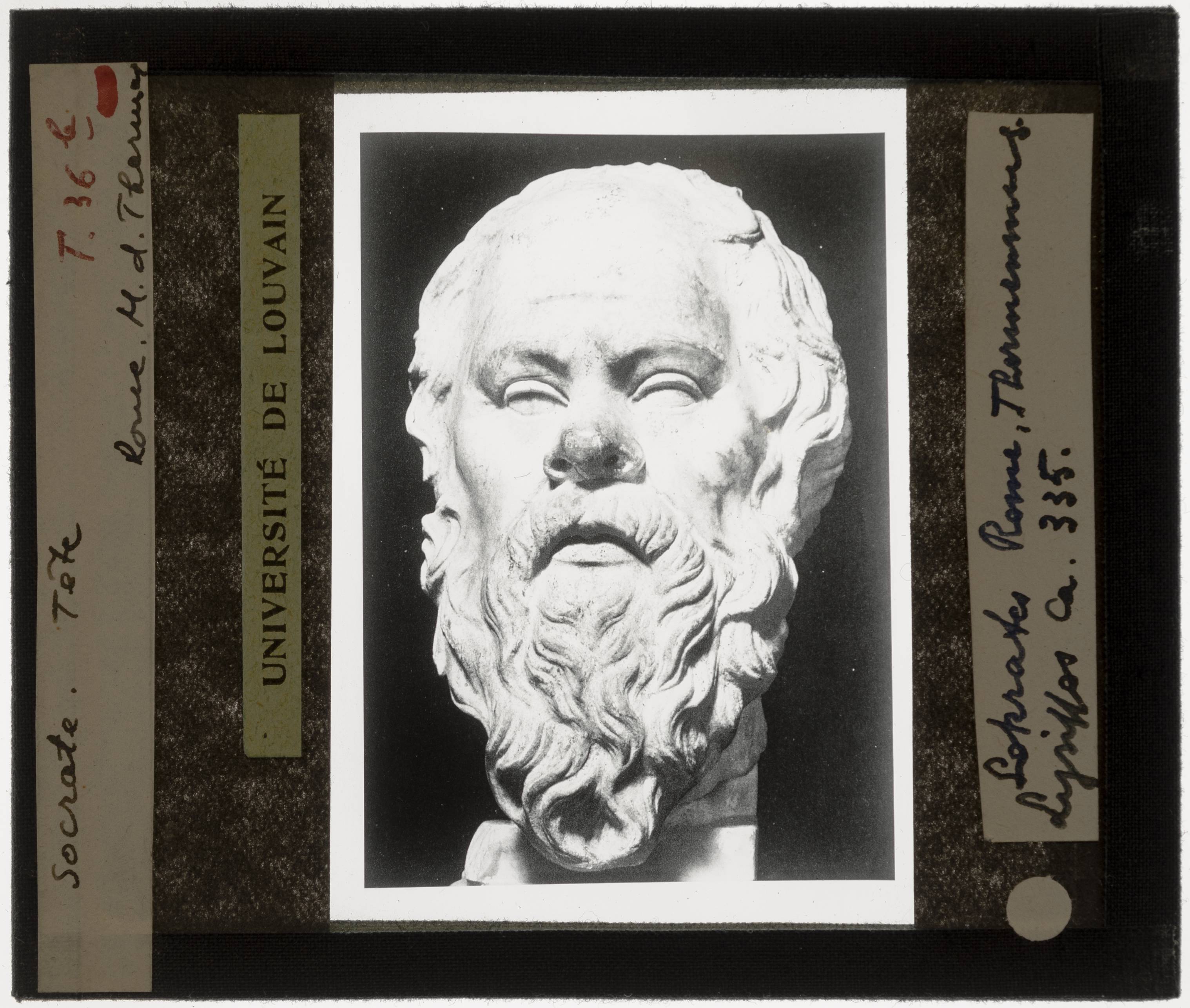
Roman Marble Bust of Socrates
between 1839 and 1939
Ready when you are
Start chatting with Socrates now.
20 messages free · No credit card · Available in 50+ languages.