


Secondary sourcePainting1638
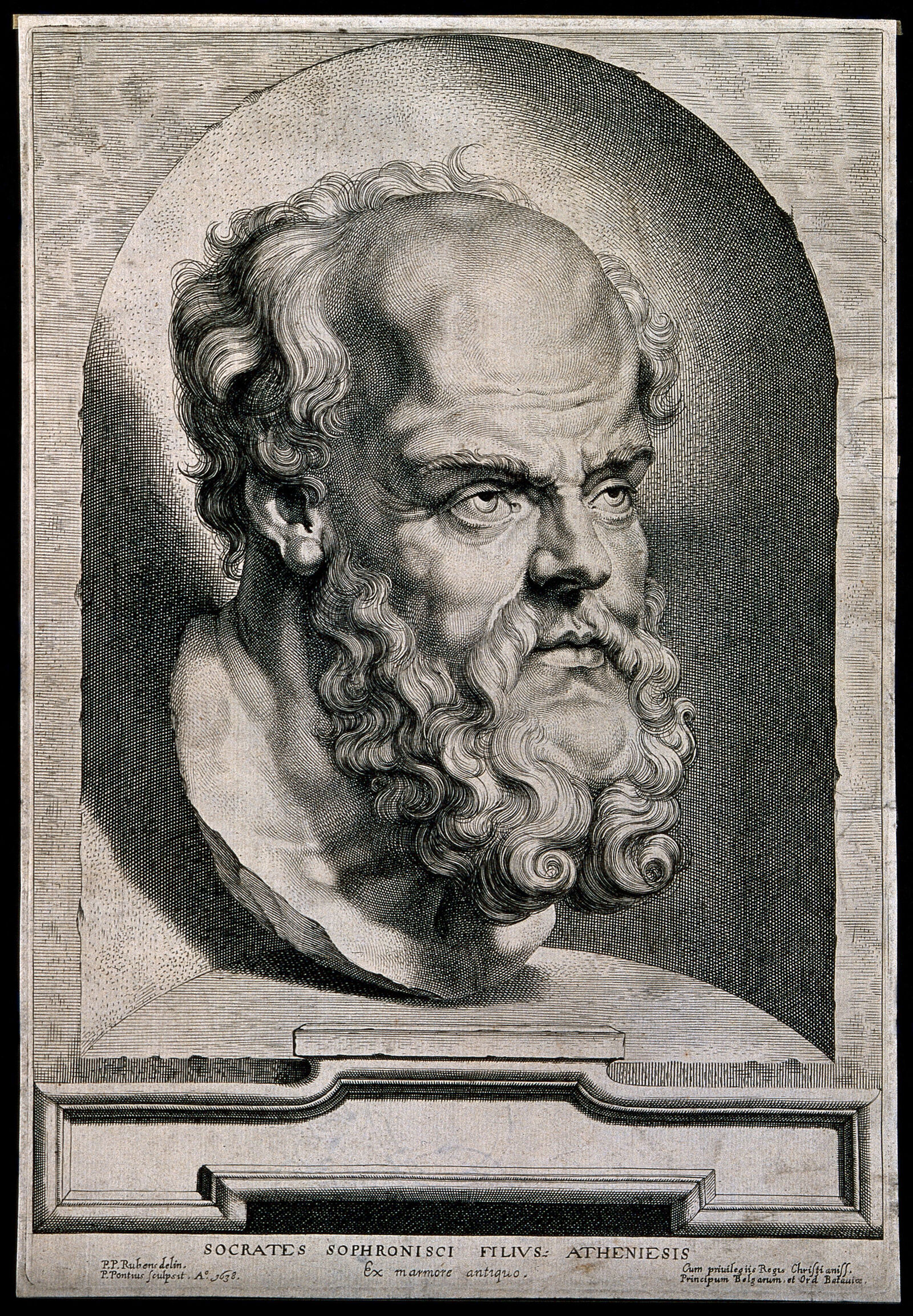
Socrates Engraving after Rubens by Pontius
Peter Paul Rubens · 1638
A 1638 engraving of Socrates by Paulus Pontius, based on a design by Peter Paul Rubens.
A later Baroque engraving imagining Socrates' appearance, showing his enduring fame long after his death.
About this source
What it is
This engraving shows a bearded, balding bust of Socrates set in an arched niche on a stone pedestal, with a Latin inscription naming him as the son of Sophroniscus, an Athenian. It was engraved by Paulus Pontius in 1638 after a design by the painter Peter Paul Rubens, and is held today by the Wellcome Collection.
Why it matters
Like other images of Socrates, this is an imagined likeness created nearly two thousand years after his death. It shows how Rubens, one of the great painters of the Baroque period, and the engraver Pontius worked together to picture a famous ancient philosopher for their own time.
Look closer
- What does the Latin inscription tell you about how Socrates was identified?
- Why might Rubens have chosen to depict Socrates as bald and heavily bearded?
- How does the niche and pedestal change the way we see this figure?
This painting is part of the curated material that grounds the AI version of Socrates on Humy.ai — when students ask about related events, the AI can quote it and cite it.
More Socrates sources
Meet the AI Socrates →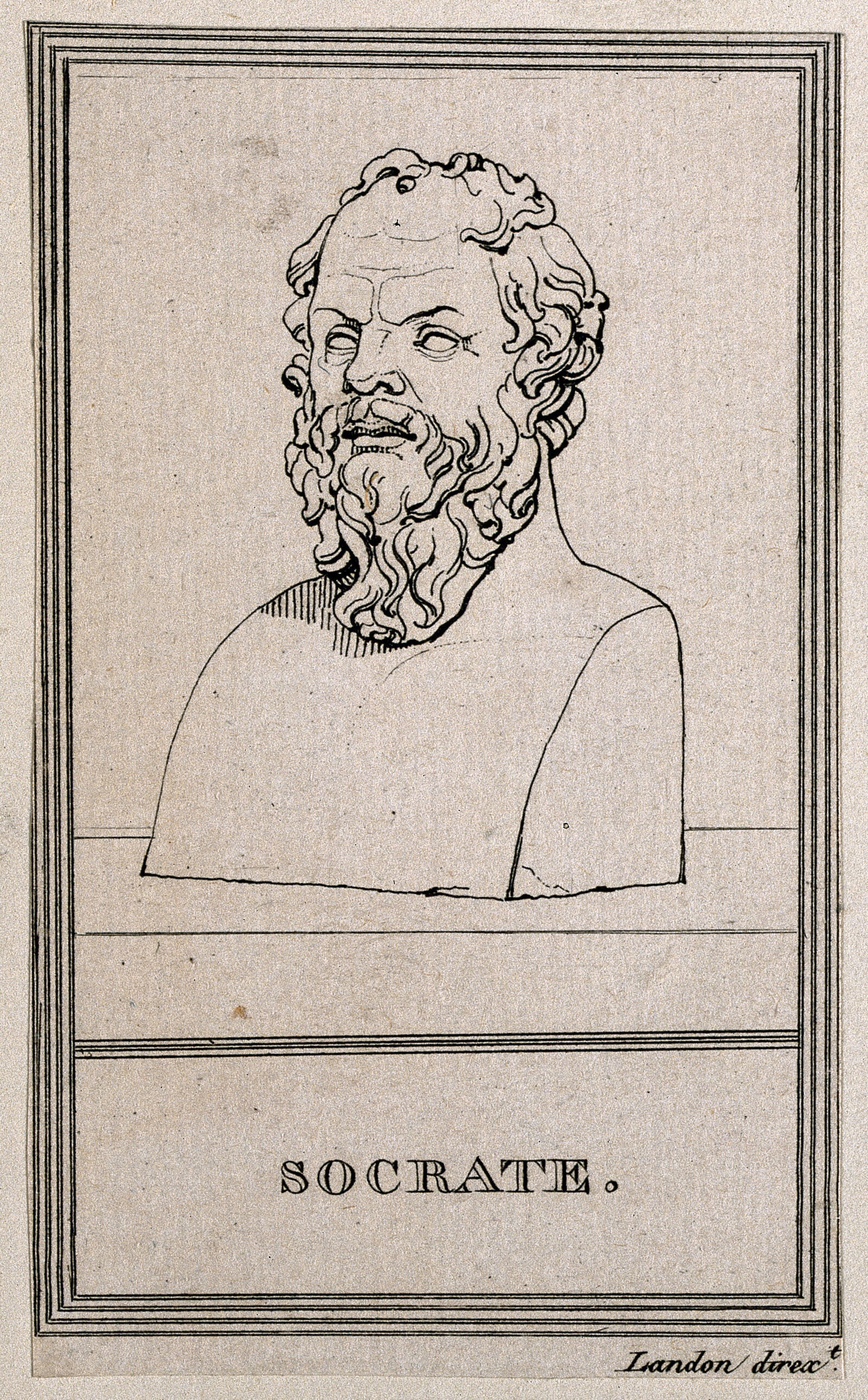
Ready when you are
Start chatting with Socrates now.
20 messages free · No credit card · Available in 50+ languages.