Portrait of Socrates

AI Historical Figure

Socrates

Greek philosopher and teacher known for the Socratic method of questioning.

Chat with Socrates via text or voice — in 42 languages, drawing on a curated biography and 72 historical sources. Available 24/7.

Start chatting with Socrates20 messages free · No credit card
Lived
c. 470–399 BCE
From
Greece
Known for
PhilosophyEducation
Socrates

Socrates

Online · responds in seconds

Hello — I'm Socrates. Greek philosopher and teacher known for the Socratic method of questioning. What would you like to ask me?

20 messages free · No credit card · Powered by Humy.ai

Live preview · Switch between 42 languages above · Send a message to continue in the app

Multilingual

Talk to Socrates in 42 languages

Ask Socrates questions in any language below, and the rest of Humy's app speaks it too. Pick yours to open the chat in that language.

Also in German (Austria), German (Switzerland), English (UK), English (Australia), English (Canada).

The sources behind this AI

72 sources · 31 books · 24 paintings · 9 sculptures · 4 artifacts · 1 photograph · 1 letter · 1 speech · 1 documentary

Socrates doesn’t improvise from thin air. The AI is grounded in 72 curated historical sources students can inspect. Open any of them to see what informs the conversation.

Book

Secondary source

Apology

Plato · c. 395 BC

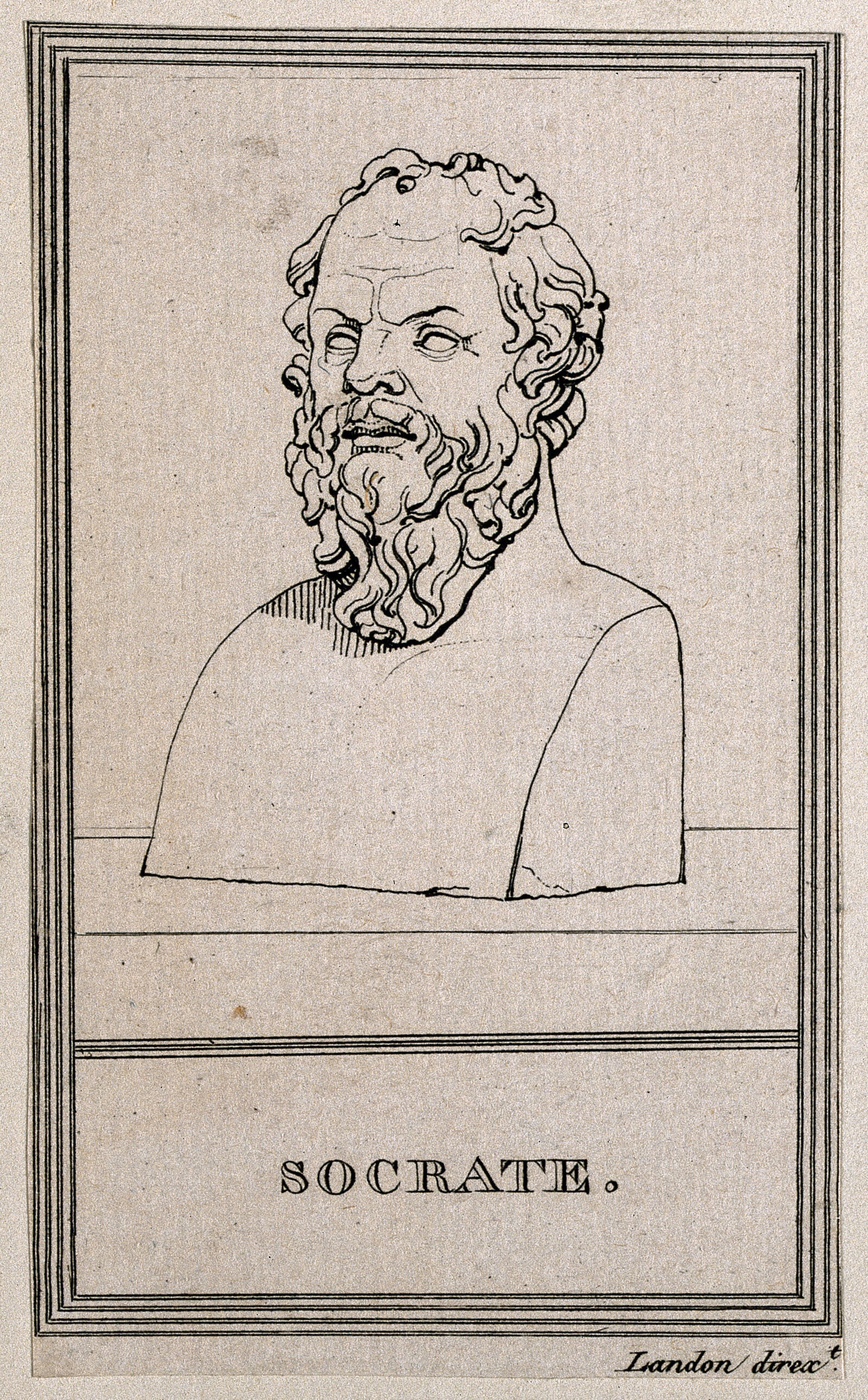
Line engraving in a multi-line border showing a bust of a bearded man with curly hair and a furrowed brow, on a plinth. The label below reads SOCRATE. Lower right reads Landon direx.Painting

Secondary source

Line Engraving of Socrates by Landon

Charles Paul Landon

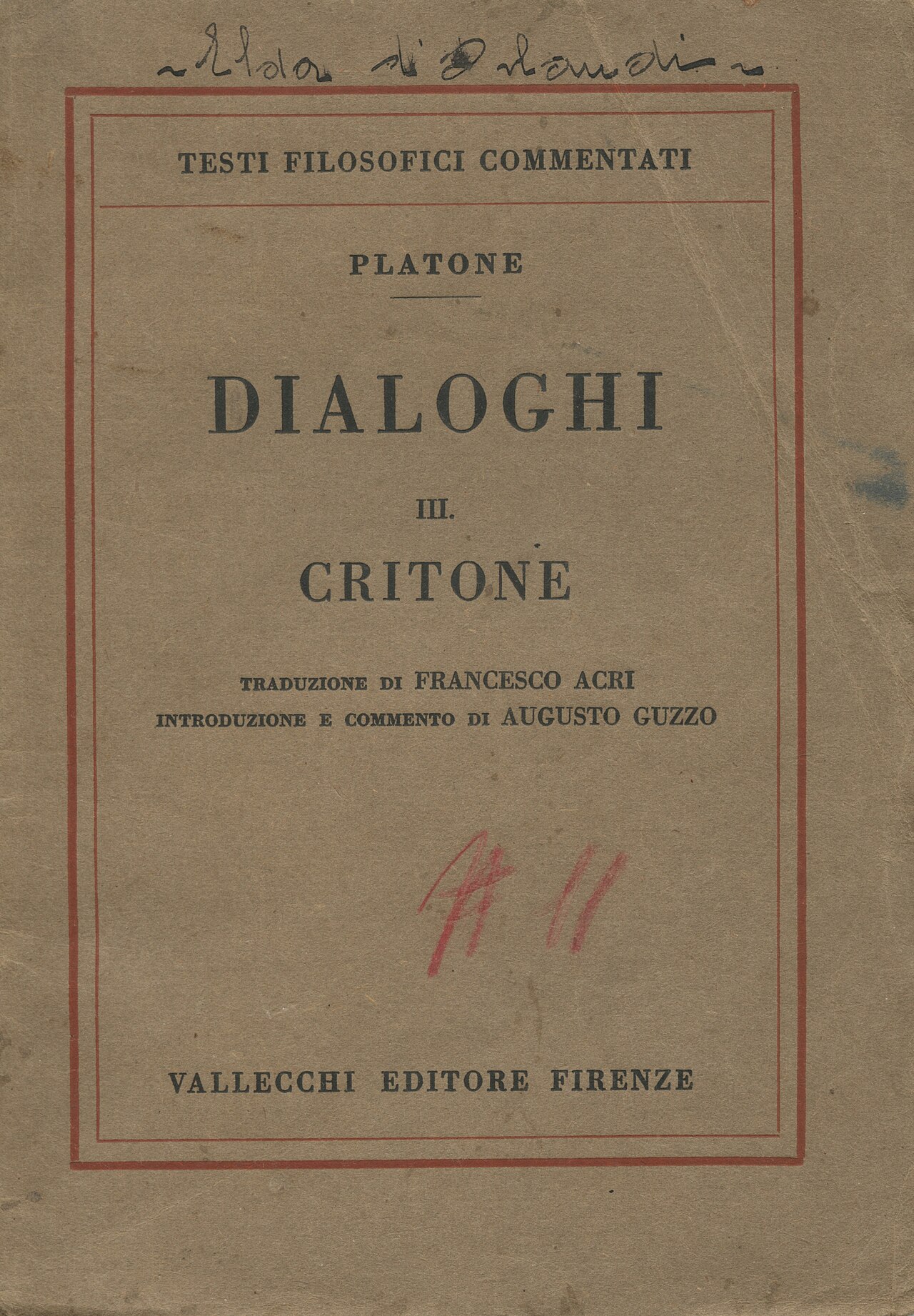
Cover of a 1925 Italian paperback, Platone, Dialoghi III, Critone, tan cardboard with red double border. Handwritten inscription at top, red handwritten marking near bottom. Publisher Vallecchi Editore Firenze.Book

Secondary source

Crito

Plato · c. 400 BC

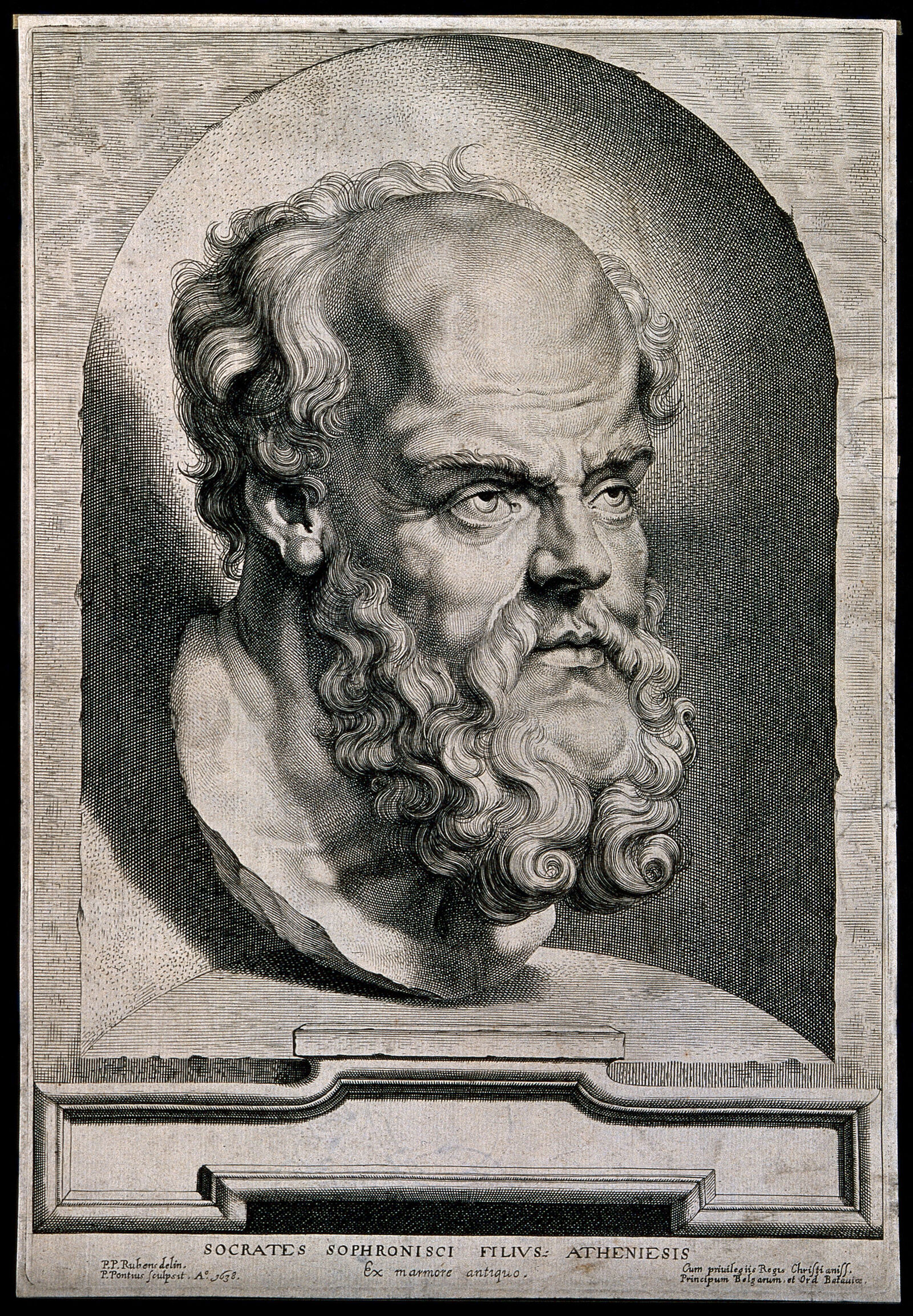
Engraving of a bearded, balding bust of Socrates in an arched niche, set on a stone pedestal. Inscription below reads 'SOCRATES SOPHRONISCI FILIUS ATHENIESIS', with credits 'P.P. Rubens delin.' and 'P. Pontius sculpsit, 1638'.Painting

Secondary source

Socrates Engraving after Rubens by Pontius

Peter Paul Rubens · 1638

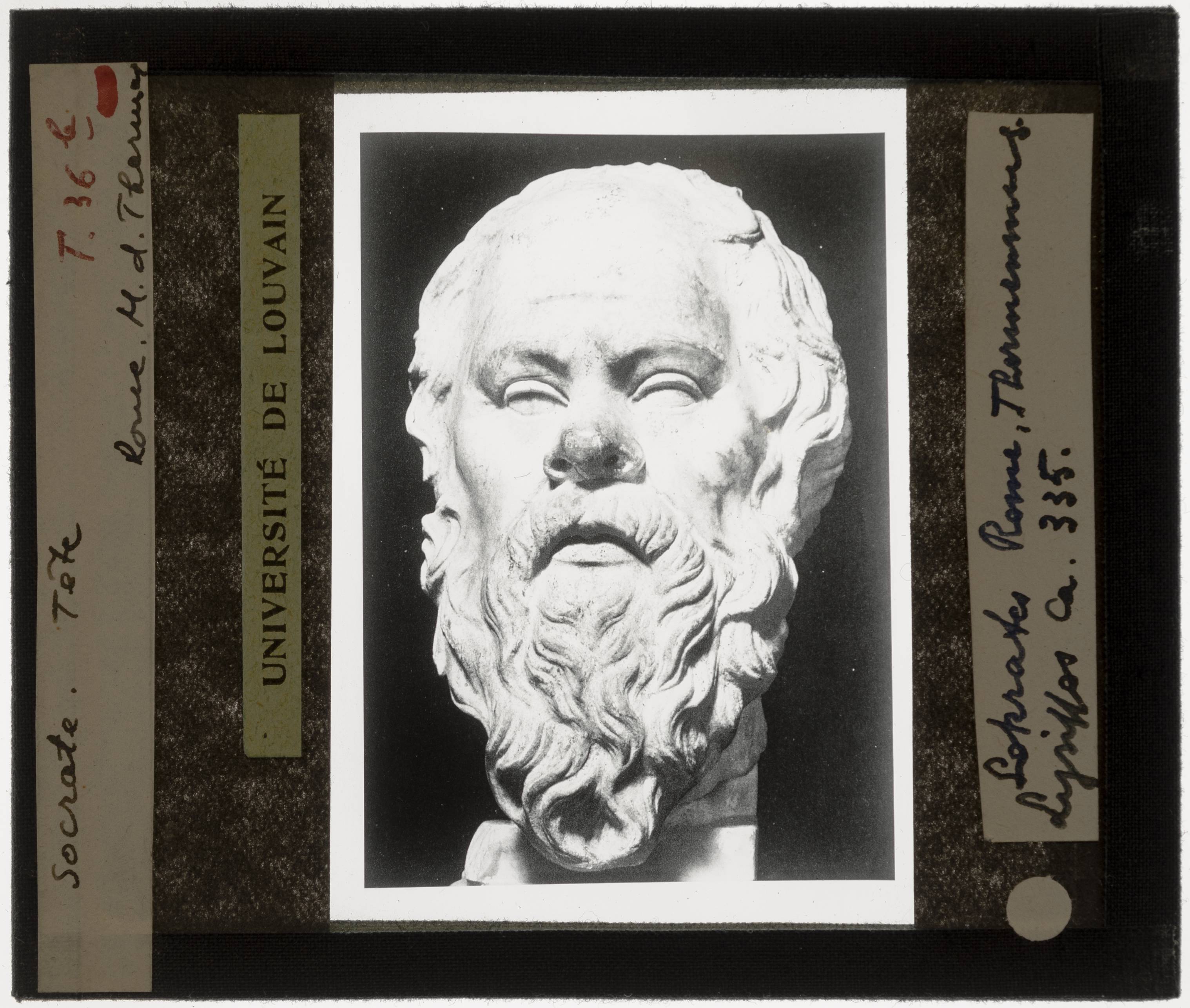
Black-and-white photograph of a white marble bust of a bearded man, shown from the front and slightly turned, with deep-set eyes, a curly beard and hair, against a dark background. The image is a glass lantern slide with labels reading Socrate and Université de Louvain.Photograph

Secondary source

Roman Marble Bust of Socrates

between 1839 and 1939

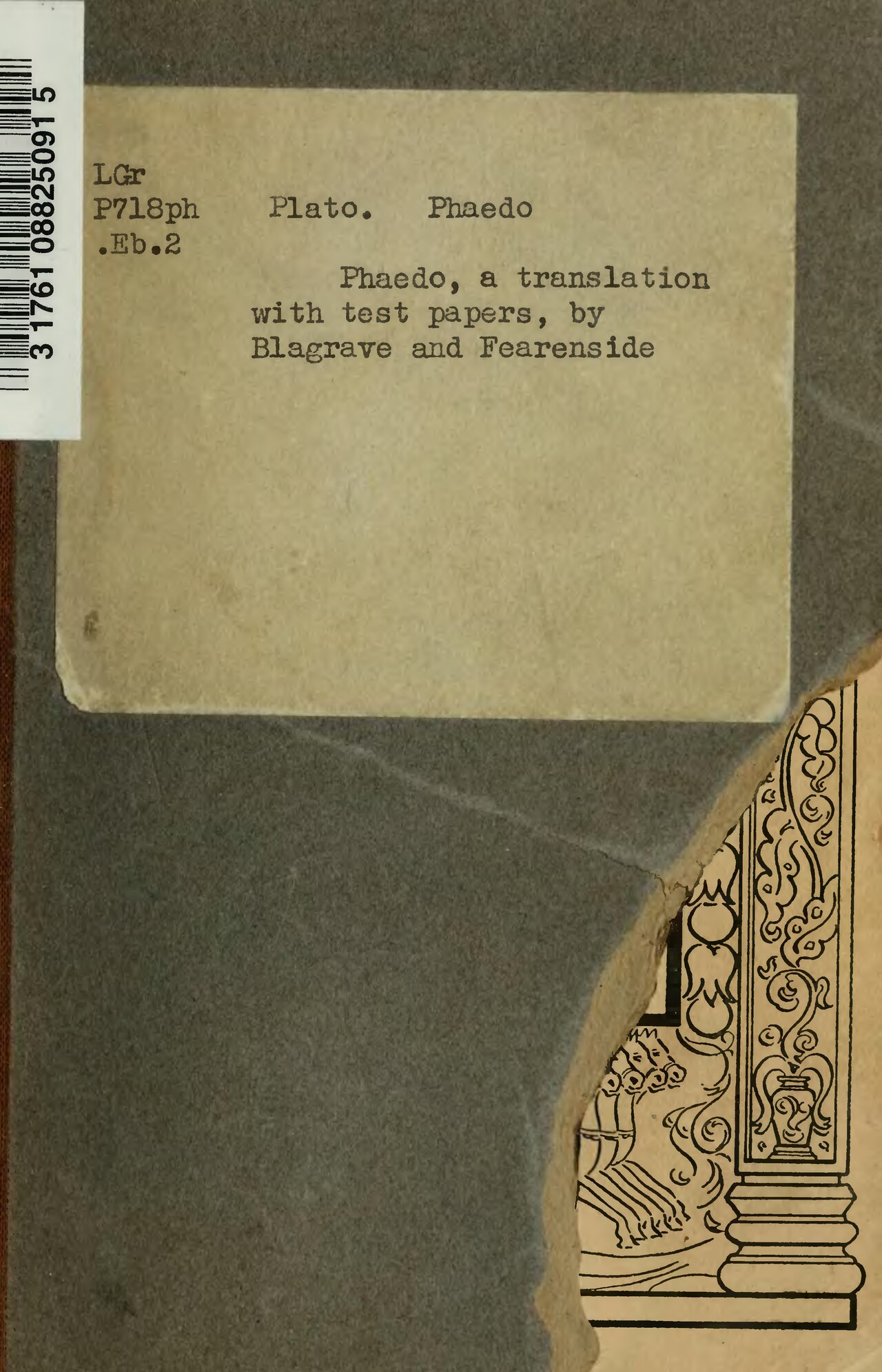
Scanned cover of a book: a gray paper cover with a torn-away corner revealing decorative line-art ornament, and a typed label reading 'LGr P718ph .Eb.2 Plato. Phaedo. Phaedo, a translation with test papers, by Blagrave and Fearenside'. A library barcode runs down the left edge.Book

Secondary source

Phaedo

Plato · c. 360 BC

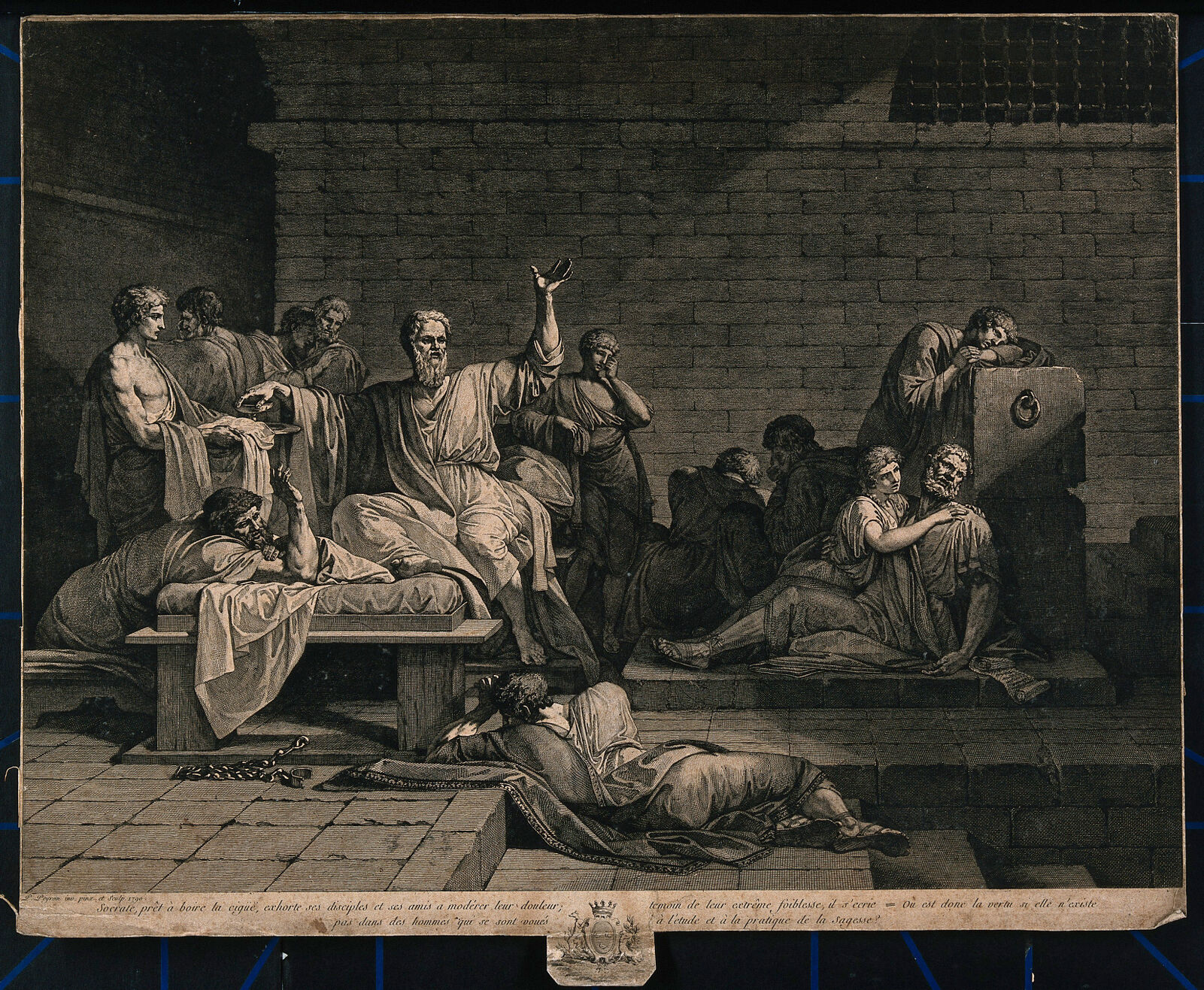
Black-and-white engraving of a bearded man seated on a low bed in a stone prison, raising one arm while a man holds a cup. Other men stand, sit, and lie around him; a woman and a man embrace at right, and a figure lies on the floor at lower center. Chains lie on the floor. French caption text runs along the bottom margin.Painting

Secondary source

Socrates Urging Friends to Restrain Their Grief

Jean-François Pierre Peyron · 1790

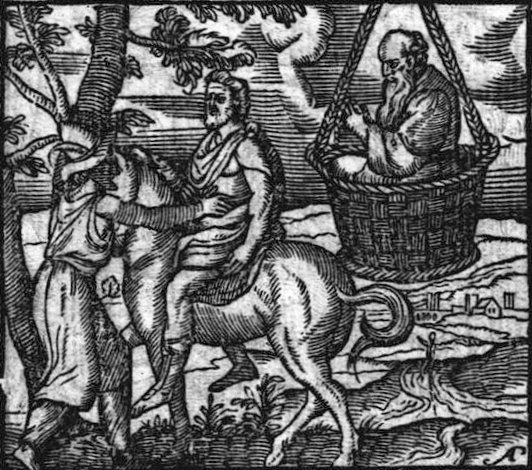
Black and white woodcut. An old bearded man sits in a basket hanging from ropes at right. Beside a tree at left, a robed figure grips a man seated on a horse-like creature. Ground and sky are hatched with lines.Book

Primary source

The Clouds

Aristophanes · 423 BC, revised c. 420-417 BC

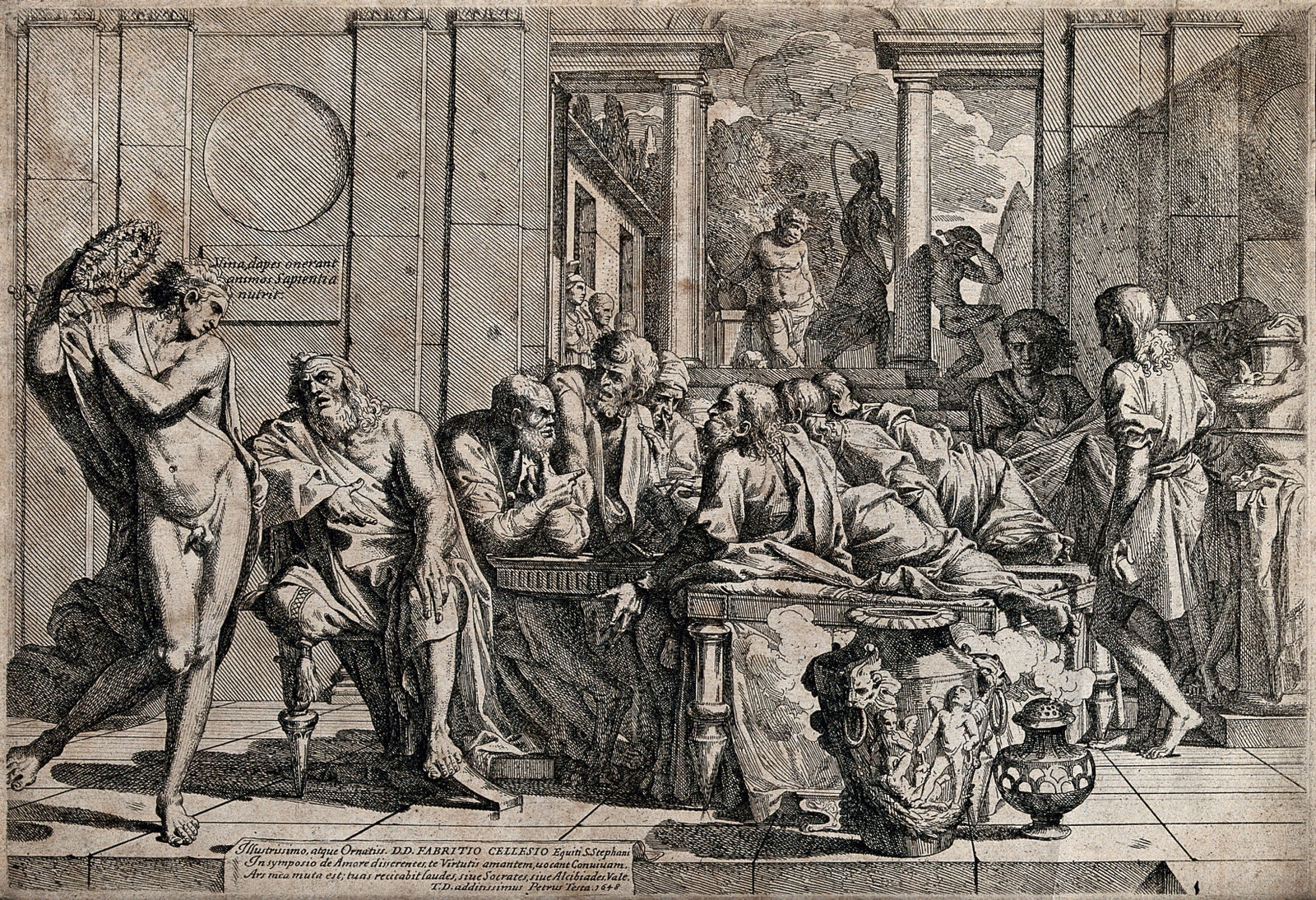
Etching of a symposium scene. On the left, a nude young man crowned with a wreath and holding a cloth enters. Bearded men recline and sit at a table, with a large ornate vase and a censer in the foreground. A statue stands in a colonnade behind. Inscriptions appear on the wall and bottom margin.Painting

Secondary source

The Symposium, with Alcibiades Entering

Pietro Testa · 1648

A plain dark red bound book cover with a vertical spine edge on the left side and faint texture. No title or text is visible.Book

Secondary source

Memorabilia

Xenophon · after 371 BC

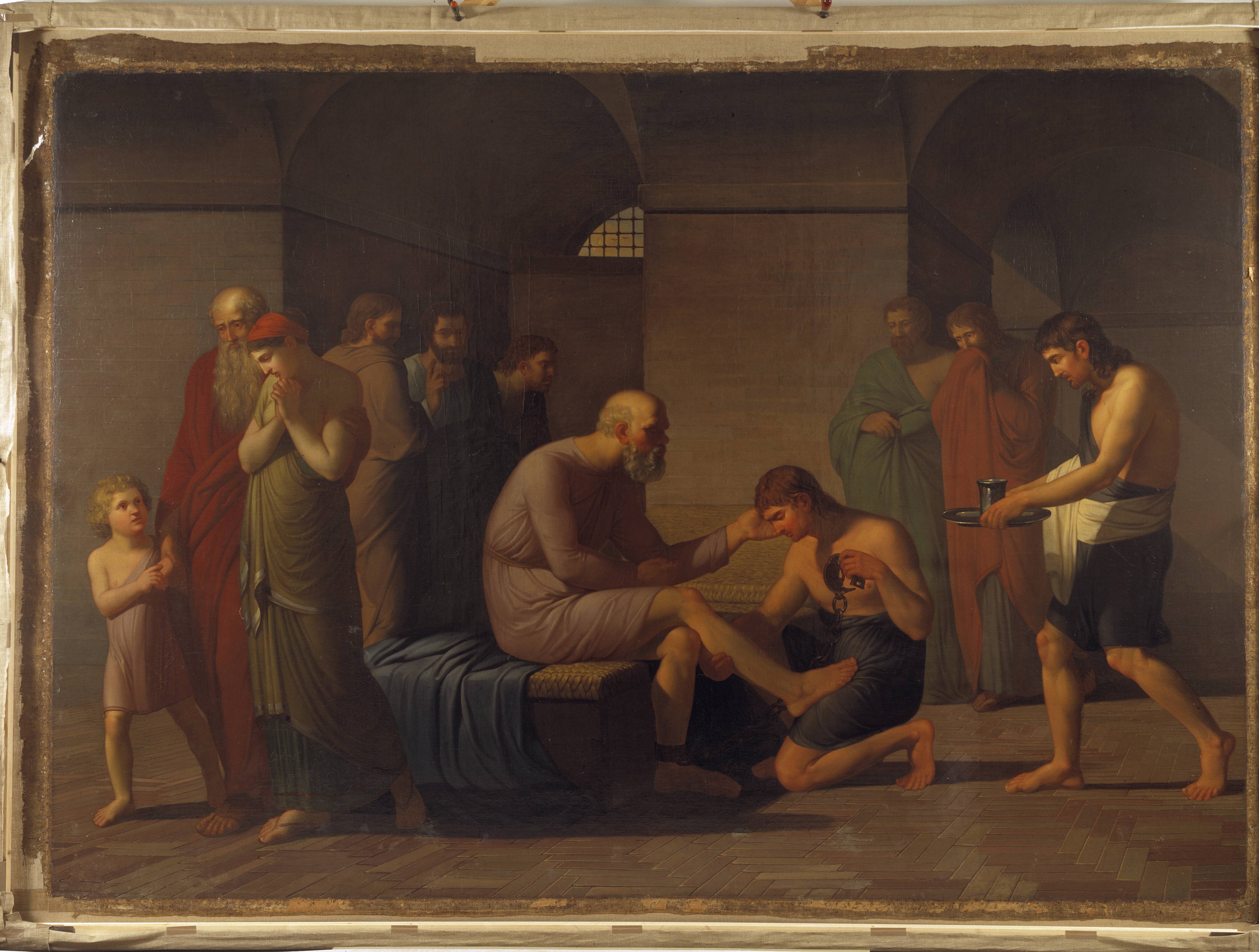
Painting of a prison scene with arched stone walls. An elderly bald, bearded man sits on a bench in a pale robe, touching the leg of a kneeling young man who wears shackles. Onlookers stand around: a child at left, a bearded old man in red, a weeping woman in green, and others, with a servant in a white apron holding a cup on a tray at right.Painting

Secondary source

The Death of Socrates (1808)

1808

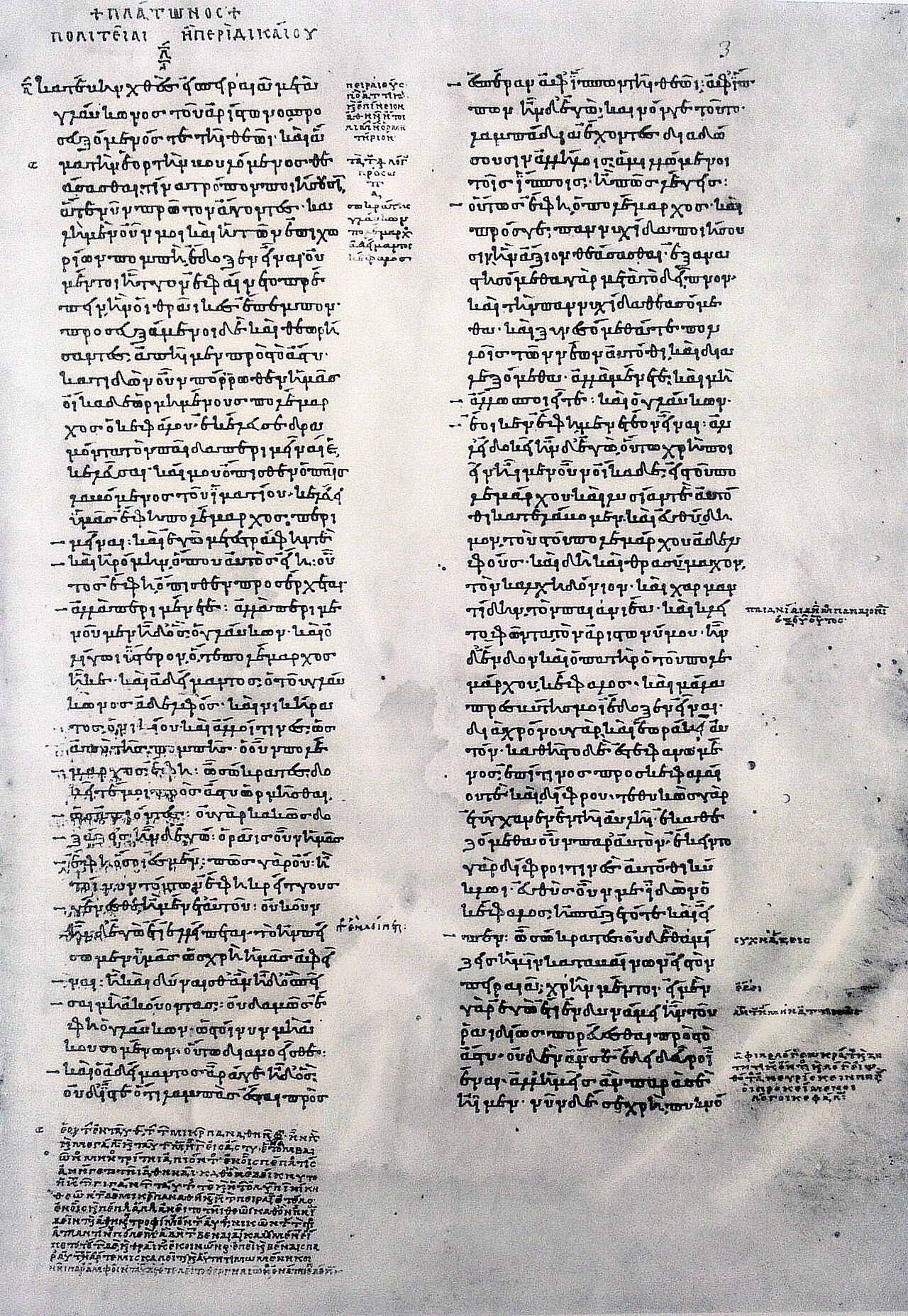
Manuscript page in Greek uncial-style handwriting in two columns on aged parchment, with a title line at top reading Platonos Politeia. Marginal notes and a small block of text appear at the bottom.Book

Secondary source

The Republic

Plato · c. 375 BC

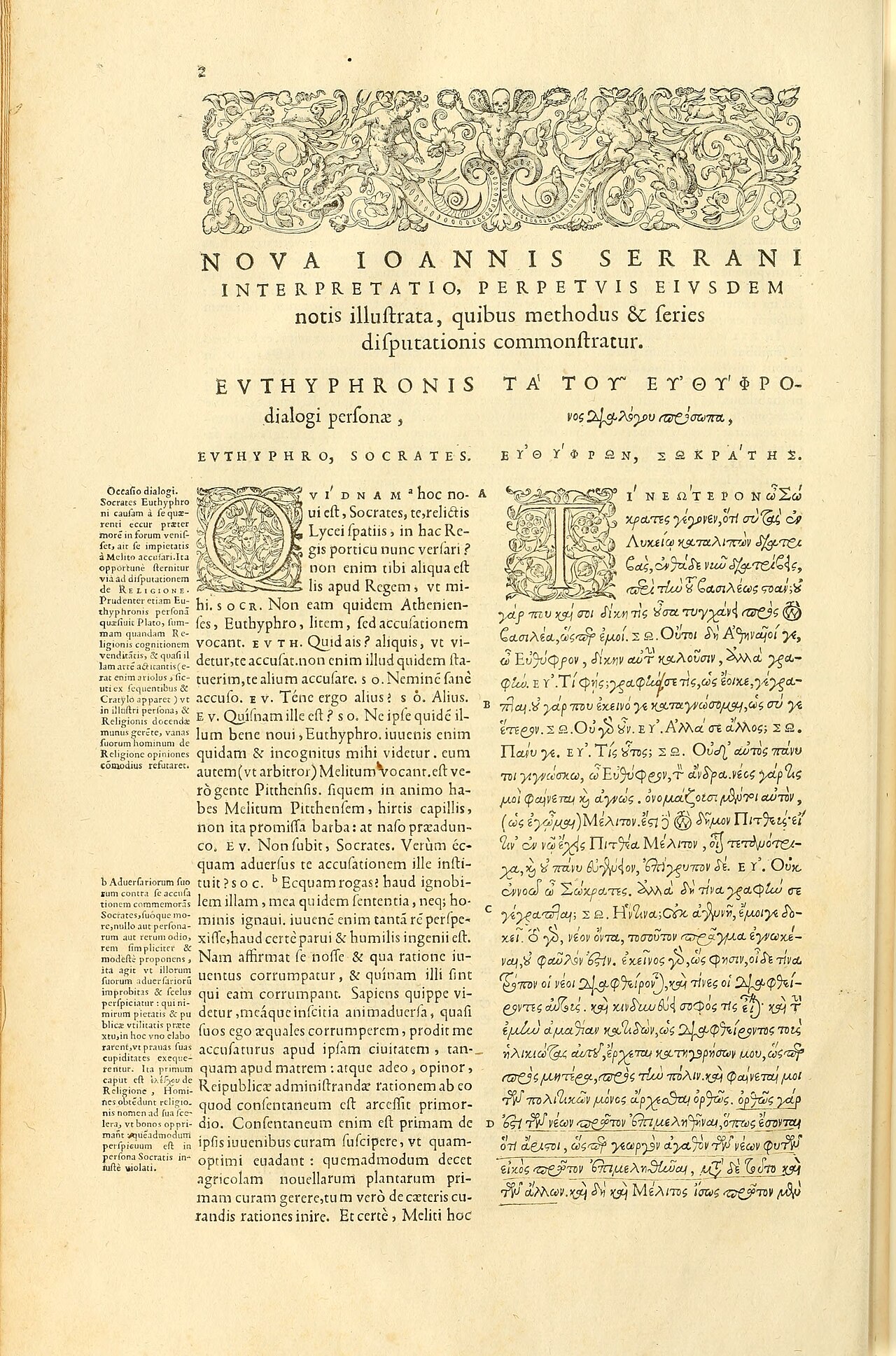
Scanned page 2 of a 1578 edition of Plato's Euthyphro, with a decorative woodcut header, the title 'Nova Ioannis Serrani Interpretatio' in large capitals, Latin and Greek two-column text, and marginal notes in smaller type.Book

Secondary source

Euthyphro

Plato · c. 400 BCE

Book

Secondary source

Apology of Socrates to the Jury

Xenophon · c. 400 BCE

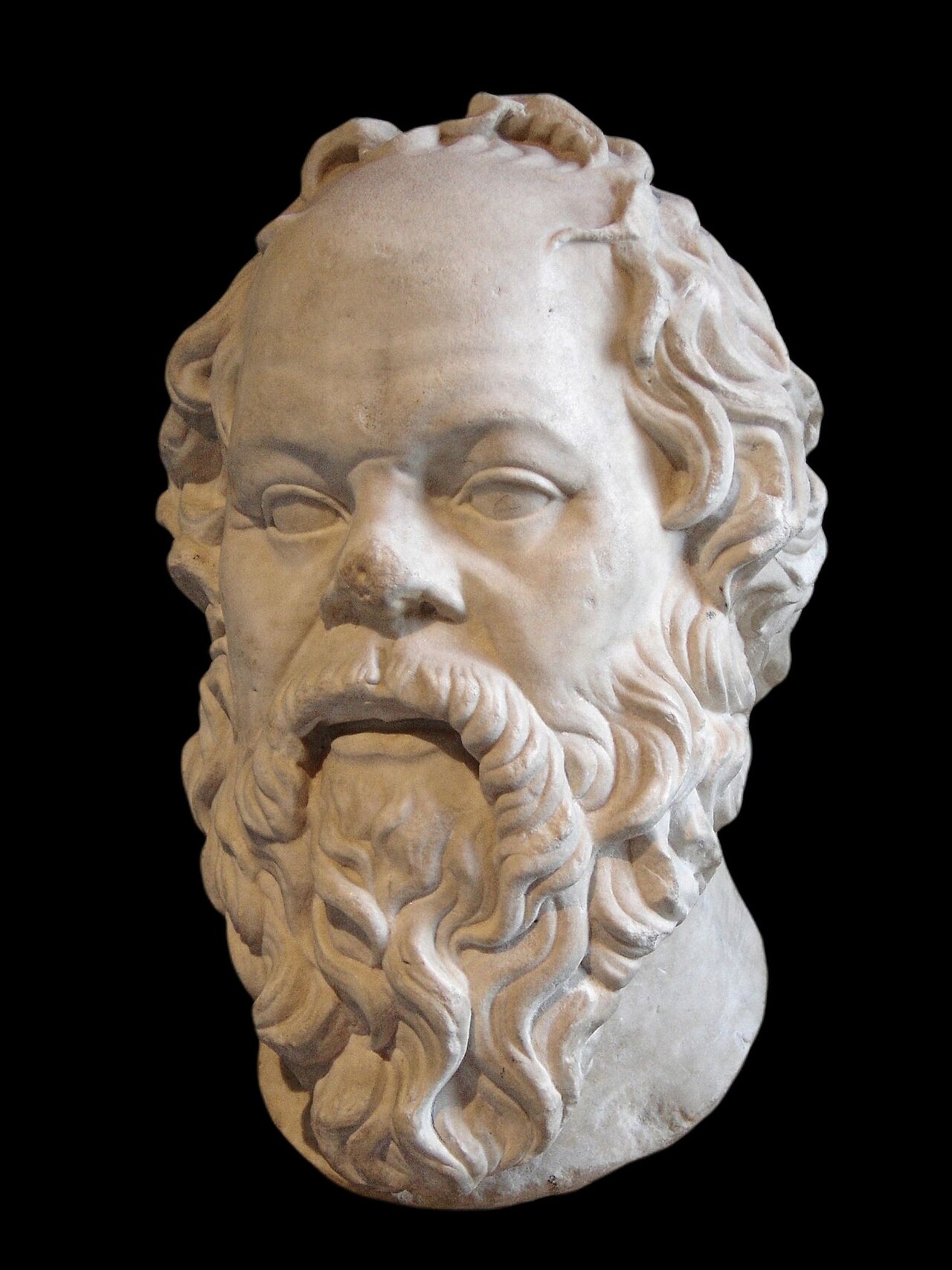
Photograph of a white marble bust of a bearded older man against a black background. The face has deep-set eyes, a broad nose, a full curly beard and moustache, and wavy hair, with a rough, unfinished base.Sculpture

Secondary source

Socrates

1st century CE

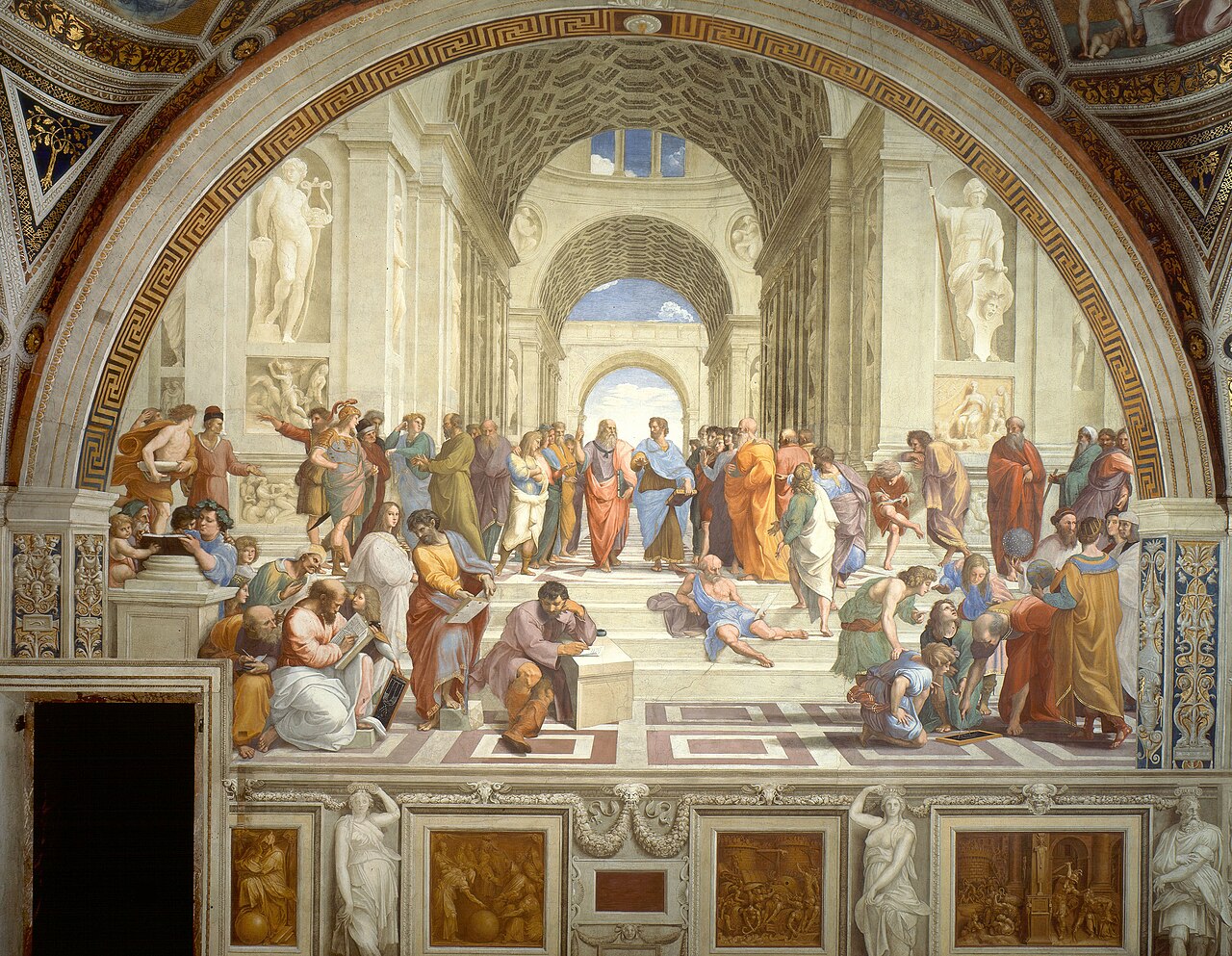
Raphael's fresco The School of Athens: a large Renaissance hall with arched ceiling and statues, filled with robed philosophers and scholars gathered on steps and a tiled floor. Two central figures in red and blue robes walk toward the viewer.Painting

Secondary source

The School of Athens

Raphael · 1509-1511

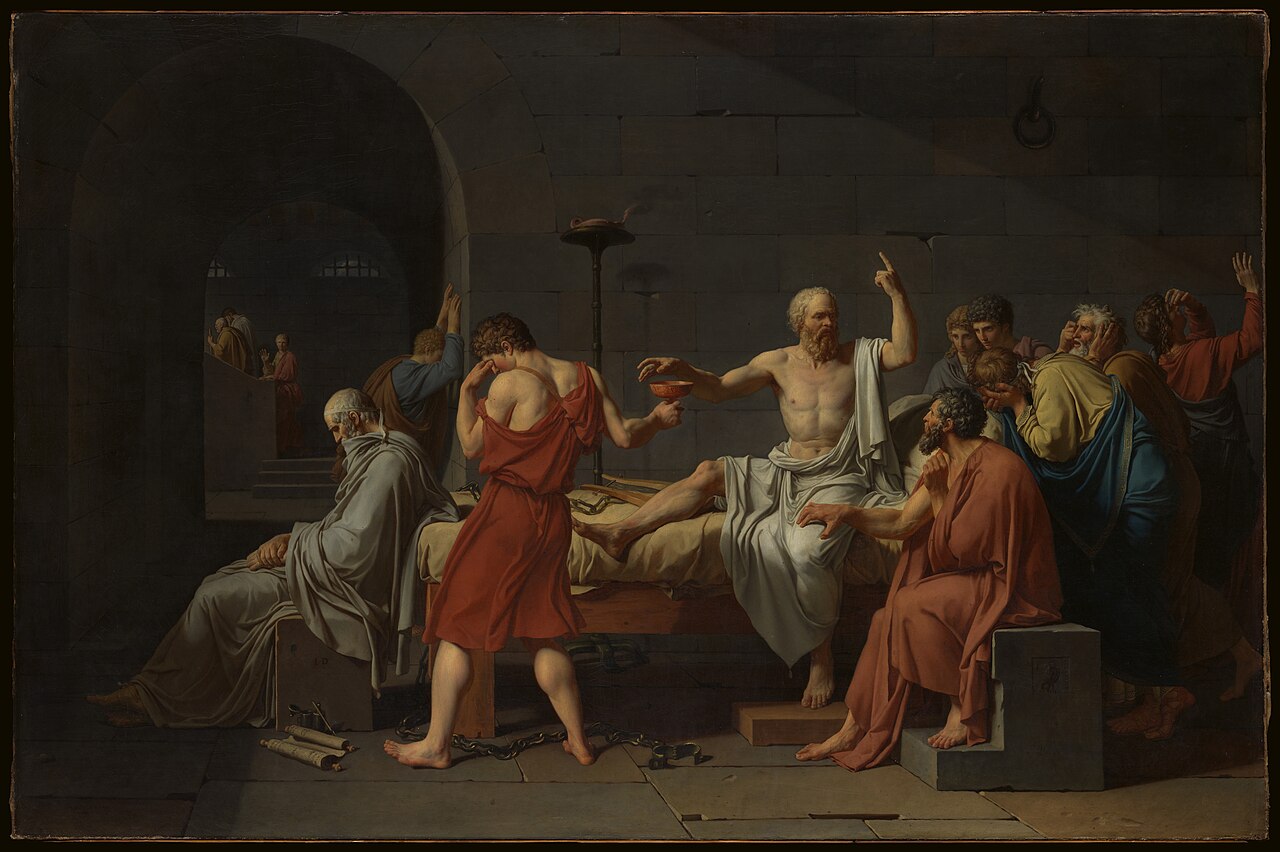
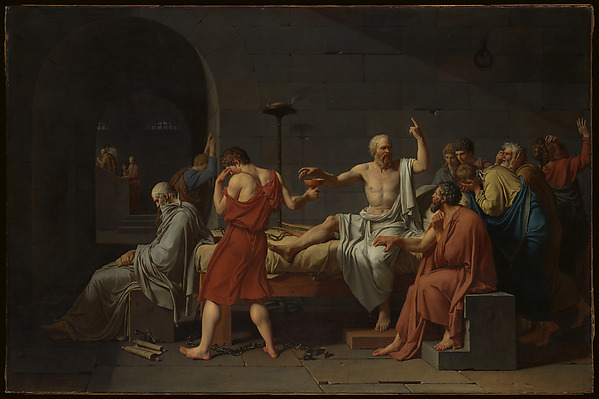
Neoclassical painting of a prison cell with a bare-chested older bearded man seated on a bed, pointing upward and reaching for a cup held by a standing young man in red. Companions sit and stand around him, several showing grief; a chained figure sits at left and an open doorway shows a distant figure.Painting

Secondary source

The Death of Socrates

Jacques-Louis David · 1787

Dark maroon book cover with a faint embossed emblem in the center. A gray Stack Annex label with call number S 052 994 is at top left, and a white barcode label reading A 000 114 435 1 is on the left edge. A light blue label with partial text reading 'nia' is at bottom left.Book

Primary source

The Frogs

Aristophanes · 405 BCE

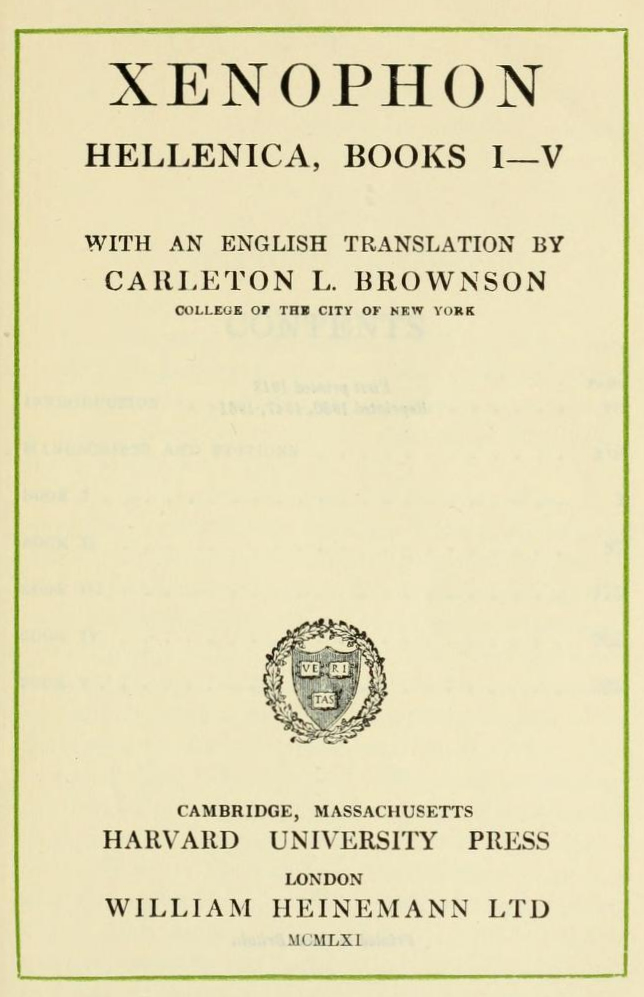
Title page of Xenophon's Hellenica, Books I-V, with an English translation by Carleton L. Brownson, College of the City of New York. Below is a shield emblem with the letters VERI TAS in a laurel wreath. Publisher: Harvard University Press, Cambridge, Massachusetts, and William Heinemann Ltd, London, MCMLXI.Book

Secondary source

Hellenica

Xenophon · 4th century BC

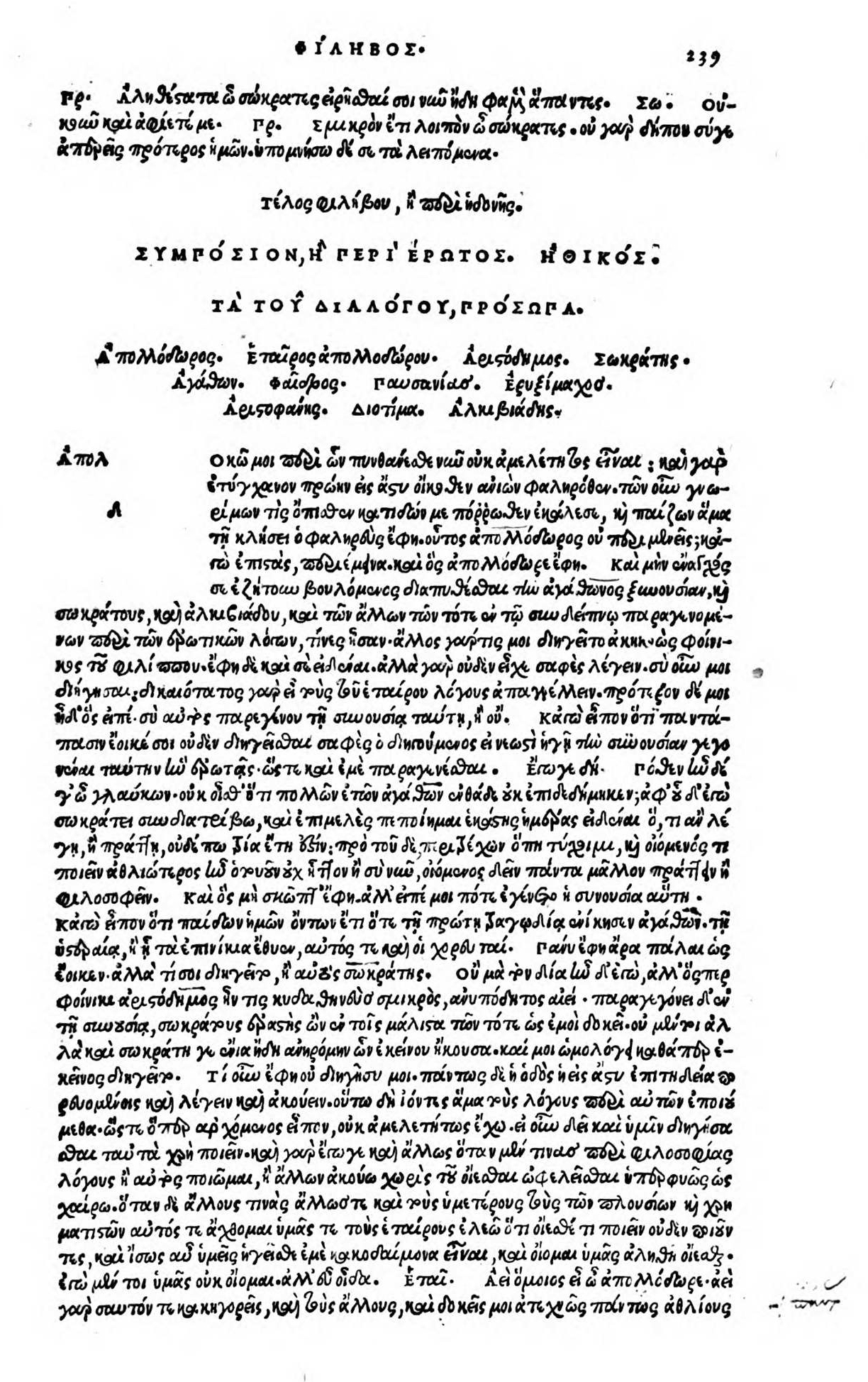
Scanned page numbered 239 from an early printed Greek edition, with Greek text in black type, a centered title line reading 'Symposion' in capitals with a dialogue list of characters beneath, and a running header 'Philebos' at top.Book

Secondary source

Symposium

Plato · c. 385-370 BC

Title page of the 1880 Oxford edition of Plato's Meno, a new translation from the text of Baiter with introduction, marginal analysis and notes. Below is a HathiTrust Public Domain, Google-digitized notice with an orange elephant logo and usage terms.Book

Secondary source

Meno

Plato · c. 385 BC

Book

Secondary source

Lives of the Eminent Philosophers: Socrates

Diogenes Laërtius

Dark blue cloth book cover with a white library barcode label at the upper left. The label reads University of Toronto and the number 3 1761 00594308 9.Book

Secondary source

Gorgias

Plato · c. 380 BC

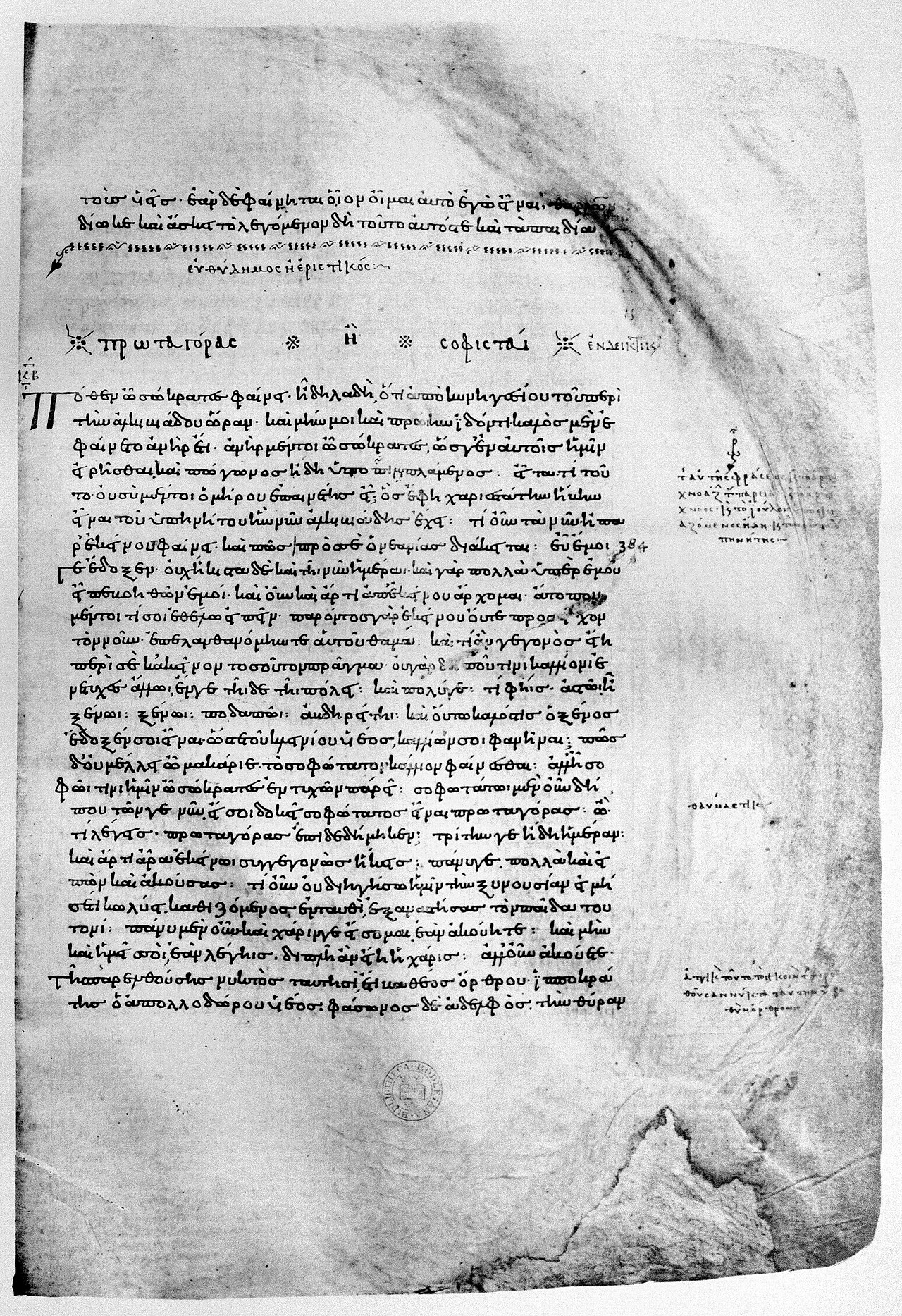
Black-and-white photograph of a manuscript page written in Greek uncial-style script in dark ink on aged parchment, with a heading reading Protagoras and Sophists, a large decorated initial letter at the left, and a round library stamp near the bottom.Book

Secondary source

Protagoras

Plato · 4th century BC

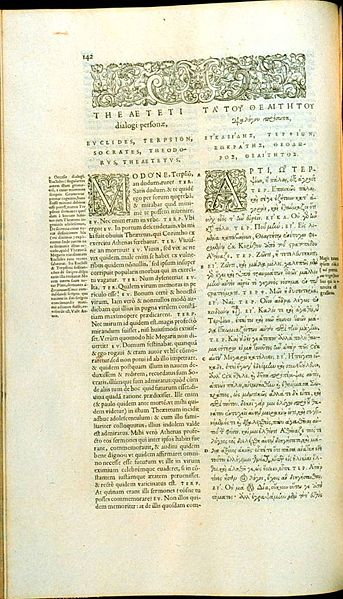
Page 142 of a 1578 printed edition of Plato's Theaetetus, edited by Henri Estienne. Two columns of Greek text run down the page, with a Latin translation in a narrow column on the left. A decorative woodcut ornament and the title lines in Greek and Latin sit at the top, with dialogue speaker names and a large decorative initial letter.Book

Secondary source

Theaetetus

Plato · early-to-middle 4th century BCE (this edition 1578)

Book

Secondary source

Symposium

Xenophon · late 360s BCE

Manuscript page 124 with several dense lines of handwritten Greek text in brown ink on aged, yellowed paper. Marginal marks and a numbered page label appear at the top right.Book

Secondary source

Metaphysics

Aristotle · c. 400 BCE

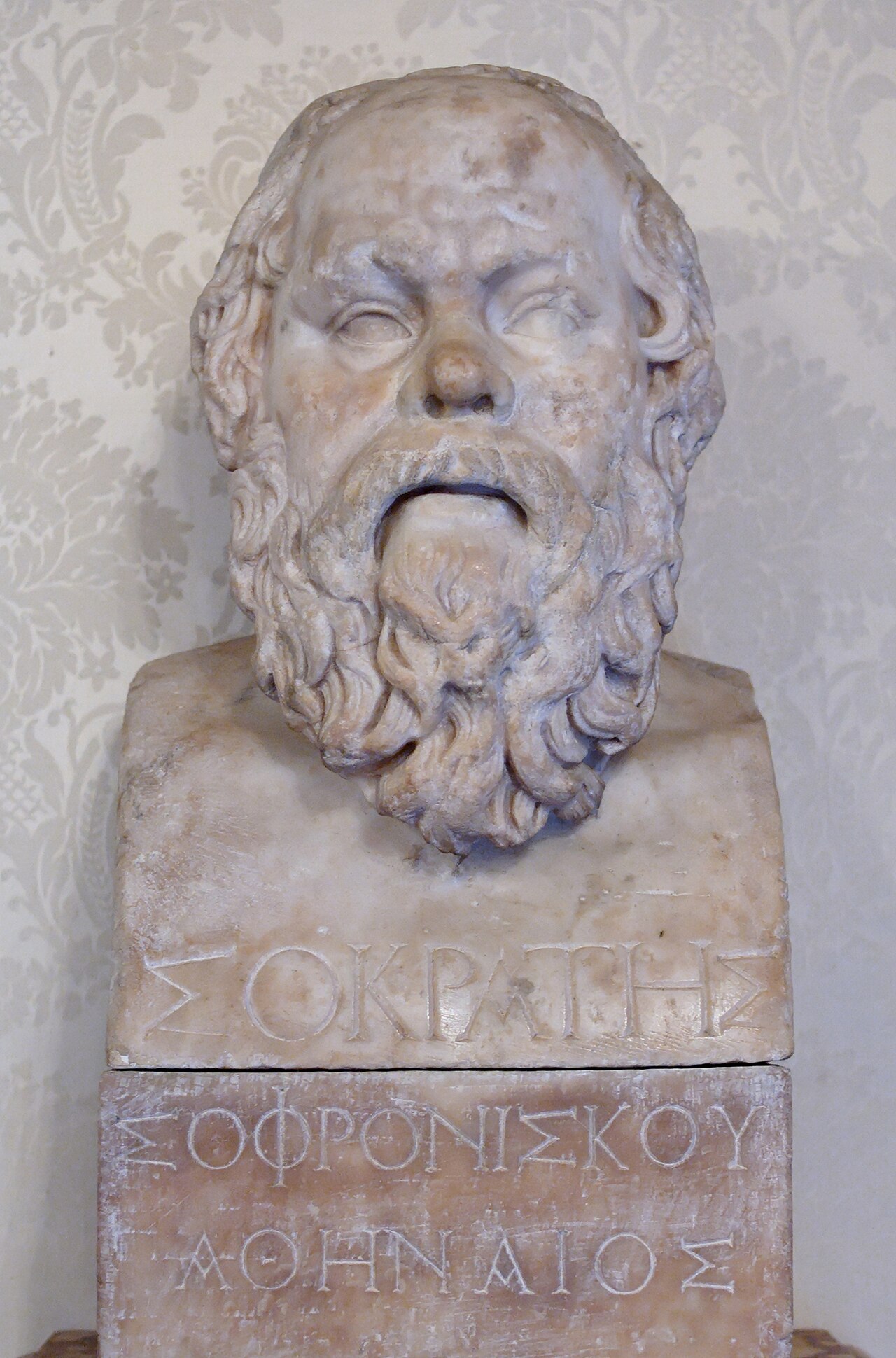
Marble bust of a bearded, balding older man with deep-set eyes and curly hair and beard, on a square pedestal. The base carries Greek inscriptions reading Socrates and Sophroniskos's son, Athenian. A patterned wallpaper stands behind.Sculpture

Secondary source

Socrates bust

Roman copy of a late Hellenistic original

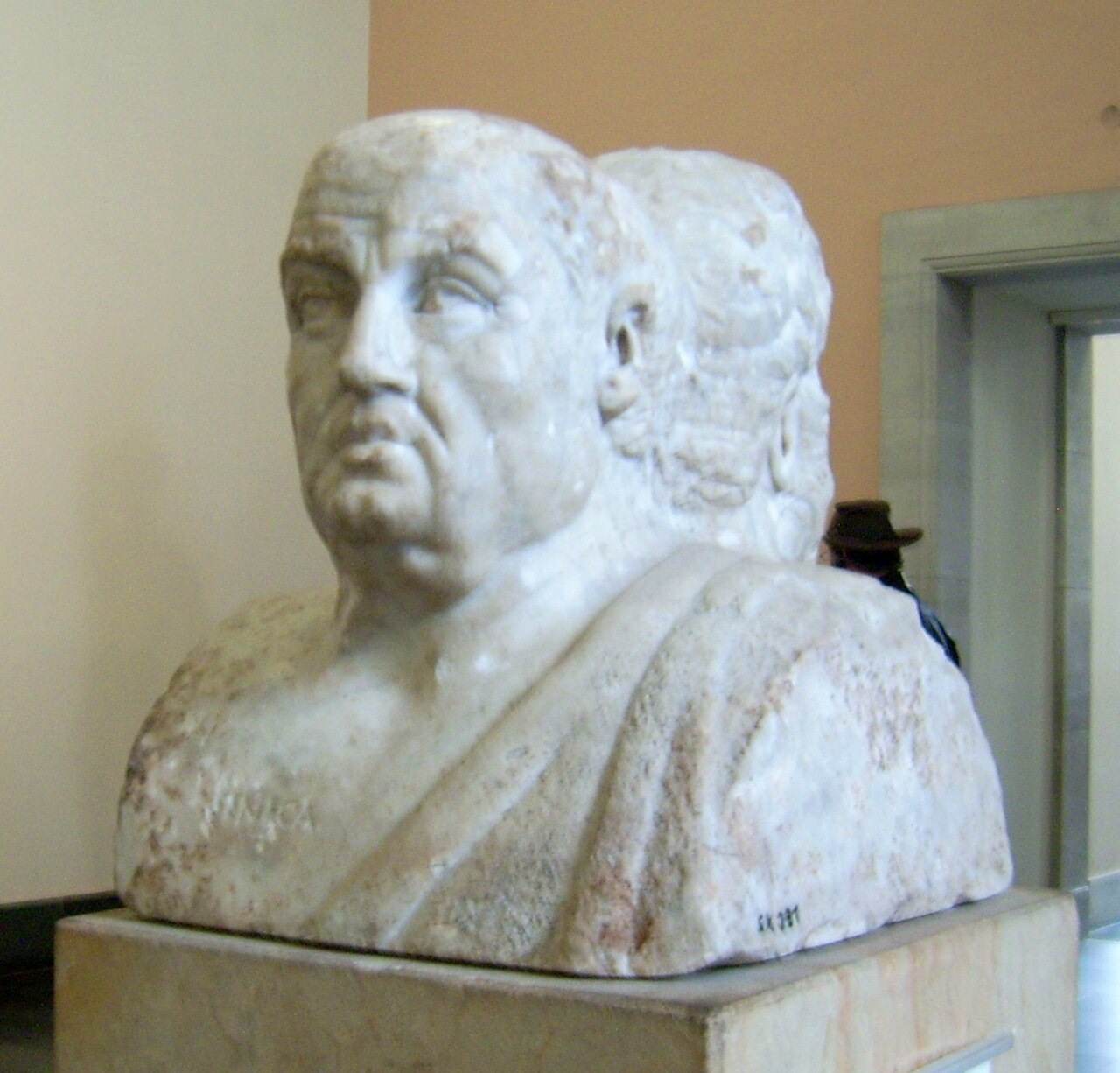
Marble double bust in a museum, showing two bearded and balding male faces joined at the back on one shoulder-length torso draped in a cloak. The front face is older with deep wrinkles; the second face is behind it on the right. Mounted on a pale stone pedestal.Sculpture

Secondary source

Double Herm of Socrates and Seneca

first half of the 3rd century AD

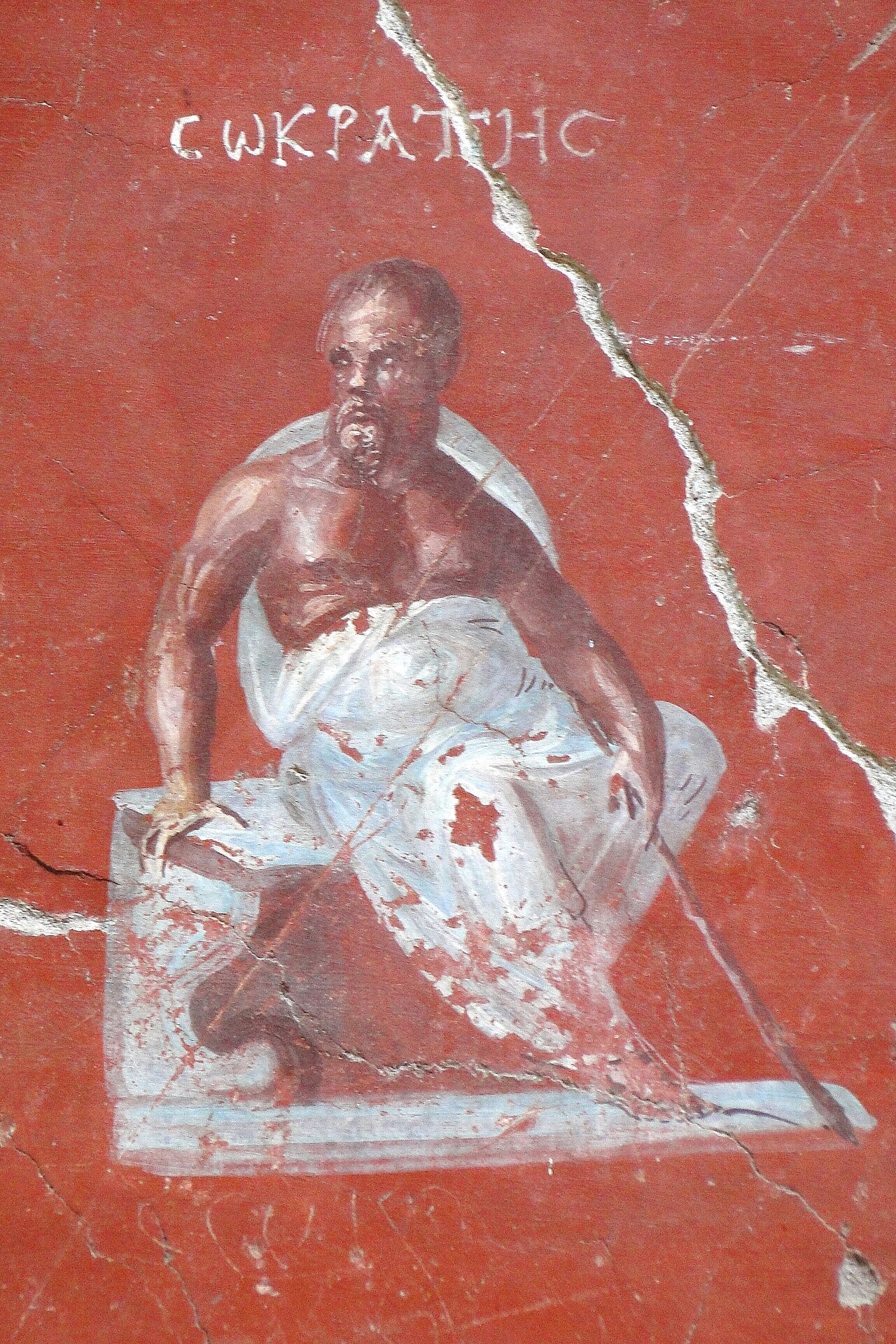
Ancient fresco on a red wall showing a seated bearded man with bare upper body and white draped cloth, resting one arm on a stone block, with Greek lettering reading SOKRATES above him. The plaster is cracked and worn.Painting

Secondary source

Fresco of Socrates from Ephesus

Unknown Roman painter · 1st century AD

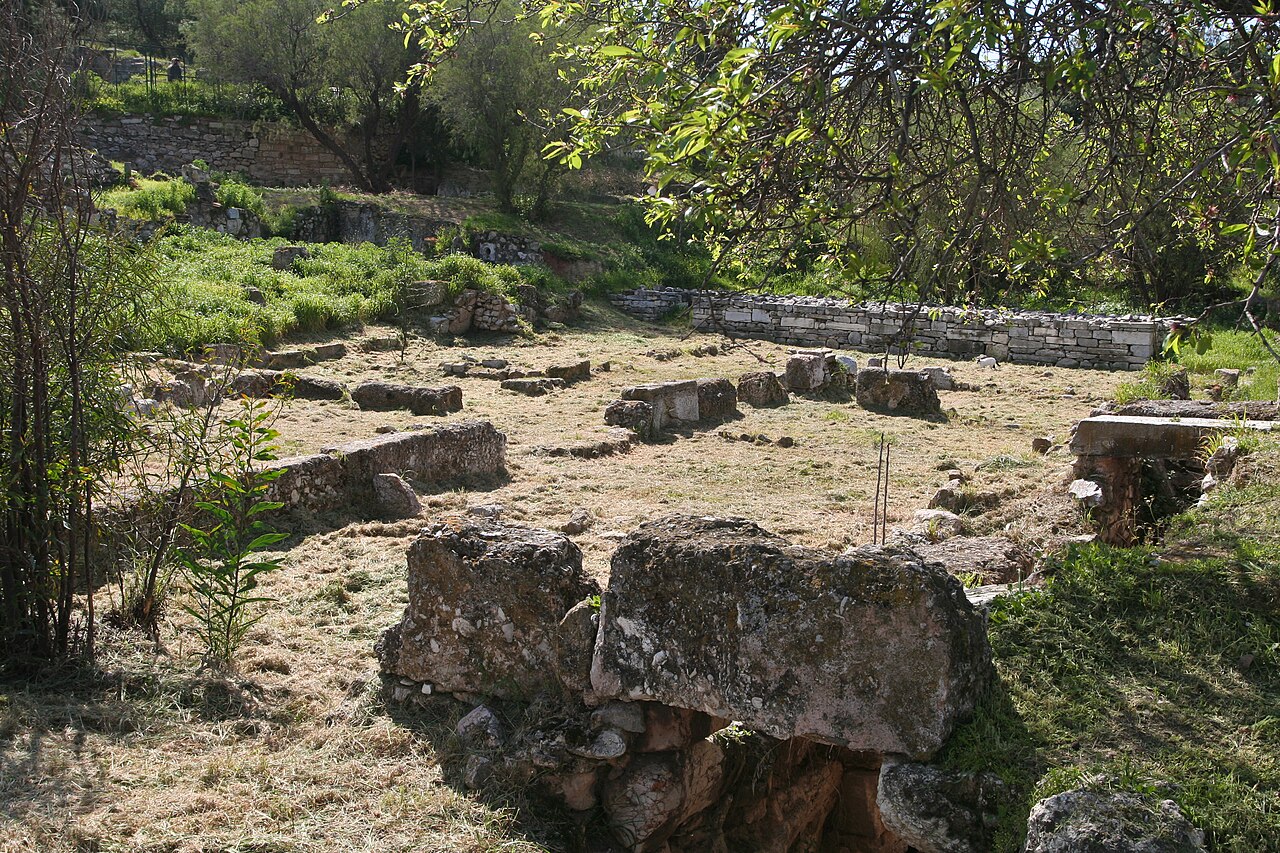
Outdoor view of ancient stone foundations and low walls on dry grass, with large weathered rectangular blocks in the foreground and a stone retaining wall and trees behind. This is the site of the ancient Athenian State Prison.Artifact

Secondary source

State Prison in the Athenian Agora

Athenian state · 5th century BC

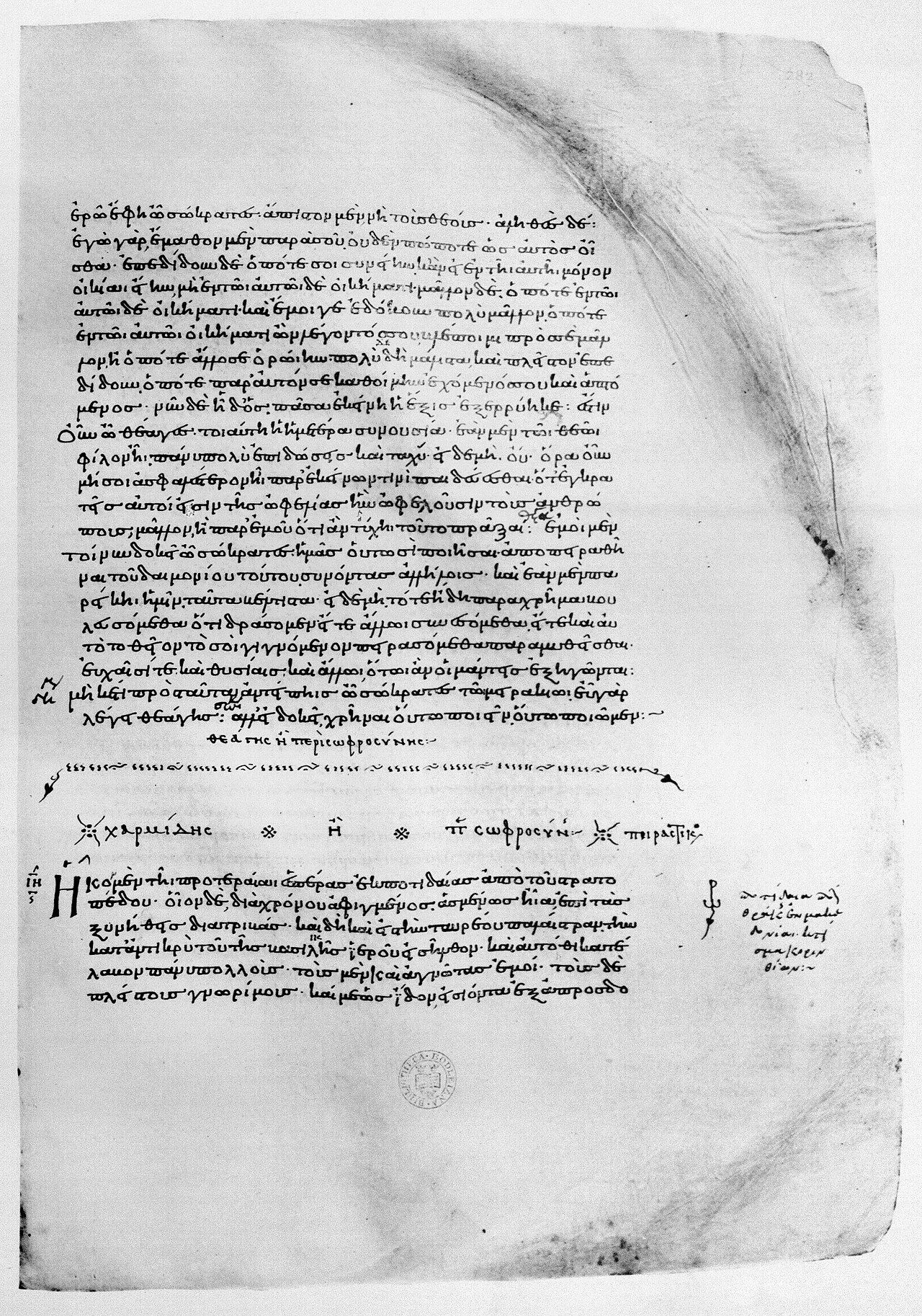
Black-and-white scan of a manuscript page written in dense Greek uncial-style script in several lines, with a decorated heading reading Charmides and a marginal note at right. A faded stain sweeps across the upper right corner, and a round library stamp sits near the bottom center.Book

Secondary source

Charmides

Plato · c. 5th-4th century BC

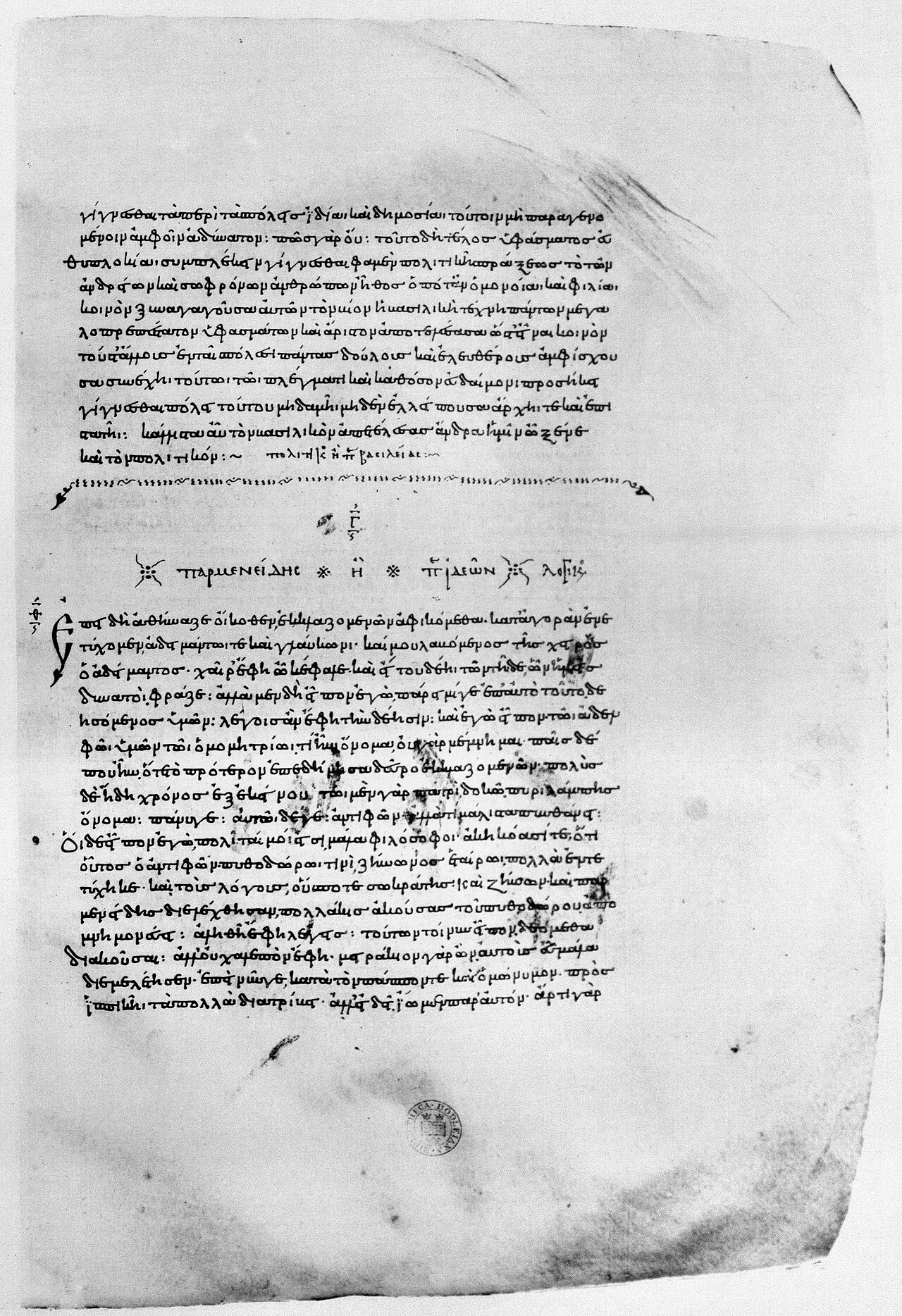
Black-and-white scan of a manuscript page written in Greek uncial-style handwriting in dark ink, with a decorative marginal line and a section heading in the middle, and a circular library stamp near the bottom. Text fills most of the page.Book

Secondary source

Parmenides

Plato · c. 5th-4th century BC

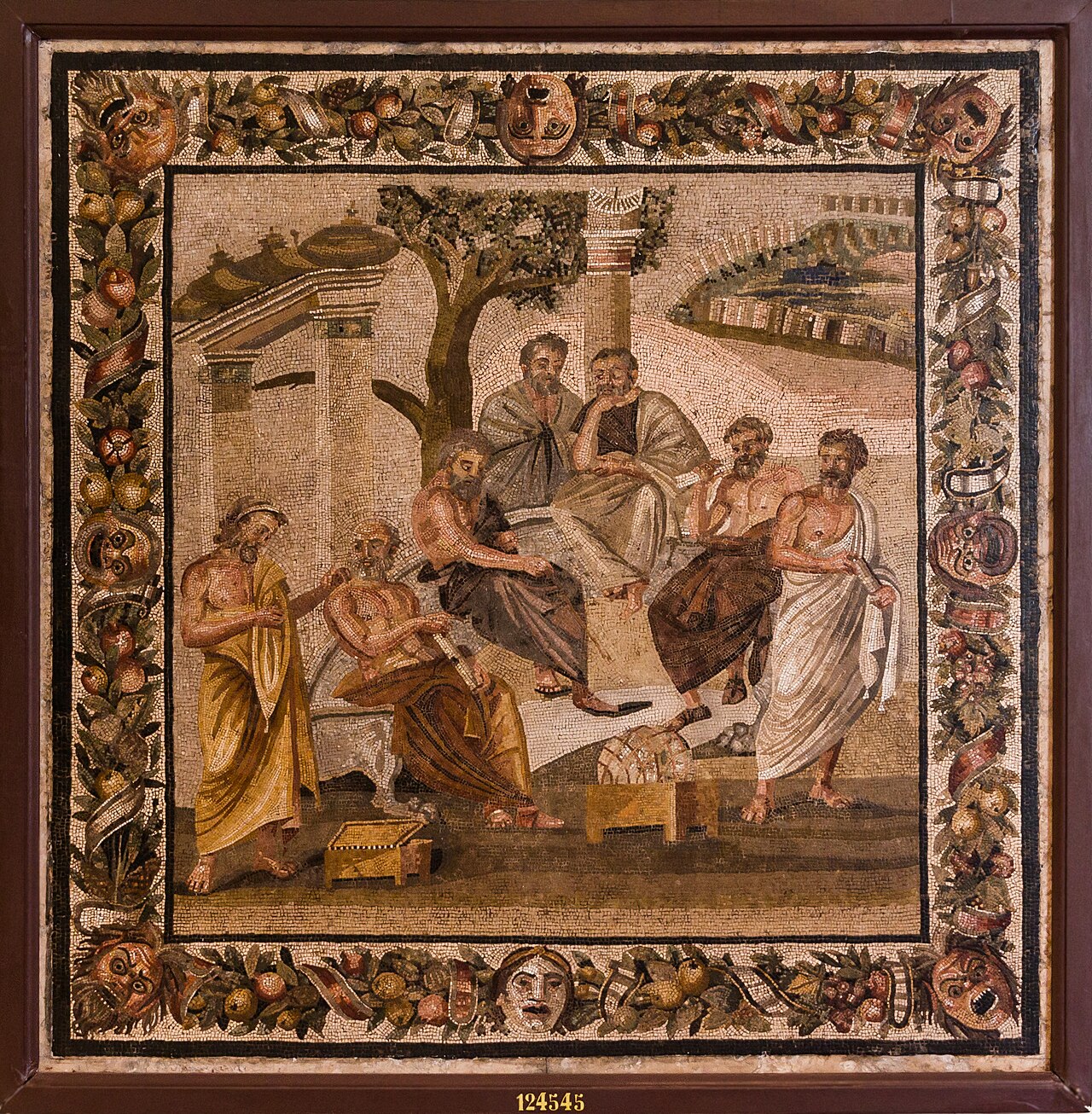
Framed Roman mosaic showing a group of bearded philosophers in a garden beneath a tree and a column, with a wooden table, a box, and a bundle of scrolls. A decorative border of fruit, leaves, and theatrical masks surrounds it. Museum label 124545 at bottom.Artifact

Secondary source

Plato's Academy mosaic

c. 1st century BC/AD

Book

Secondary source

Oeconomicus

Xenophon · after 362 BC

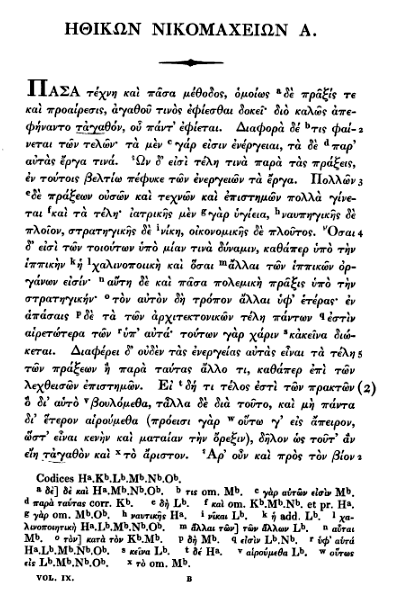
Scanned printed page of Greek text titled ΗΘΙΚΩΝ ΝΙΚΟΜΑΧΕΙΩΝ Α (Nicomachean Ethics, Book I), with opening Greek paragraph, large initial letter, and critical apparatus footnotes at the bottom listing manuscript variants; page marked VOL. IX and page number 8.Book

Secondary source

Nicomachean Ethics

Aristotle · 4th century BC

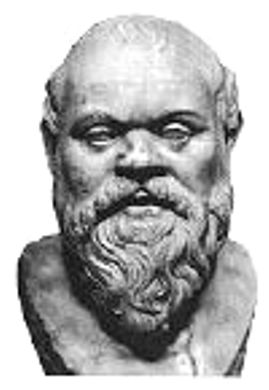
Black-and-white photograph of a marble bust of a bearded older man with a bald, furrowed forehead, deep-set eyes, a flat broad nose, and a thick curly beard, shown from the chest up.Sculpture

Secondary source

Socrate silenico

Trajanic era, early 2nd century AD

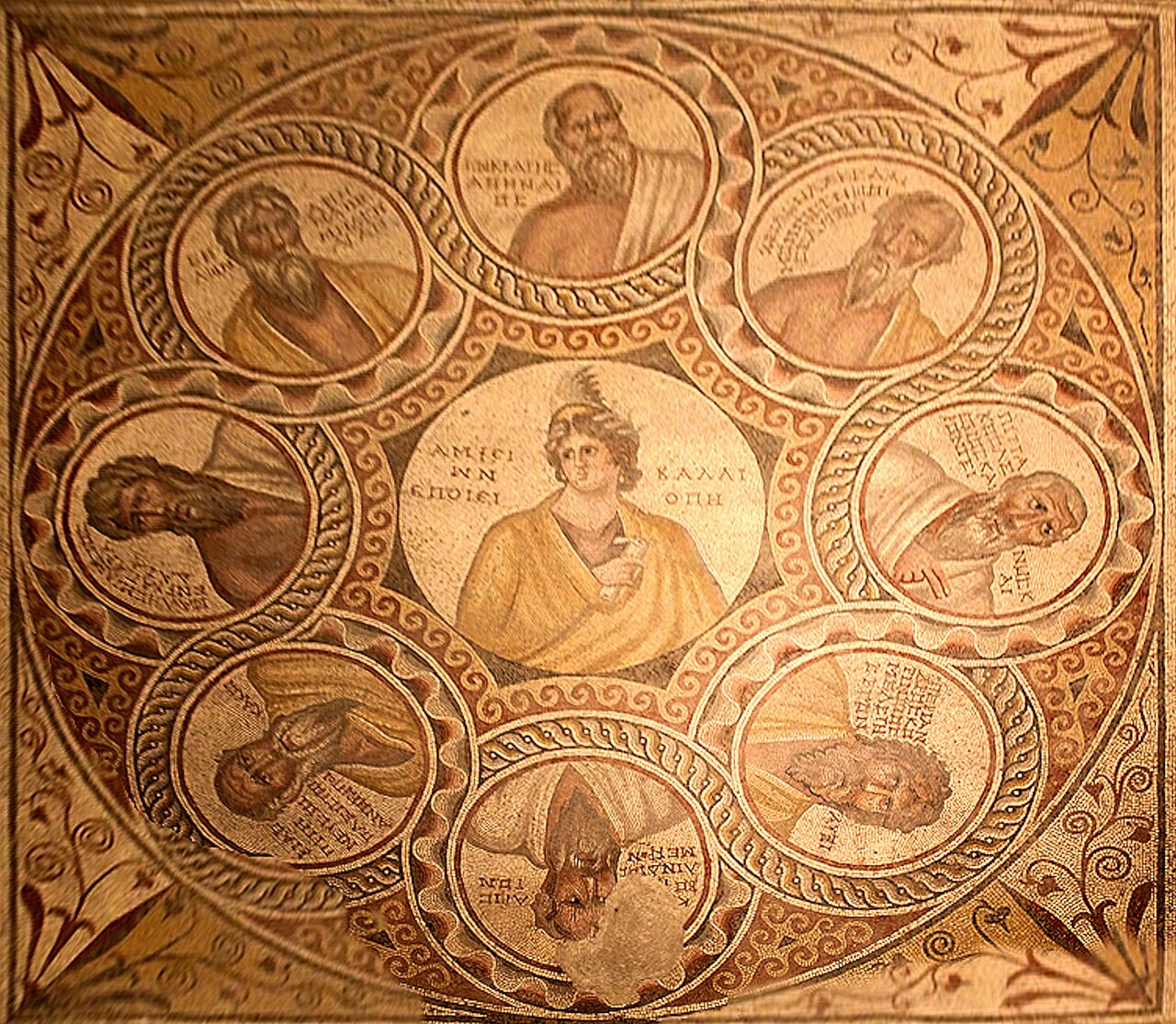
Photograph of a floor mosaic showing the Seven Sages of Baalbek. A central medallion depicts a figure with a wreath-like headdress holding a scroll, surrounded by seven circular medallions with bearded and older figures, bordered by ornate scroll and rope patterns in brown and ochre tones.Artifact

Secondary source

Seven Sages Mosaic of Baalbek

3rd century AD

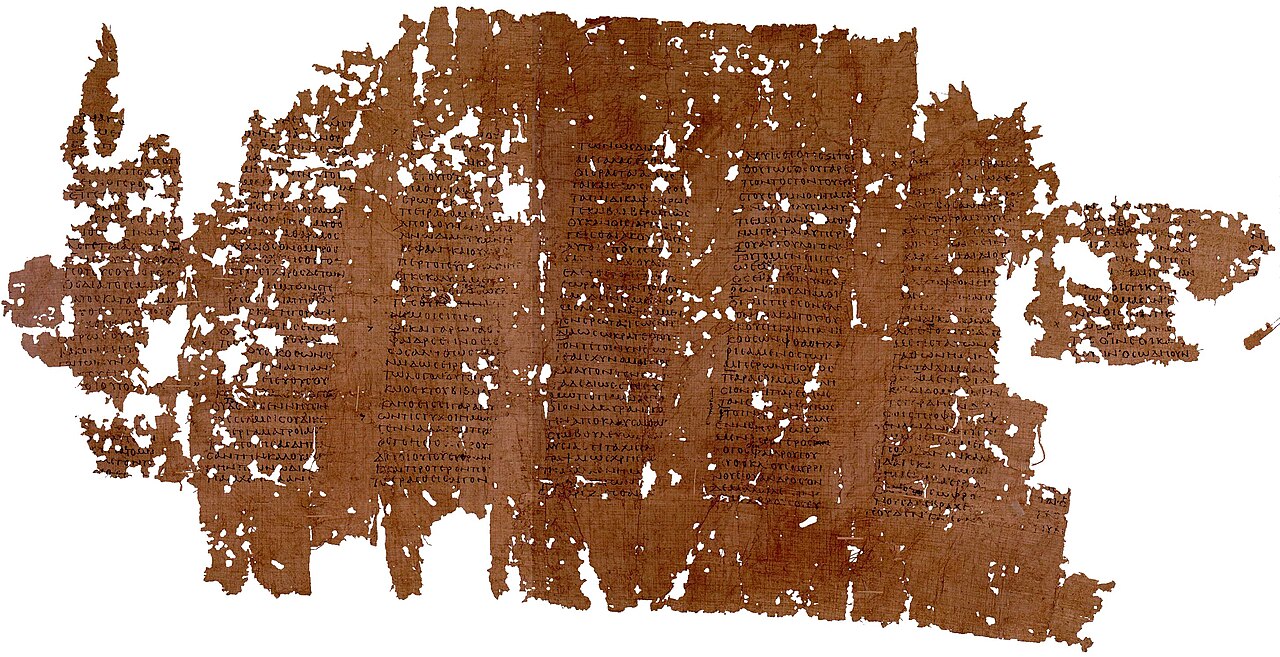
A brown papyrus fragment with columns of small dark Greek handwriting, heavily perforated with holes and torn edges, set against a white background. Several columns of text are visible across the sheet.Book

Secondary source

Phaedrus

Plato · c. 370 BC

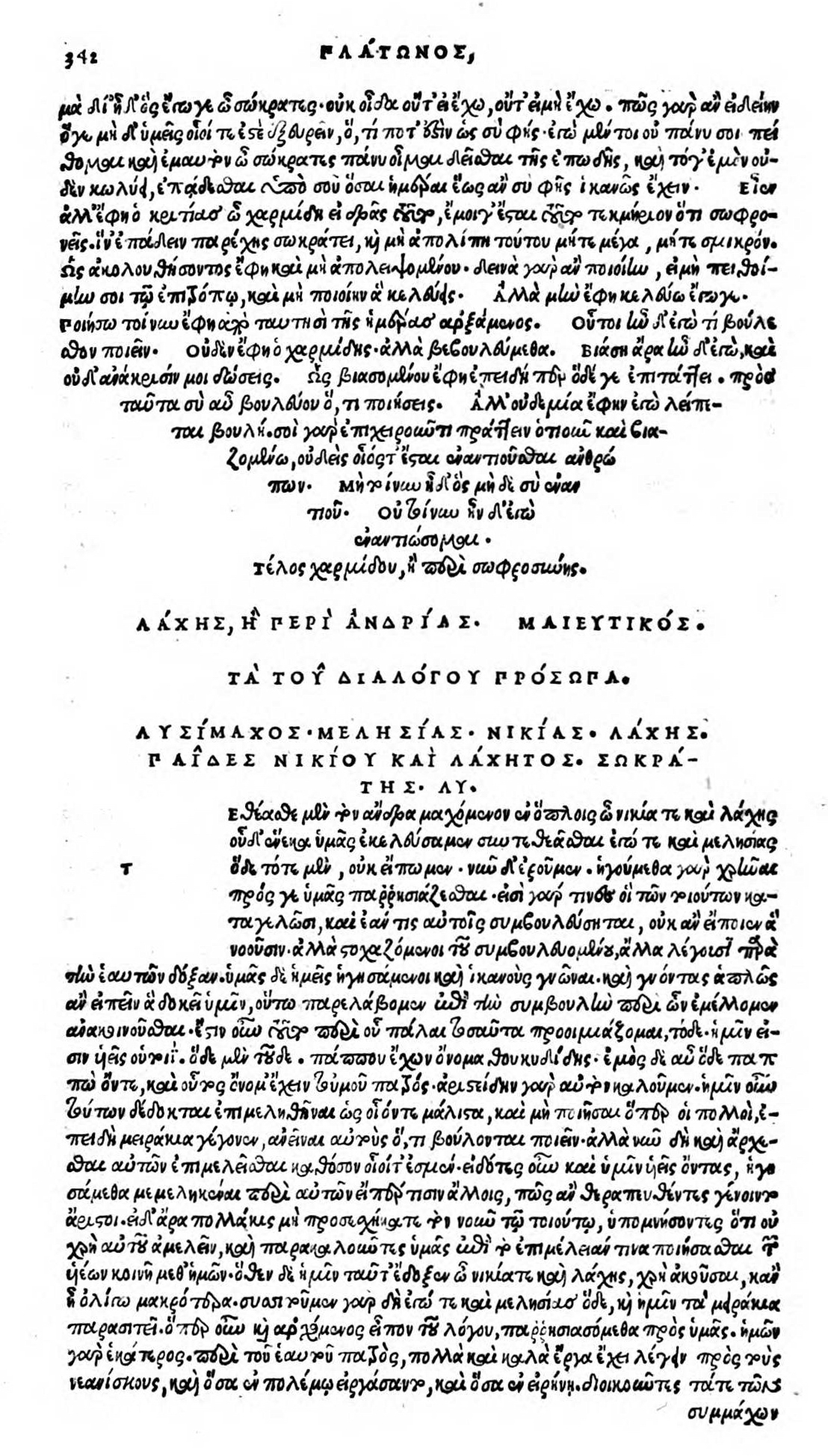
Printed page numbered 342 with running header 'PLATONOS' in Greek type, showing dense Greek text, a centered title line 'ΛΑΧΗΣ, Η ΠΕΡΙ ΑΝΔΡΙΑΣ. ΜΑΙΕΥΤΙΚΟΣ' and a list of dramatis personae, followed by the opening lines of the dialogue.Book

Secondary source

Laches

Plato · 4th century BC

Letter

Secondary source

Seventh Letter

Plato · after 353 BC

Title page of Xenophon's Anabasis, with an English translation by Carleton L. Brownson, published by Harvard University Press in Cambridge, Massachusetts and London, England. A Loeb Classical Library seal with a seated figure appears in the center.Book

Primary source

Anabasis

Xenophon · c. 370 BC

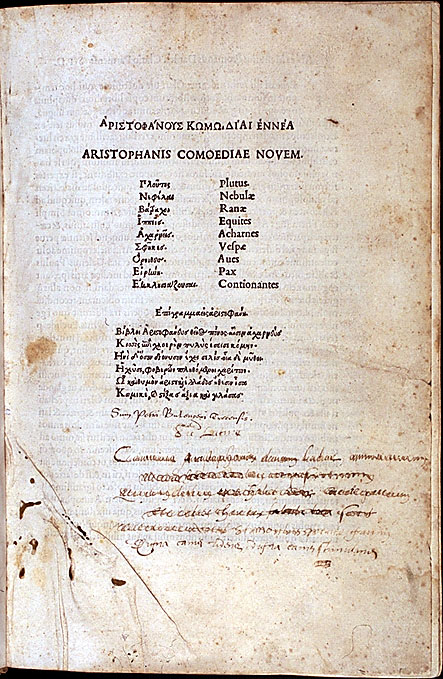
Title page of the 1498 Aldine edition of Aristophanes in Greek and Latin, listing nine comedies including Plutus, Nebulae, Ranae, Equites, Acharnes, Vespae, Aves and Pax, with Greek verses and handwritten annotations below.Book

Primary source

The Birds

Aristophanes · 414 BC

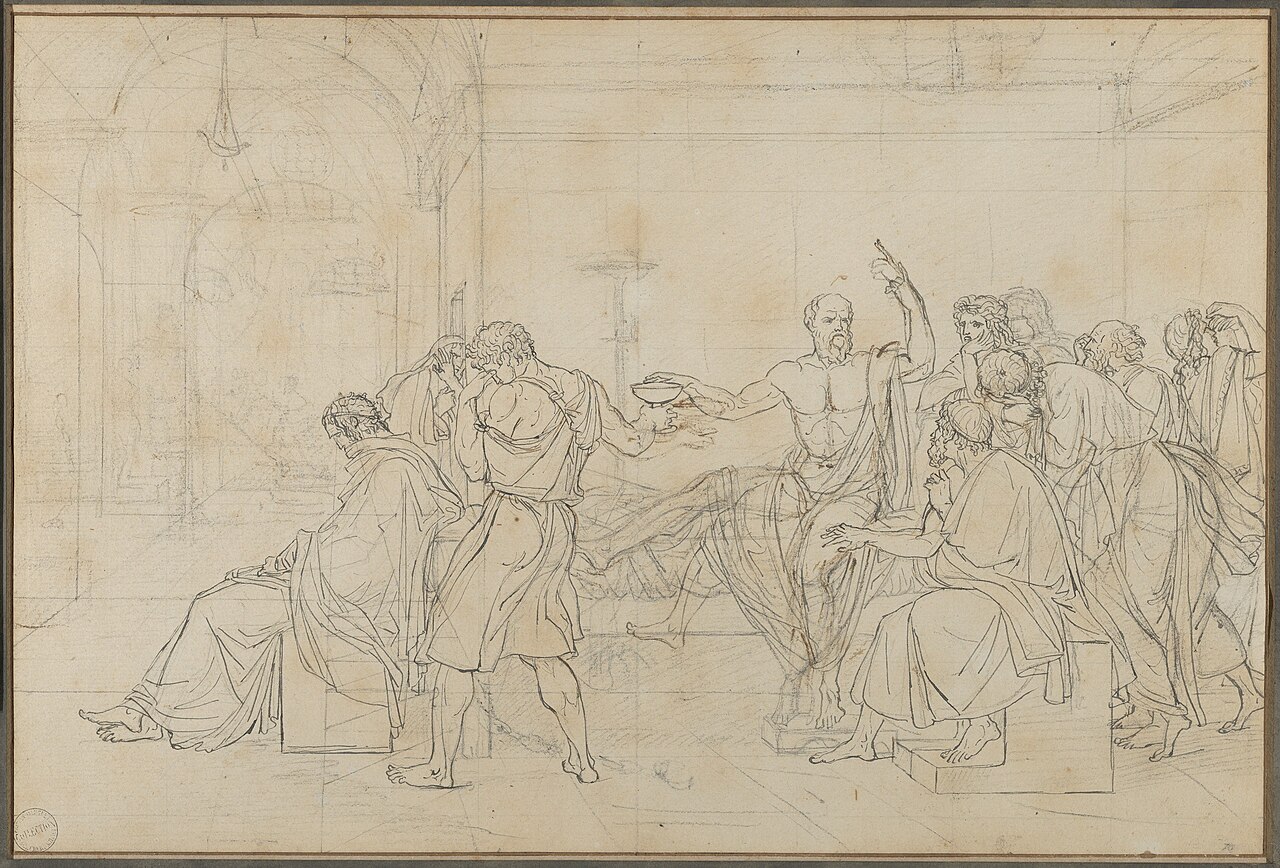
Pen and ink sketch of a classical scene: a bald, muscular man reaches for a cup in a columned hall while a figure raises a finger. Seated and standing mourners in draped robes surround him, one figure is bent over in grief, and arches are visible on the left.Painting

Secondary source

The Death of Socrates (drawing)

Jacques-Louis David · 1786

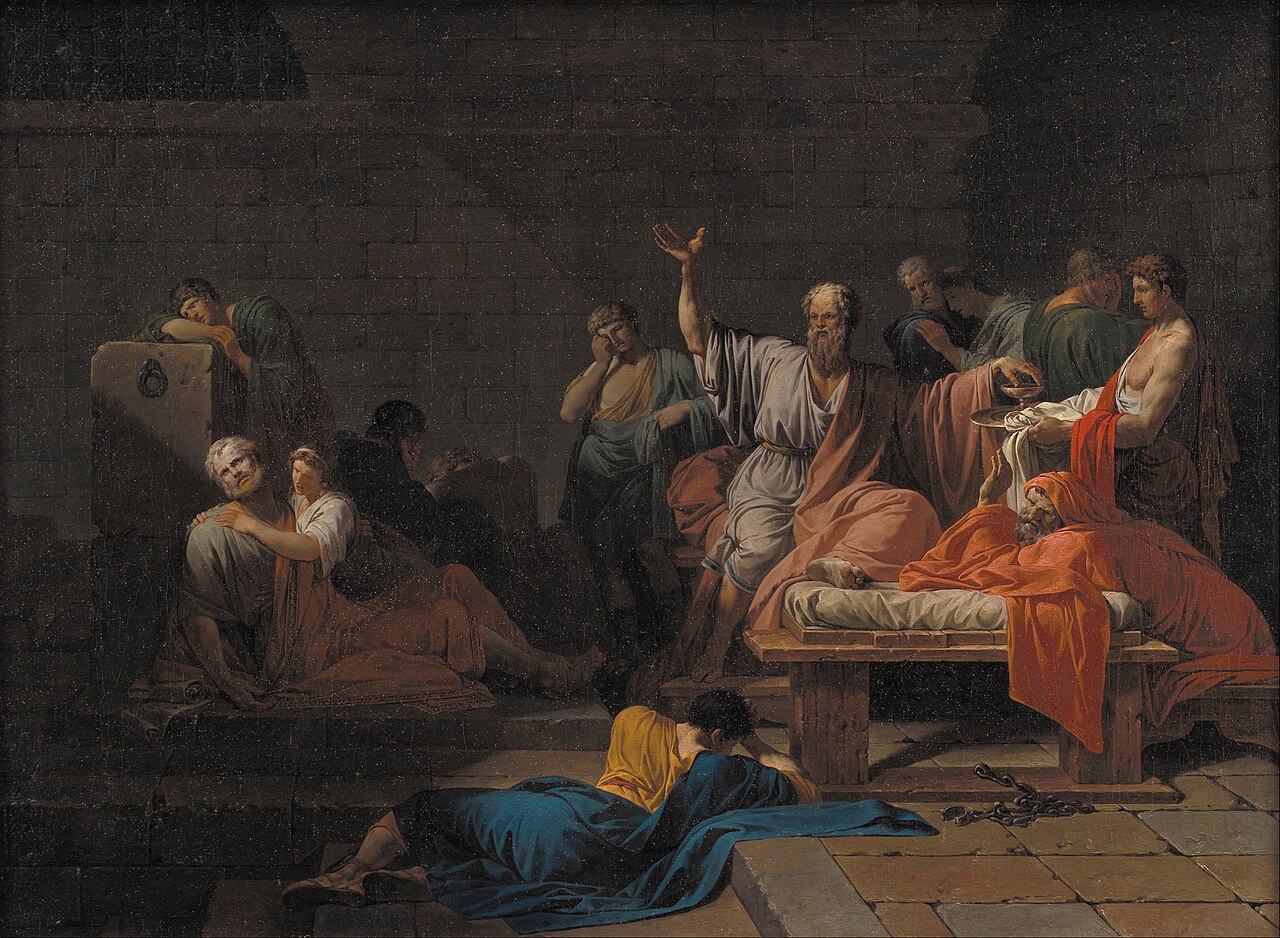
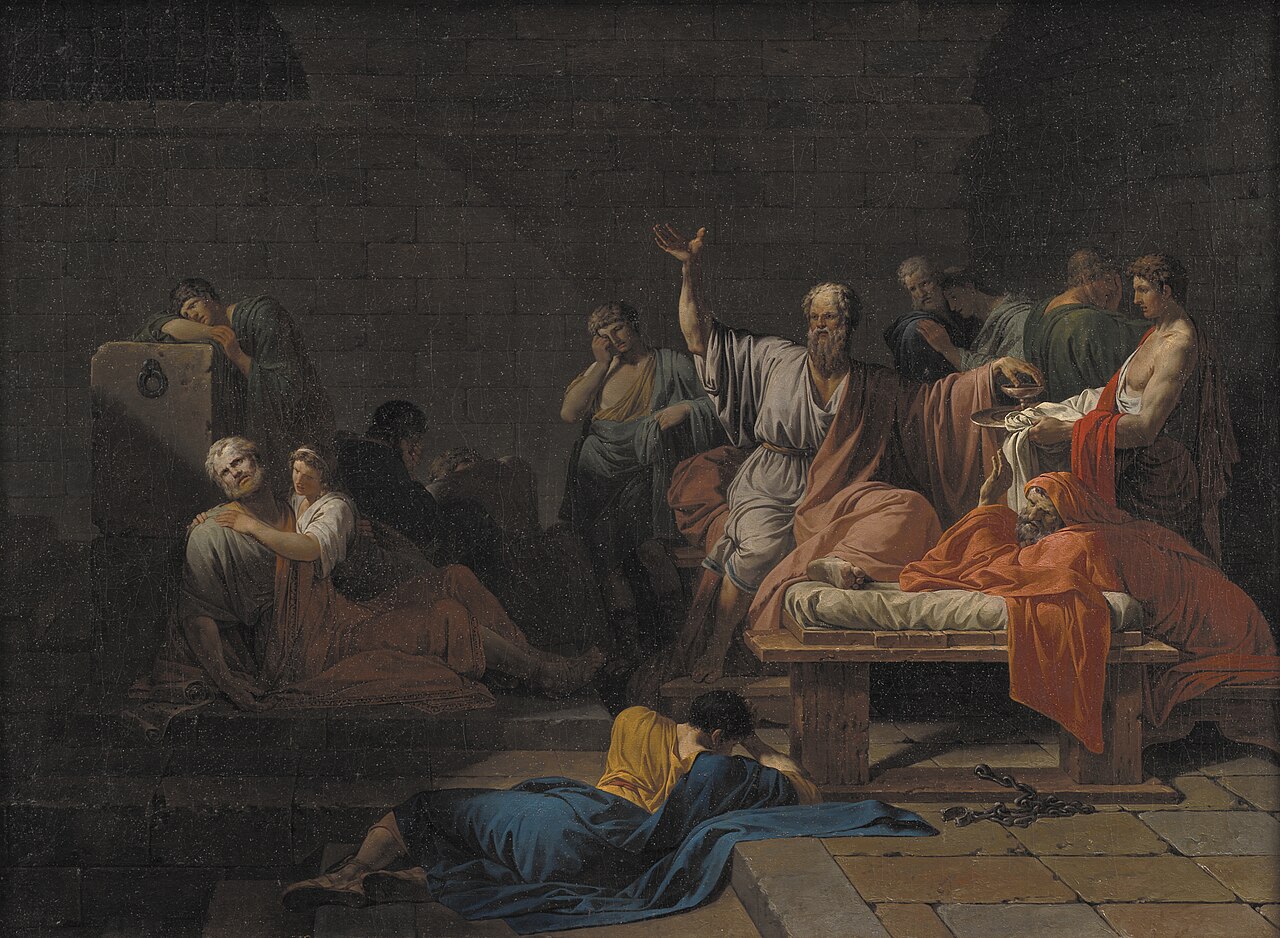
Painting of a dim prison cell with stone walls. A bearded man in a white robe raises one arm while seated on a wooden bed draped in white. Around him, several men sit and stand, some weeping, one lying face down in blue and yellow cloth in the foreground. A man at right holds a cup, and a figure in red sits at the bed's foot. Chains lie on the stone floor.Painting

Secondary source

The Death of Socrates (Peyron)

Jean-François Pierre Peyron · 1786

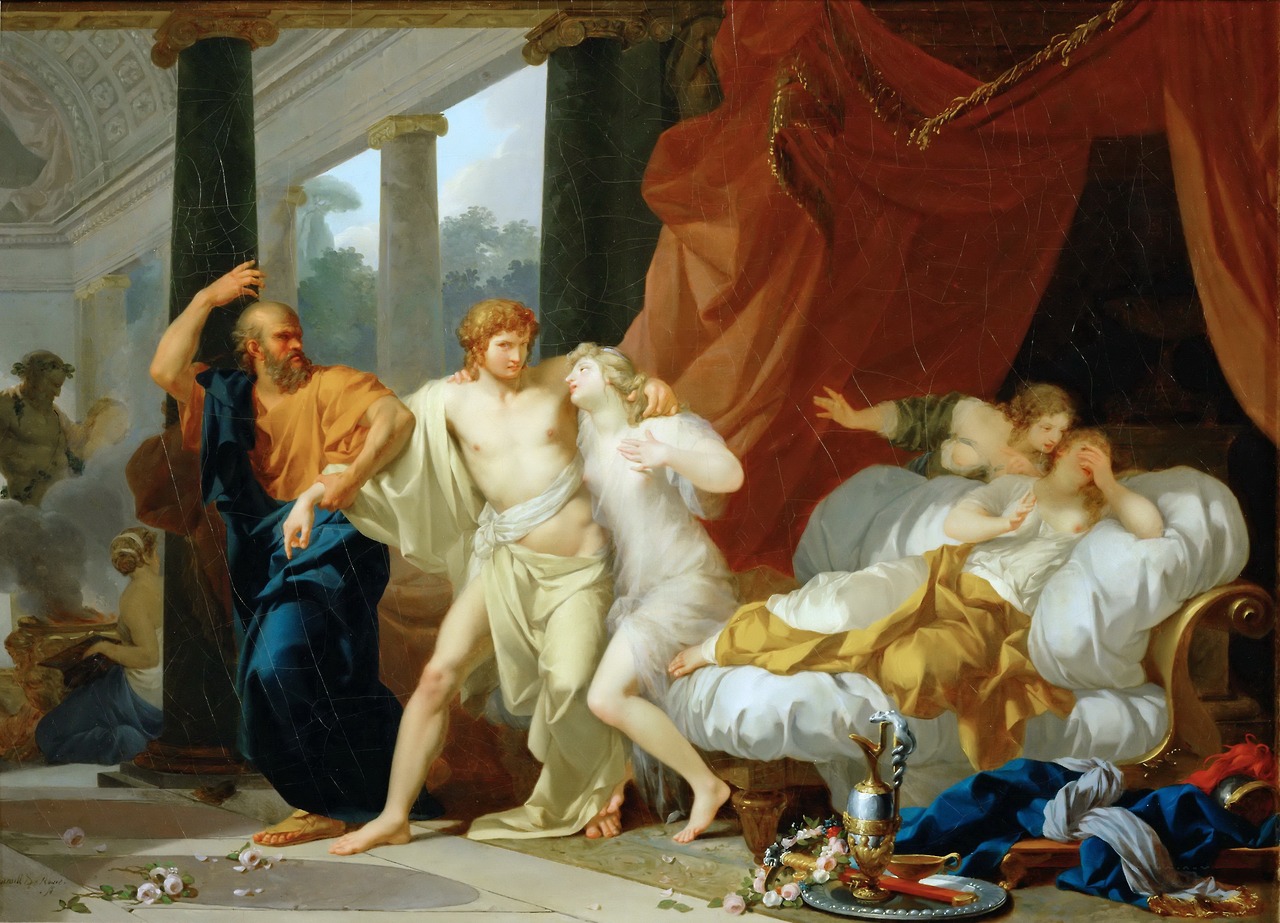
Painting of a bearded older man in an orange tunic and blue cloak pulling a young man by the arm away from a reclining woman on a white couch. A pale woman in a sheer dress clings to the young man. Classical columns and a red drapery frame the scene.Painting

Secondary source

Socrates Tears Alcibiades from the Embrace of Sensual Pleasure

Jean-Baptiste Regnault · 1791

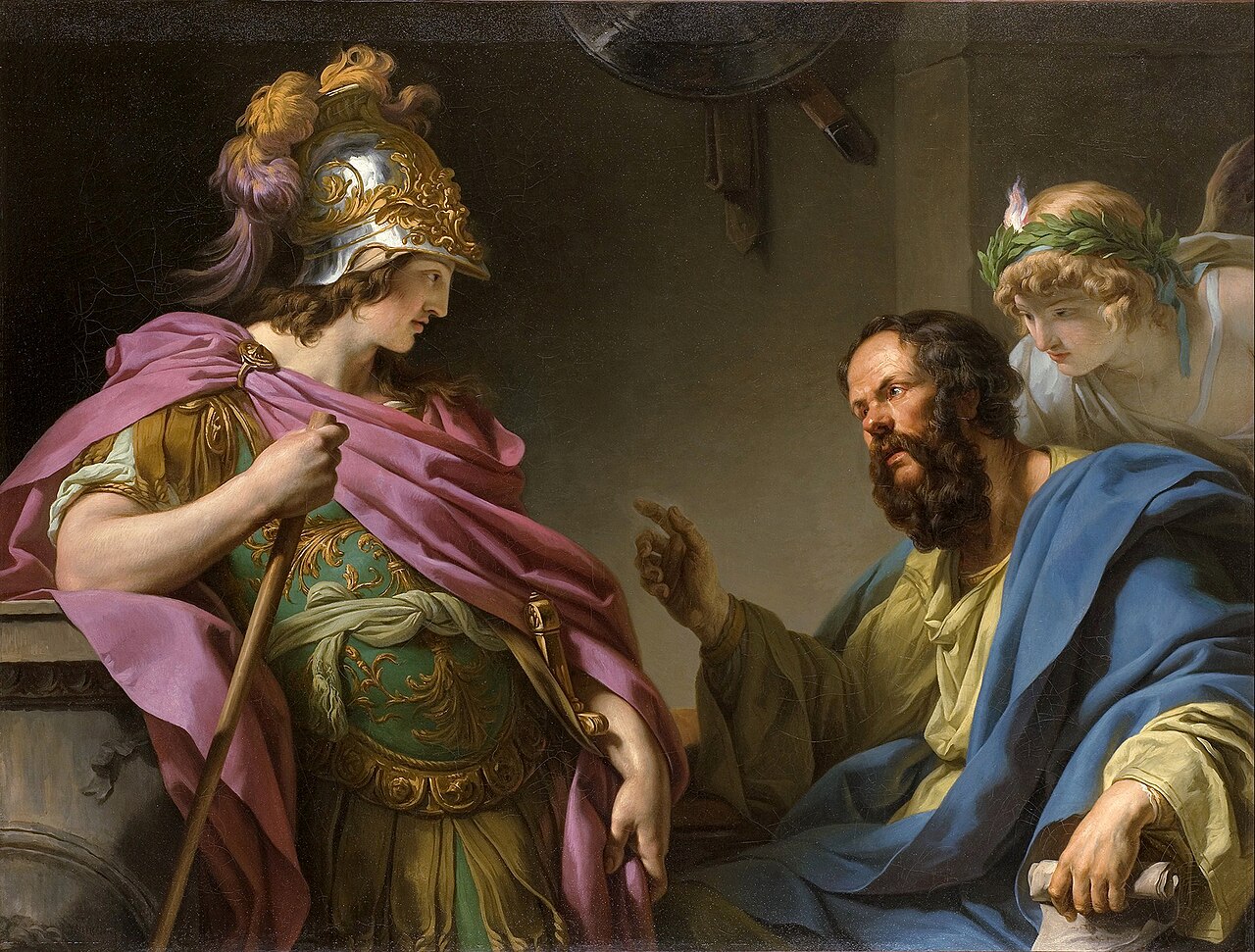
Painting of a helmeted young man in a pink cloak and green armor holding a staff, looking toward a bearded older man in a yellow tunic who gestures with one finger. A blue-draped man holds a scroll, and a winged figure with a laurel wreath looks on from behind.Painting

Secondary source

Alcibiades Receiving the Lessons of Socrates

François-André Vincent · 1777

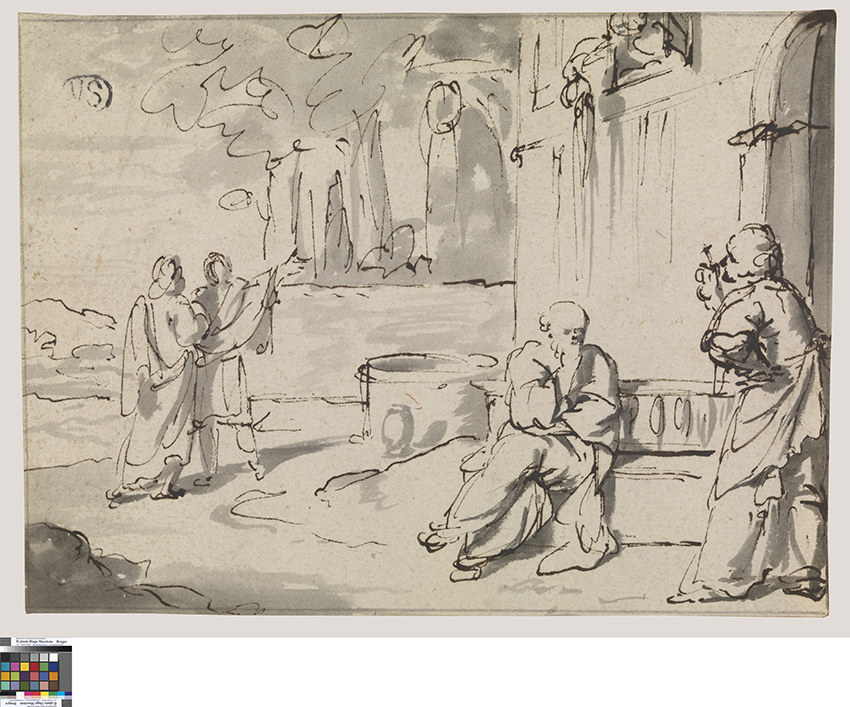
Pen and grey wash drawing of a street scene: two figures at left look upward at a leafy tree, a seated bearded old man in a robe rests his head on his hand beside a stone well, and a standing man at right in a long cloak looks toward the seated man. A building with arched doorway is at right.Painting

Secondary source

Socrates and Xanthippe

Jan van Mieris · 1660-1690

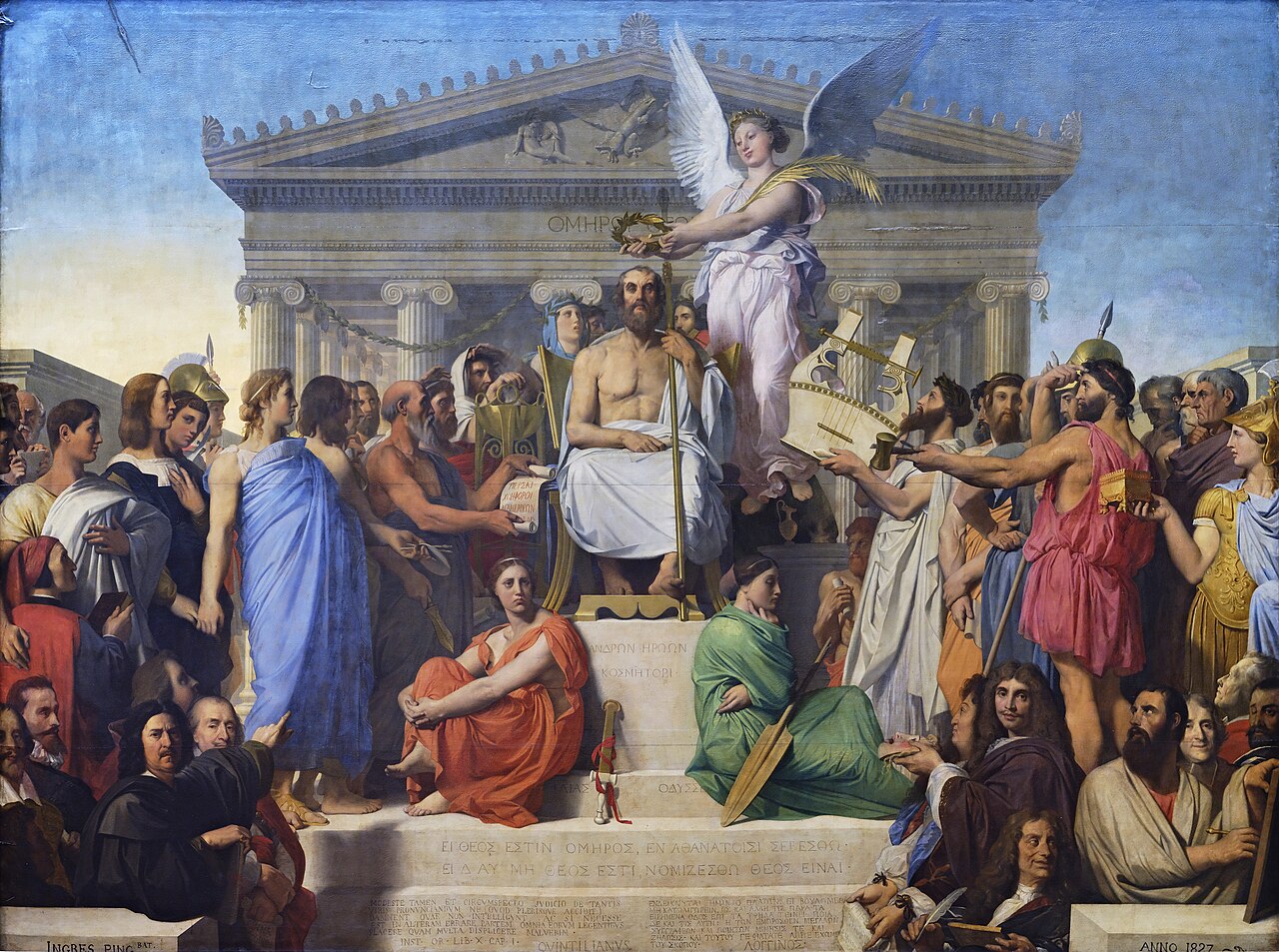
Ingres's painting The Apotheosis of Homer: a seated, bare-chested figure of Homer with a scepter at center, crowned by a winged Victory on a temple facade, surrounded by a crowd of figures from antiquity and later eras, with inscriptions on a stone pedestal below.Painting

Secondary source

The Apotheosis of Homer

Jean-Auguste-Dominique Ingres · 1827

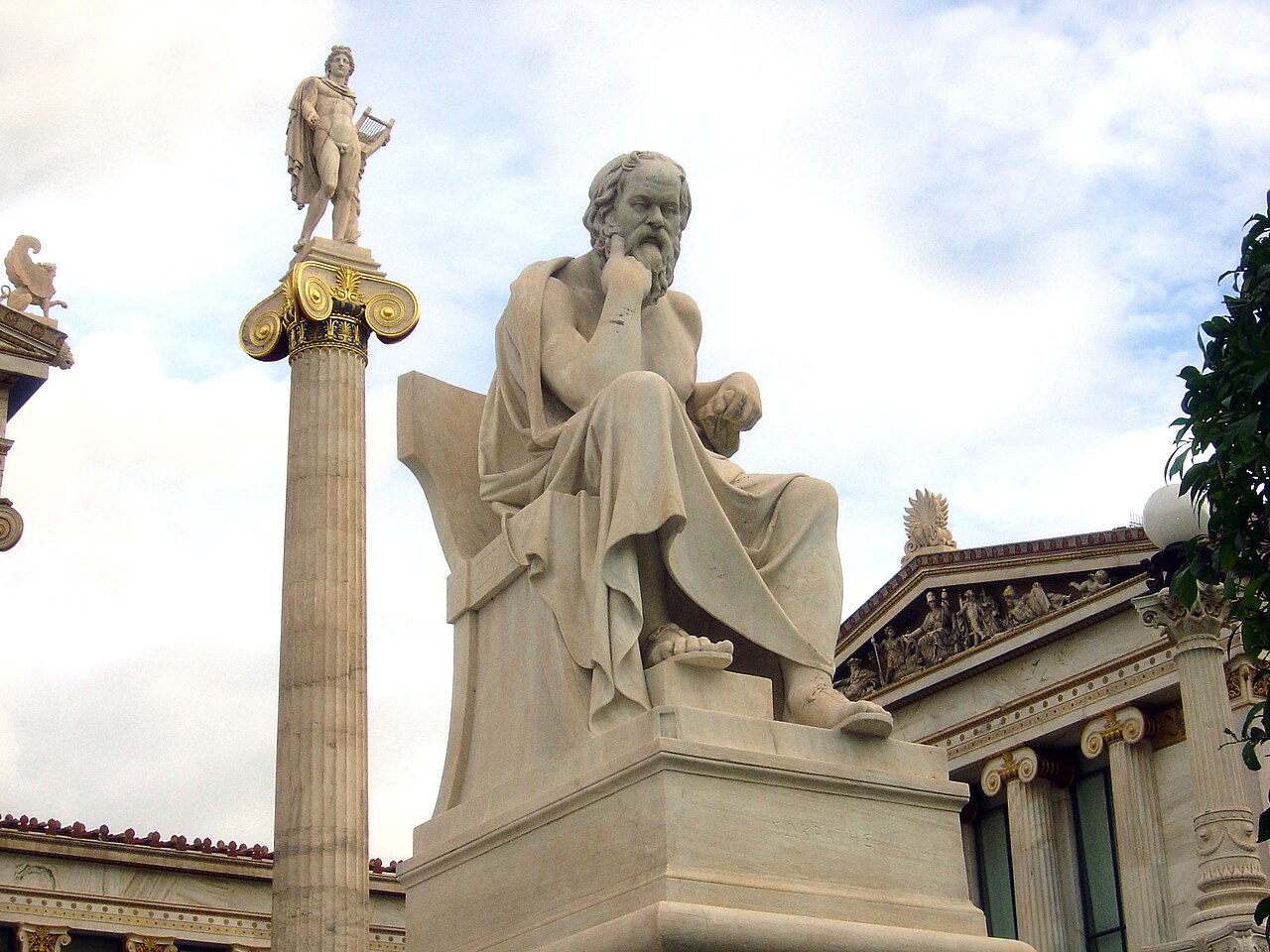
White marble statue of a bearded seated man, Socrates, resting his chin on one hand in a thoughtful pose, on a stone pedestal. Behind him stands a tall Ionic column topped by a gilded capital and a statue of a figure holding a lyre. A classical building with a pediment is at right.Sculpture

Secondary source

Socrates (statue)

Leonidas Drosis · 1885

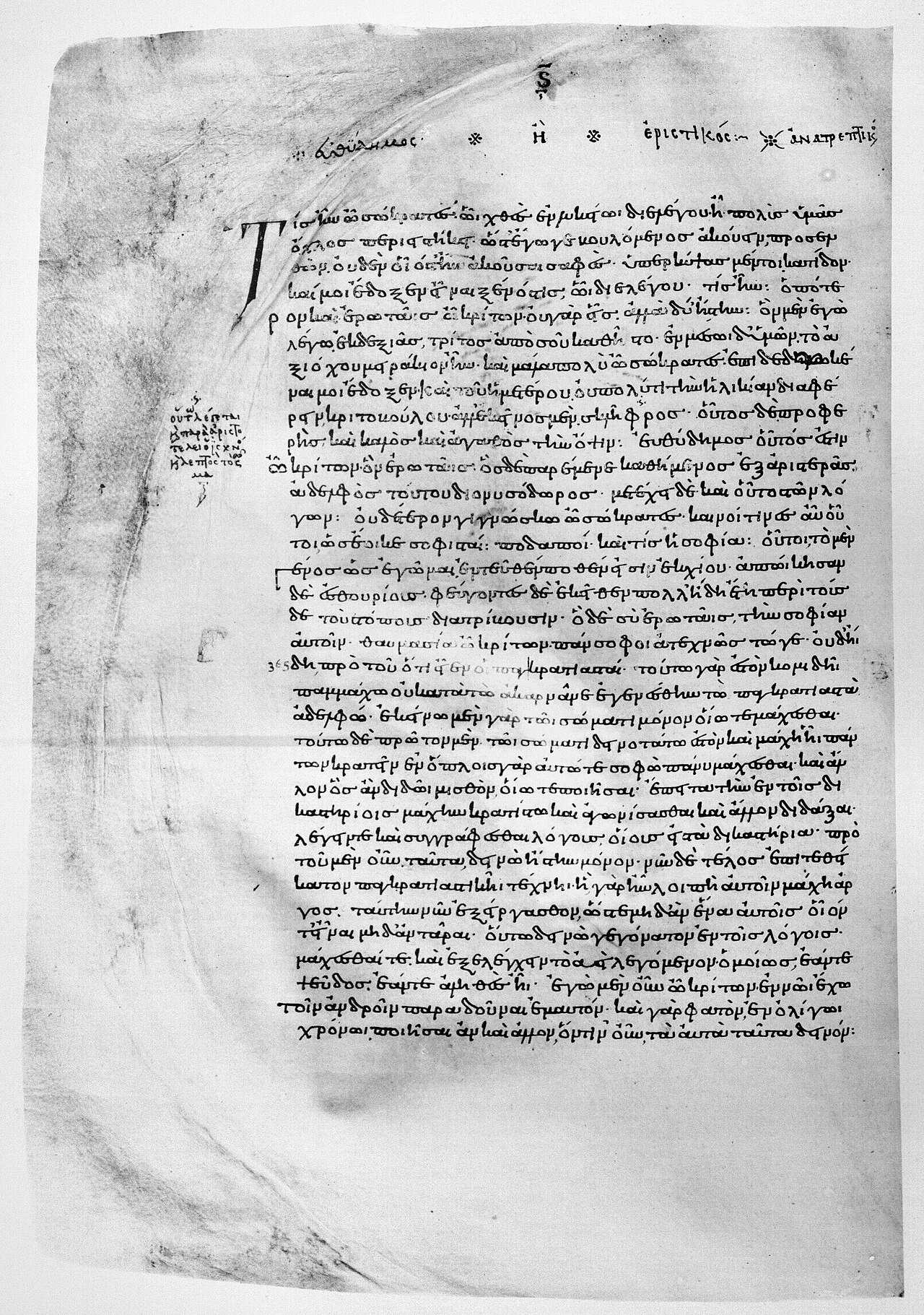
Black-and-white photograph of a manuscript page written in Greek uncial-style handwriting in dark ink on aged parchment. A large decorated initial letter stands at the left, a heading in Greek appears at the top, and marginal notes are visible at the left edge. The page shows the opening of a text.Book

Secondary source

Euthydemus

Plato · c. 384 BC

Book

Secondary source

Phaedo

Plato

Book

Primary source

Euthyphro

Plato

Book

Secondary source

Life of Socrates

Diogenes Laertius

Painting of a dim stone prison cell. Socrates sits on a bed, gesturing upward with one raised finger, surrounded by seated and standing men in robes, one of whom is raising a hand. A man in grey sits at left, and a man in red stands near the chains on the floor. A cup is visible.Painting

Secondary source

The Death of Socrates

Jacques-Louis David · 1787

Book

Primary source

Ion

Plato

Speech

Primary source

Apology of Socrates

Plato

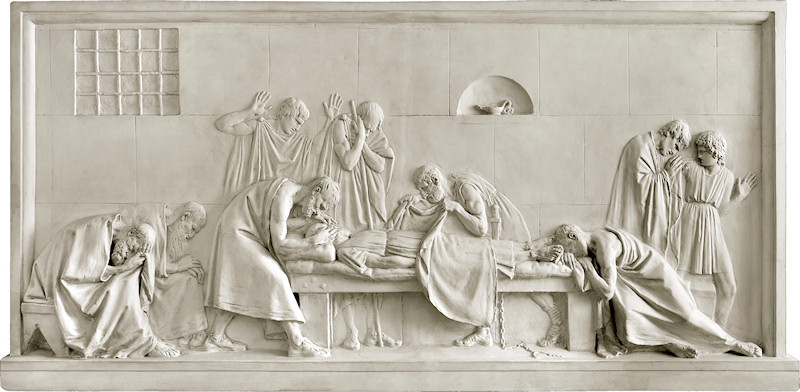
White marble-like relief sculpture in a rectangular frame showing a deathbed scene. A bearded man leans over a reclining body on a bier, while mourners kneel and stand around it, one kneeling figure in the foreground hiding his face. A barred window and a small niche are on the back wall.Sculpture

Secondary source

Crito Closing the Eyes of Socrates

Antonio Canova · c. 1790-1792

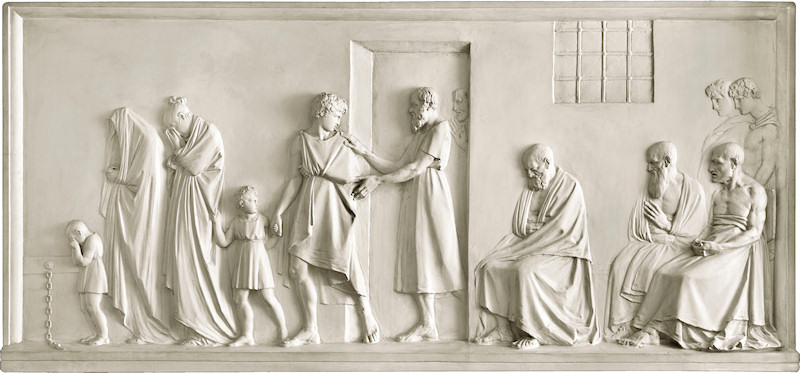
White marble-toned relief sculpture showing Socrates taking leave of his family in a prison. Socrates stands center-right in a doorway clasping hands with a woman. A small child is held by a woman at left, a young child crouches at far left with a chain, and an old man sits at right with two seated men beside him, one bowed and one bare-chested.Sculpture

Secondary source

Socrates Taking Leave of His Family

Antonio Canova · c. 1787-1790

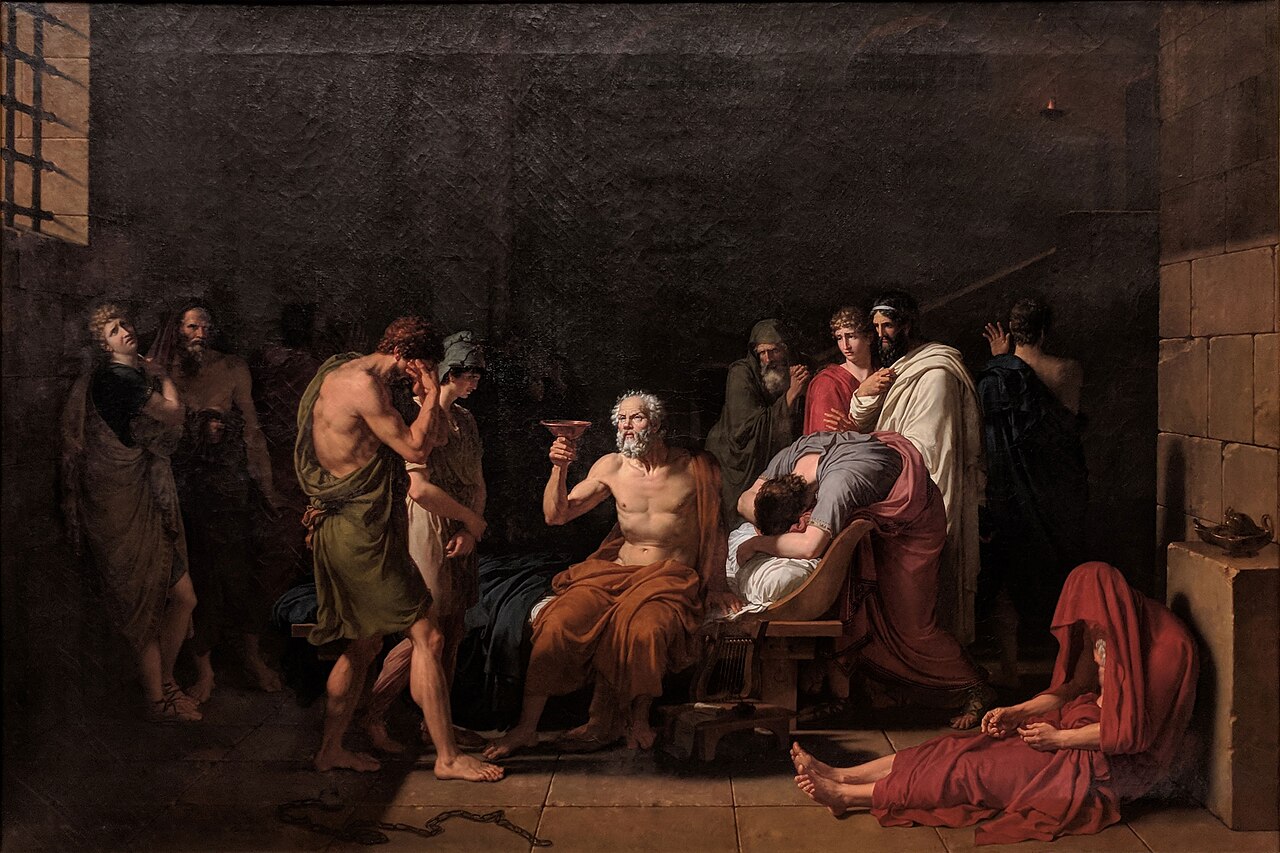
Painting of Socrates seated on a bed in a dark stone cell, raising a red cup with his right hand as men around him react with grief. A man in green holds his head, and a young man lies face-down at the bottom right, and a figure in red draped cloth sits on the floor. A barred window is at upper left.Painting

Secondary source

The Death of Socrates

François-Xavier Fabre · 1802

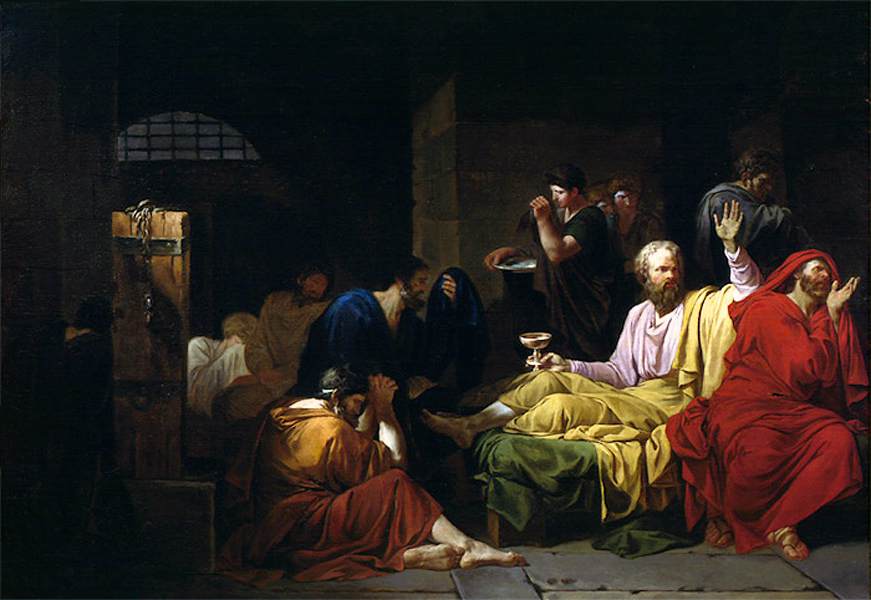
Painting of a prison scene with a dark stone interior and a barred window. A bearded man reclines on a bed wrapped in yellow and green drapes, reaching for a cup, while companions in red, orange, and blue robes grieve around him; one man raises his hand toward the sky and a figure in the background holds a bowl.Painting

Secondary source

The Death of Socrates

Jean-François Pierre Peyron · second half of 18th century

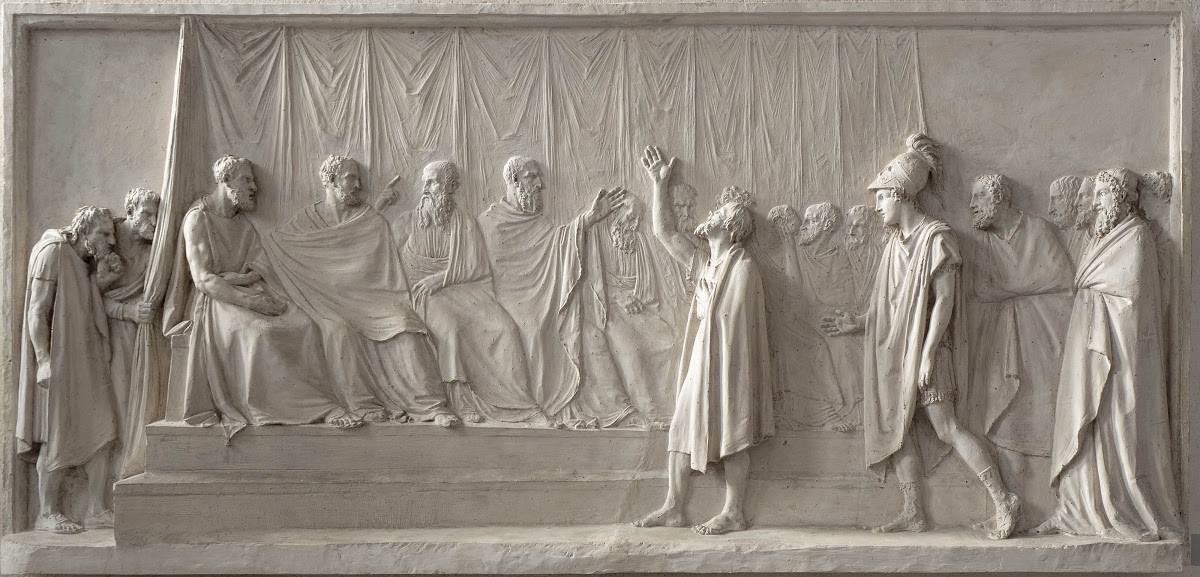
White plaster relief showing seated and standing robed figures before a draped curtain on a raised platform. A central standing figure in a helmet and cloak gestures, while other figures listen or look on, in an ancient-style courtroom scene.Sculpture

Secondary source

The Apology of Socrates before the Judges

Antonio Canova · 1790-1792

Painting of a dim prison cell with stone walls. An elderly bearded man in a white robe raises one arm while seated on a wooden bed, and a man in a red cloak holds a cup near him. Other men stand or sit around the room, some weeping, and a figure in a blue cloak and yellow scarf lies on the floor in front.Painting

Secondary source

The Death of Socrates

Jean-François Pierre Peyron · 1787

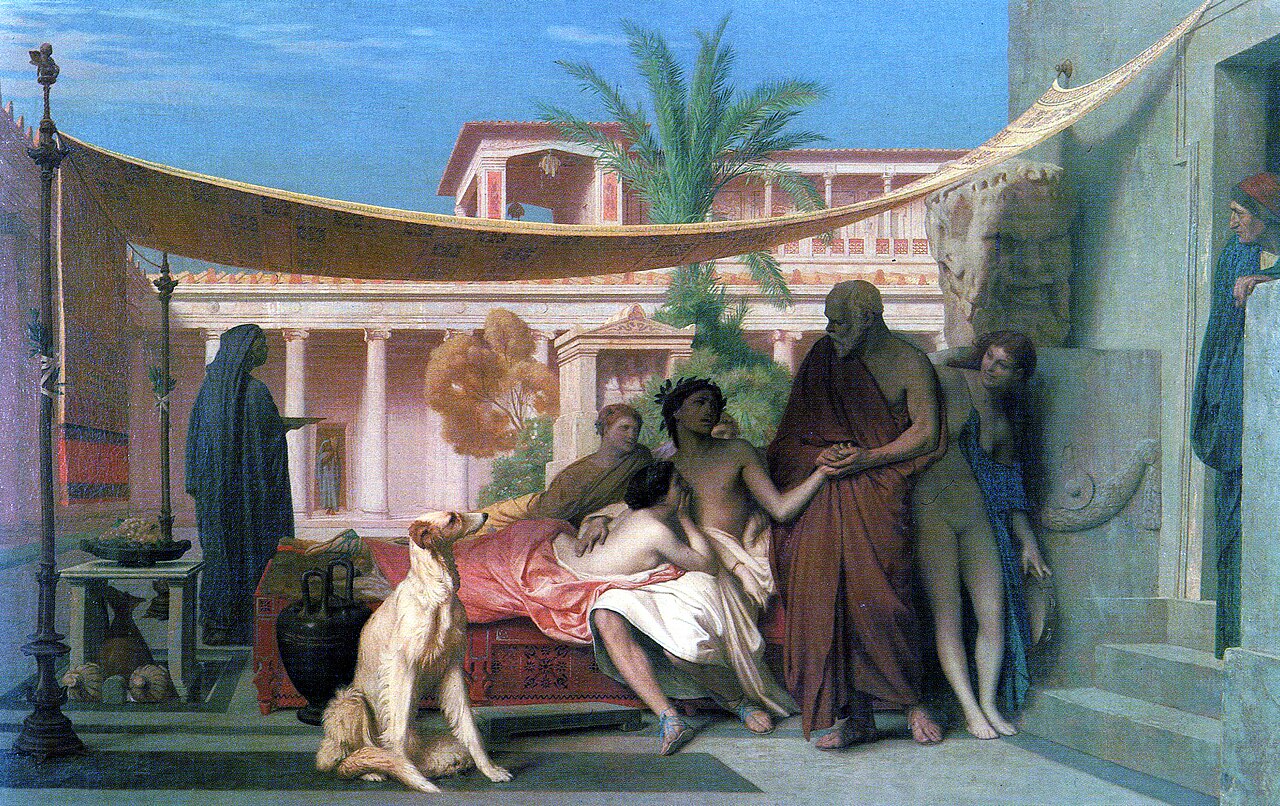
Painting of an ancient Greek courtyard with a columned building, palm tree, and a hanging cloth canopy. An elderly bearded man in a brown robe holds hands with a young man reclining on a couch, while a nude woman stands beside them and a dog sits in the foreground. A veiled figure stands at left and a man peers from a doorway at right.Painting

Secondary source

Socrates Seeking Alcibiades in the House of Aspasia

Jean-Léon Gérôme · 1861

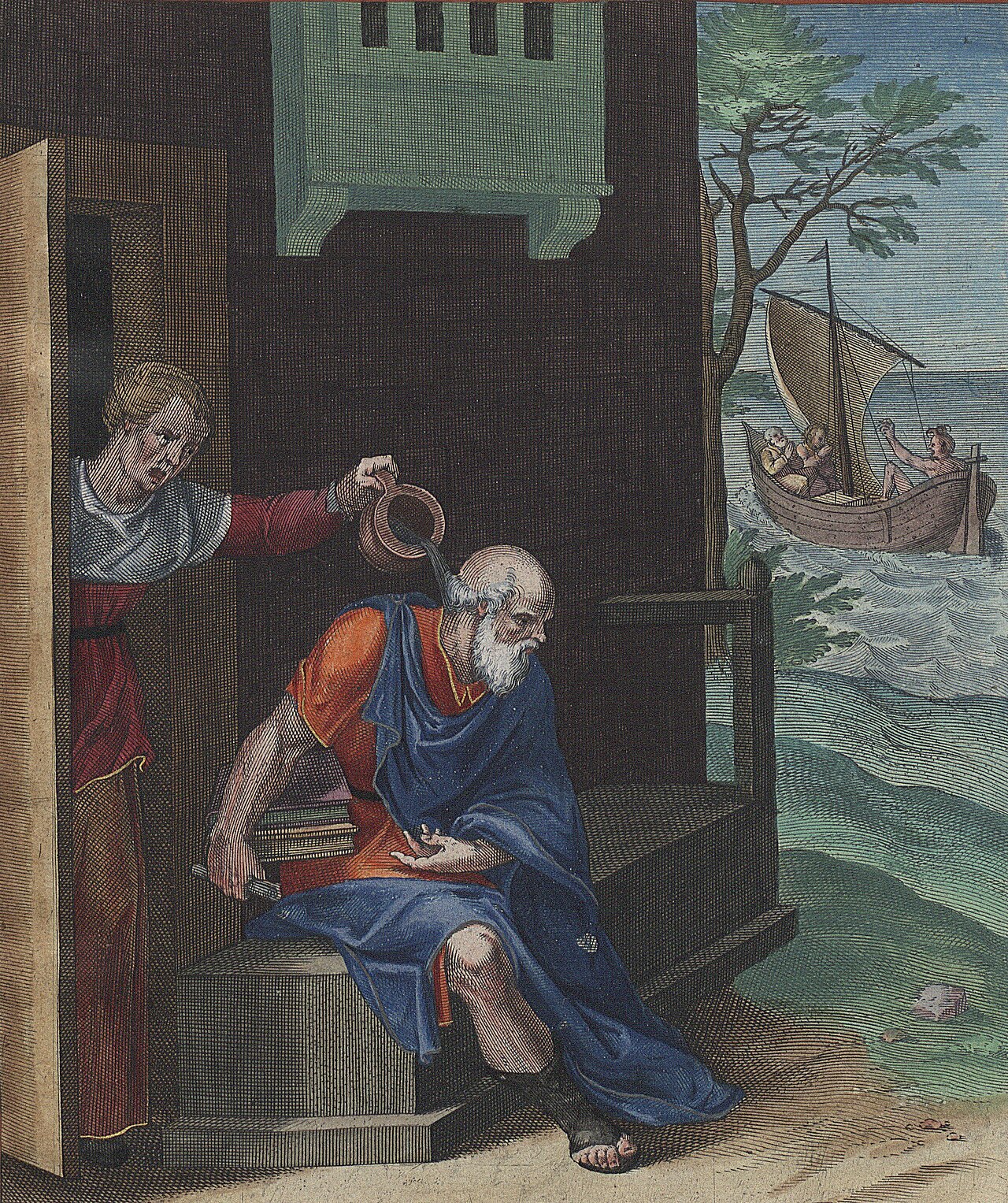
Colored engraving of an old bearded man in a blue cloak and orange tunic sitting on steps, while a younger woman in a red dress at a doorway pours liquid from a vessel onto his head. A small sailing boat with figures is on the sea at right.Painting

Secondary source

Socrates and Xanthippe

Otto van Veen · 1607

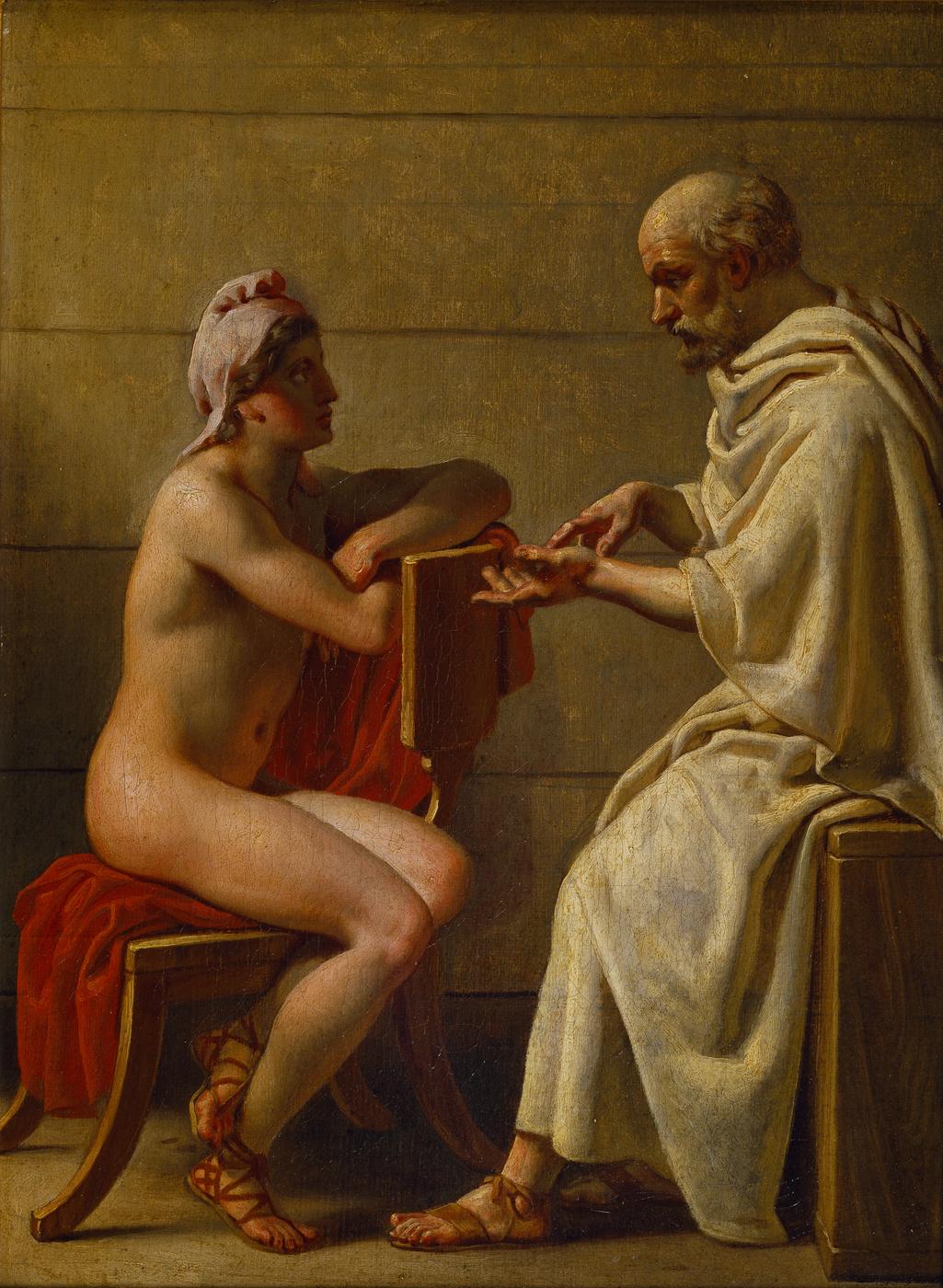
Painting of an older bearded man in a white robe and sandals, seated at right, extending his hand toward a nude young man seated at left wearing a pink head cloth, with a red drape over his lap and a wooden chair beside him against a plain wall.Painting

Secondary source

Socrates and Alcibiades

Christoffer Wilhelm Eckersberg · between 1813 and 1816

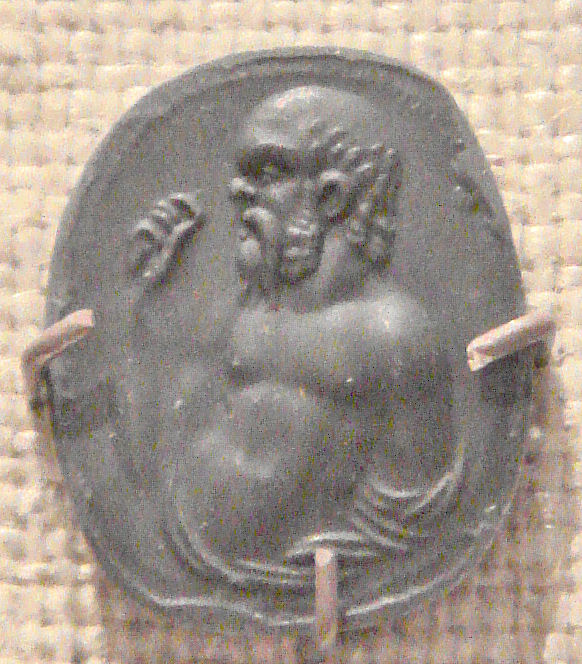
Photograph of a dark grey oval gem imprint showing a bearded male figure in profile with a receding hairline, facing left, with his hand raised near his head. Mounted on a textured fabric background with small metal supports.Artifact

Secondary source

Socrates Carnelian Gem Imprint

PHGCOM · 1st century BCE-CE (gem); 2008 (photograph)

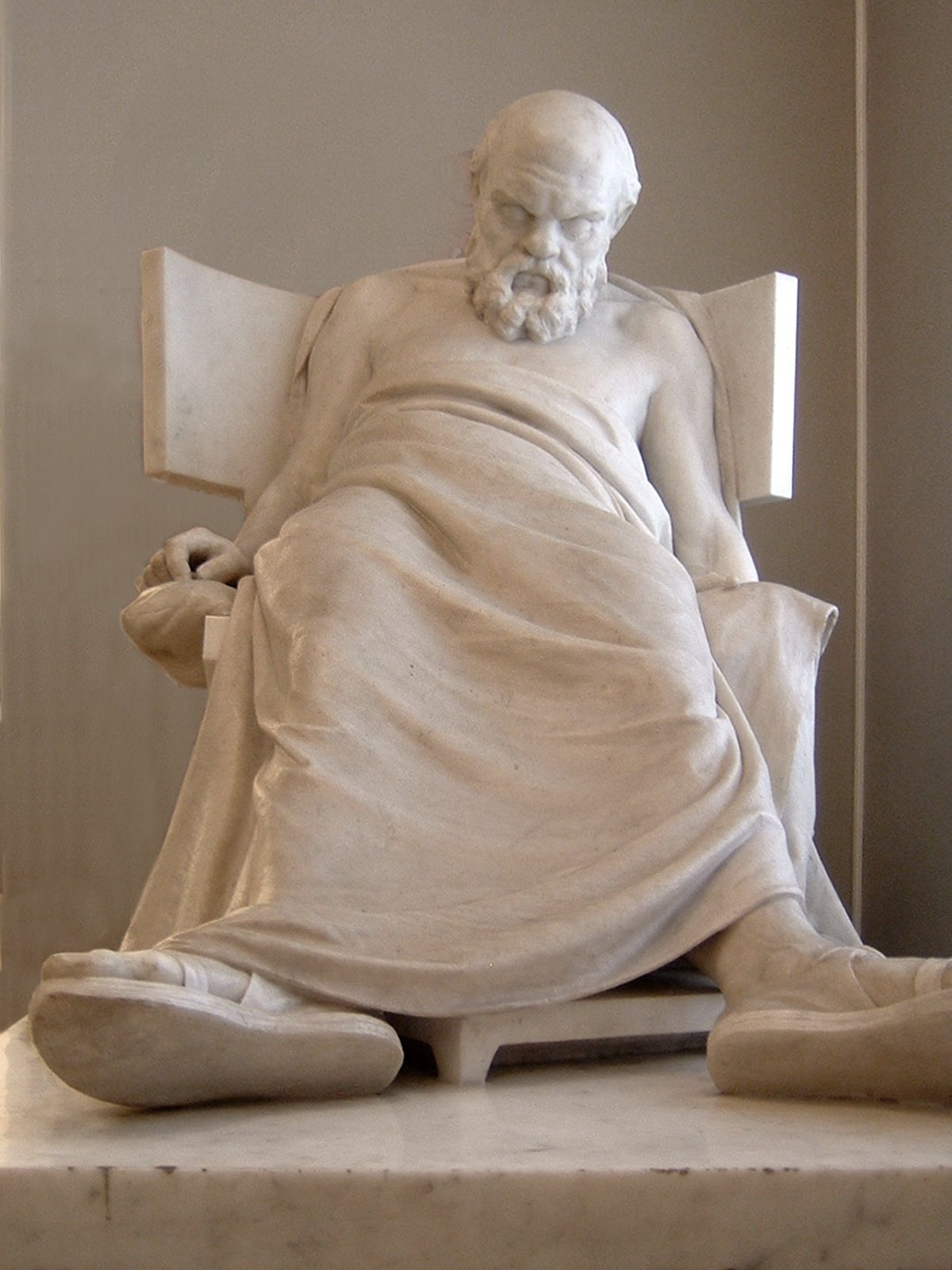
Photograph of a white marble sculpture of an elderly, bald, bearded man seated in a chair with a draped garment, scowling and with bare feet in sandals, set on a marble plinth against a plain wall.Sculpture

Secondary source

The Death of Socrates

Mark Antokolski · 1875

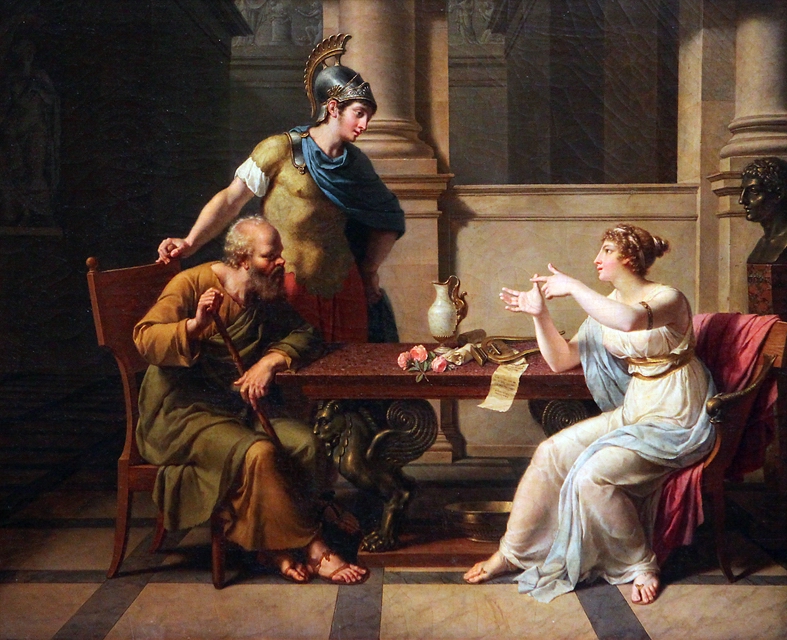
Painting of a classical interior with a marble floor and columns. An elderly bearded man in a brown robe sits at left holding a staff. A helmeted young man in a blue cloak and gold cuirass stands behind him. A woman in a white dress gestures while seated at right beside a small table holding a pitcher, a scroll, and pink flowers. A bust sits at far right.Painting

Secondary source

Aspasia Conversing with Socrates and Alcibiades

Nicolas-André Monsiau · 1801

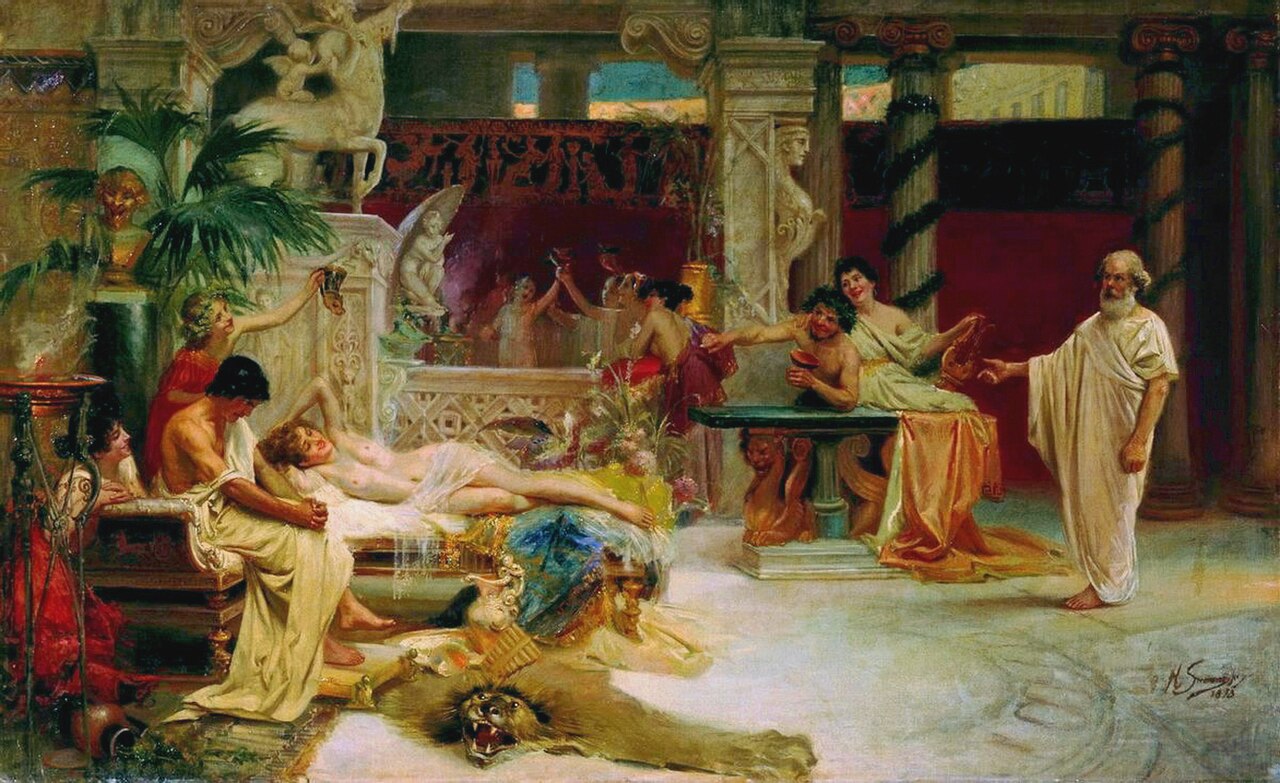
Painting of an ornate Roman-style interior with marble columns, statues, and a red wall. A bearded old man in a white robe stands at right, looking toward a reclining man and a woman on a couch. Partly nude figures, a table, and a lion skin rug fill the scene.Painting

Secondary source

Socrates Finds His Student Alcibiades at a Brothel

Henryk Siemiradzki · 1873

Documentary

Secondary source

Socrates on Knowledge and Not-Knowing

Wolfgang Danner, Claus Ast · 3 November 2021

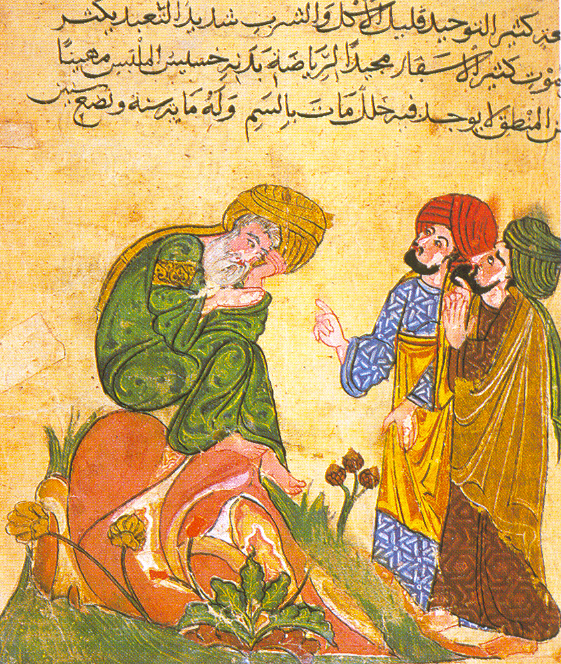
Painted manuscript page on yellowed paper with Arabic calligraphy across the top. An elderly bearded man in a green robe and turban sits on grass with his head bowed. To the right, two younger men in blue and brown robes stand close together; one in a red turban points upward and the other raises a hand to his face. Plants and flowers fill the lower foreground.Painting

Secondary source

Sughrat Manuscript Illustration

Al-Mubashshir ibn Fatik · 13th century

Want the full shelf? Chat with Socrates in the app and open the Sources panel — every quote links back to the original.

Trusted by educators worldwide

Conversations
375,000+
Real exchanges between students and historical figures
Messages exchanged
4,142,000+
Across every figure, classroom and language
Historical figures
100,000+
Each informed by a curated biography and selected sources
Languages supported
50+
From English and Spanish to Arabic and Korean

Paying customers

Used by 98 schools and universities

Partner school logo
Tecnológico de Monterrey logo
Hyper Island logo
Partner school logo
Chambersburg Area School District logo
Broward County Public Schools logo
Nebo School District logo
National Louis University logo
South Florida PBS logo
Punahou School logo
University of Wisconsin–River Falls logo
Partner school logo
Partner school logo
Archbishop Mitty High School logo
Kingsburg High School logo
Norwalk Public Schools logo
Partner school logo
Connections logo
Partner school logo
Moore Public Schools logo
Partner school logo
Partner school logo
Partner school logo
Partner school logo
Robbinsville Public Schools logo
Partner school logo
Partner school logo
Partner school logo
Tecnológico de Monterrey logo
Hyper Island logo
Partner school logo
Chambersburg Area School District logo
Broward County Public Schools logo
Nebo School District logo
National Louis University logo
South Florida PBS logo
Punahou School logo
University of Wisconsin–River Falls logo
Partner school logo
Partner school logo
Archbishop Mitty High School logo
Kingsburg High School logo
Norwalk Public Schools logo
Partner school logo
Connections logo
Partner school logo
Moore Public Schools logo
Partner school logo
Partner school logo
Partner school logo
Partner school logo
Robbinsville Public Schools logo
Partner school logo
Partner school logo

What educators are saying

“We enjoyed the program last year and used it frequently.”
“My students say it’s a welcome change of pace. I’m not a fan of the “sage on the stage” model, so I try to incorporate research-oriented and self-paced activities. With Humy, students have to take charge of their learning. They’ve become more adept at critical thinking, forming better questions, and improving their reading comprehension. The interview feature has been my go-to tool. I create assignments where students must ask historical figures a set number of questions, then summarize the responses to ensure they’re truly absorbing the material. This approach lets them actively explore the past rather than passively consuming information.”
“Humy has helped me bring historical figures, sometimes long past, to life. When my students interact with these figures in real-time, it eliminates some of the perceived “ancient” characteristics of my curriculum. This has shifted my students’ thinking away from viewing history as abstract or irrelevant. Real-time interactions make historical figures relatable, even allowing students to ask off-topic questions that help put historical lives in a more relevant context for 13-year-olds. The feature I use the most is the interview feature. After teaching a topic, most recently Gandhi and Joan of Arc, I have the students ask pointed, focused questions. We practice good conversation techniques beforehand, teaching them to listen (or read) carefully and formulate thoughtful follow-up questions rather than just interrogating. It helps students practice effective conversation skills.”

FAQ

Frequently asked questions

Who is Socrates?
Greek philosopher and teacher known for the Socratic method of questioning. On Humy.ai you can chat with an AI version of Socrates that draws on a short biography and 72 historical sources during the conversation — by text or voice, in 42 languages.
Is Socrates AI free?
Yes. Socrates is in Humy's free library: a free account includes 20 messages a month with Socrates and the other free figures, by text or voice. No credit card is needed.
What sources does the Socrates AI use?
It draws on a short biography and 72 historical sources (books, paintings and sculptures), including “Apology”, “Line Engraving of Socrates by Landon” and “Crito”. Each source has its own page on Humy.ai.
How historically accurate is the AI version of Socrates?
Each figure uses a short biography and a small set of selected historical sources as context (retrieval-augmented generation), so answers stay closer to known material than the model's general knowledge alone. It isn't a citation-grade research tool — like any LLM, the AI can get details wrong or extrapolate. Treat it as a strong starting point for inquiry and cross-reference important claims.
Can I talk to Socrates by voice?
Yes. In addition to text chat, you can call Socrates and hear their voice respond in real time — useful for auditory learners, interview practice and Socratic dialogue.
Is Humy.ai safe and compliant for schools?
Yes. Humy.ai is used by more than 100 schools, universities and organisations. The platform is FERPA- and GDPR-aligned, supports SSO, and offers an IT-approval pack tailored for school procurement teams.

Ready when you are

Start chatting with Socrates now.

20 messages free · No credit card · Available in 50+ languages.