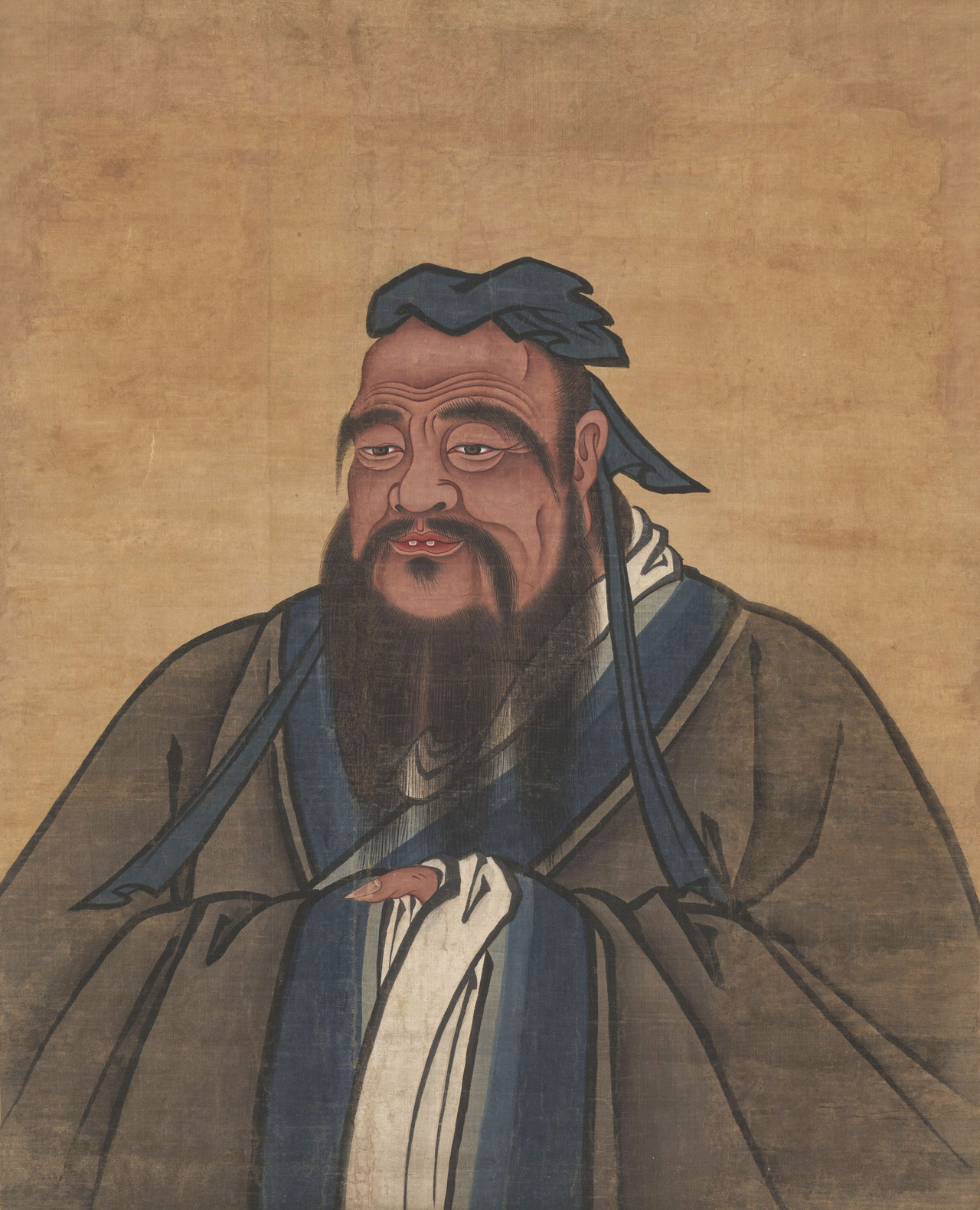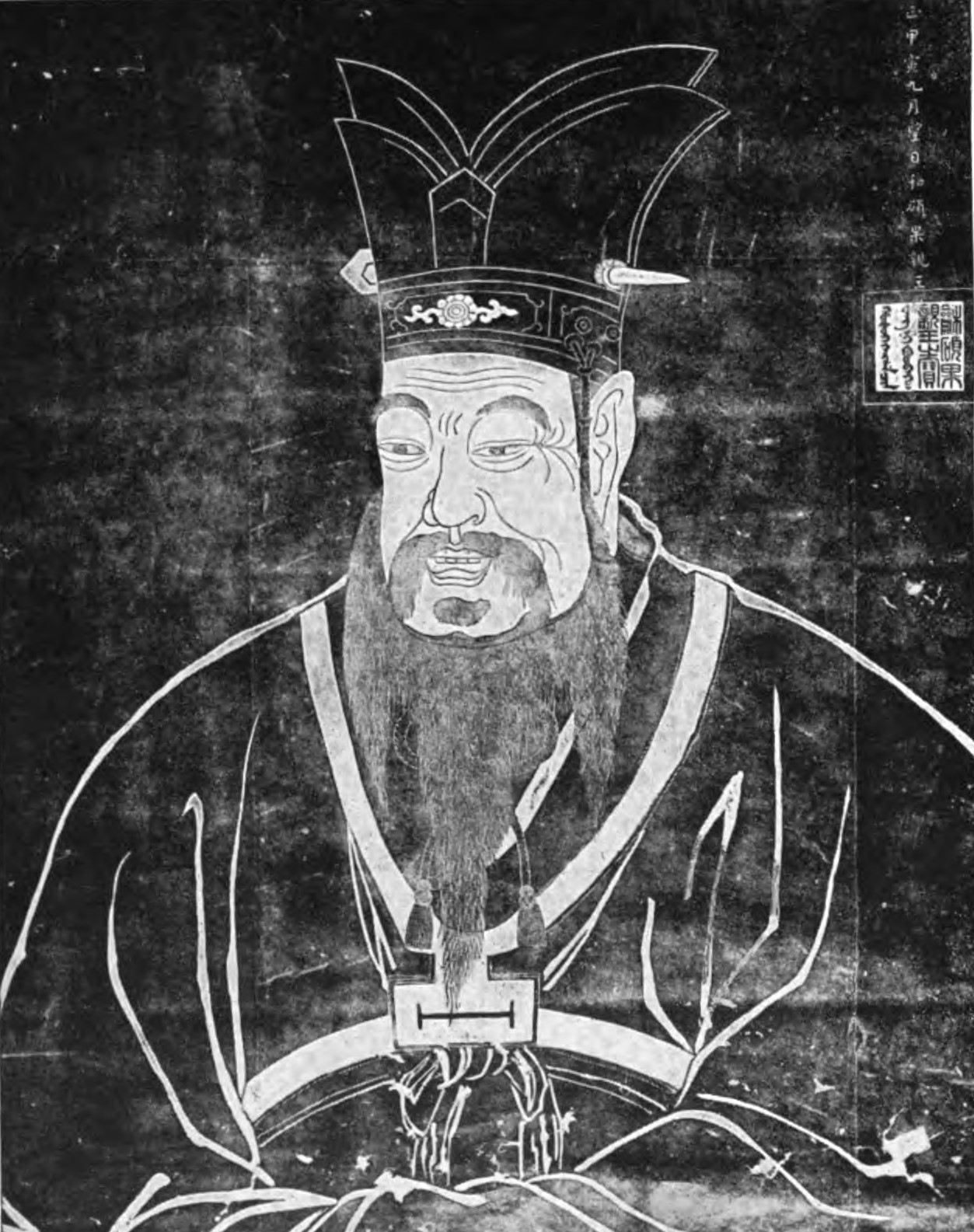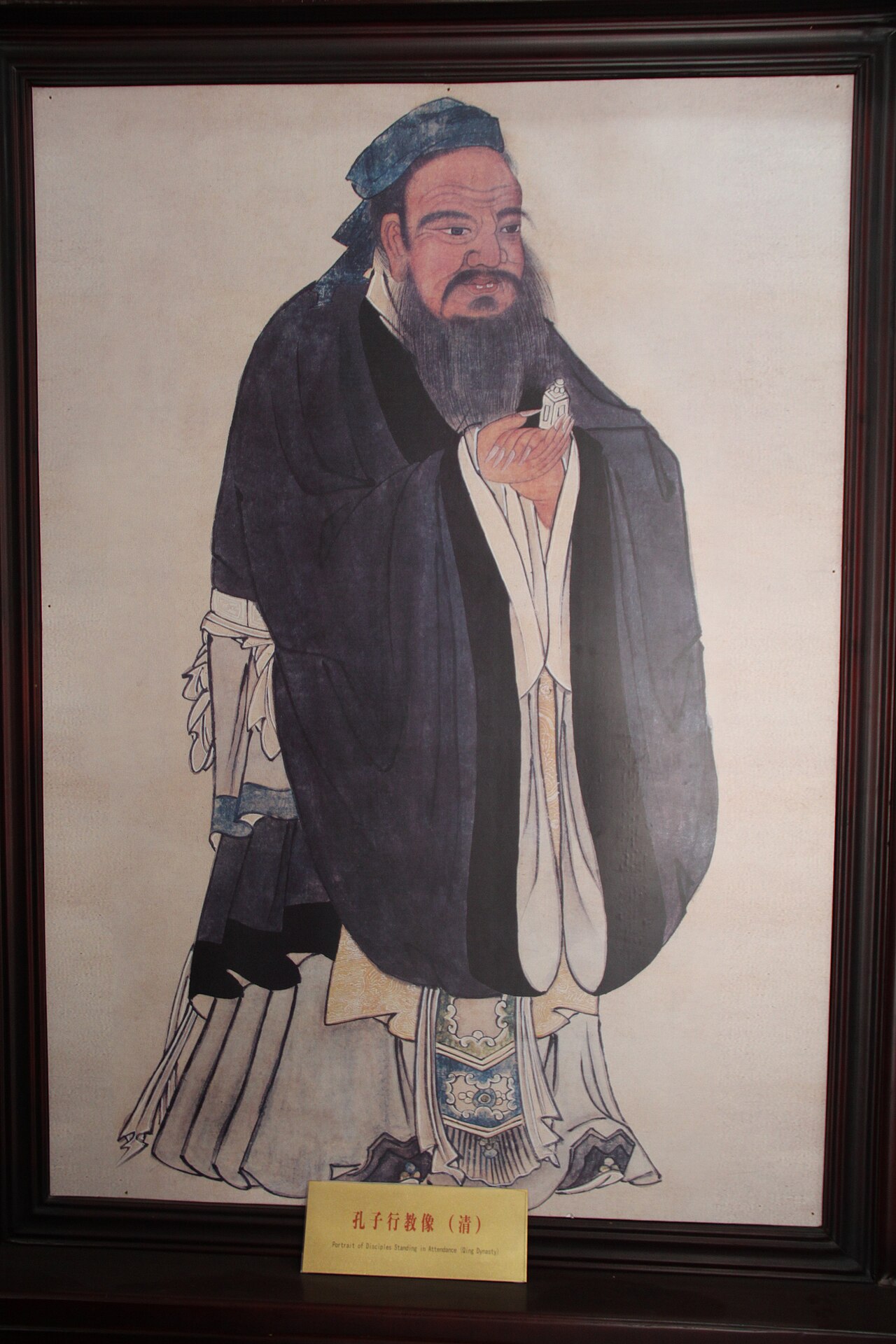

Portrait of Confucius

AI Historical Figure

Confucius

Chinese philosopher and educator.

Chat with Confucius via text or voice — in 42 languages, drawing on a curated biography and 85 historical sources. Available 24/7.

Start chatting with Confucius20 messages free · No credit card
Lived
551–479 BCE
From
China
Known for
ReligionPhilosophy
Confucius

Confucius

Online · responds in seconds

Hello — I'm Confucius. Chinese philosopher and educator. What would you like to ask me?

20 messages free · No credit card · Powered by Humy.ai

Live preview · Switch between 42 languages above · Send a message to continue in the app

Multilingual

Talk to Confucius in 42 languages

Ask Confucius questions in any language below, and the rest of Humy's app speaks it too. Pick yours to open the chat in that language.

Also in German (Austria), German (Switzerland), English (UK), English (Australia), English (Canada).

The sources behind this AI

85 sources · 47 books · 16 paintings · 8 photographs · 8 artifacts · 4 documents · 1 sculpture · 1 newspaper article

Confucius doesn’t improvise from thin air. The AI is grounded in 85 curated historical sources students can inspect. Open any of them to see what informs the conversation.

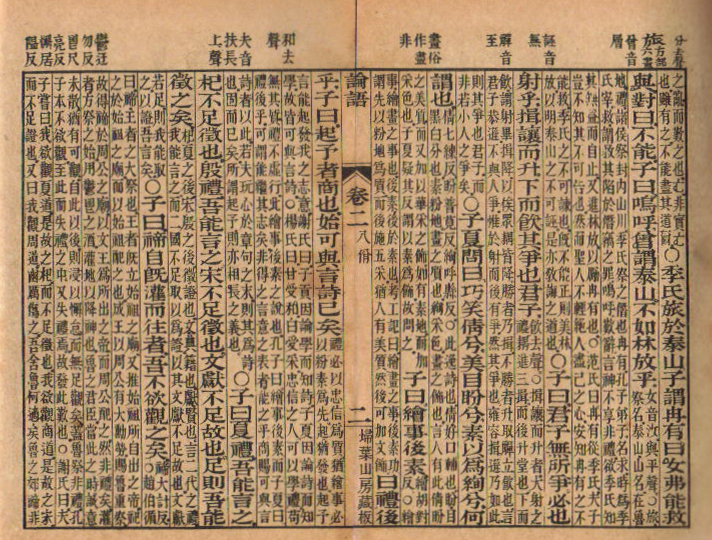
Scan of a page from a Japanese woodblock-printed edition of the Analects (Rongo), in vertical columns of Chinese characters. The header reads 論語 and 卷二八 (volume two). The page has yellowed paper, a central fold, and a printed page number at the bottom.Book

Secondary source

Analects

c. 480 BCE – 2nd century BCE

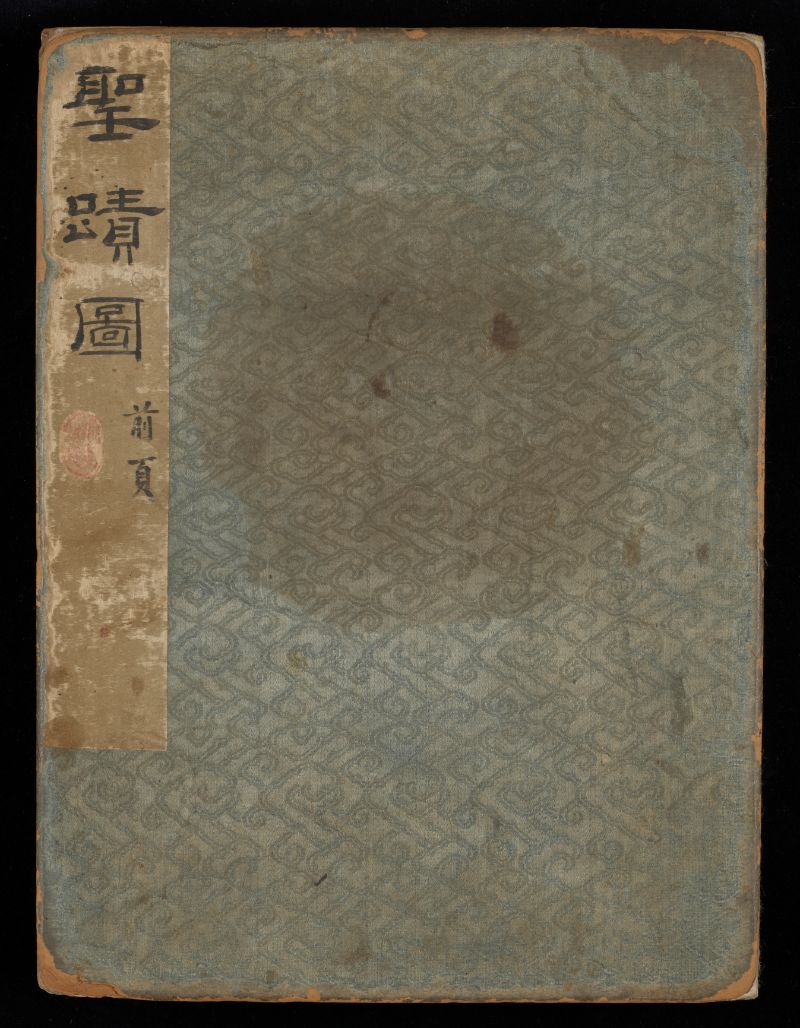
Front cover of a bound Chinese book with blue-grey patterned silk brocade of cloud scrolls. A tan label on the left bears large black brush characters reading 聖蹟圖 and a smaller 前頁, with a red seal impression below. The cover edges are worn.Book

Secondary source

Pictures of the Sage's Traces

Unknown · 1758

Book

Secondary source

Records of the Grand Historian, Vol. 47: Hereditary House of Confucius

Sima Qian · c. 94 BCE

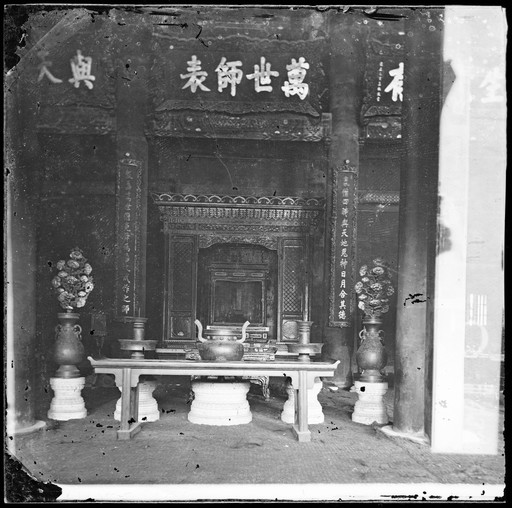
Black and white photograph of an interior hall with a carved wooden altar and incense burners on a long table, flanked by large pillars with Chinese characters on the walls and red-framed inscriptions; the view looks toward a shrine niche with ornate wooden canopy.Photograph

Primary source

Temple of Confucius, Peking (Interior)

John Thomson · 1871

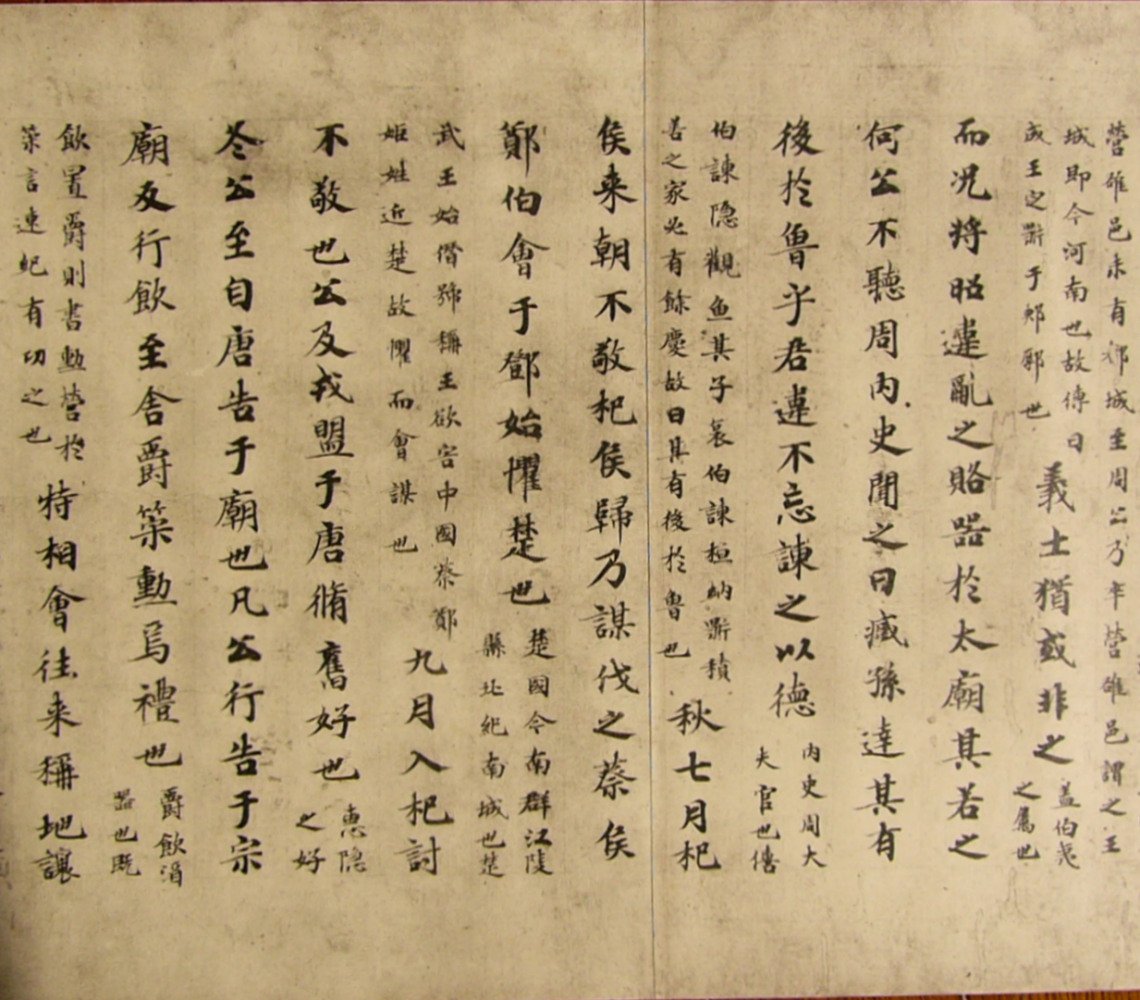
Two facing pages of a classical Chinese manuscript in black ink brush calligraphy on aged, yellowed paper, written in vertical columns with some smaller annotation characters between lines. The text is a commentary on a historical chronicle, with the handwriting appearing in a regular, cursive-influenced style.Document

Secondary source

Spring and Autumn Annals

Confucius · 5th century BCE

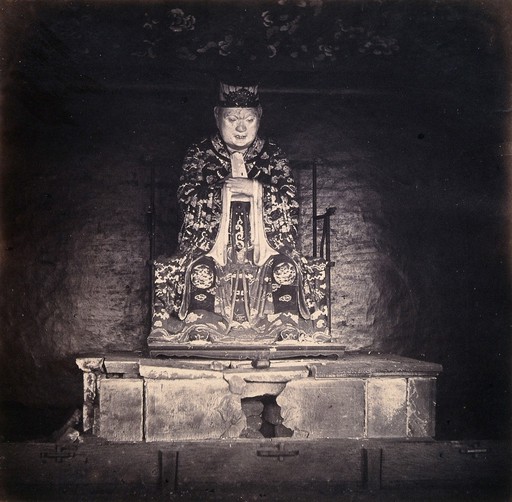
Sepia photograph of a seated, painted statue of Confucius in a dim shrine. The figure wears an ornate embroidered robe and a tall headdress, with hands clasped at the chest, on a carved wooden throne atop a stone plinth.Photograph

Primary source

Statue of Confucius, Canton

Felice Beato · April 1860

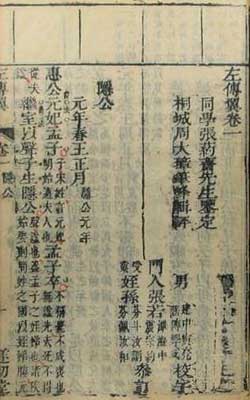
Page of a Chinese woodblock-printed book with vertical columns of classical Chinese text in black characters on yellowed paper. The header reads 左傳贊卷一 and includes commentary names and a printer's note at the lower right. The main text includes the heading 隱公 and the passage beginning 元年春王正月.Book

Secondary source

Zuo Zhuan

Zuo Qiuming · 4th century BCE

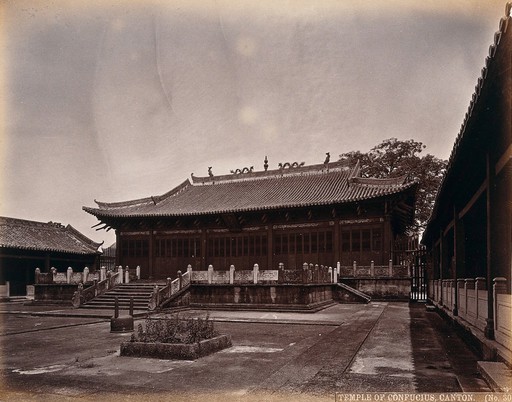
Sepia photograph of the Temple of Confucius in Canton. A tiled, upturned-roof wooden hall stands behind a stone terrace with balustrades and a flight of steps. Courtyard paving and a planted stone bed lie in front; a covered colonnade runs along the right edge. Caption reads Temple of Confucius, Canton, No. 20.Photograph

Primary source

Temple of Confucius, Canton

William Pryor Floyd

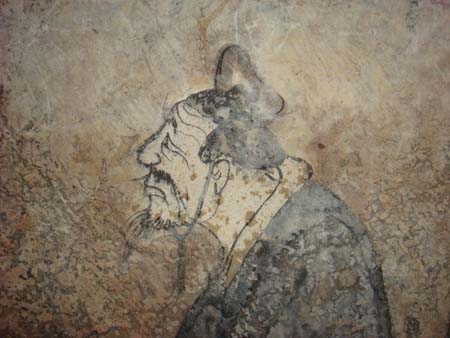
Faded fresco painting in ochre and gray tones showing a profile of an elderly man with a long beard, wearing a tall cap and a dark robe with a light collar, against a weathered plaster background.Painting

Secondary source

Portrait of Confucius

Western Han dynasty

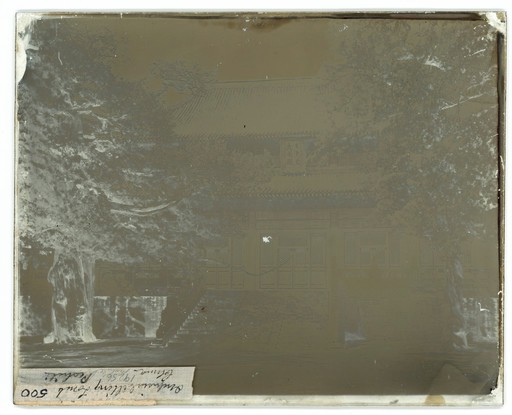
Sepia-toned glass-plate photograph of a multi-roofed temple hall with curved eaves, seen from outside, with large trees on the left and a stone railing in the foreground. A handwritten paper label is at the bottom edge, upside down.Photograph

Primary source

Temple of Confucius, Peking (Exterior)

John Thomson · 1871

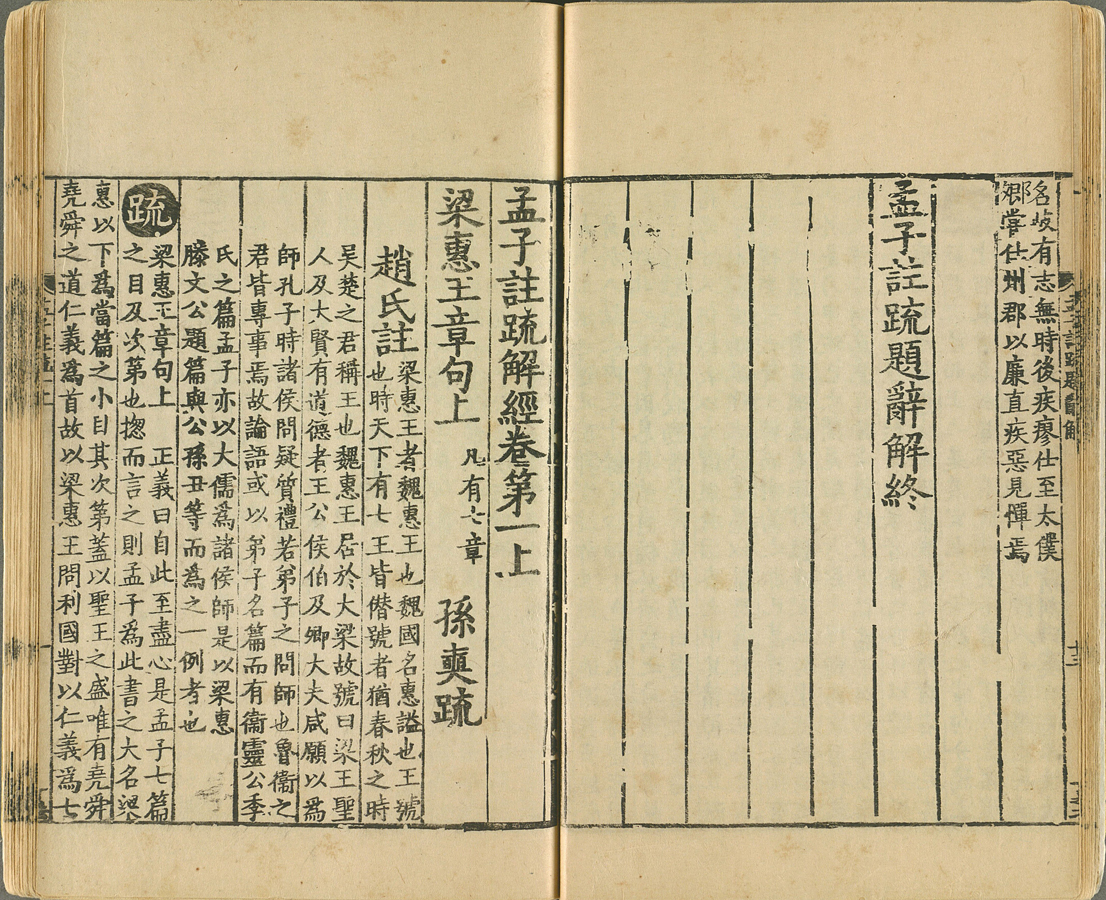
Open page of an old Chinese woodblock-printed book with vertical columns of classical Chinese characters, a large title reading 孟子註疏解經卷第一上 (Mencius annotated commentary, first scroll, part one) and a smaller subtitle, with blank ruled pages on the right and marginal notes at the top right.Book

Secondary source

Mencius

Mencius · late 4th century BCE

Book

Secondary source

Great Learning

Confucius and Zengzi · Compiled after Confucius's death, later canonized during the Song dynasty

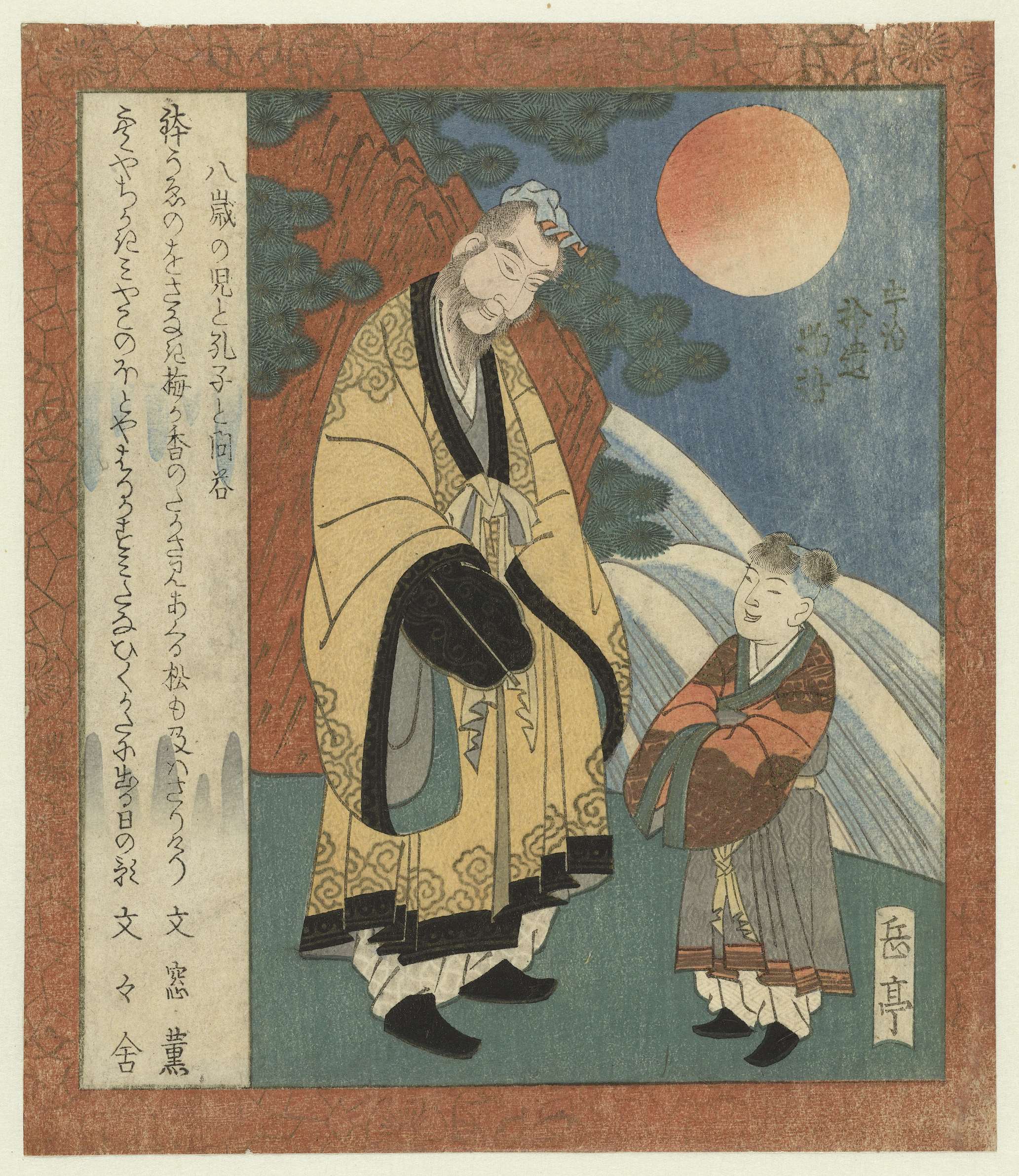
Japanese woodblock print in a red patterned border. An elderly bearded man in a yellow robe with black trim stands beside a smiling child in a red and brown patterned robe, under a large orange moon, with a pine tree and a red cliff behind them. Vertical Japanese text panel on the left.Painting

Secondary source

Confucius and an Eight-Year-Old Boy

1829

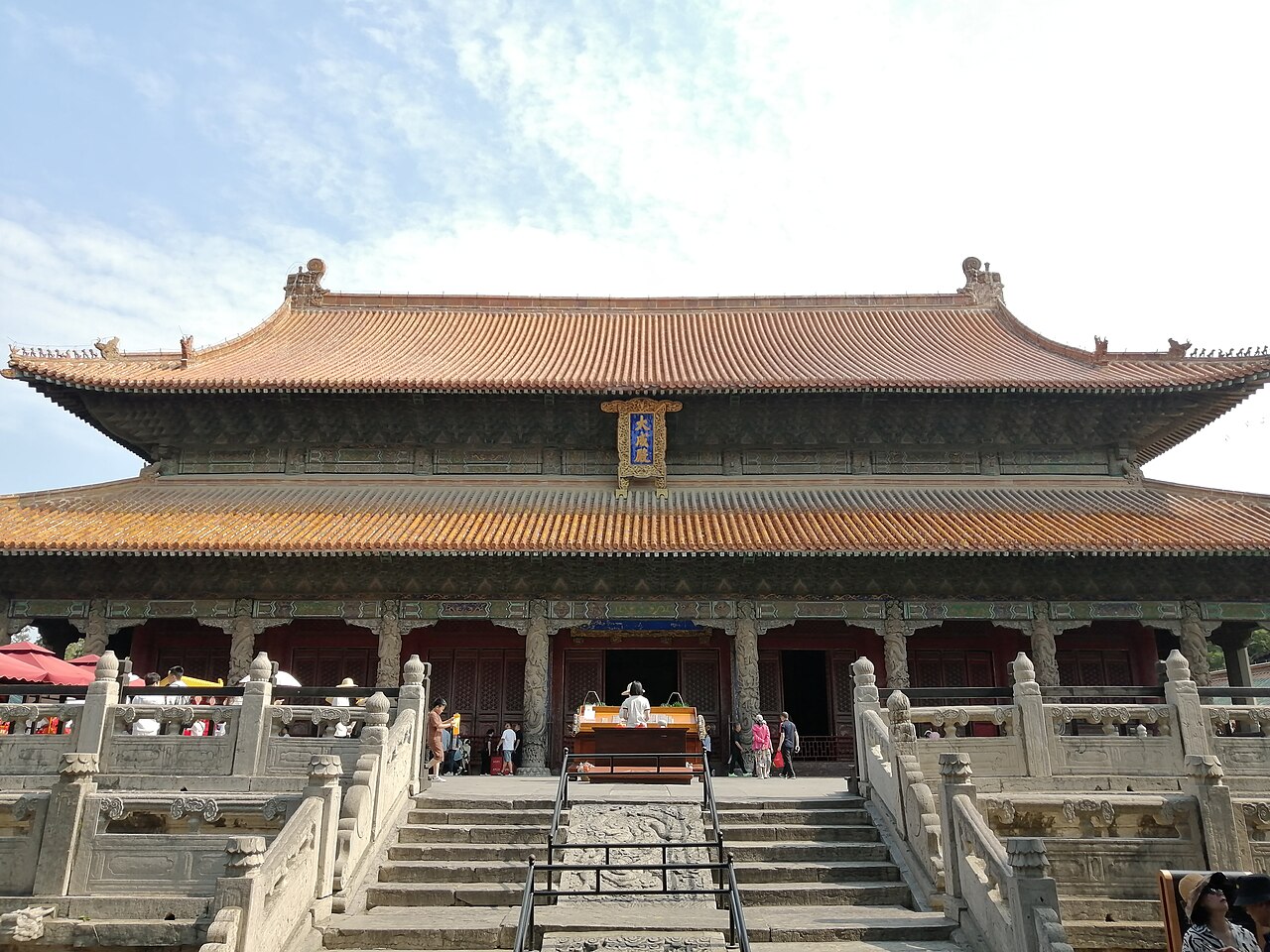
Front view of a large traditional Chinese temple hall with a double-eaved roof of golden-yellow glazed tiles, red wooden walls, and a tall stone-railed staircase leading up to the entrance. Visitors stand near the steps.Artifact

Secondary source

Temple of Confucius, Qufu

Begun 478 BCE, expanded through later dynasties

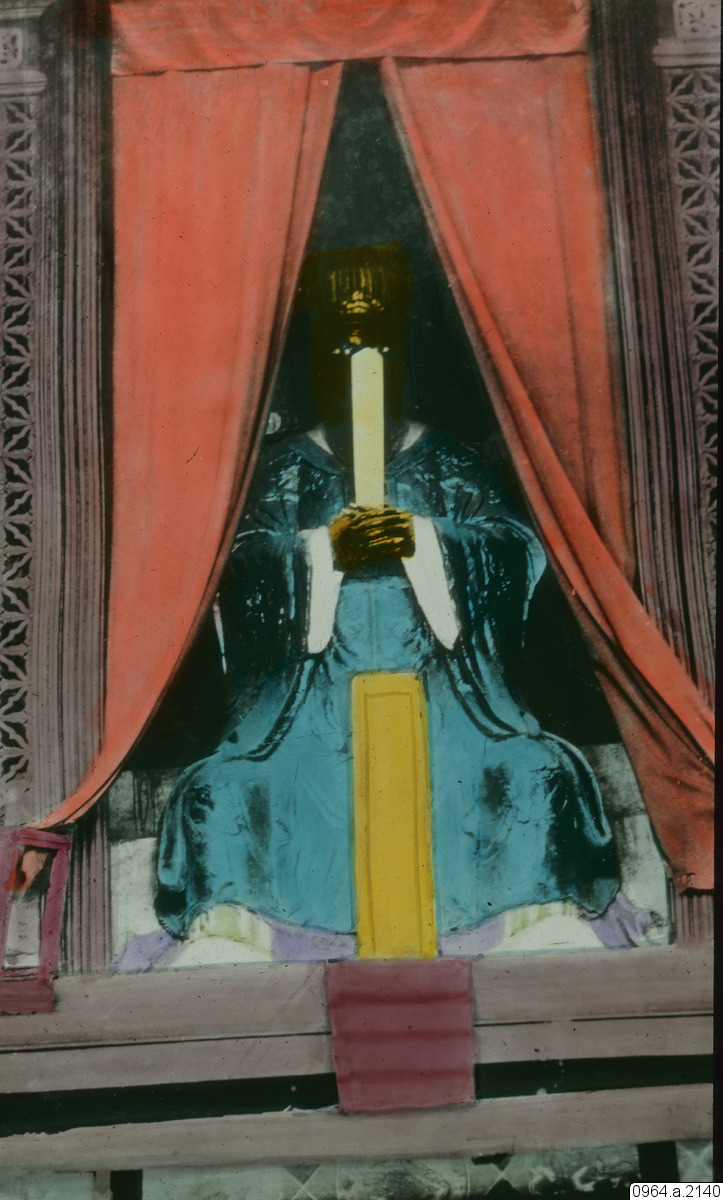
Hand-colored lantern slide of a seated figure in a blue robe and tall black hat, holding a yellow tablet over its face. Red curtains frame it inside a carved wooden shrine.Photograph

Secondary source

Photograph of a Seated Confucius Statue

Okänd

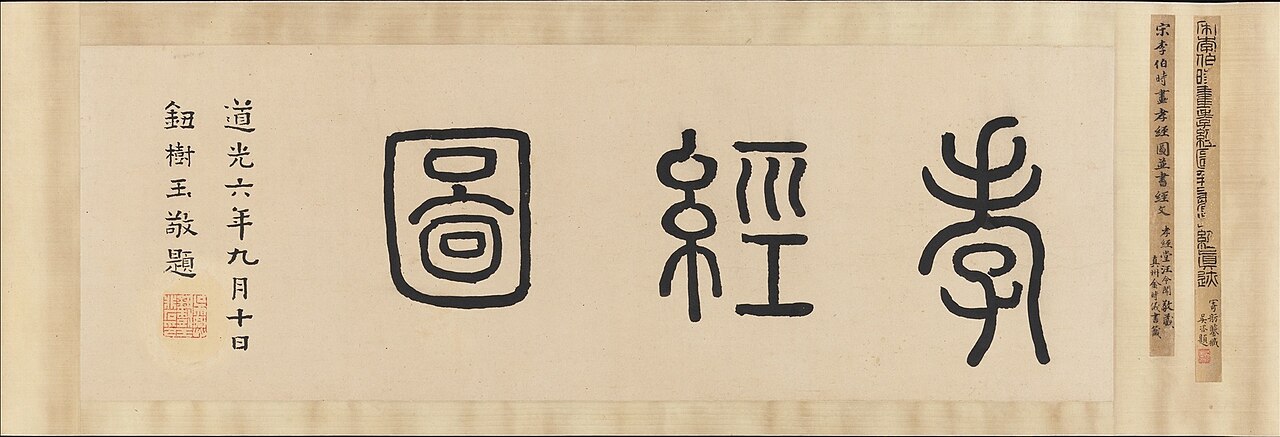
Calligraphy scroll frontispiece reading 孝經圖 (Classic of Filial Piety illustration) in large black seal-script characters on pale paper. At left is a dated inscription in standard script with a red seal stamp. Narrow side panels with small text are at the right edge.Book

Secondary source

Classic of Filial Piety

Unknown, attributed to Confucius and Zengzi · c. 400 BCE

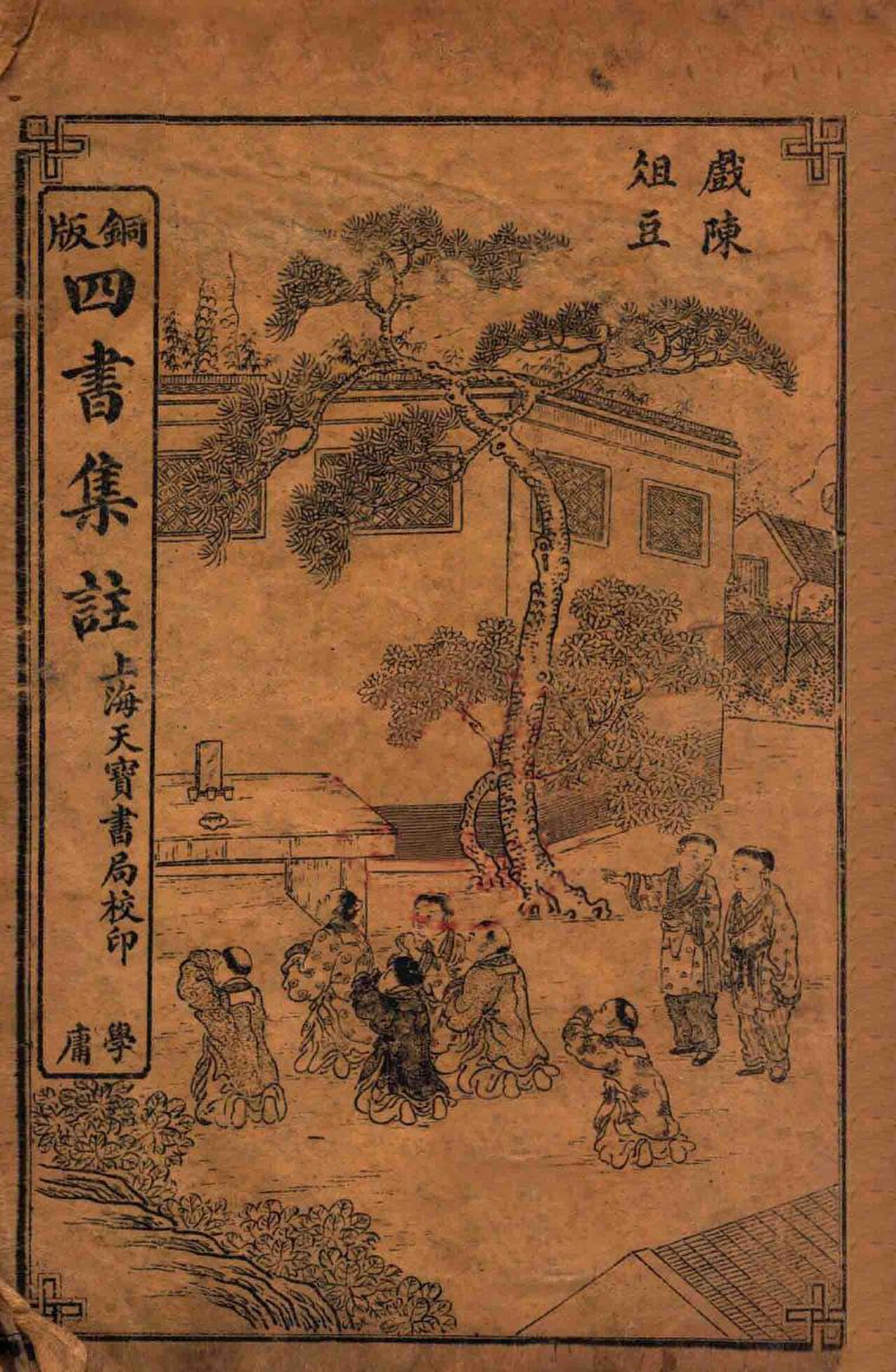
Title page of a Chinese woodblock-printed edition of the Four Books with commentary, on tan paper. Vertical black characters read 四書集註 and 上海天寶書局校印. Above is a pine tree over a tiled-roof courtyard, where children play, with a small table in the foreground.Book

Secondary source

Doctrine of the Mean

Zisi · Attributed to Zisi, later canonized during the Song dynasty

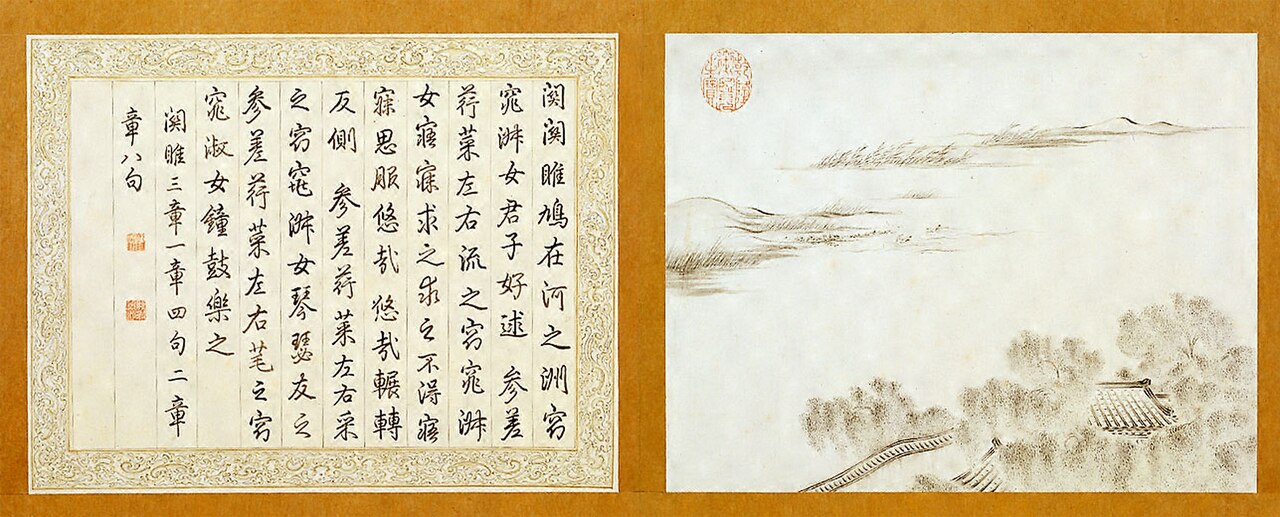
Handscroll spread showing a calligraphy page on the left with vertical lines of Chinese characters in a gold-bordered frame, and a painted landscape leaf on the right with a red seal, misty hills, trees, and a pavilion roof.Book

Secondary source

Classic of Poetry

Various authors · 11th-7th century BCE

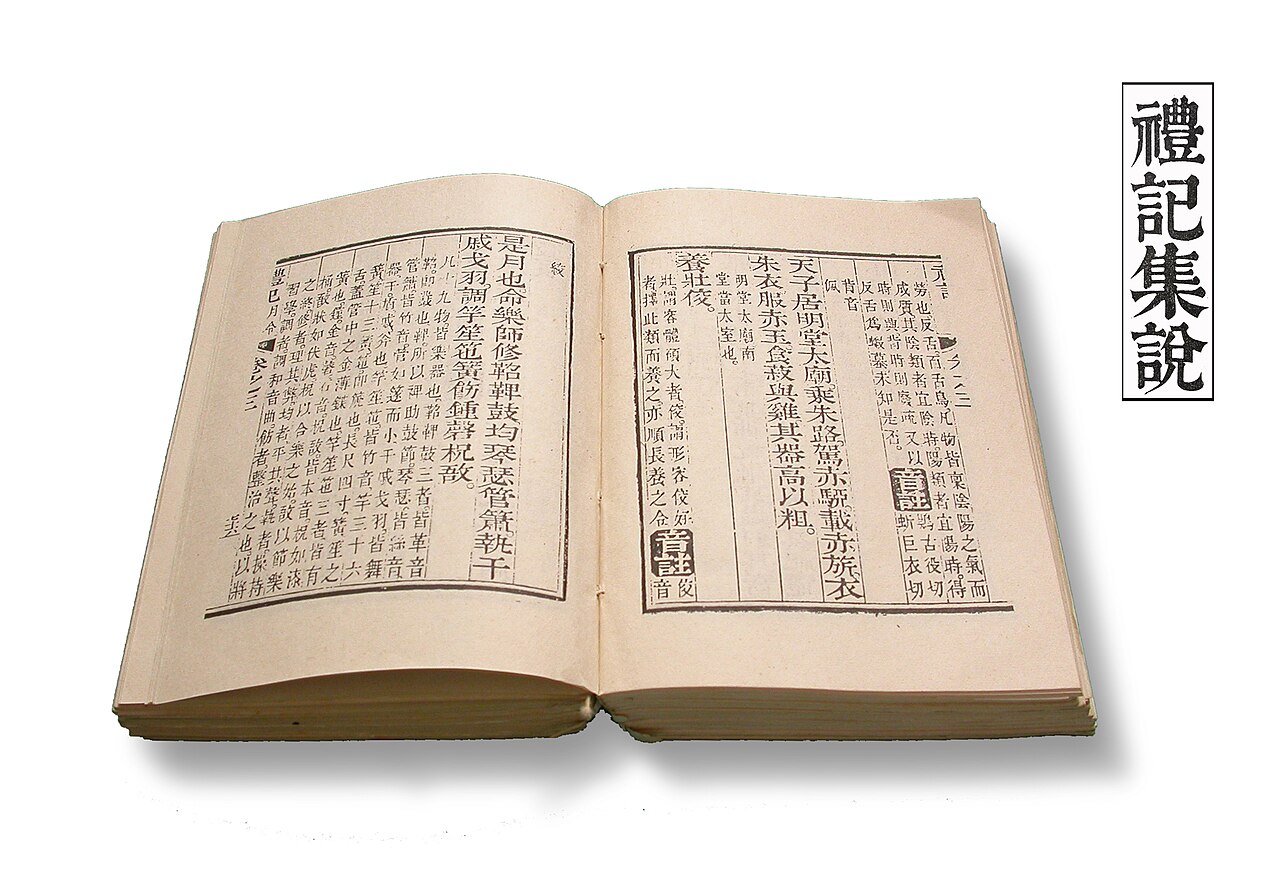
An open printed book of woodblock-style Chinese text on cream paper, with vertical columns of black characters and boxed page borders, photographed against a white background. A vertical title label in Chinese characters appears at the upper right.Book

Secondary source

Book of Rites

Dai Sheng and others · 1st century BCE

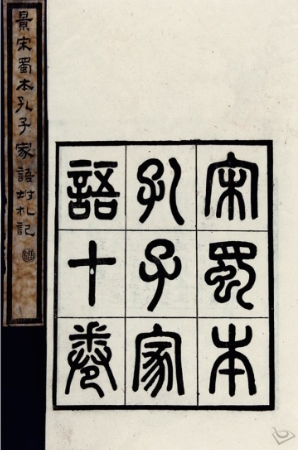
Cover of a printed Chinese book. A vertical strip on the left edge carries printed characters in regular script. The main panel shows a boxed title in seal-script characters on white paper, arranged in a 3-by-3 grid read right to left.Book

Secondary source

Kongzi Jiayu

Kong Anguo · compiled by Han dynasty, surviving version associated with 3rd century CE; this print 1895

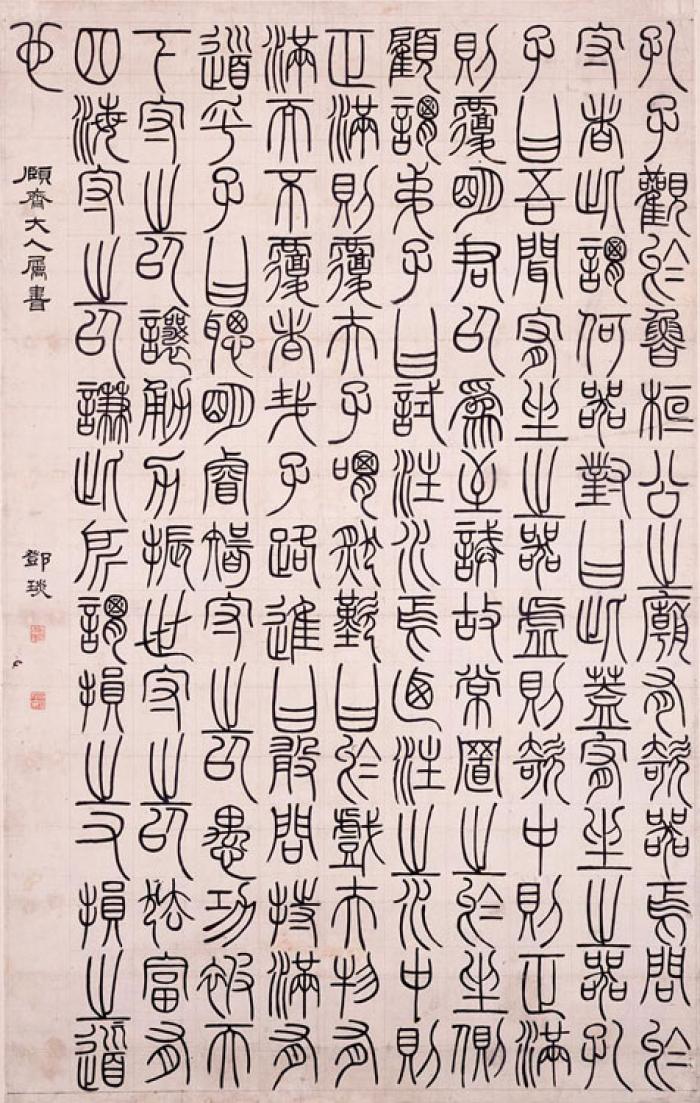
A hanging scroll of ink calligraphy in seal script, written in vertical columns on paper, with a signature and red seal stamps at the lower left. The text is a passage from the Xunzi, written by Deng Shiru.Book

Secondary source

Xunzi

Xunzi · 3rd century BCE; this scroll before 1796

Scan of a page from an old printed Chinese book on yellowed paper, with vertical columns of classical Chinese text. The header at upper right reads 墨子卷之七 (Mozi, volume seven). A small printed note appears at the lower right corner.Book

Secondary source

Mozi

Mozi · Warring States period, 476-221 BCE

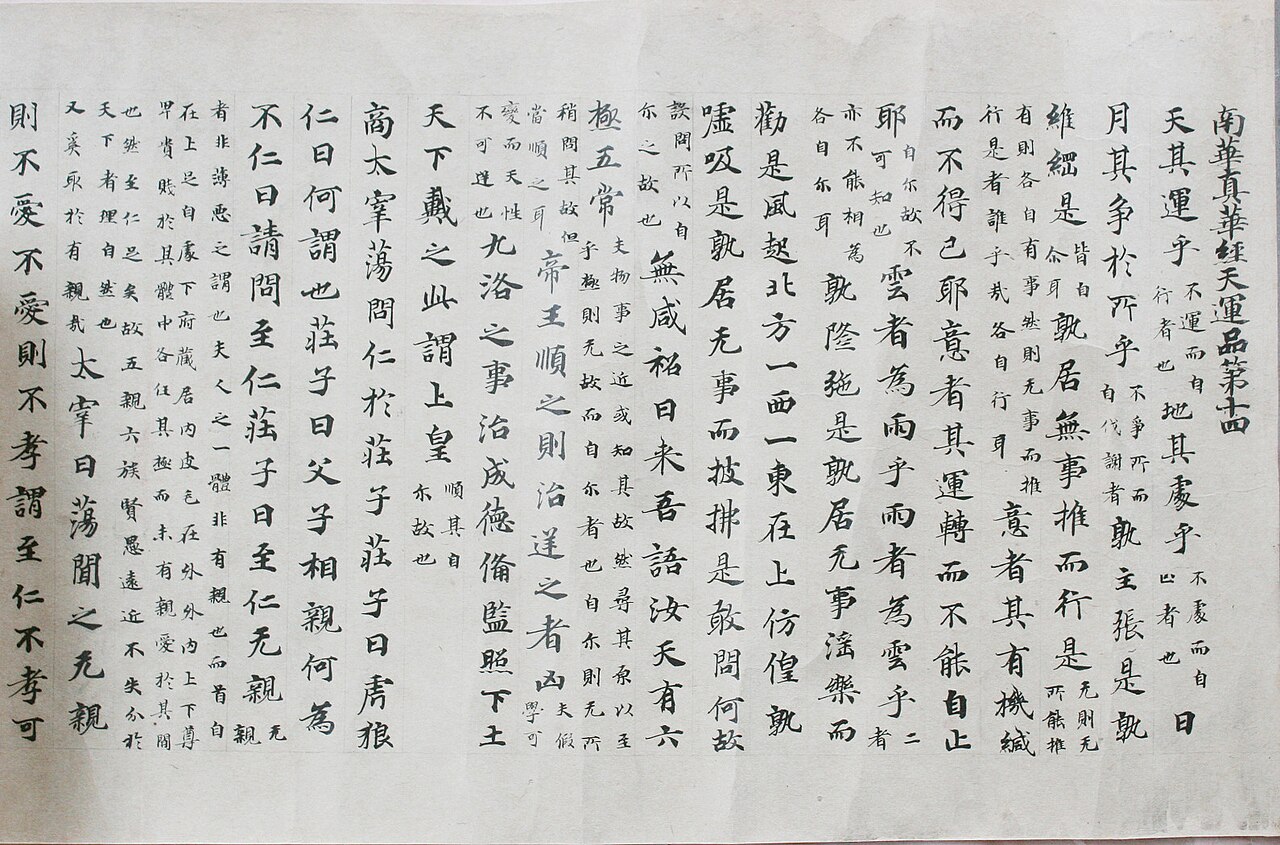
Photograph of a handwritten classical Chinese manuscript page in vertical columns of brush-written characters on aged paper, with a title line at the top right reading as a chapter heading from the Zhuangzi.Book

Secondary source

Zhuangzi

Zhuang Zhou · c. 300 BCE

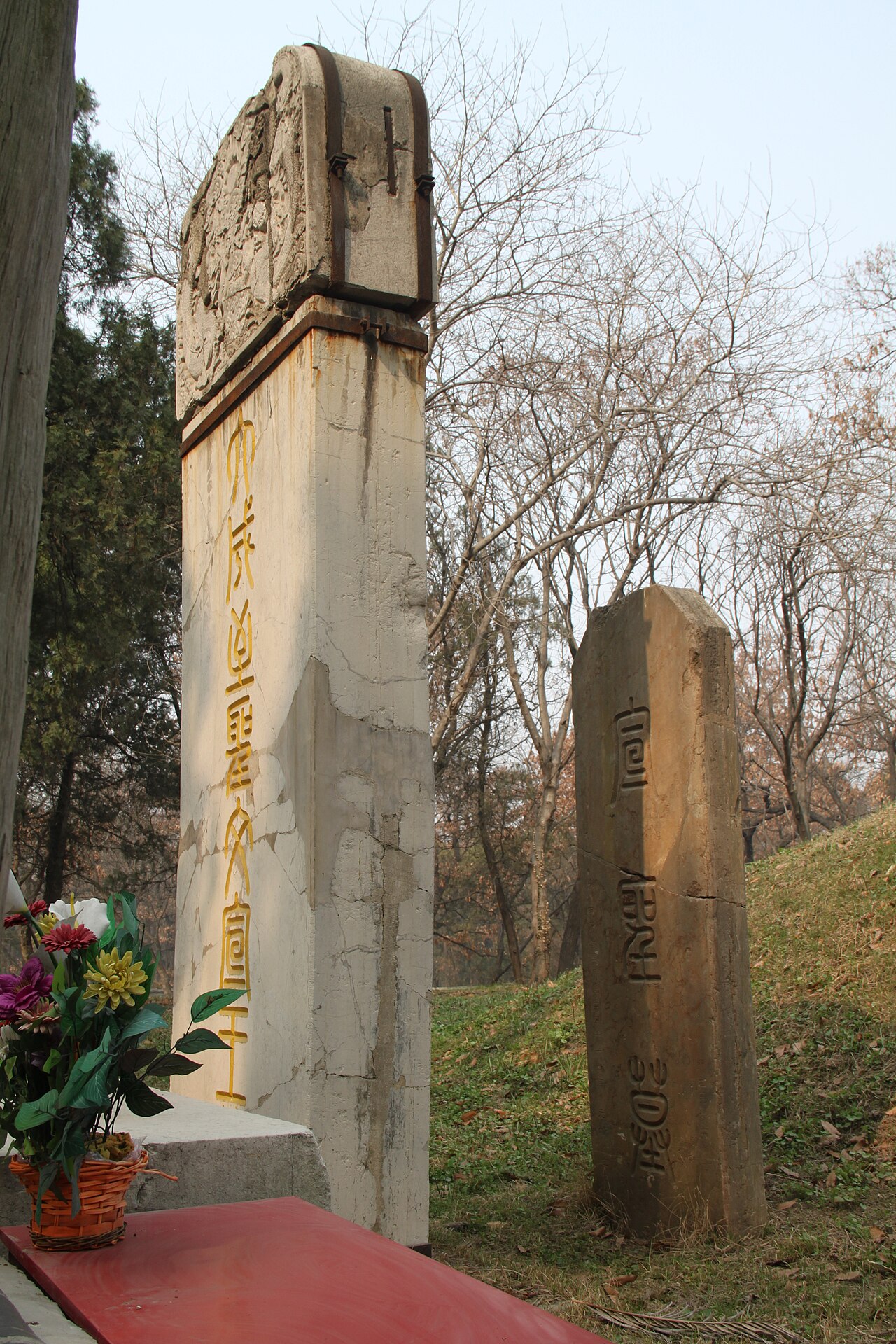
Two tall stone steles stand in a grassy cemetery area with bare winter trees behind them. The left stele has a carved top and gold seal-script characters. The right stele is plain with carved characters. A vase of artificial flowers sits on a red base in the foreground.Artifact

Secondary source

Tomb of Confucius, Cemetery of Confucius

Disciples; later imperial expansions · 479 BCE onward

Painting of an elderly bearded man with a long dark beard and blue head wrap, wearing a brown robe with blue and white sashes, against a tan background. He has a calm, slightly downward gaze.Painting

Secondary source

Portrait of Confucius at Leisure

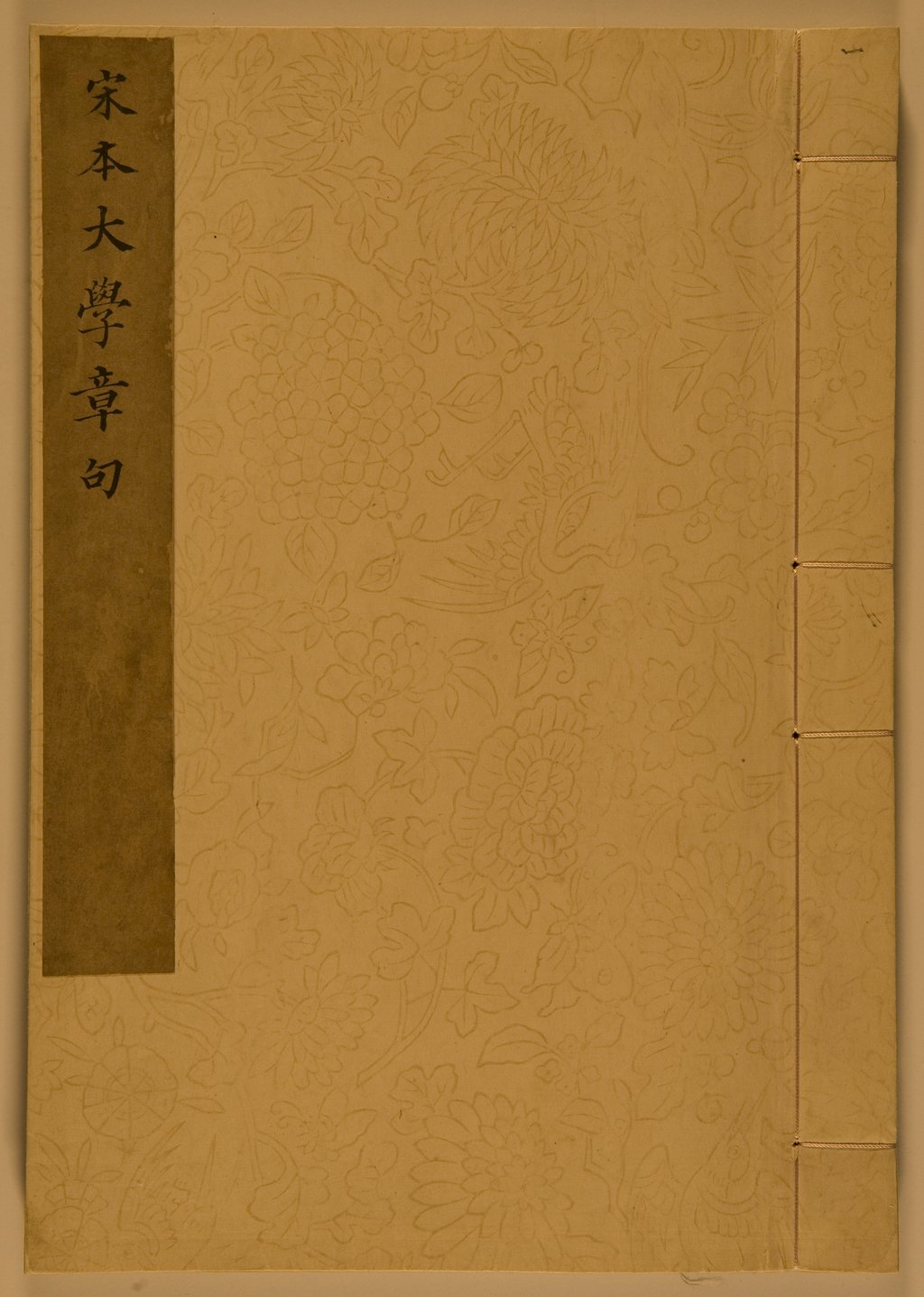
Front cover of a Chinese bound book in tan paper with a faint floral and chrysanthemum pattern. A dark brown vertical label on the left bears three columns of black Chinese characters. Four stitched binding holes run down the right edge.Book

Secondary source

The Four Books in Chapter and Verse with Collected Commentaries

Zhu Xi · Song dynasty, 960-1279

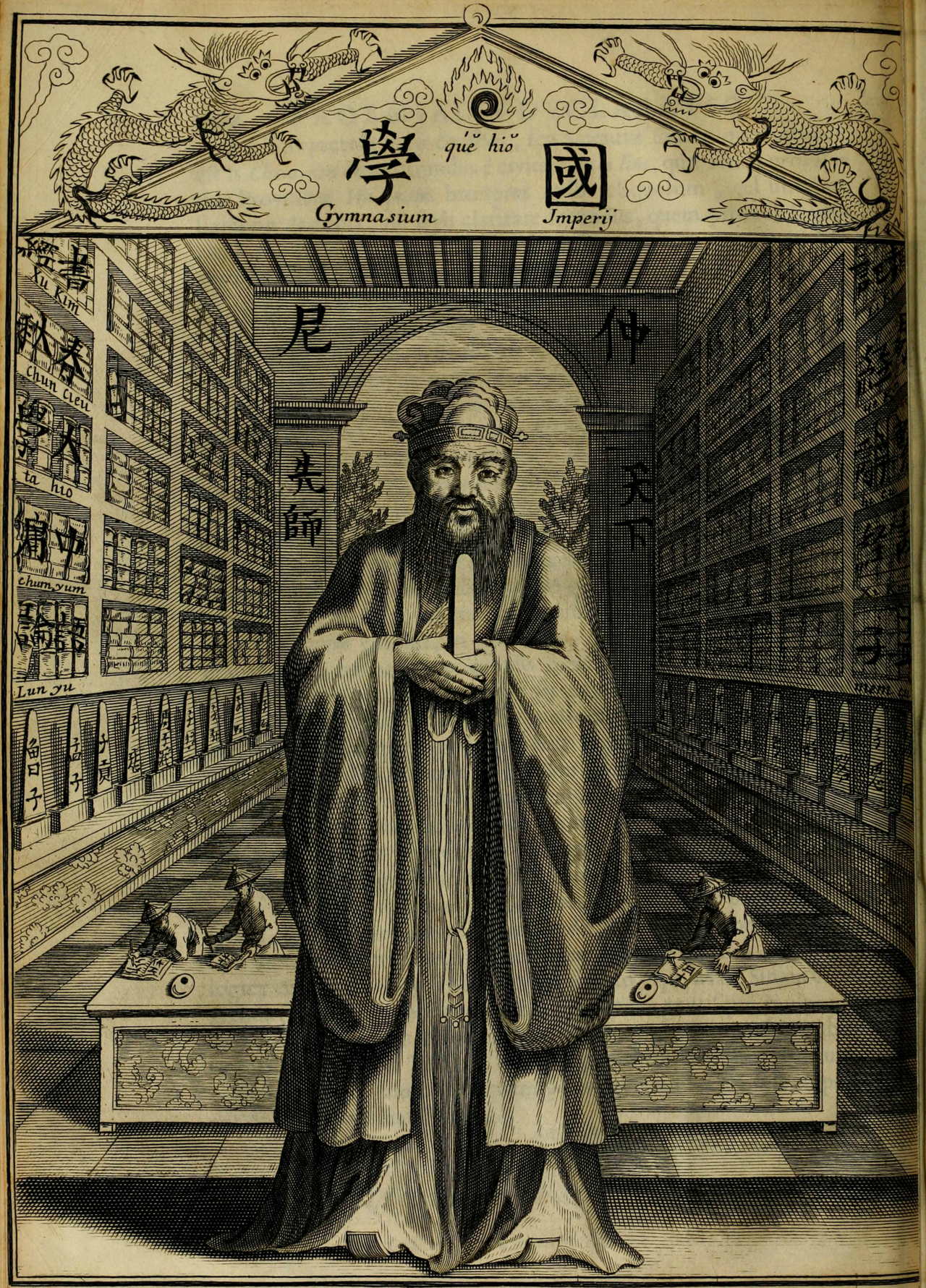
Engraved frontispiece: a bearded man in long robes and a tall hat stands holding a tablet, between bookshelves. Two scribes work at tables at left and right. Chinese characters and dragons decorate the top and sides.Book

Secondary source

Confucius Sinarum Philosophus

Prospero Intorcetta, Philippe Couplet and others · 1687

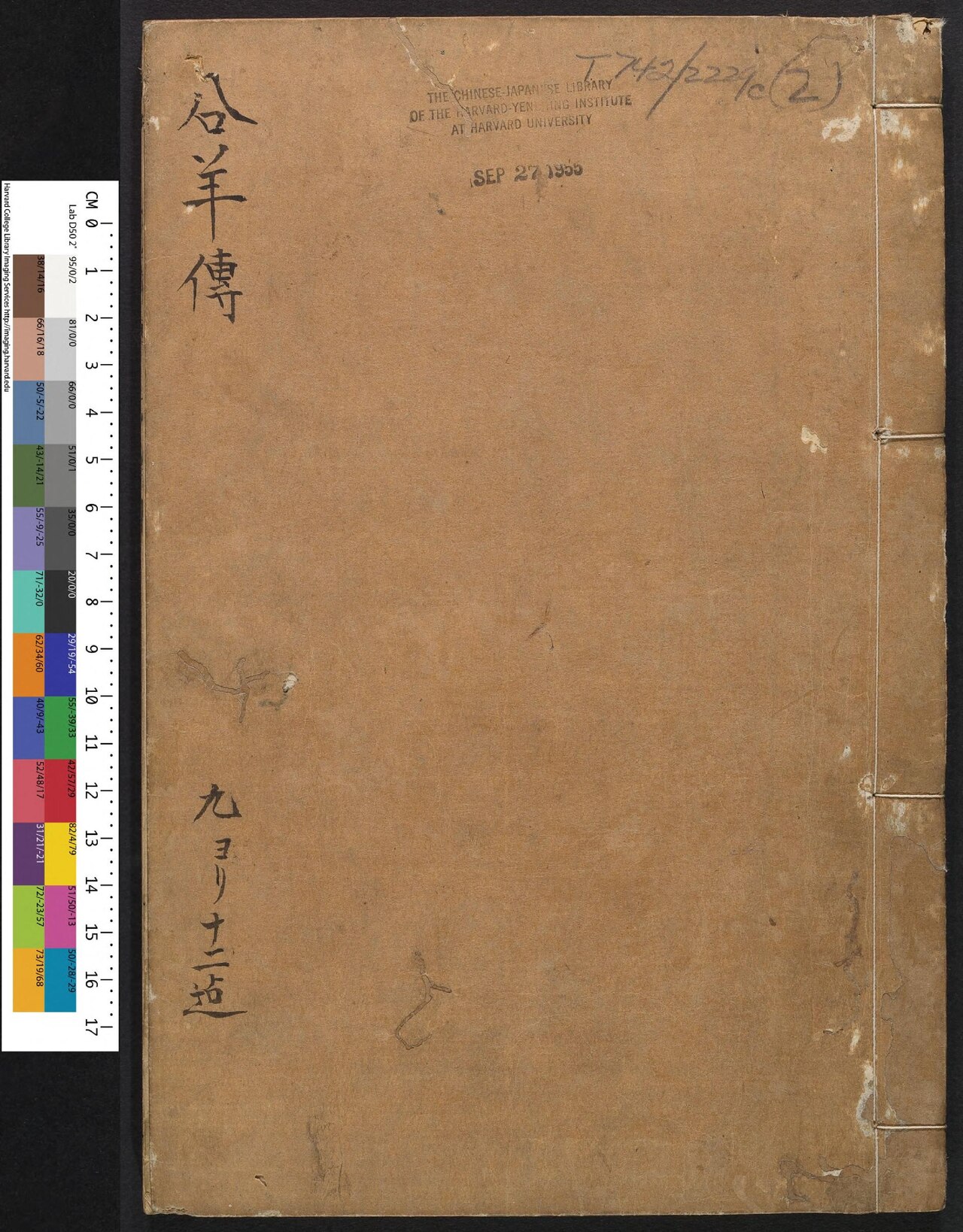
Front cover of a bound Chinese book with brown paper wrapping and two stitched binding holes on the right edge. Black brush title reads 公羊傳 with 九ヨリ十二迄 written below, and a library stamp reads The Chinese-Japanese Library of the Harvard-Yenching Institute, Sep 27 1955, with a call number. A color calibration strip is on the left.Book

Secondary source

Gongyang Zhuan

Attributed to Gongyang Gao · c. 3rd-2nd century BCE

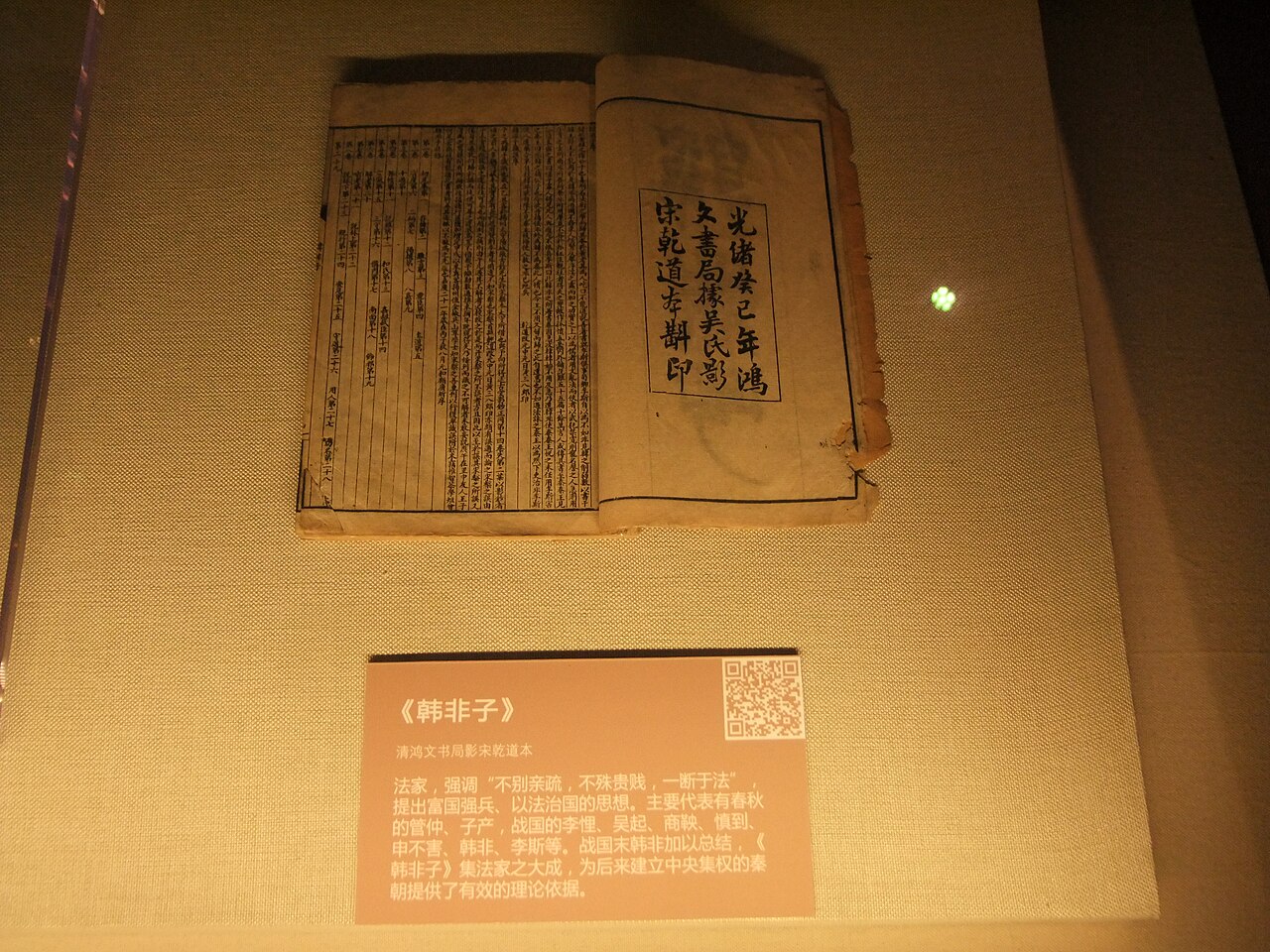
A photo of an open old Chinese bound book in a museum display case, with printed columns of classical text on the left page and handwritten calligraphy on the right page. Below is a placard with Chinese text titled Han Feizi.Book

Secondary source

Han Feizi

Han Fei · c. 3rd century BCE

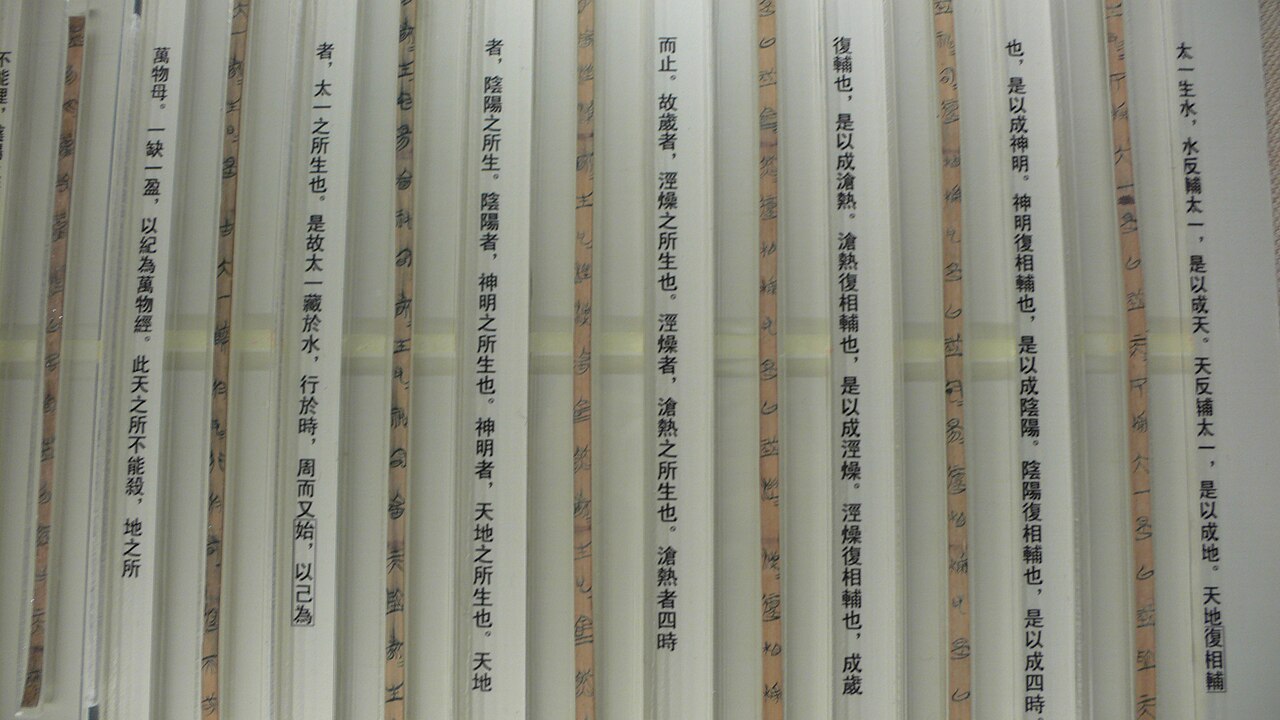
Partial view of a museum display of thin bamboo slips standing upright in a row, each with vertical Chinese characters. Printed black text on white panels in front of the slips reads in columns.Artifact

Primary source

Bamboo Texts of Guodian

c. 300 BCE

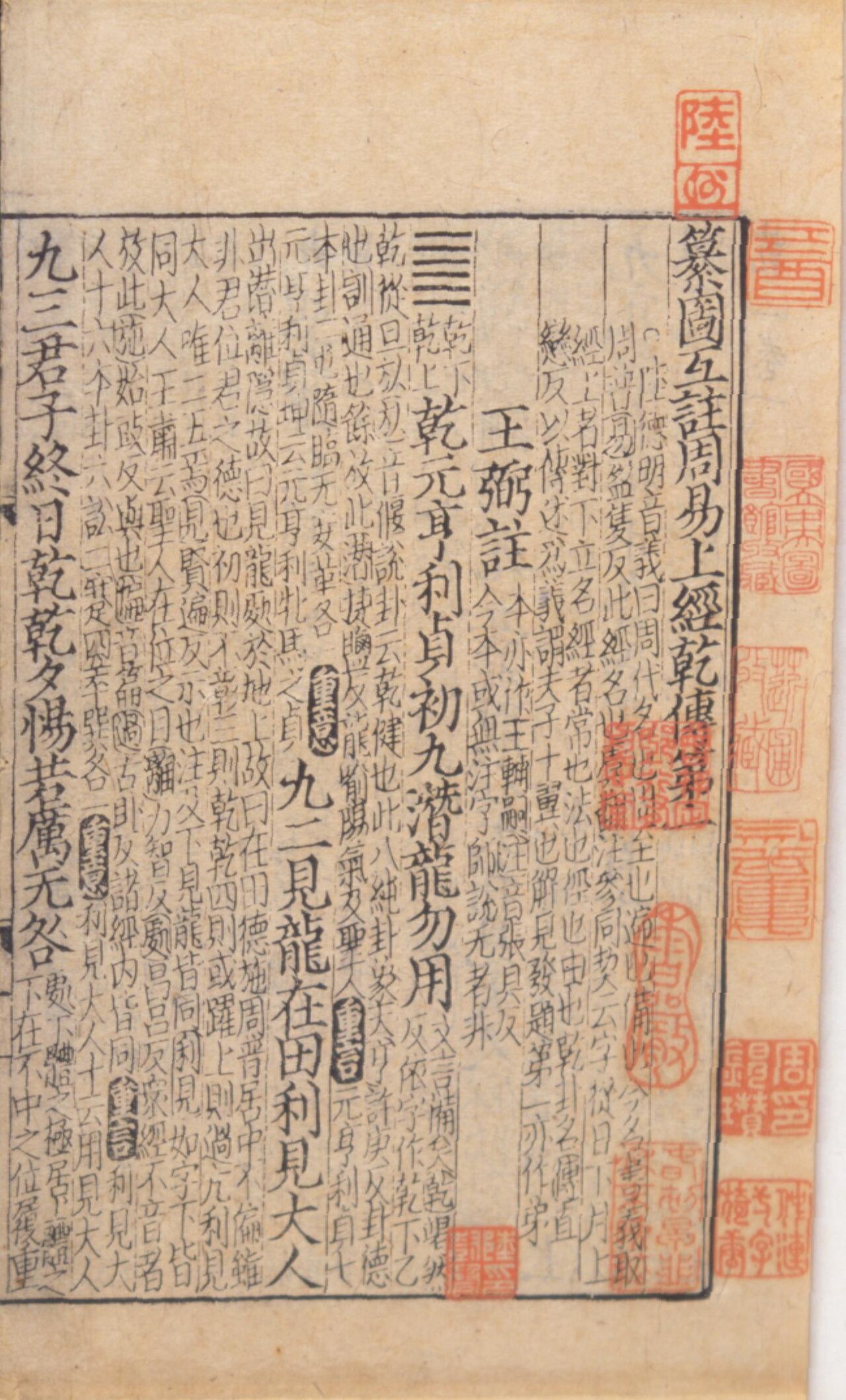
Scan of a page from a Chinese woodblock-printed book in vertical columns of black Chinese characters on aged yellowed paper. Red seal stamps appear in the margins and at the top right. The page includes the heading 乾傳 with commentary text and hexagram lines at the top.Book

Secondary source

I Ching

Fuxi · Song dynasty, 960-1279 (printing); core text much older

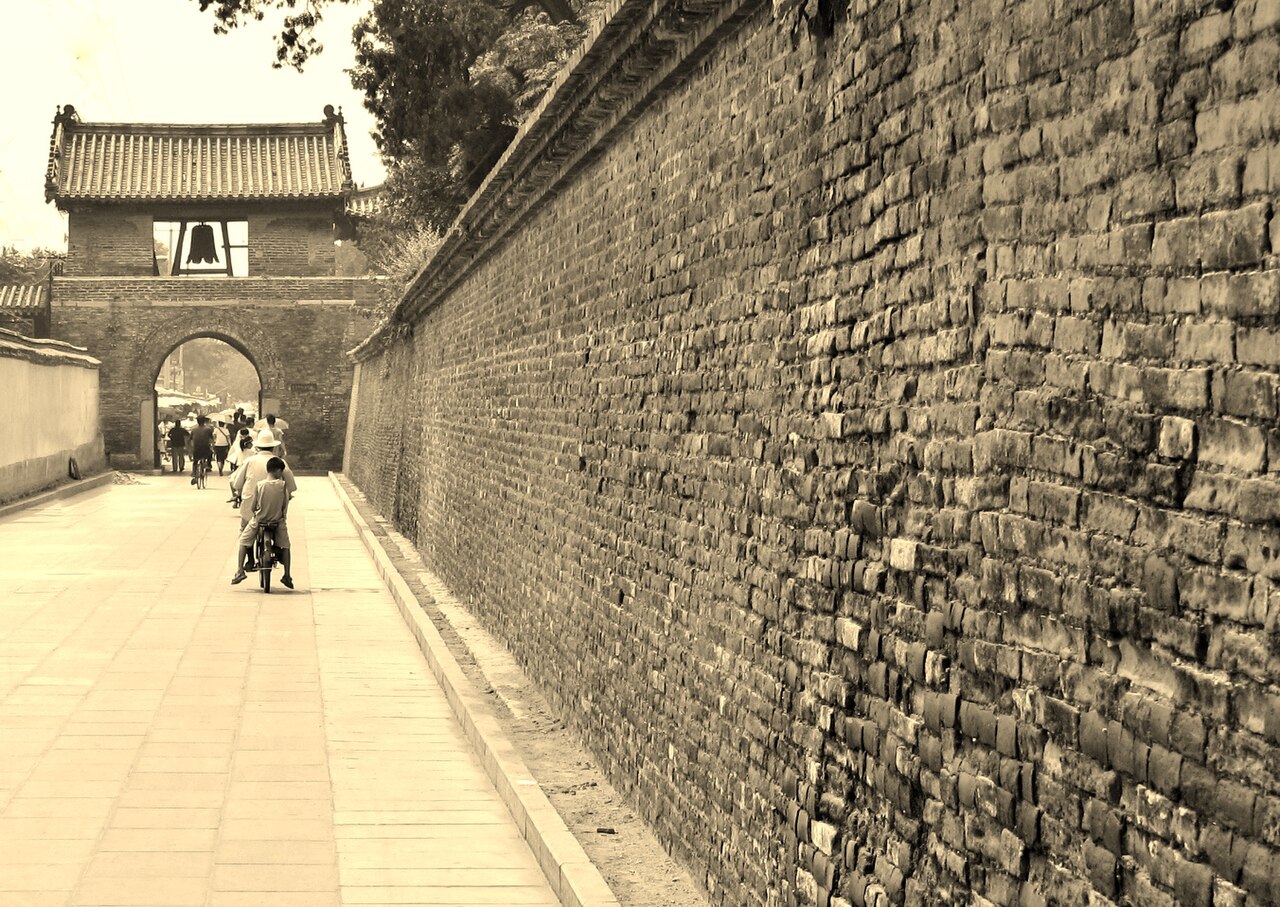
Sepia-toned photo of a long brick wall with a tiled roof ridge running along its top, beside a paved walkway. At left, a brick gatehouse with an arched passage and a bell-shaped window opening. People and a cyclist walk toward the gate.Artifact

Secondary source

Kong Family Mansion

Kong family · Song–Qing dynasties

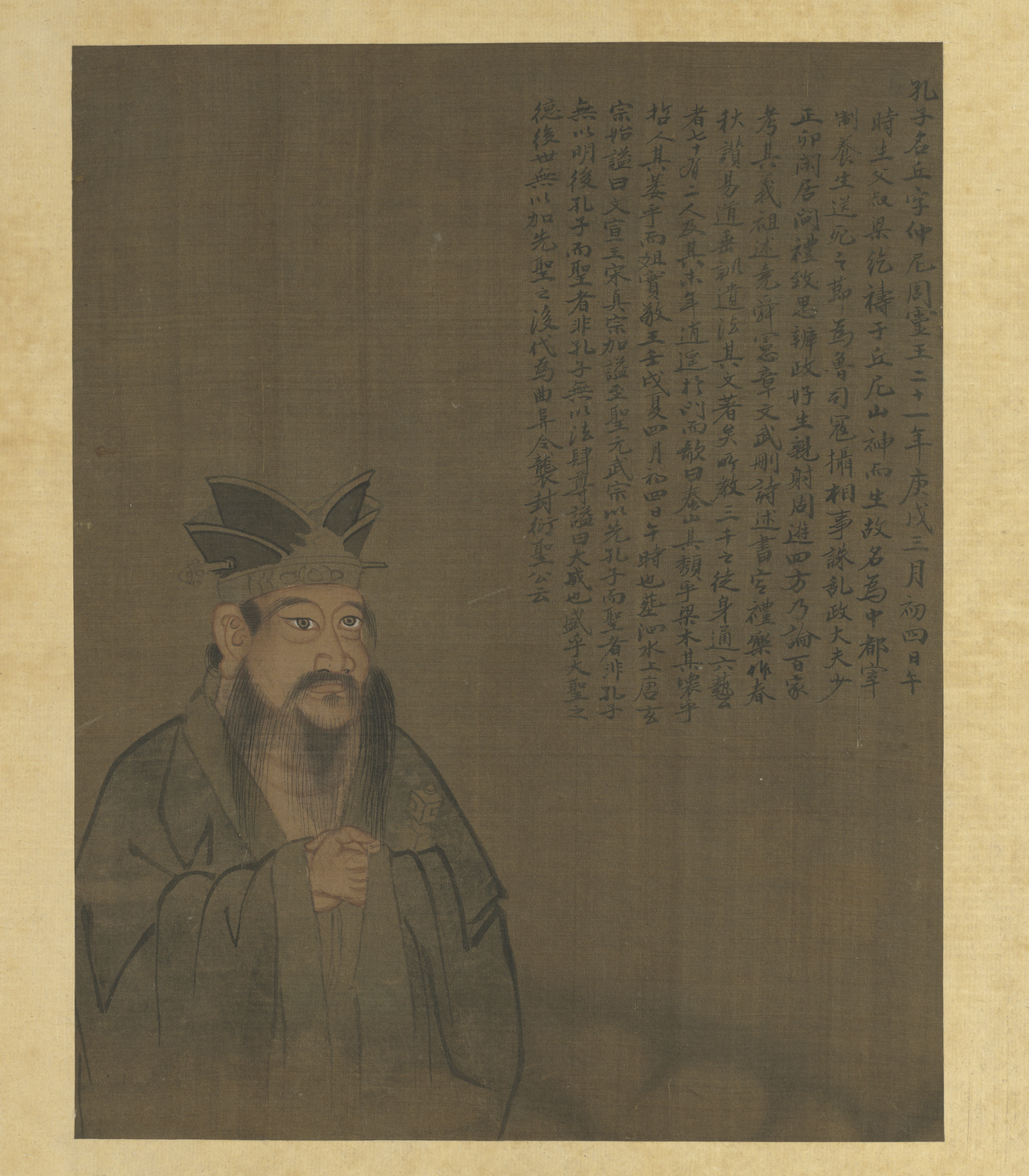
Painting on silk of a bearded man in a dark green robe and tall black cap with upturned wings, hands clasped at his chest, facing left. Vertical Chinese calligraphy text in black ink sits to the right on the brown background.Painting

Secondary source

Portrait of Kongzi in an Album of Sages Through the Ages

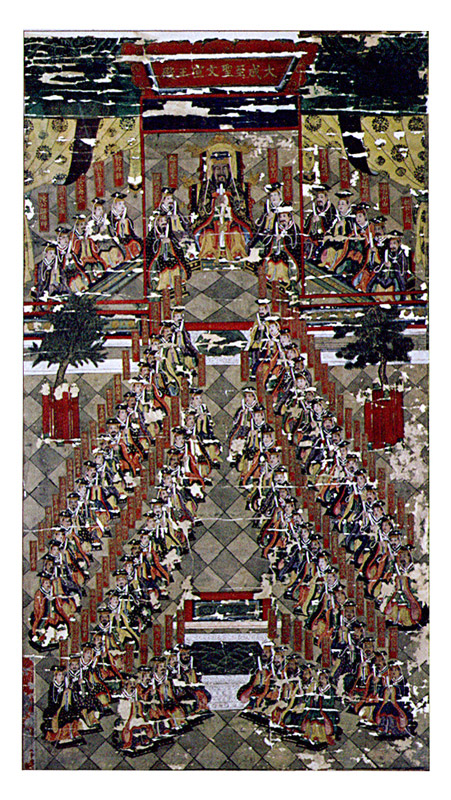
A painted hanging scroll showing a central throne under a red-roofed canopy where a seated sage figure is attended by rows of officials in robes and hats. Rows of attendants stand on a checkered floor, with red banners, pine trees, and a red inscribed plaque above.Painting

Secondary source

Daeseongji Seongmunseonwang Jeonjwado

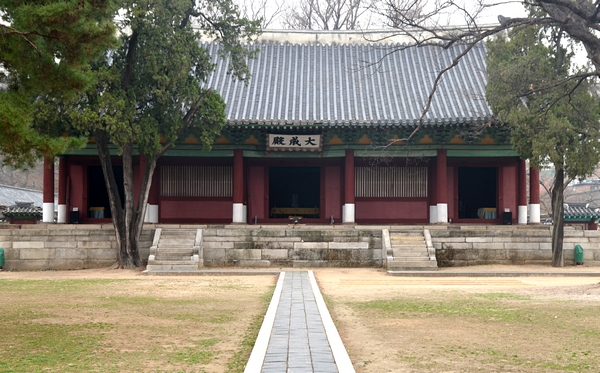
Front view of a traditional East Asian wooden hall with a dark tiled hip roof, red-painted pillars, and green-and-gold eave decoration. A plaque reading 大成殿 hangs above the central doorway. Stone terraces with stairs lead up to the open doors, and a stone-paved path runs across grass toward the building.Artifact

Secondary source

Munmyo

1398

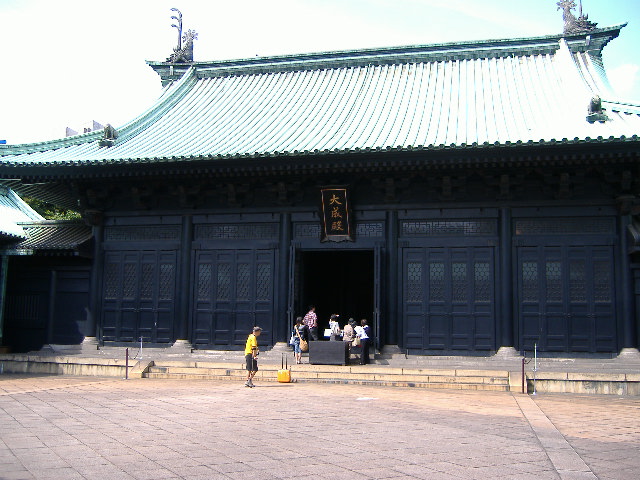
Front view of a large dark-wooden Chinese-style temple hall with a green tiled roof and upturned ridge ornaments. A black plaque with gold characters hangs above the central open doorway. Visitors stand on a stone platform and steps in front, and a person in a yellow shirt walks across a paved courtyard.Artifact

Secondary source

Yushima Seidō

1690

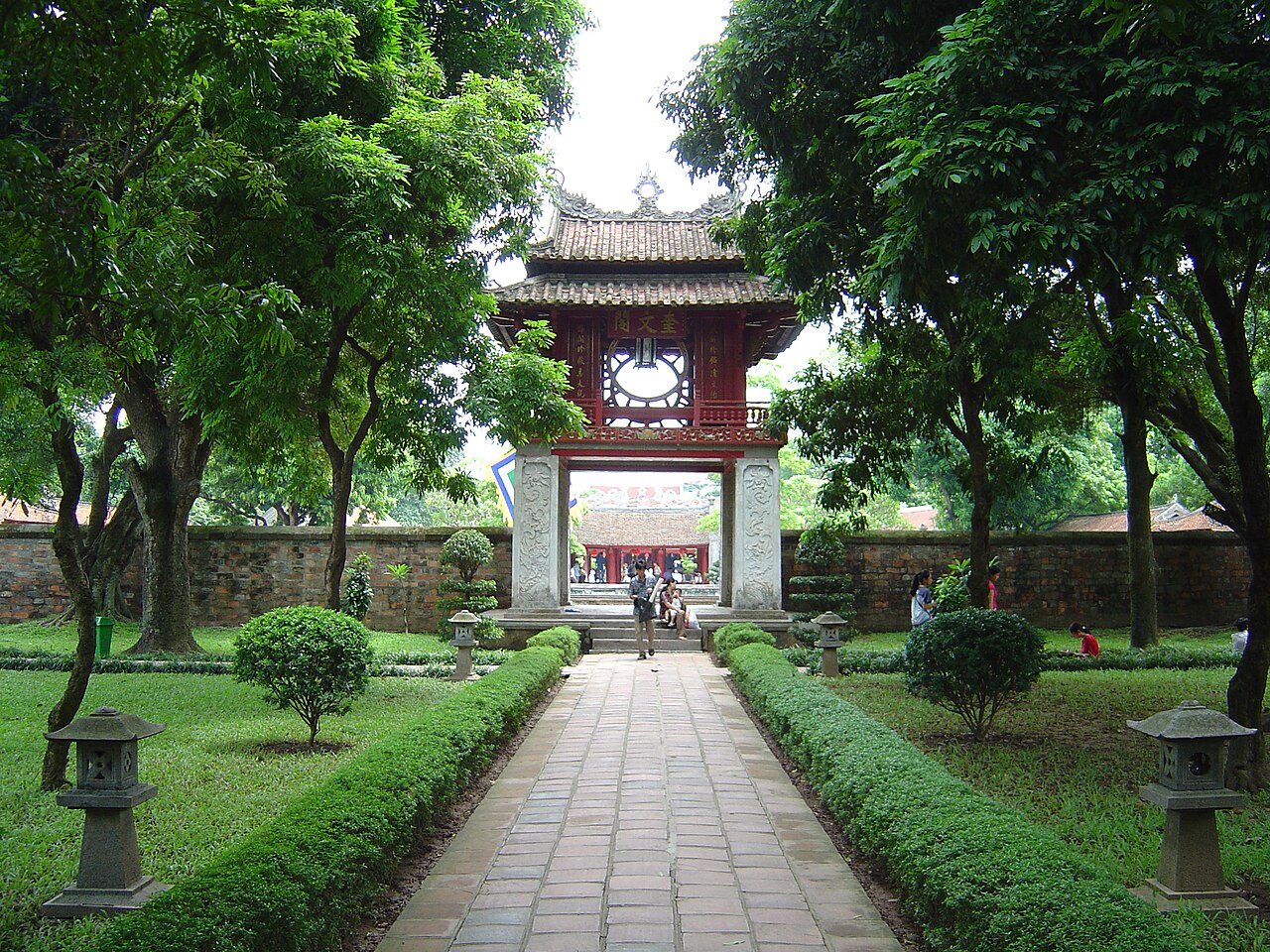
A red-and-tan traditional gateway with a tiled roof stands at the end of a brick path lined with clipped hedges, shade trees, and stone lanterns. Visitors walk toward it, and a stone courtyard and walls lie beyond.Artifact

Secondary source

Temple of Literature

1070

Book

Secondary source

The Analects (Legge translation)

James Legge

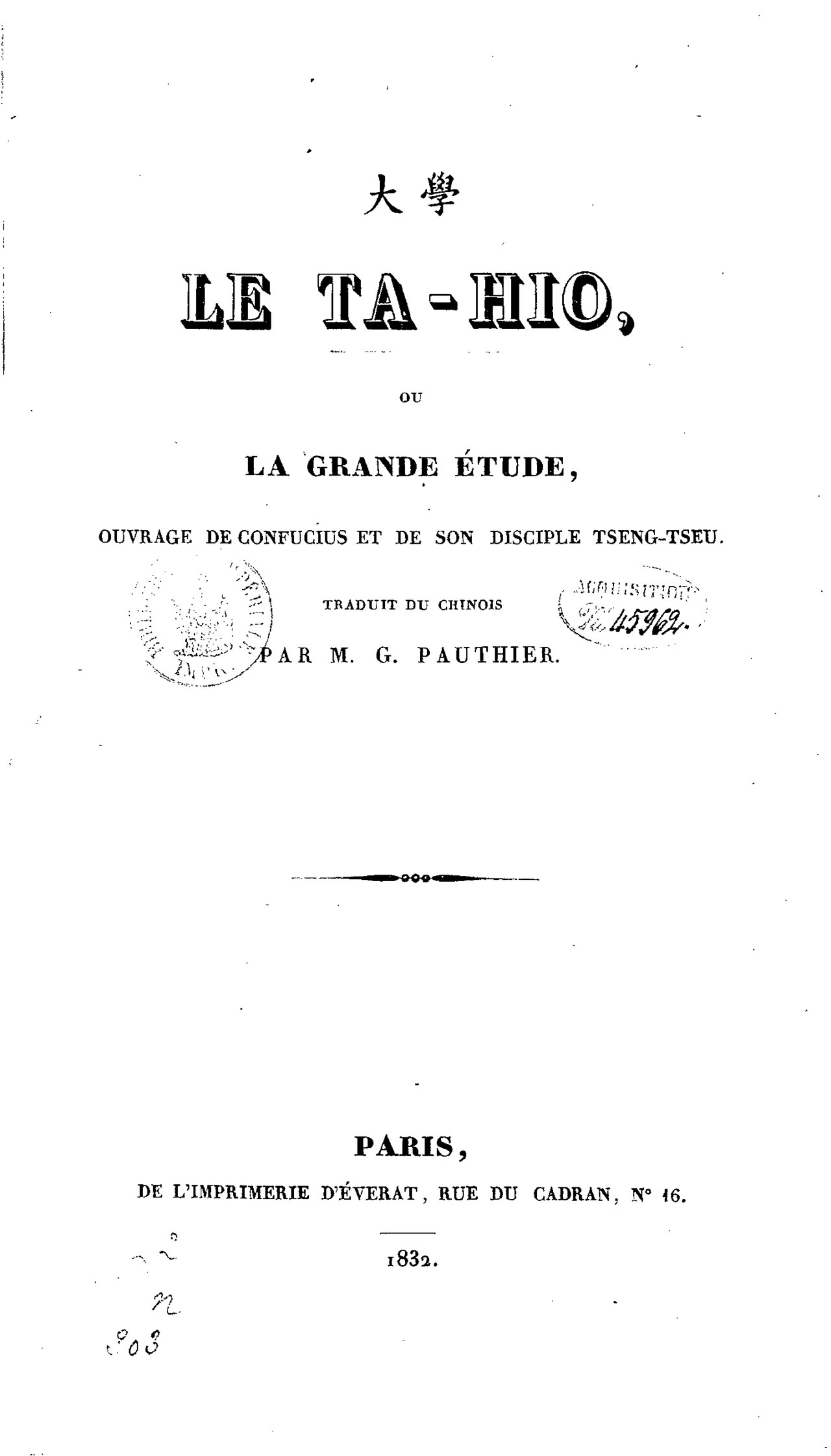
Title page of 'Le Ta-Hio, ou La Grande Étude' with Chinese characters above, translated from Chinese by M. G. Pauthier, Paris, De l'Imprimerie d'Everat, rue du Cadran no 16, 1832. Library stamps and handwritten shelf marks appear on the page.Book

Secondary source

Le Ta-Hio, ou la Grande Étude

G. Pauthier · 1832

Book

Secondary source

Annals of Confucius

Zi Hu

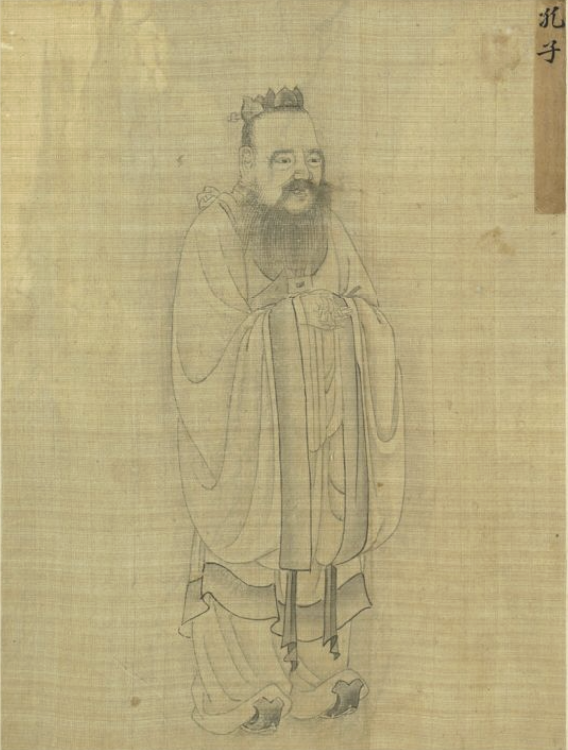
Ink line drawing on pale silk of a standing bearded man in long flowing robes and a crown, with hands clasped in front. A vertical label with Chinese characters appears at the upper right.Painting

Secondary source

Kongzi

Unknown author

Book

Secondary source

Guliang Zhuan

Guliang Chi

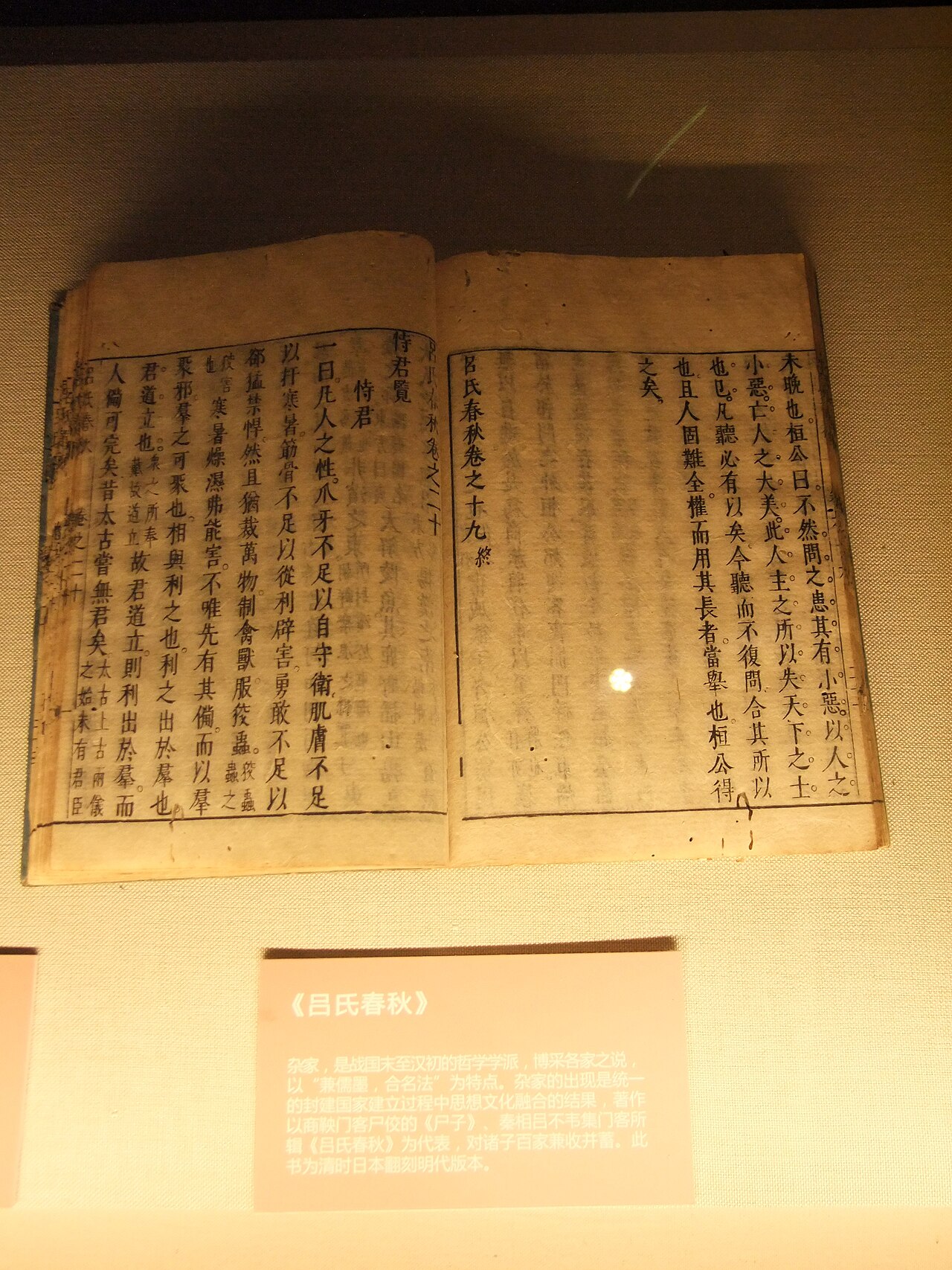
An open old Chinese woodblock-printed book in a museum display case, with vertical columns of black characters on yellowed paper. A Chinese caption card below reads 呂氏春秋 (Lüshi Chunqiu).Book

Secondary source

Lüshi Chunqiu

Lü Buwei (compiler) · c. 239 BCE

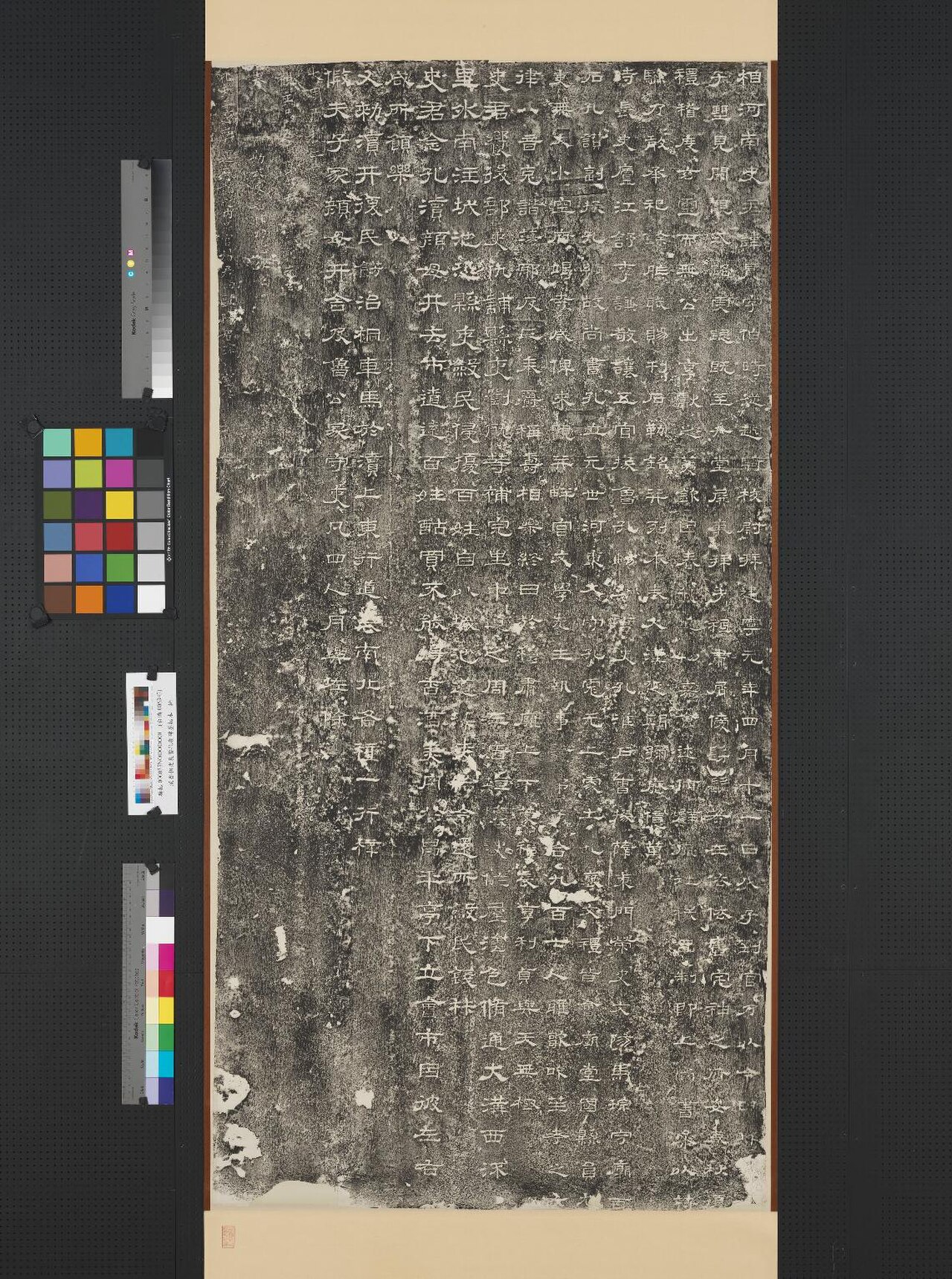
Ink rubbing mounted on a dark backdrop with color calibration charts at left. The rubbing shows a tall, dark stele surface with light-colored clerical-script characters arranged in vertical columns, with worn and damaged areas visible.Document

Primary source

Stele of Shi Chen Offering to the Temple of Confucius

Han dynasty officials of Lu · 169 CE

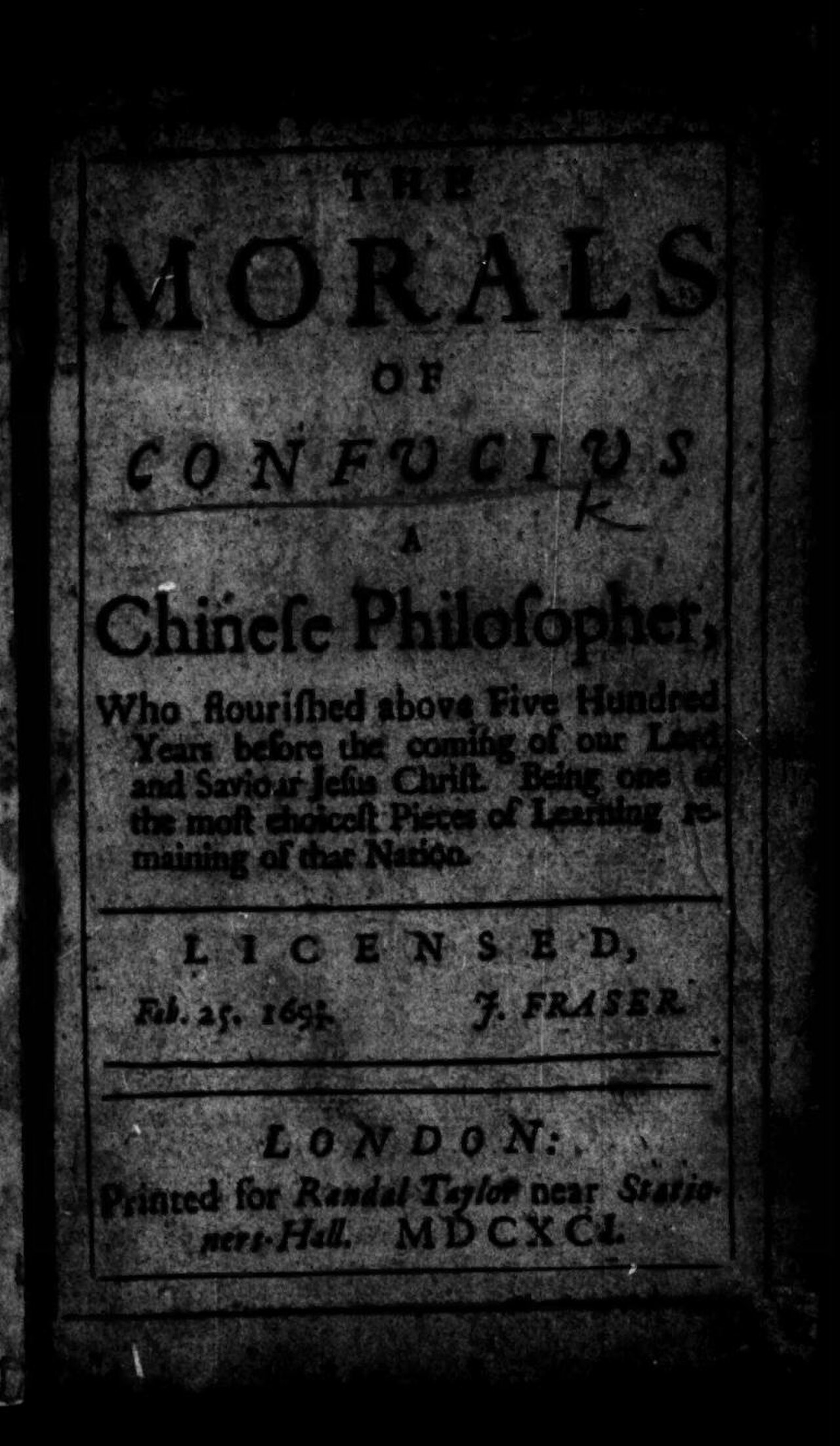
Title page of 'The Morals of Confucius, a Chinese Philosopher', dark scan. Text reads: 'The Morals of Confucius, a Chinese Philosopher, who flourished above Five Hundred Years before the coming of our Lord and Saviour Jesus Christ. Being one of the most choicest Pieces of Learning remaining of that Nation.' Below: 'Licensed, Feb. 25, 1691, J. Fraser' and 'London: Printed for Randal Taylor near Stationers-Hall, MDCXCI.'Book

Secondary source

The Morals of Confucius, a Chinese Philosopher

Anonymous (after Louis Cousin / Jean de La Brune) · 1691

Book

Primary source

The Great Learning and The Doctrine of the Mean

Confucius; Zengzi; Zisi

Book

Primary source

The Analects of Confucius

Confucius

Book

Primary source

The Sayings of Confucius

Confucius

Book

Primary source

Confucian Analects

Confucius · c. 475 BCE-221 BCE

Black-and-white rubbing of a stone relief showing a bearded man in a tall, feathered hat with a decorated band, long beard, and layered robes with sashes. Chinese seal stamps appear at upper right.Sculpture

Secondary source

Stone Tablet Relief of Confucius from Hsianfu

1727

The Life and Teaching of ConfuciusBook

Secondary source

The Life and Teaching of Confucius

James Legge · 1887

The Ethics of ConfuciusBook

Secondary source

The Ethics of Confucius

Miles Menander Dawson · 1915

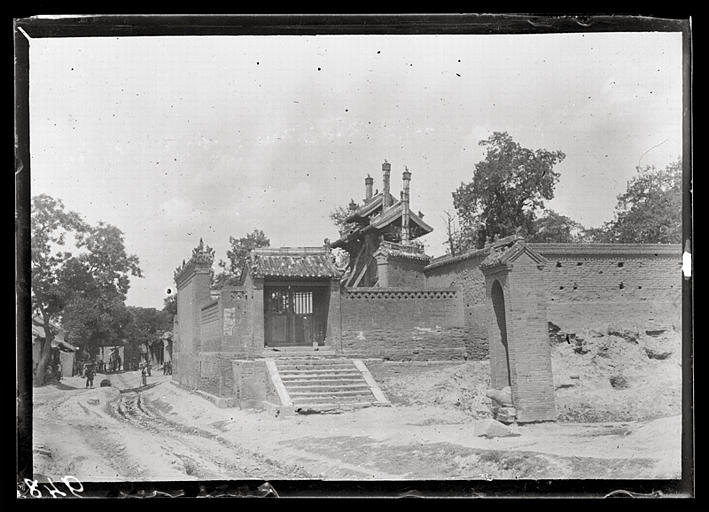
Black and white photograph of a brick temple-like building with a tiled, curved roof, a wooden door reached by a flight of stone steps, and a long brick wall. An arched brick gateway stands at right, with a dirt road and small figures in front and trees behind.Photograph

Secondary source

Stele Marking Where Confucius Questioned Laozi

Édouard Chavannes · 1907

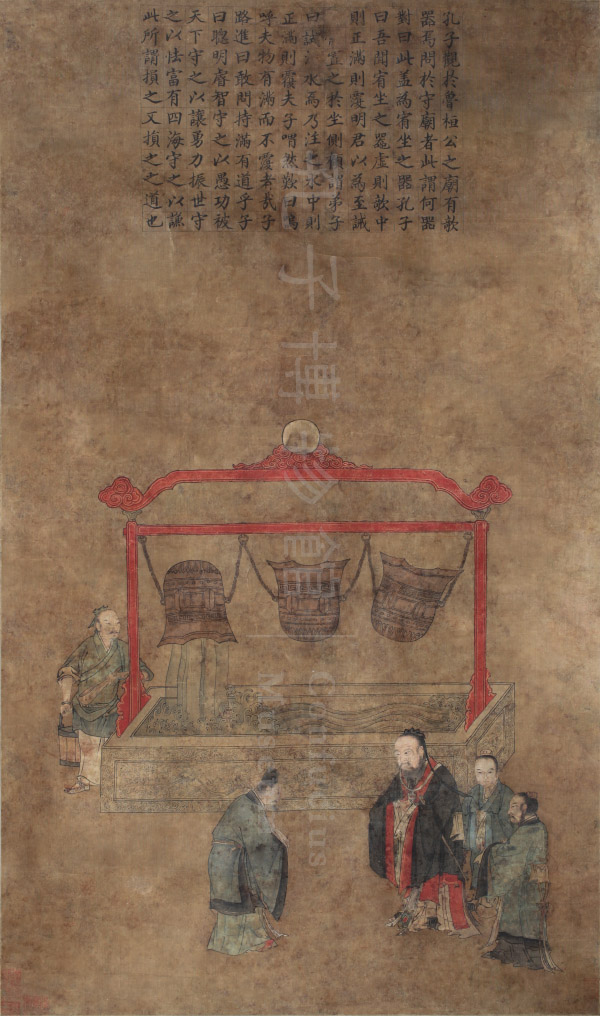
Painted scroll showing a red-framed structure holding three hanging vessels over a stone base. A bearded robed figure in black and red stands with attendants at right, while a man stands at left. Calligraphy column at top.Painting

Secondary source

Confucius Watching the Tilting Containers

Ming dynasty

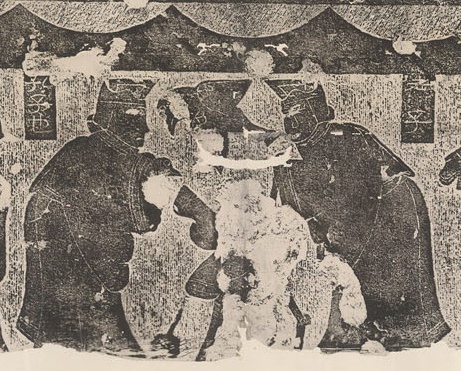
Detail of an ink rubbing of a carved stone relief. Two tall robed figures stand facing each other beneath a scalloped canopy band, with vertical inscription panels on each side. The rubbing is dark, with worn, pale patches.Painting

Secondary source

Confucius Visiting Laozi, Wu Family Shrine relief rubbing

Huang Yi · 1786

Document

Tertiary source

Confucius entry, Encyclopaedia Britannica, 11th edition

1911

Document

Secondary source

Confucius entry, Encyclopaedia Britannica, 9th edition

James Legge

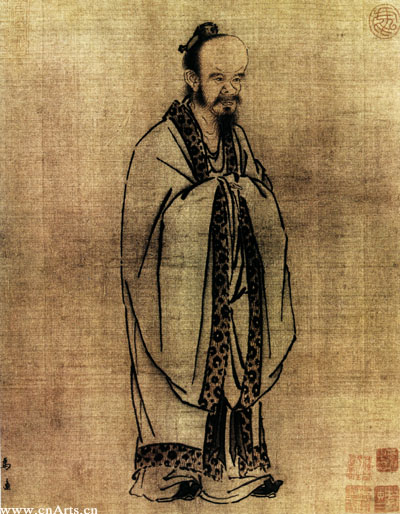
Ink and light color painting on silk of a standing bearded man with a topknot, wearing long flowing robes with patterned dark trim, hands clasped in sleeves, against a plain tan background. Red seals appear at the top right and bottom right.Painting

Secondary source

Portrait of Confucius by Ma Yuan

Ma Yuan · Southern Song dynasty

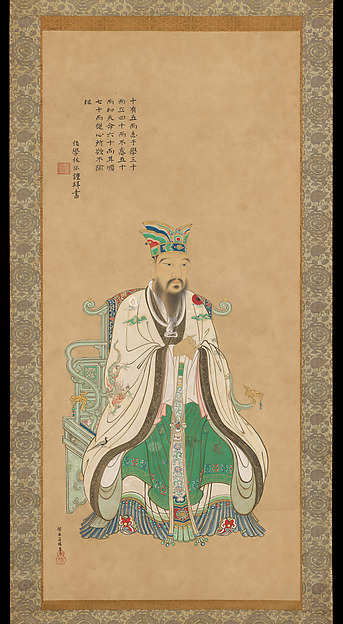
Hanging scroll painting of a seated, long-bearded man in a colorful tall headdress, white robe, and green garment, on a carved chair. A column of Chinese characters and a red seal appear at upper left, framed by patterned brocade mounting.Painting

Secondary source

Portrait of Confucius by Kano Tan'yū

Kano Tan'yū · ca. 1658

The Sacred Books of China: The Texts of ConfucianismBook

Primary source

The Sacred Books of China: The Texts of Confucianism

James Legge · 1879

Book

Primary source

Vida y pensamientos morales de Confucio

Confucius

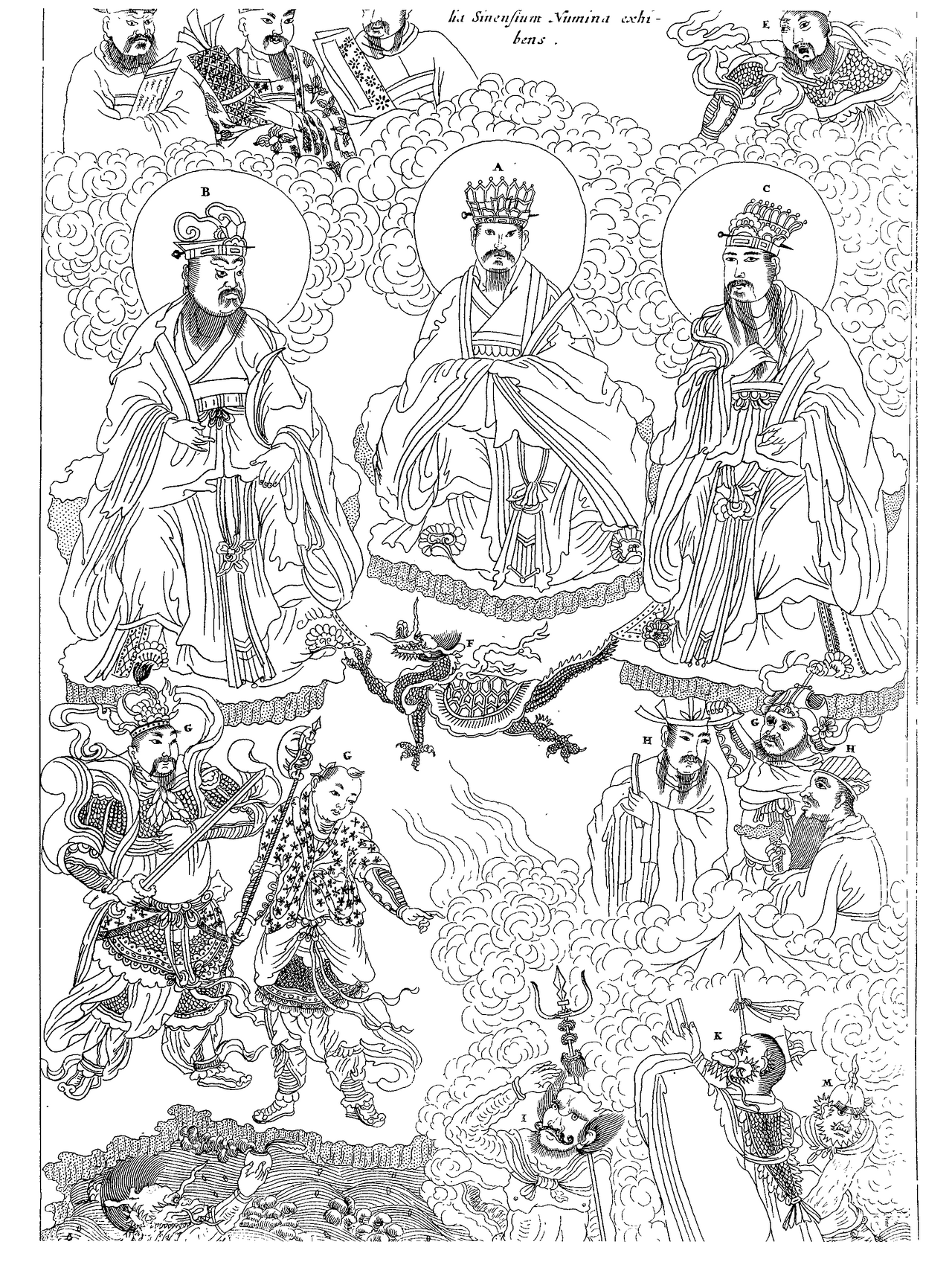
Engraved plate titled in Latin 'Principalia Sinensium Numina exhibens' showing labeled figures: three seated or standing robed deities in halos at top center and sides, a dragon with a tortoise shell between them, and below, armored guardian figures, attendants, a demon with a trident, and figures in clouds.Painting

Secondary source

Principal Deities of the Chinese

Unknown Chinese artist, with Latin captions by Athanasius Kircher · 1667

The Odes of ConfuciusBook

Primary source

The Odes of Confucius

L. Cranmer-Byng · 1908

The Sayings of ConfuciusBook

Primary source

The Sayings of Confucius

Leonard A. Lyall · 1909

Chinese Literature: Analects of Confucius, Shi-King, Mencius and OthersBook

Primary source

Chinese Literature: Analects of Confucius, Shi-King, Mencius and Others

Epiphanius Wilson · 1900

The Classics of Confucius: Book of OdesBook

Primary source

The Classics of Confucius: Book of Odes

L. Cranmer-Byng · 1906

The Wisdom of ConfuciusBook

Primary source

The Wisdom of Confucius

Confucius; Epiphanius Wilson · 1900

Book

Secondary source

Book of Documents

Confucius (traditional editor)

Book

Primary source

The Book of Filial Duty

Confucius (attributed); translated by Ivan Chên · 1908

Newspaper article

Secondary source

The Ethics of Confucius

Warren G. Benton · 1891

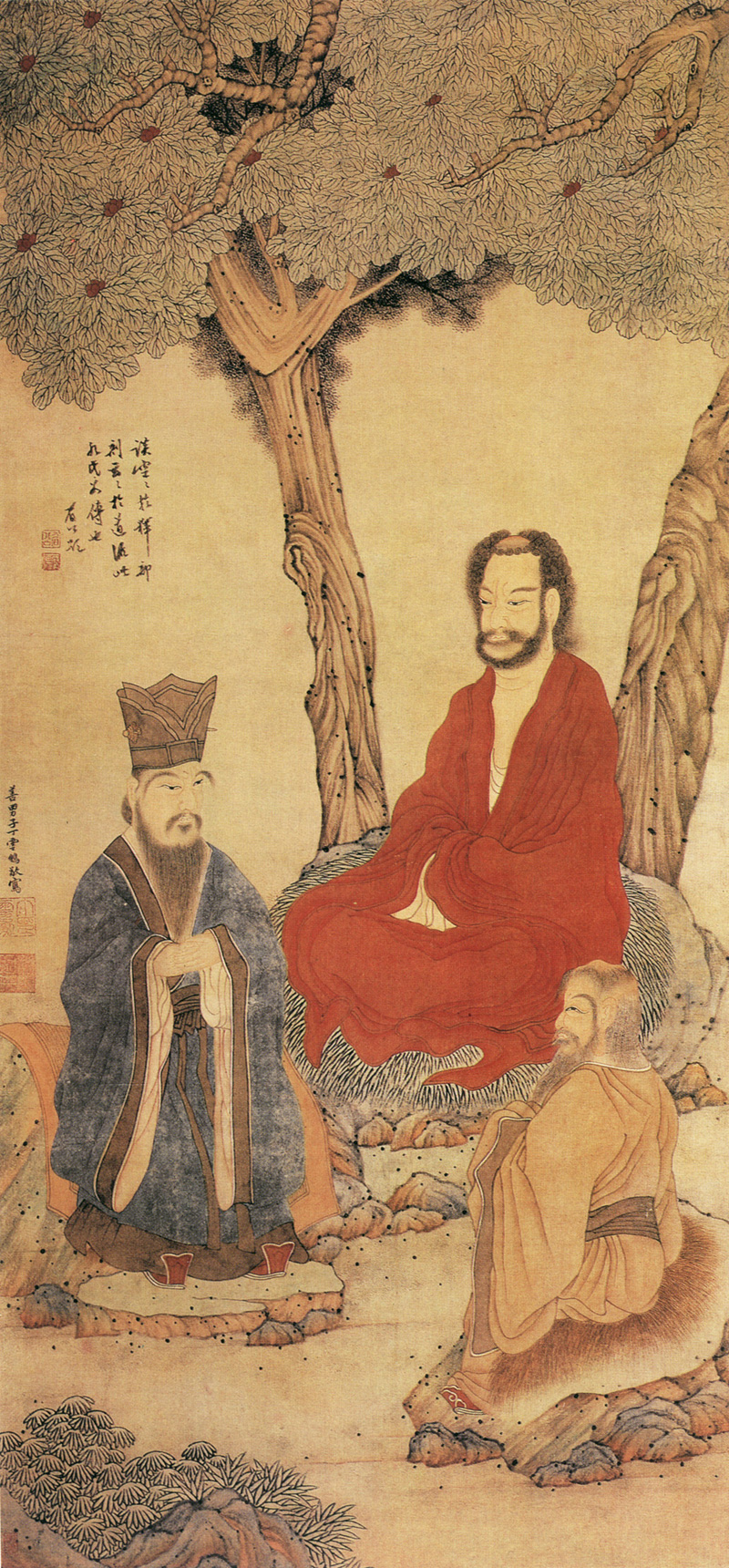
Hanging scroll painting in ink and color on paper showing three seated figures under a large tree: on the left a bearded man in a blue robe and tall hat, in the center a red-robed bald figure with a beard seated on a rock, and on the right a kneeling older man in a yellow robe. Calligraphy and seal stamps appear at the upper left.Painting

Secondary source

Confucius, Laozi and Buddhist Arhat

Ding Yunpeng · Ming dynasty

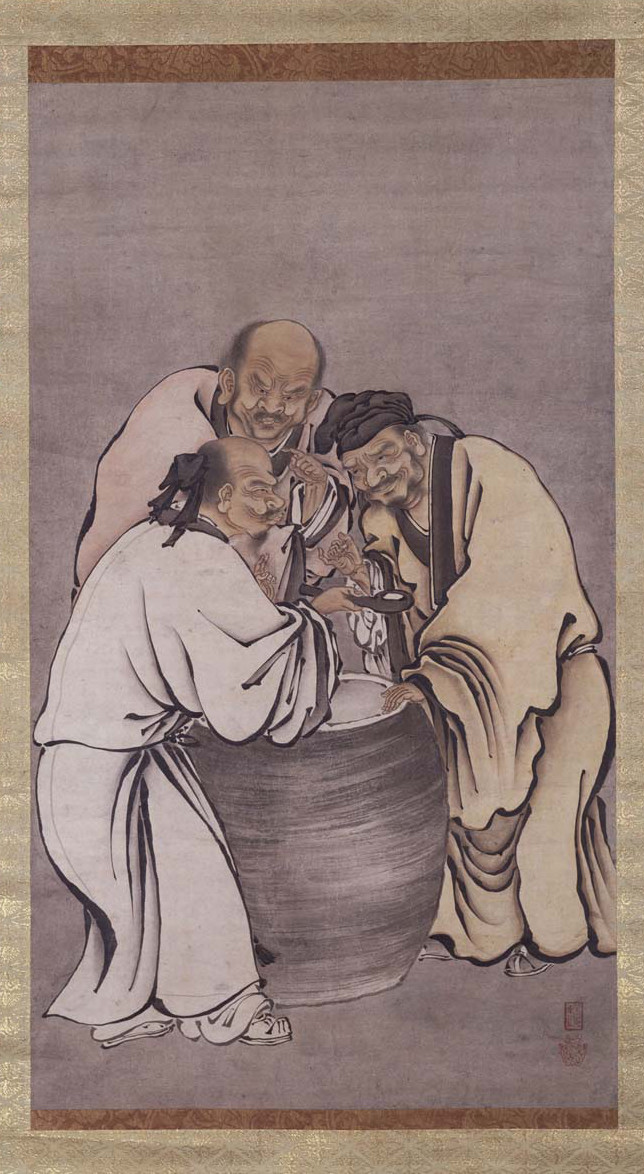
Hanging scroll painting of three men in robes crowded around a large earthenware vat, each leaning over and dipping a finger or looking into it. Muted grey-brown background with pale, ink-outlined figures.Painting

Secondary source

The Three Vinegar Tasters

Kanō school artist · 16th century

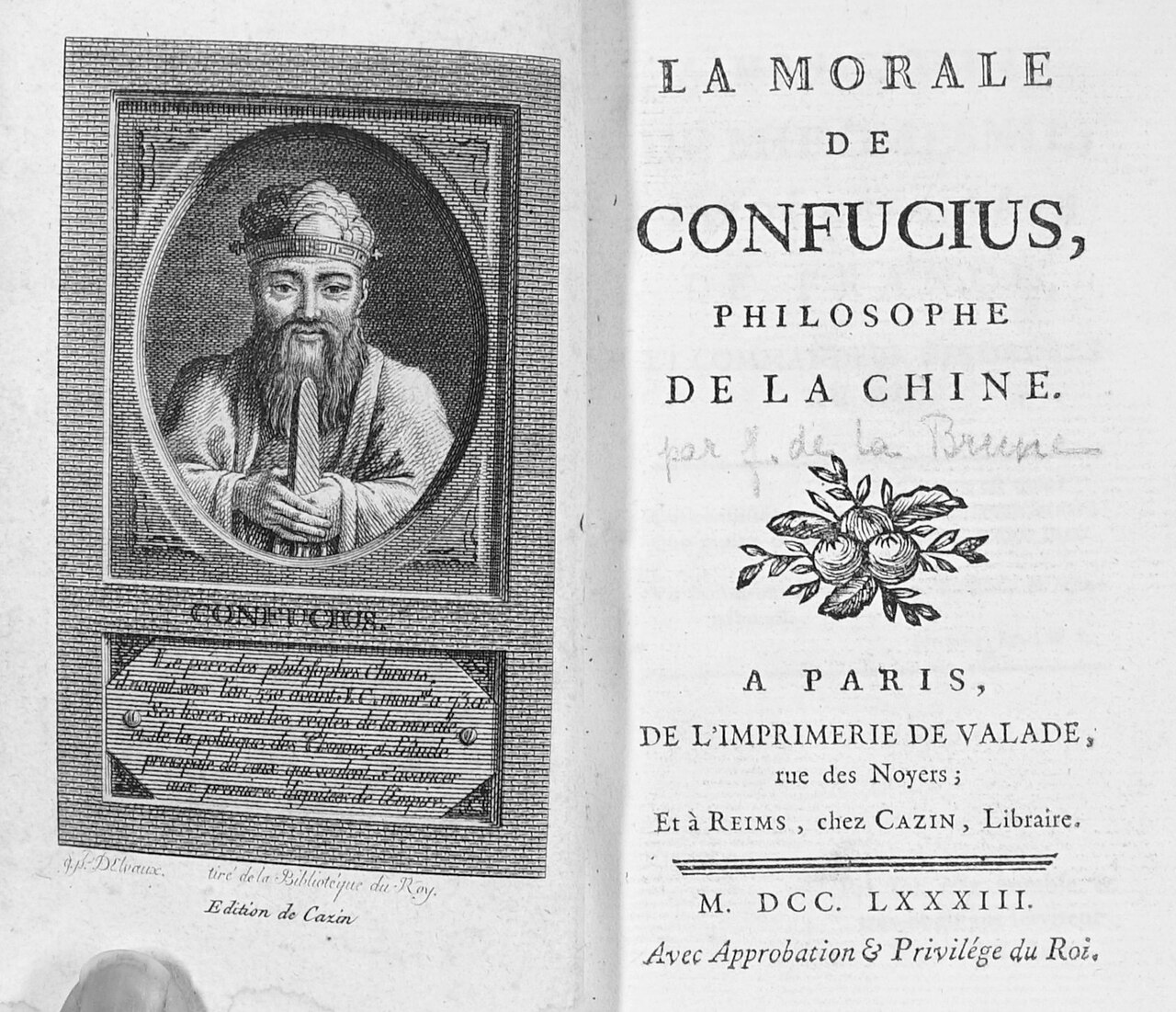
Open book showing a title page on the right reading 'La Morale de Confucius, Philosophe de la Chine', Paris 1783, and on the left an engraved oval portrait of Confucius with a caption and a small inscribed text panel below.Book

Secondary source

La morale de Confucius, philosophe de la Chine

1783

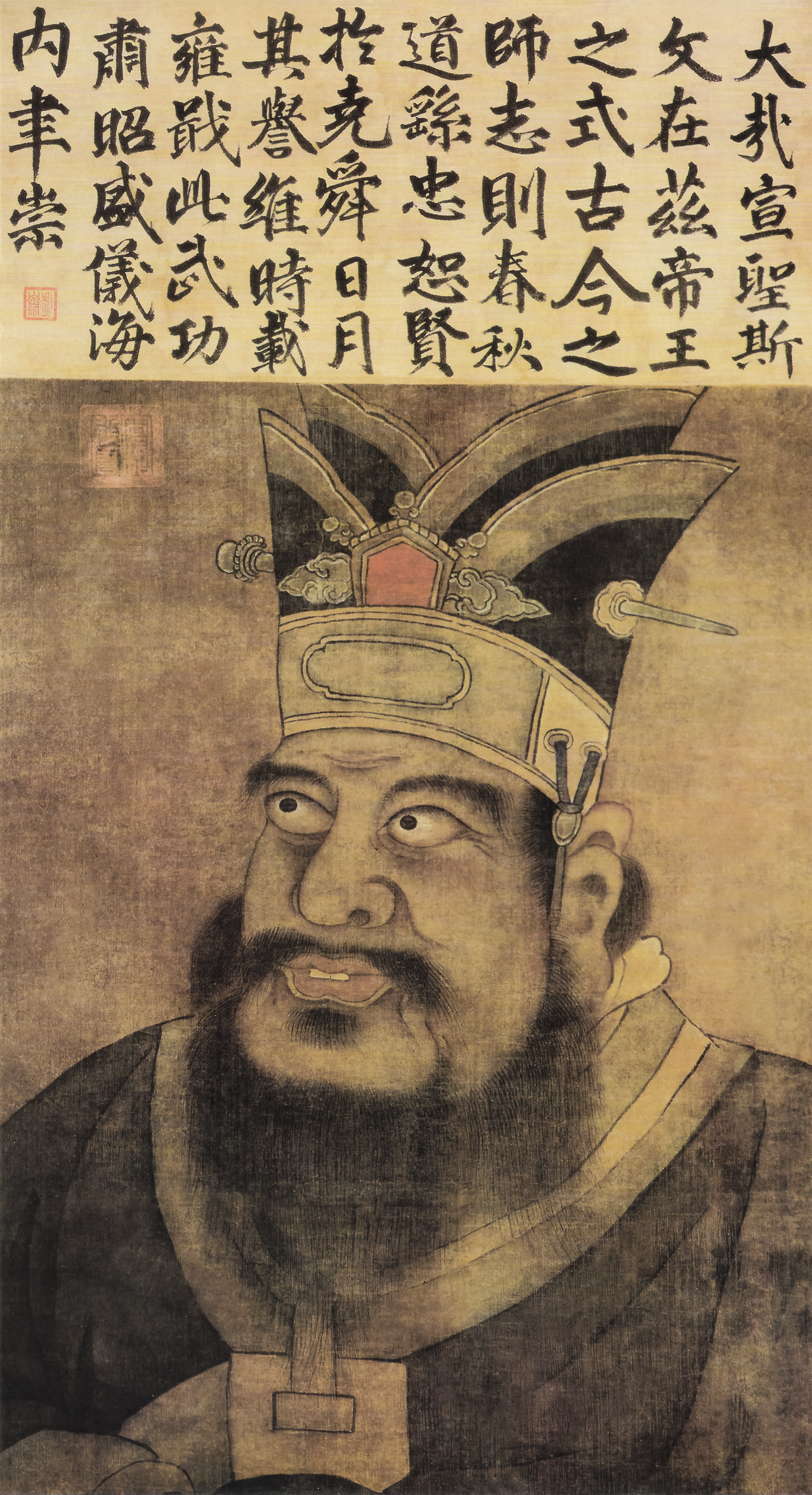
Painting of a bearded man in a black and gold official's hat with a red central panel and a dark robe, looking to the side. Vertical Chinese calligraphy in black ink runs across the top and left of a yellowed scroll.Painting

Secondary source

Portrait of Confucius as Minister of Justice of State Lu

Unknown author

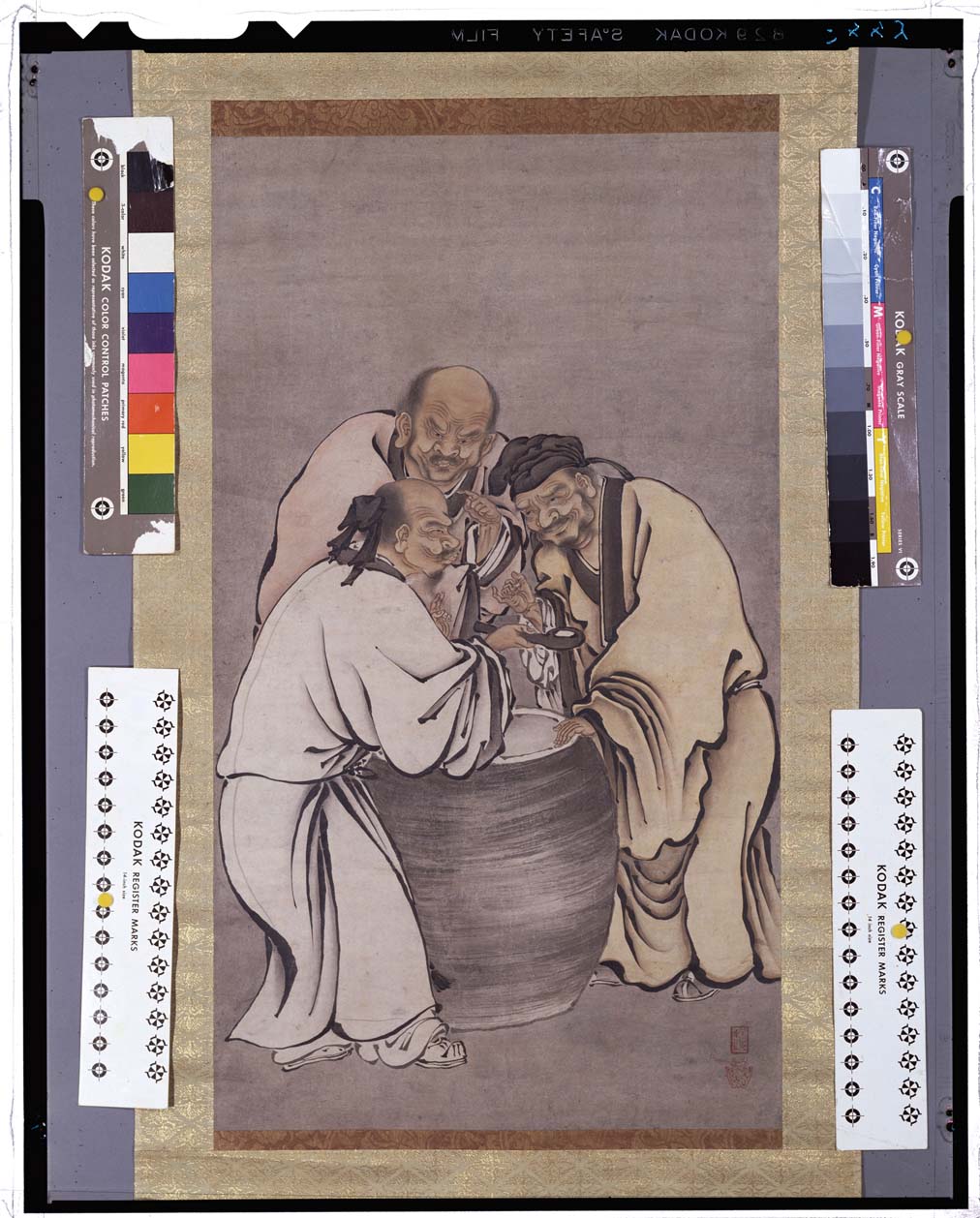
Photographic reproduction of a hanging scroll painting on a gold-brocaded mount, with Kodak color control patches, a gray scale, and register marks along the edges. The painting shows three robed figures with shaved heads leaning over a large dark ceramic vat, each dipping a finger or spoon into it. Muted tones of gray, beige, and pale pink with black ink outlines.Painting

Secondary source

The Three Vinegar Tasters

Kanō school artist · 16th century

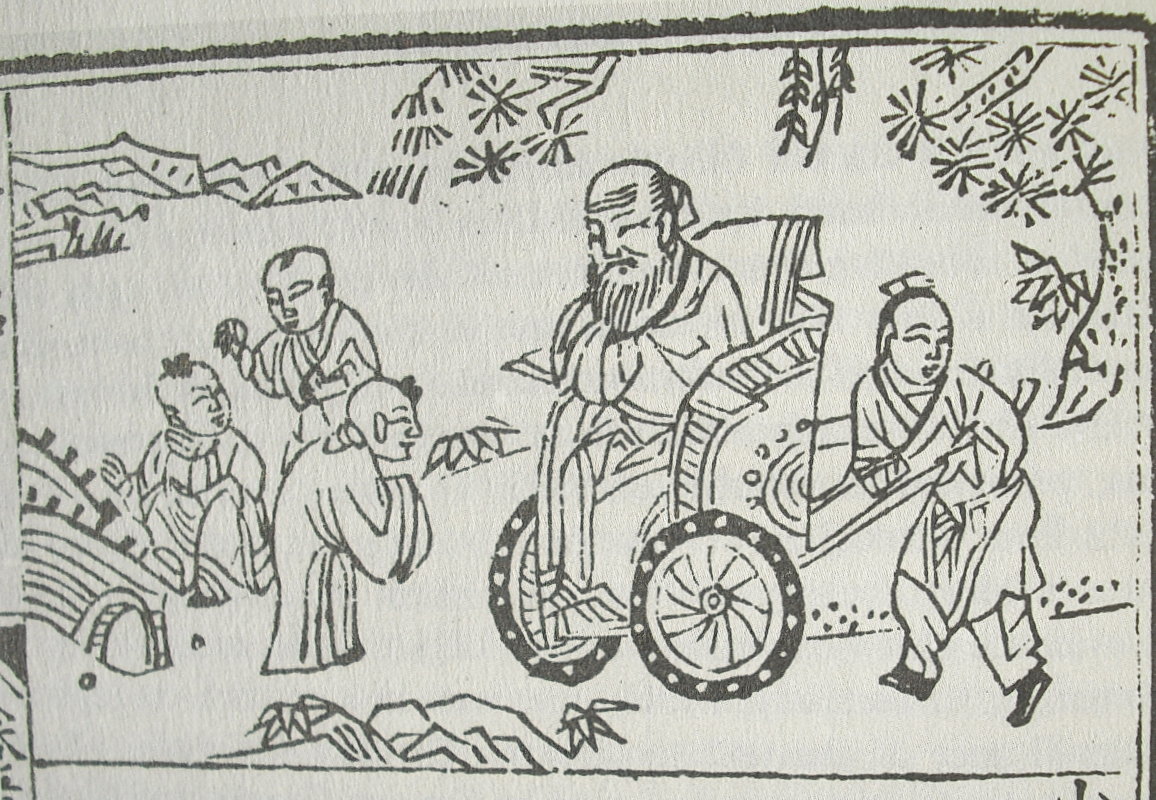
Black-and-white woodblock-style print of a bearded elder seated in a two-wheeled handcart pulled by a young attendant. Two children stand and sit near a stone bridge, and a bald child gestures beside the cart. Pine branches and mountains frame the scene.Painting

Secondary source

Confucius and Children

Unknown Chinese artist · 1680

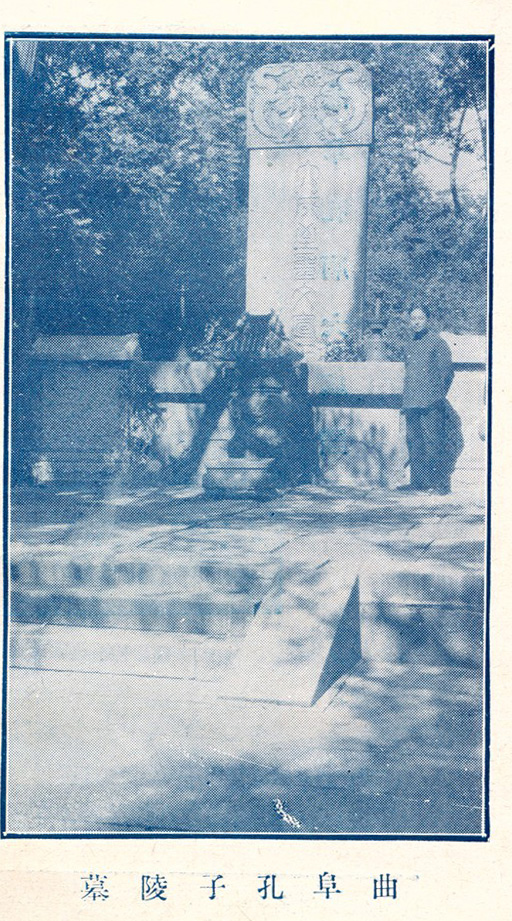
Blue-toned photograph of a tall carved stone stele with an ornate top and vertical inscriptions, set behind a low stone tomb enclosure. Trees fill the background, and a man in a long coat stands to the right. Chinese caption below reads 曲阜孔子陵墓.Photograph

Secondary source

Tomb of Confucius at Qufu

Shandong Province Road Administration Bureau · June 1935

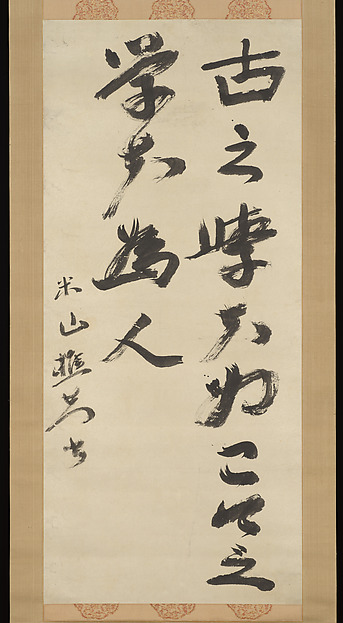
Hanging scroll with a mounted paper panel bearing four large black brush-written Chinese characters in a column on the right, reading 古之學者為己, plus a smaller signature column at lower left. Tan silk brocade borders surround the panel.Artifact

Secondary source

Meiji Calligraphy Quoting the Analects on Scholarship

Miwada Beizan · late 19th–early 20th century

Book

Secondary source

The Sayings of Confucius

Lionel Giles · 1910

Book

Secondary source

The Life, Labours and Doctrines of Confucius

Edward Harper Parker · 1897

Book

Secondary source

Rise of Confucius, the Chinese Sage

R. K. Douglas · 1905

Book

Secondary source

The Conduct of Life: The Ethics of Confucius

Miles Menander Dawson · 1915

Framed reproduction of a traditional Chinese painting of a bearded man in a dark blue hat and long dark robe over white garments, holding an object in one hand. A gold label with Chinese characters and English text is mounted below the frame.Photograph

Secondary source

Confucius Portrait in the Kong Family Mansion, Qufu

Gary Todd · 2014-03-09

The Shu King, or Chinese Historical ClassicBook

Primary source

The Shu King, or Chinese Historical Classic

Confucius · 1904

Book

Secondary source

The Ethics of Confucius

Miles Menander Dawson · 1915

Want the full shelf? Chat with Confucius in the app and open the Sources panel — every quote links back to the original.

Use Confucius in class

4 collections

Ready-made collections from the Humy team that feature Confucius. Preview any of them, then try it free.

Trusted by educators worldwide

Conversations
375,000+
Real exchanges between students and historical figures
Messages exchanged
4,142,000+
Across every figure, classroom and language
Historical figures
100,000+
Each informed by a curated biography and selected sources
Languages supported
50+
From English and Spanish to Arabic and Korean

Paying customers

Used by 98 schools and universities

Partner school logo
Tecnológico de Monterrey logo
Hyper Island logo
Partner school logo
Chambersburg Area School District logo
Broward County Public Schools logo
Nebo School District logo
National Louis University logo
South Florida PBS logo
Punahou School logo
University of Wisconsin–River Falls logo
Partner school logo
Partner school logo
Archbishop Mitty High School logo
Kingsburg High School logo
Norwalk Public Schools logo
Partner school logo
Connections logo
Partner school logo
Moore Public Schools logo
Partner school logo
Partner school logo
Partner school logo
Partner school logo
Robbinsville Public Schools logo
Partner school logo
Partner school logo
Partner school logo
Tecnológico de Monterrey logo
Hyper Island logo
Partner school logo
Chambersburg Area School District logo
Broward County Public Schools logo
Nebo School District logo
National Louis University logo
South Florida PBS logo
Punahou School logo
University of Wisconsin–River Falls logo
Partner school logo
Partner school logo
Archbishop Mitty High School logo
Kingsburg High School logo
Norwalk Public Schools logo
Partner school logo
Connections logo
Partner school logo
Moore Public Schools logo
Partner school logo
Partner school logo
Partner school logo
Partner school logo
Robbinsville Public Schools logo
Partner school logo
Partner school logo

What educators are saying

“We enjoyed the program last year and used it frequently.”
“My students say it’s a welcome change of pace. I’m not a fan of the “sage on the stage” model, so I try to incorporate research-oriented and self-paced activities. With Humy, students have to take charge of their learning. They’ve become more adept at critical thinking, forming better questions, and improving their reading comprehension. The interview feature has been my go-to tool. I create assignments where students must ask historical figures a set number of questions, then summarize the responses to ensure they’re truly absorbing the material. This approach lets them actively explore the past rather than passively consuming information.”
“Humy has helped me bring historical figures, sometimes long past, to life. When my students interact with these figures in real-time, it eliminates some of the perceived “ancient” characteristics of my curriculum. This has shifted my students’ thinking away from viewing history as abstract or irrelevant. Real-time interactions make historical figures relatable, even allowing students to ask off-topic questions that help put historical lives in a more relevant context for 13-year-olds. The feature I use the most is the interview feature. After teaching a topic, most recently Gandhi and Joan of Arc, I have the students ask pointed, focused questions. We practice good conversation techniques beforehand, teaching them to listen (or read) carefully and formulate thoughtful follow-up questions rather than just interrogating. It helps students practice effective conversation skills.”

FAQ

Frequently asked questions

Who is Confucius?
Chinese philosopher and educator. On Humy.ai you can chat with an AI version of Confucius that draws on a short biography and 85 historical sources during the conversation — by text or voice, in 42 languages.
Is Confucius AI free?
Confucius is part of Humy's full library of more than 100,000 figures, which comes with a paid plan. A free account (no credit card) includes 20 messages a month with the free library's figures, so you can try how the conversations work first.
What sources does the Confucius AI use?
It draws on a short biography and 85 historical sources (books, paintings and photographs), including “Analects”, “Pictures of the Sage's Traces” and “Records of the Grand Historian, Vol. 47: Hereditary House of Confucius”. Each source has its own page on Humy.ai.
How historically accurate is the AI version of Confucius?
Each figure uses a short biography and a small set of selected historical sources as context (retrieval-augmented generation), so answers stay closer to known material than the model's general knowledge alone. It isn't a citation-grade research tool — like any LLM, the AI can get details wrong or extrapolate. Treat it as a strong starting point for inquiry and cross-reference important claims.
Can I talk to Confucius by voice?
Yes. In addition to text chat, you can call Confucius and hear their voice respond in real time — useful for auditory learners, interview practice and Socratic dialogue.
Is Humy.ai safe and compliant for schools?
Yes. Humy.ai is used by more than 100 schools, universities and organisations. The platform is FERPA- and GDPR-aligned, supports SSO, and offers an IT-approval pack tailored for school procurement teams.

Ready when you are

Start chatting with Confucius now.

20 messages free · No credit card · Available in 50+ languages.