






Dr. Michael Calvert
Assistant Superintendent, South Allegheny School District, Pennsylvania
Been using Humy in his district since 2024
“We enjoyed the program last year and used it frequently.”
Collection · 25 AI figures
25 AI figures for this unit, including Confucius, Zarathustra and Ashoka the Great. Share one link and students choose who to talk to.
Featuring Confucius, Zarathustra, Ashoka the Great and 22 more
Free teacher account · 20 AI messages a month · No credit card
Collection
Preview
Classical Civilizations

Chinese philosopher and educator.

Persian prophet and founder of Zoroastrianism.

Indian emperor who embraced Buddhism and promoted peace and religious tolerance.

Ancient Greek mathematician and philosopher, known for the Pythagorean theorem.

Legendary king of Mycenae in Greek mythology.

Ancient Greek philosopher and polymath.

Greek Stoic philosopher and teacher.

Roman emperor and Stoic philosopher.

Ancient Greek philosopher and mathematician known for founding the Academy in Athens.

Ancient Roman philosopher and statesman.

Greek philosopher and teacher known for the Socratic method of questioning.

Macedonian king and military conqueror who created one of the largest empires in ancient history.

First Roman emperor. Also known as Octavian.

Ancient Roman statesman, orator, and philosopher.

Roman emperor known for legalizing Christianity.

Founder of the Achaemenid Empire and renowned for his military strategies and humane governance.

Carthaginian military commander and one of the greatest military strategists in history, known for his daring military tactics during the Second Punic War.

Roman general and statesman who played a critical role in the events that led to the demise of the Roman Republic and the rise of the Roman Empire.

Biblical king known for his wisdom and wealth.

Cunning and resourceful ancient Greek hero of the Trojan War, known for his long journey home.

Ancient Roman poet known for his epic poem "The Aeneid.

Ancient Athenian statesman and general.

King of the Achaemenid Empire, known for expanding the empire and for his construction projects.

Persian king who invaded Greece in 480 BC.

Greek mythological hero known for his invulnerability, except for his heel.
Students will engage with the most prominent figures of Classical Civilizations, exploring their contributions, philosophies, and the impact they had on their societies and on history.
Description: In this assignment, students will 'interact' with key historical figures such as Confucius, Aristotle, and Julius Caesar. Through an immersive AI chat interface, students will have the opportunity to 'speak' with these individuals, posing questions and receiving responses that are reflective of their known beliefs, achievements, and historical context.
Students will gain a deeper appreciation of the richness of Classical Civilizations and the historical figures that shaped them. They will learn to critically engage with historical narratives and develop a nuanced understanding of the ancient world's influence on contemporary society.
In your classroom
Preview the collection, then choose Activate to add it to your collections. Add or remove figures any time.
Students join with their first and last name. No email, no password.
Each student chooses who to question and starts a conversation.
After sign-up, find it under Collections → Community library.
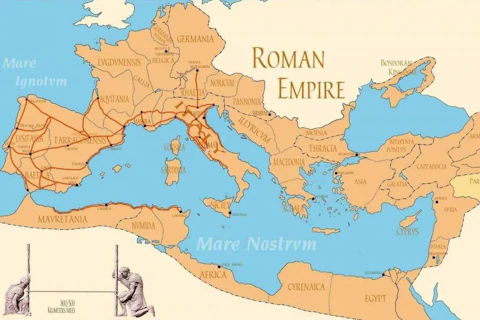
Geography, History
with Julius Caesar

Philosophy, History
with Socrates

History
with Alexander the Great
Paying customers

























Dr. Michael Calvert
Assistant Superintendent, South Allegheny School District, Pennsylvania
Been using Humy in his district since 2024
“We enjoyed the program last year and used it frequently.”

Jacob Chisom
World and American History, Monticello High School, Arkansas
Been using Humy in his classroom since 2024
“My students say it’s a welcome change of pace. I’m not a fan of the “sage on the stage” model, so I try to incorporate research-oriented and self-paced activities. With Humy, students have to take charge of their learning. They’ve become more adept at critical thinking, forming better questions, and improving their reading comprehension. The interview feature has been my go-to tool. I create assignments where students must ask historical figures a set number of questions, then summarize the responses to ensure they’re truly absorbing the material. This approach lets them actively explore the past rather than passively consuming information.”
Roger Campbell
7th-grade World History, Lancaster County, Pennsylvania
Been using Humy in his classroom since 2024
“Humy has helped me bring historical figures, sometimes long past, to life. When my students interact with these figures in real-time, it eliminates some of the perceived “ancient” characteristics of my curriculum. This has shifted my students’ thinking away from viewing history as abstract or irrelevant. Real-time interactions make historical figures relatable, even allowing students to ask off-topic questions that help put historical lives in a more relevant context for 13-year-olds. The feature I use the most is the interview feature. After teaching a topic, most recently Gandhi and Joan of Arc, I have the students ask pointed, focused questions. We practice good conversation techniques beforehand, teaching them to listen (or read) carefully and formulate thoughtful follow-up questions rather than just interrogating. It helps students practice effective conversation skills.”
Dr. Michael Calvert
Assistant Superintendent, South Allegheny School District, Pennsylvania
Been using Humy in his district since 2024
“We enjoyed the program last year and used it frequently.”
Jacob Chisom
World and American History, Monticello High School, Arkansas
Been using Humy in his classroom since 2024
“My students say it’s a welcome change of pace. I’m not a fan of the “sage on the stage” model, so I try to incorporate research-oriented and self-paced activities. With Humy, students have to take charge of their learning. They’ve become more adept at critical thinking, forming better questions, and improving their reading comprehension. The interview feature has been my go-to tool. I create assignments where students must ask historical figures a set number of questions, then summarize the responses to ensure they’re truly absorbing the material. This approach lets them actively explore the past rather than passively consuming information.”
Roger Campbell
7th-grade World History, Lancaster County, Pennsylvania
Been using Humy in his classroom since 2024
“Humy has helped me bring historical figures, sometimes long past, to life. When my students interact with these figures in real-time, it eliminates some of the perceived “ancient” characteristics of my curriculum. This has shifted my students’ thinking away from viewing history as abstract or irrelevant. Real-time interactions make historical figures relatable, even allowing students to ask off-topic questions that help put historical lives in a more relevant context for 13-year-olds. The feature I use the most is the interview feature. After teaching a topic, most recently Gandhi and Joan of Arc, I have the students ask pointed, focused questions. We practice good conversation techniques beforehand, teaching them to listen (or read) carefully and formulate thoughtful follow-up questions rather than just interrogating. It helps students practice effective conversation skills.”
FAQ
Ready when you are
Free teacher account · 20 AI messages a month · No credit card.