Portrait of Darius the Great

AI Historical Figure

Darius the Great

King of the Achaemenid Empire, known for expanding the empire and for his construction projects.

Chat with Darius the Great via text or voice — in 42 languages, drawing on a curated biography and 83 historical sources. Available 24/7.

Start chatting with Darius the Great20 messages free · No credit card
Lived
550–486 BCE
From
Iran
Known for
Rulers & royaltyPolitics & government
Darius the Great

Darius the Great

Online · responds in seconds

Hello — I'm Darius the Great. King of the Achaemenid Empire, known for expanding the empire and for his construction projects. What would you like to ask me?

20 messages free · No credit card · Powered by Humy.ai

Live preview · Switch between 42 languages above · Send a message to continue in the app

Multilingual

Talk to Darius the Great in 42 languages

Ask Darius the Great questions in any language below, and the rest of Humy's app speaks it too. Pick yours to open the chat in that language.

Also in German (Austria), German (Switzerland), English (UK), English (Australia), English (Canada).

The sources behind this AI

83 sources · 31 artifacts · 21 documents · 12 books · 9 sculptures · 8 paintings · 2 photographs

Darius the Great doesn’t improvise from thin air. The AI is grounded in 83 curated historical sources students can inspect. Open any of them to see what informs the conversation.

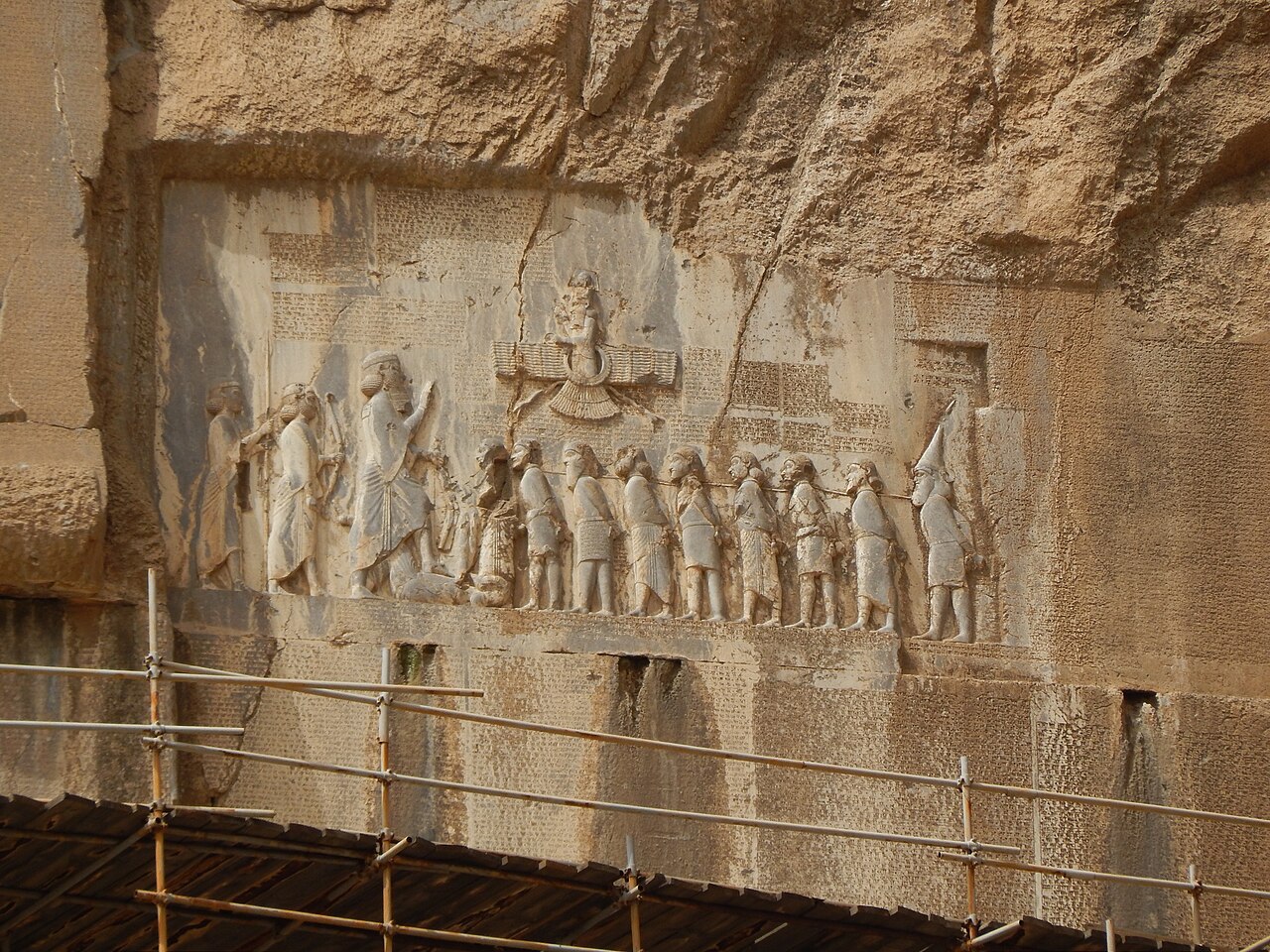
Carved relief on a rock cliff face showing a row of standing figures in fringed robes and tall headdresses, with a winged figure with a crown above them. Inscribed text panels surround the relief. Metal scaffolding is in the foreground.Document

Primary source

Behistun Inscription

Darius the Great · c. 522-486 BC

Photograph of a brown papyrus fragment with black Greek uncial-style handwriting in about twelve lines, with a measuring ruler along the right edge marked in centimetres. The fragment has ragged edges and visible fibres.Book

Secondary source

Histories

Herodotus · c. 440 BCE

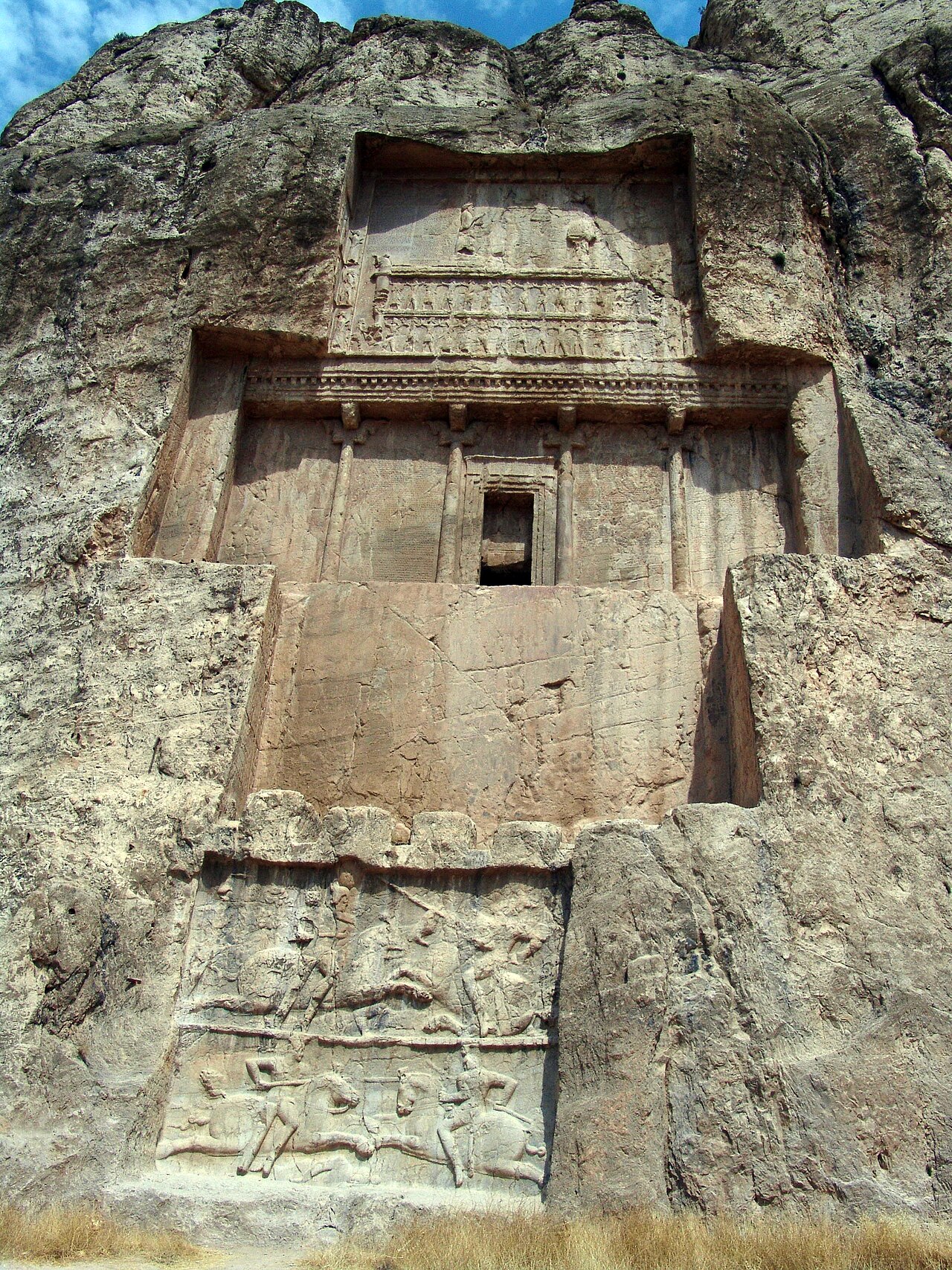
Rock-cut tomb facade carved into a cliff face at Naqsh-e Rustam, with a cross-shaped doorway opening, columns, and a carved frieze above; relief panels of mounted figures appear at the lower left. Dry grass lies at the base.Artifact

Primary source

Tomb of Darius I

c. 490 BCE

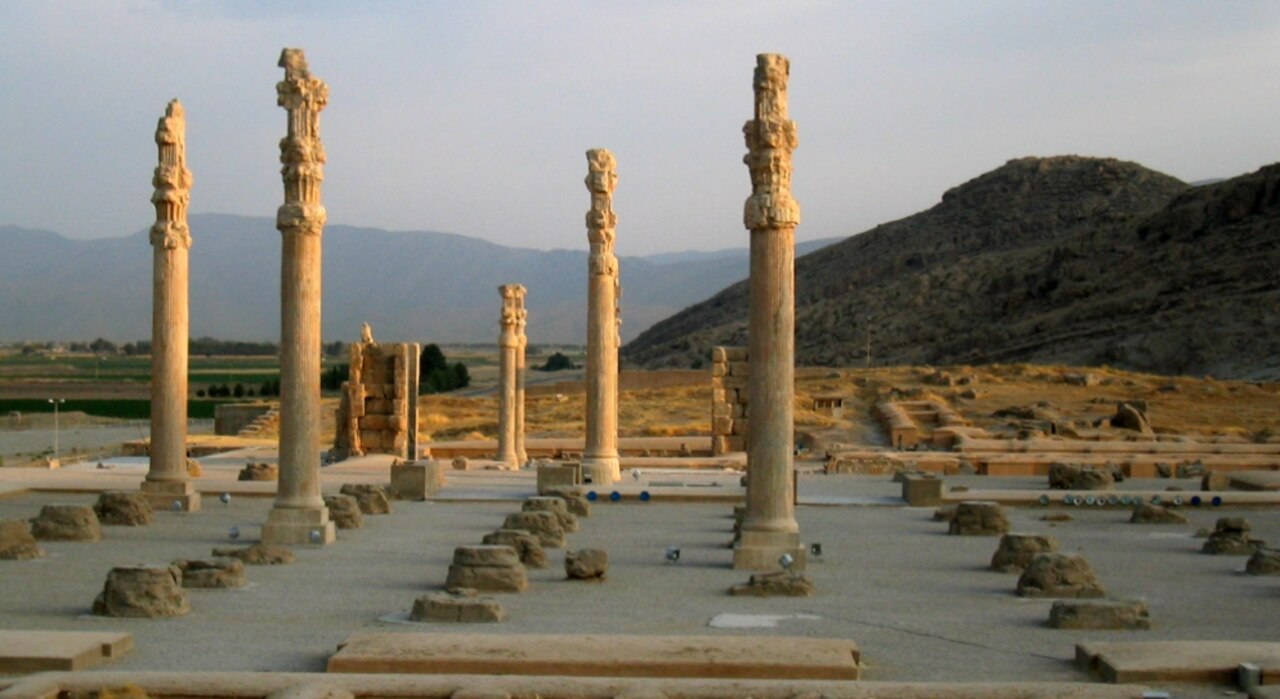
Ruins of the Apadana at Persepolis: several tall fluted stone columns with ornate carved capitals stand on a stone platform, with scattered column bases, a hill and mountains behind under a hazy sky.Artifact

Primary source

Apadana of Persepolis

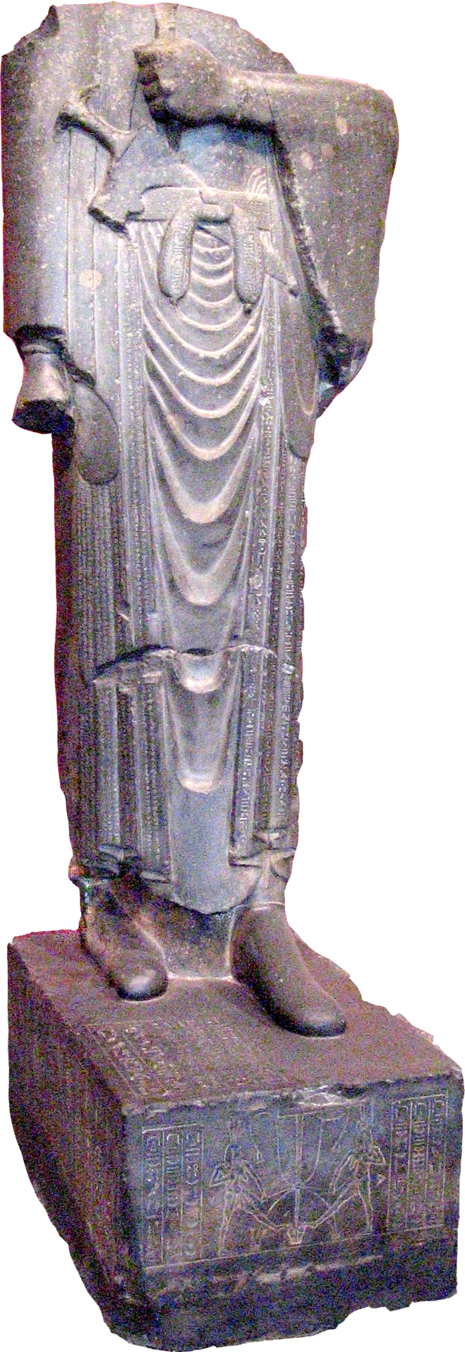
Photo of a dark stone statue of a standing figure, headless and missing the arms, wearing a long pleated robe with carved inscriptions down the sides. It stands on a rectangular plinth carved with relief scenes.Sculpture

Primary source

Statue of Darius I

c. 490 BCE

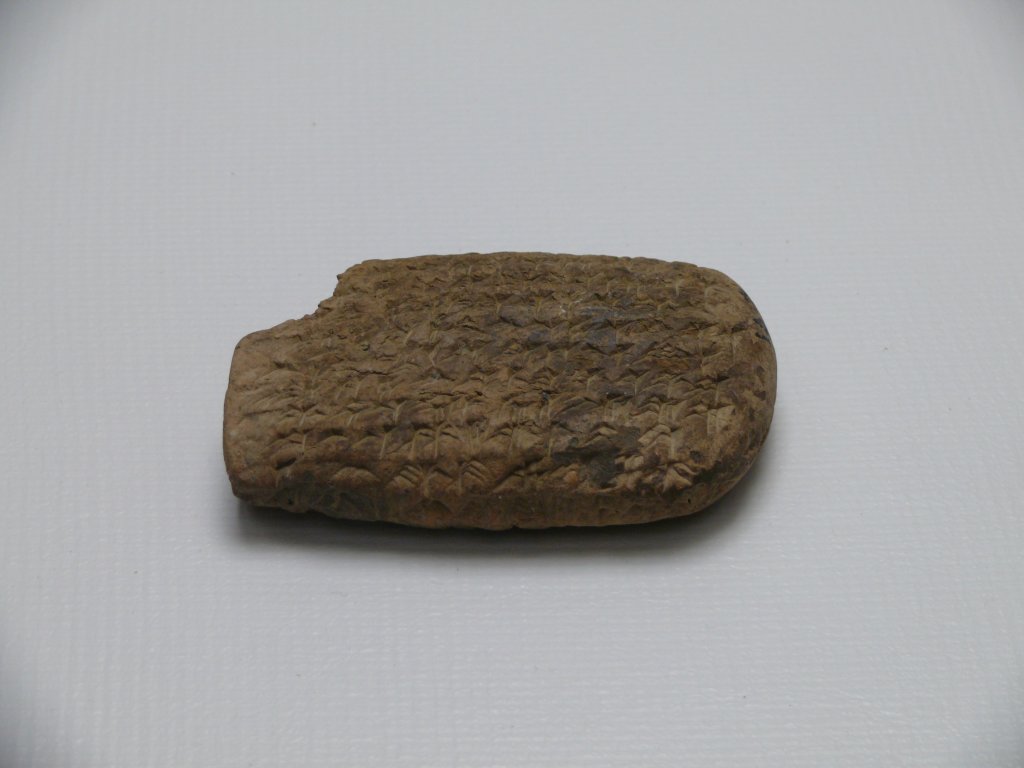
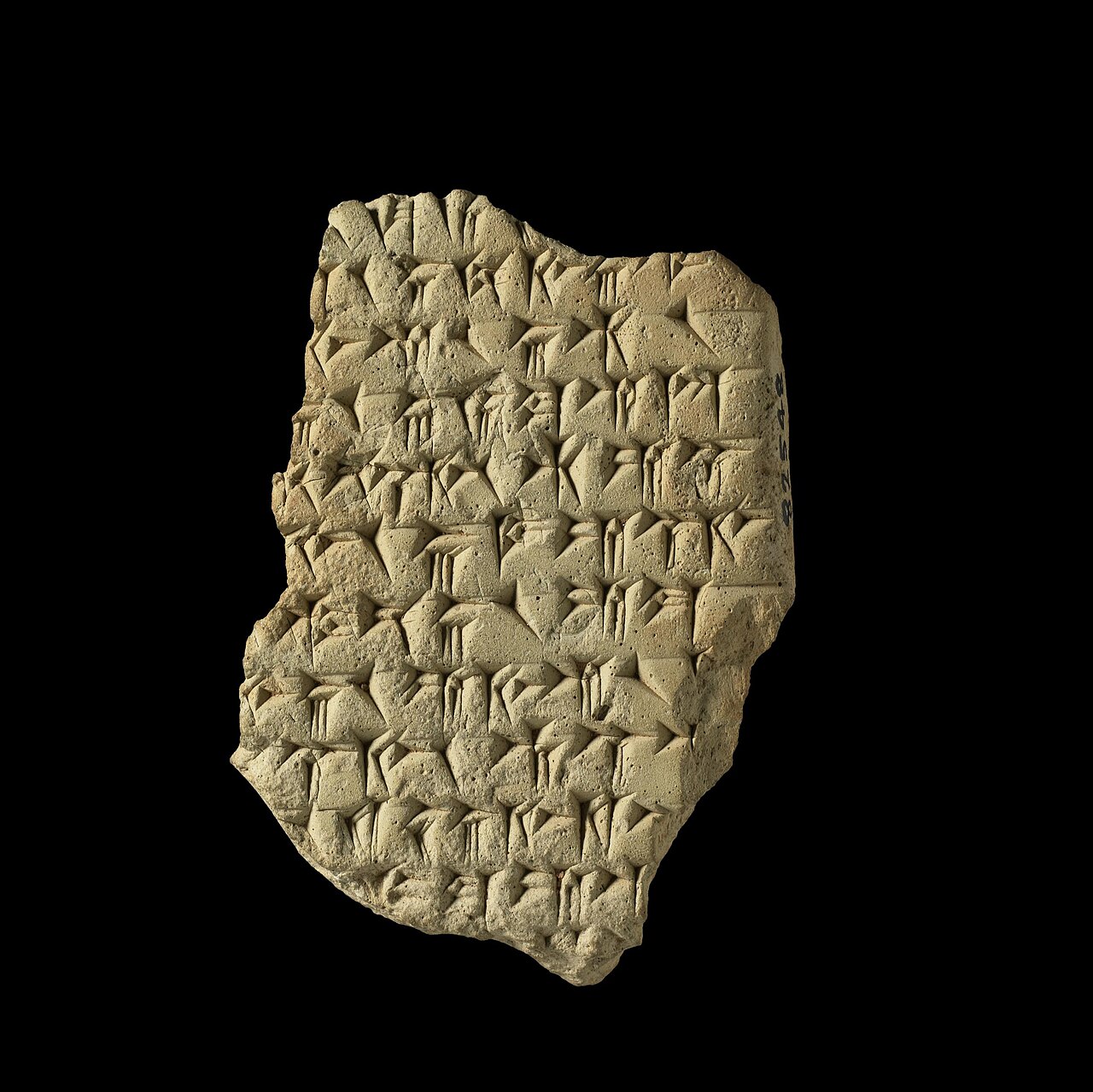
A photograph of a small brown clay tablet lying on a pale grey background. The tablet has a chipped upper-left corner and its surface is covered with rows of cuneiform wedge-shaped marks.Document

Primary source

Persepolis Administrative Archives

c. 509-457 BCE

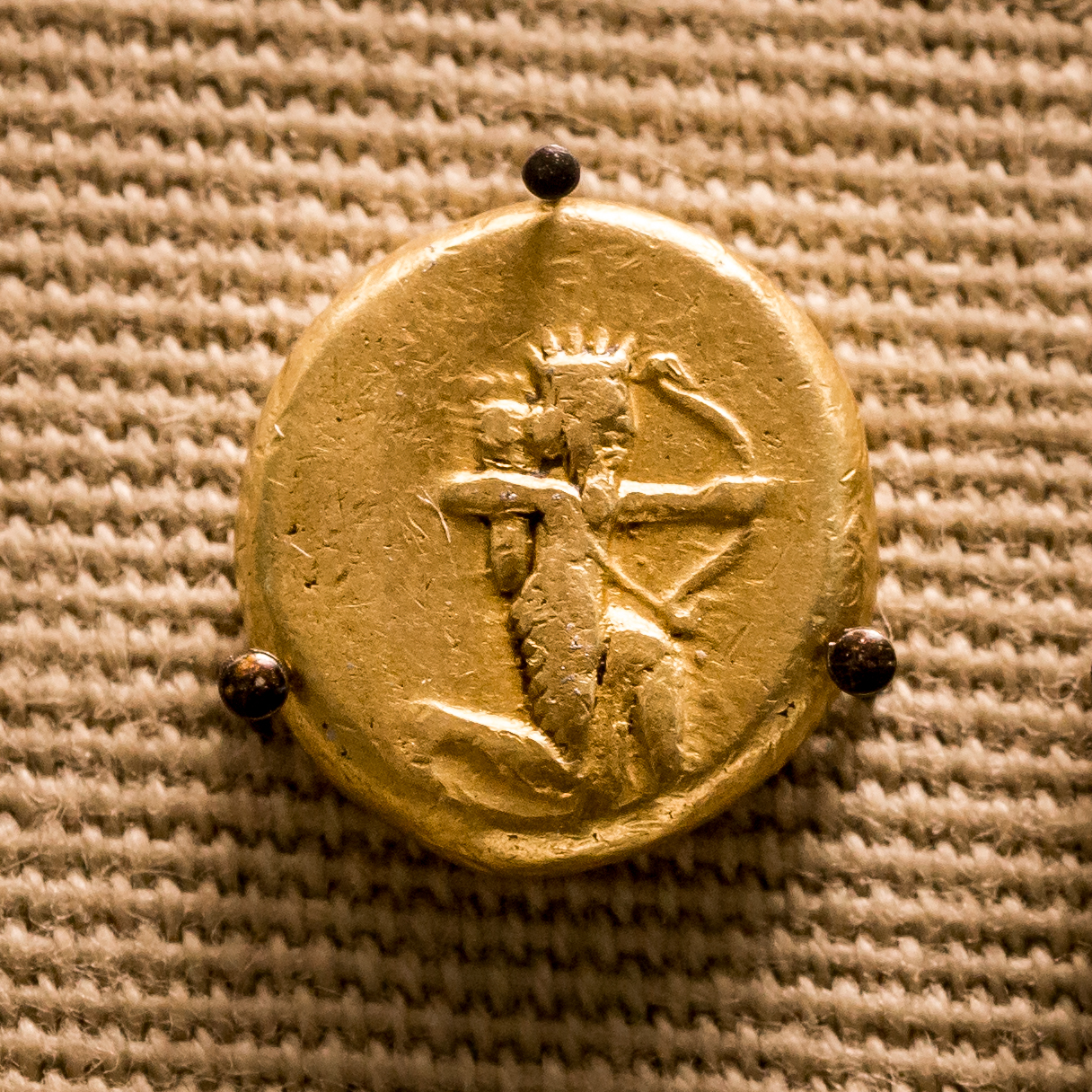
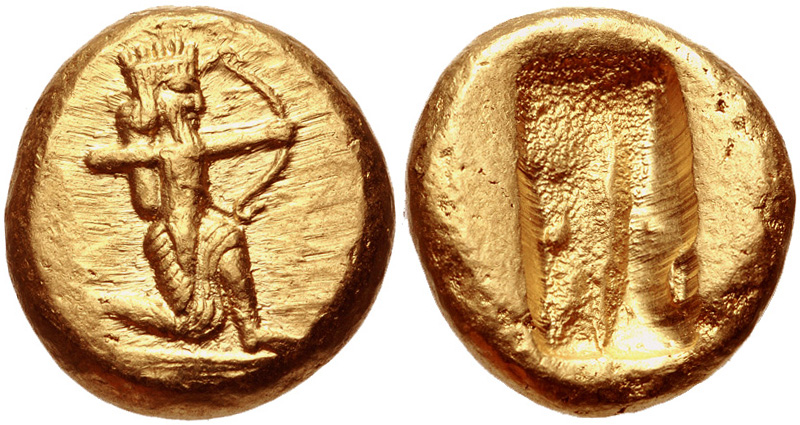
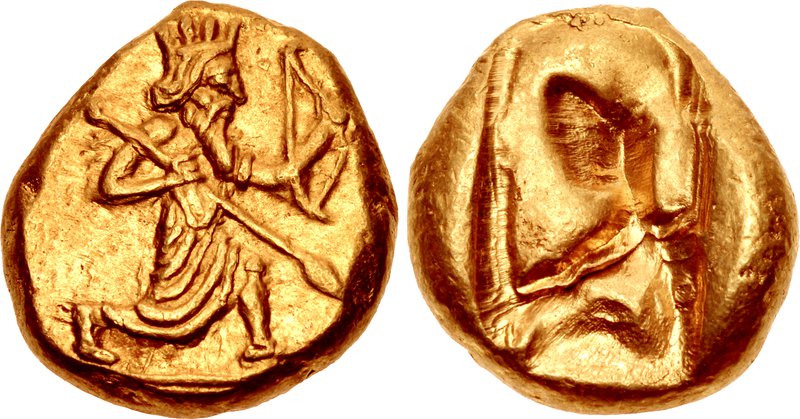
Photo of a gold daric coin resting on a textured cloth, held by small dark pins. The obverse shows a kneeling figure wearing a crown, holding a bow and drawing an arrow, in a raised relief design.Artifact

Primary source

Gold Daric Coin

Achaemenid royal mint · c. 500 BCE

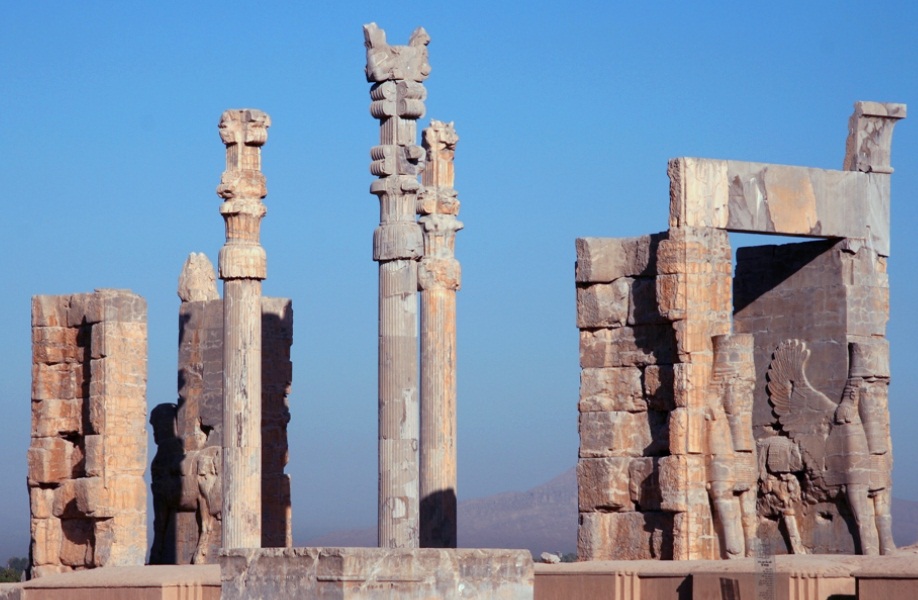
Ruined stone gateway at Persepolis with tall fluted columns topped by carved animal-head capitals, and a stone winged bull with a human head beside a standing stone doorway under a clear blue sky.Artifact

Primary source

Persepolis

c. 515 BCE

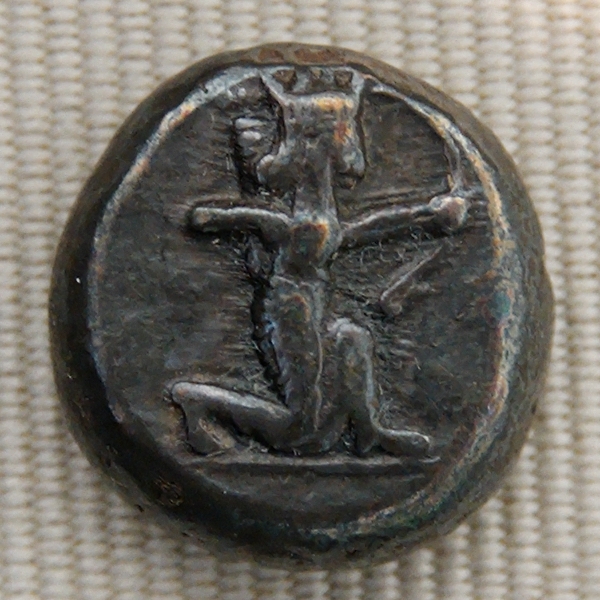
Close-up photograph of a dark, worn ancient silver coin on a textured cream fabric background. The raised design shows a kneeling figure facing right, holding a drawn bow with an arrow, with a crown-like headdress and a rectangular-shaped border around the design.Artifact

Primary source

Silver Siglos of Darius I

Achaemenid royal mint · c. 500-490 BCE

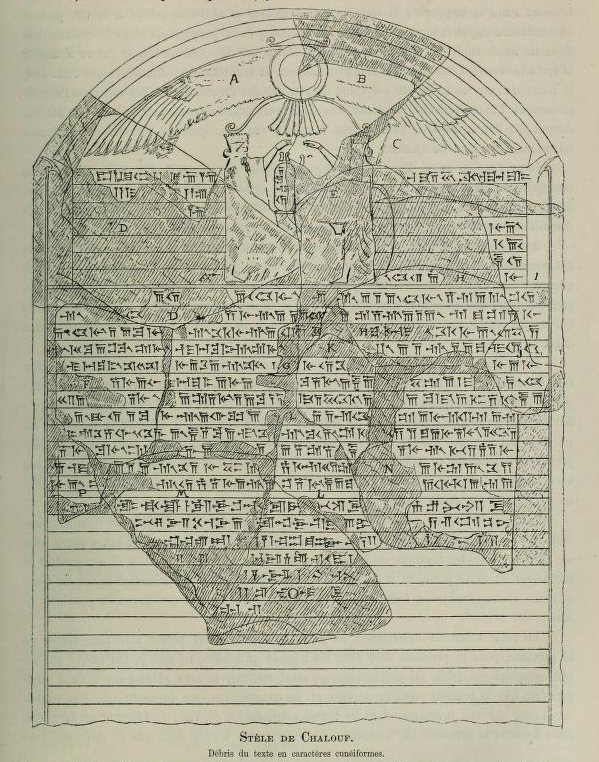
Black-and-white engraved drawing of the Stele de Chalouf: an arched stone slab with a winged sun disk at top, two standing figures in the upper panel, and many rows of wedge-shaped cuneiform text below. Letter labels A to H mark parts of the stone. Caption beneath reads 'Stèle de Chalouf'.Document

Primary source

Darius the Great's Suez Inscriptions

Darius I · c. 500s BCE

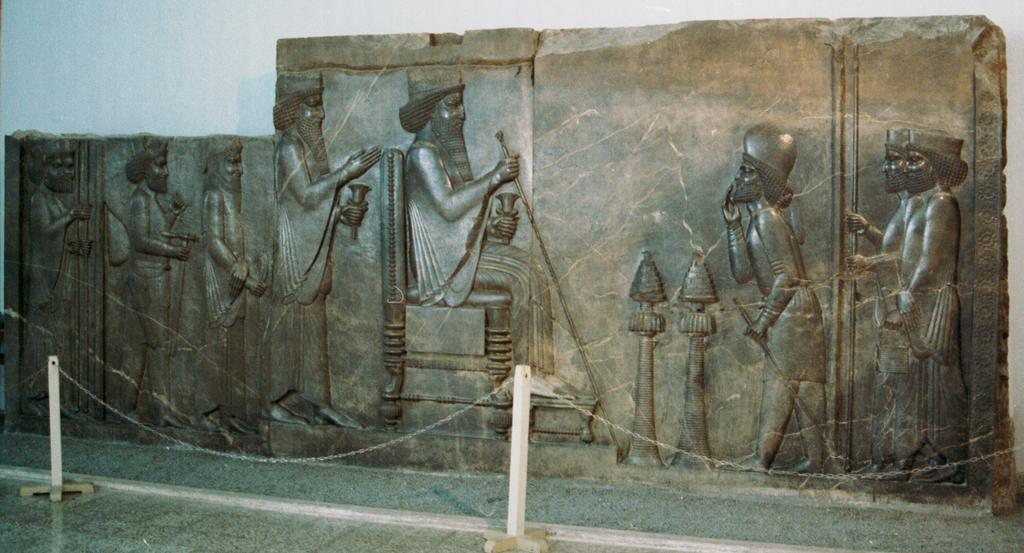
Photograph of a carved stone relief displayed in a museum behind a low chain barrier. A seated king on a throne holds a flower and a bent staff, with a standing attendant holding a fan or flywhisk and a Persian-style figure with a cup, while courtiers in long robes and tall hats stand in a row on the left and right. Two tall ornate pillars or standards stand between groups of figures.Sculpture

Primary source

Treasury Relief of Persepolis

Achaemenid court sculptors · c. 500-480 BCE

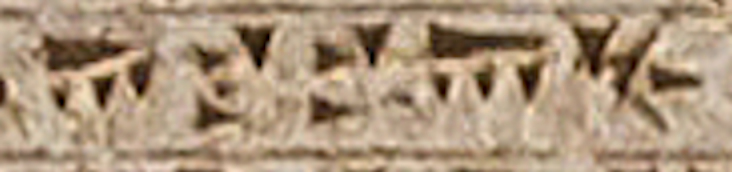
Close-up photograph of a stone surface carved with a line of wedge-shaped cuneiform signs in a light tan, weathered limestone-like material. The signs are arranged in a horizontal row across the image.Document

Primary source

DNa Inscription of Darius I

Darius I

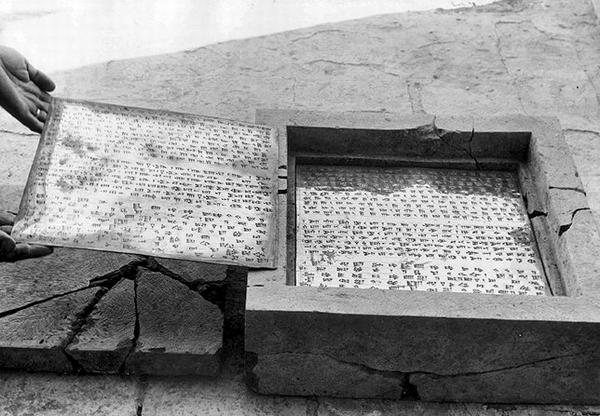
Black-and-white photo of a hand lifting a thin inscribed metal plate, with a stone-lined recess beside it holding a second plate covered in rows of cuneiform-like script. The stone surface around it is cracked.Document

Primary source

Apadana hoard

Darius I · c. 515 BCE

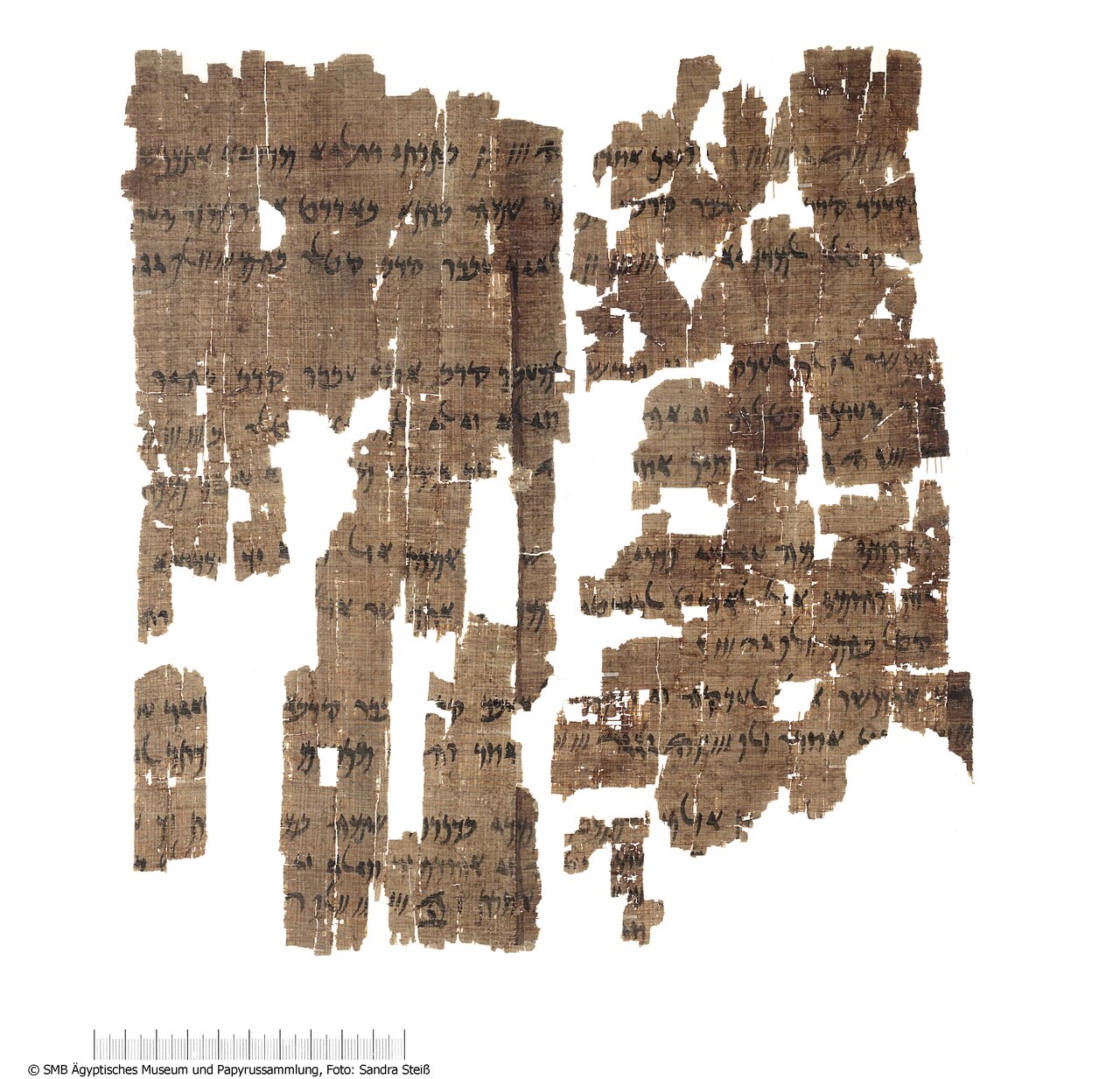
Photograph of several torn, brown papyrus fragments laid out on a white background, with dark ink text in columns written in a Semitic script. A scale bar and photo credit line appear at the bottom left.Document

Primary source

Behistun papyrus

Darius I

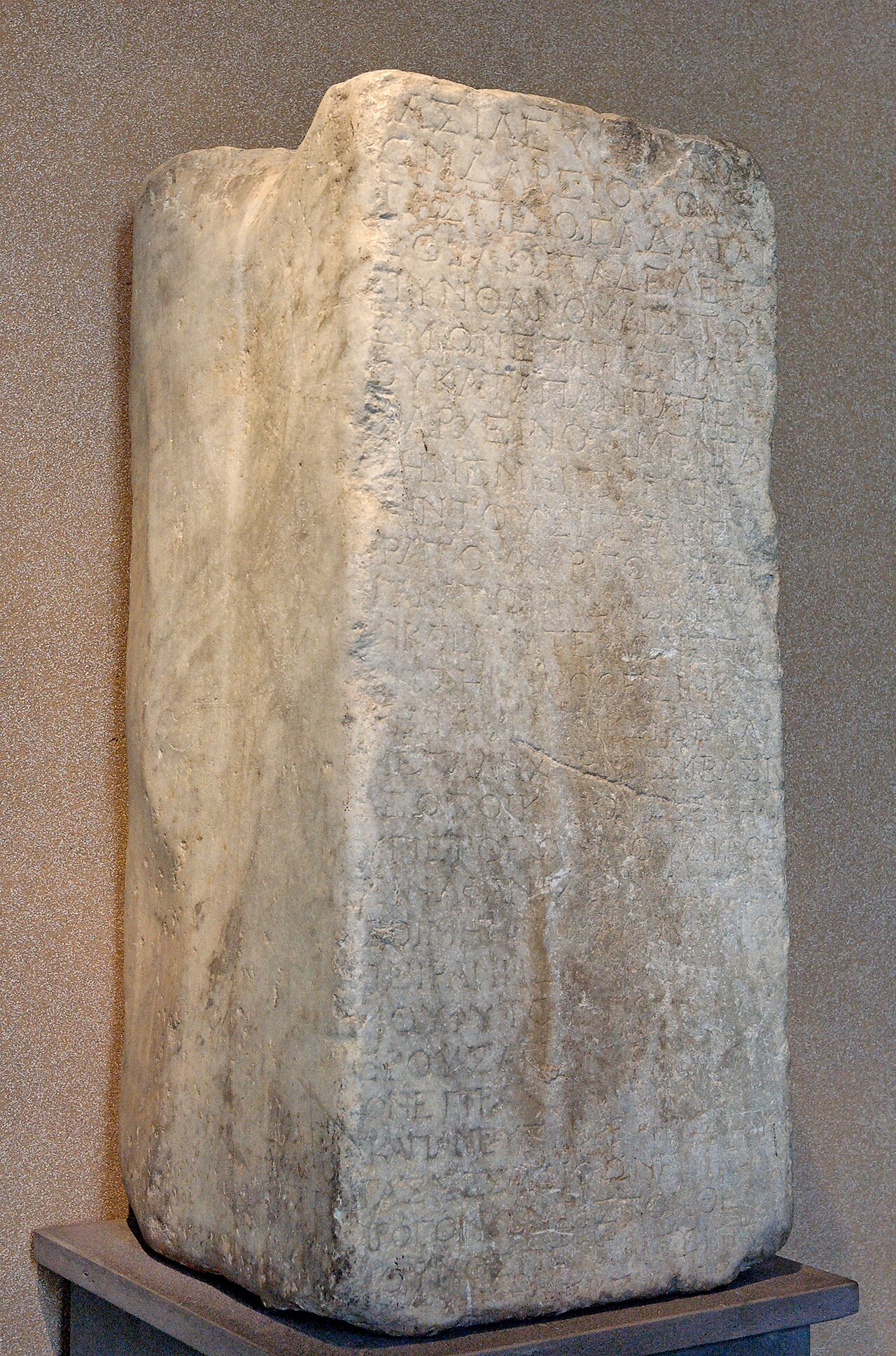
Photograph of a tall, roughly carved white marble block inscribed with lines of Greek letters on its front face, displayed on a dark wooden base against a beige wall. The inscription runs in columns down the stone.Document

Secondary source

Letter from Darius to Gadatas

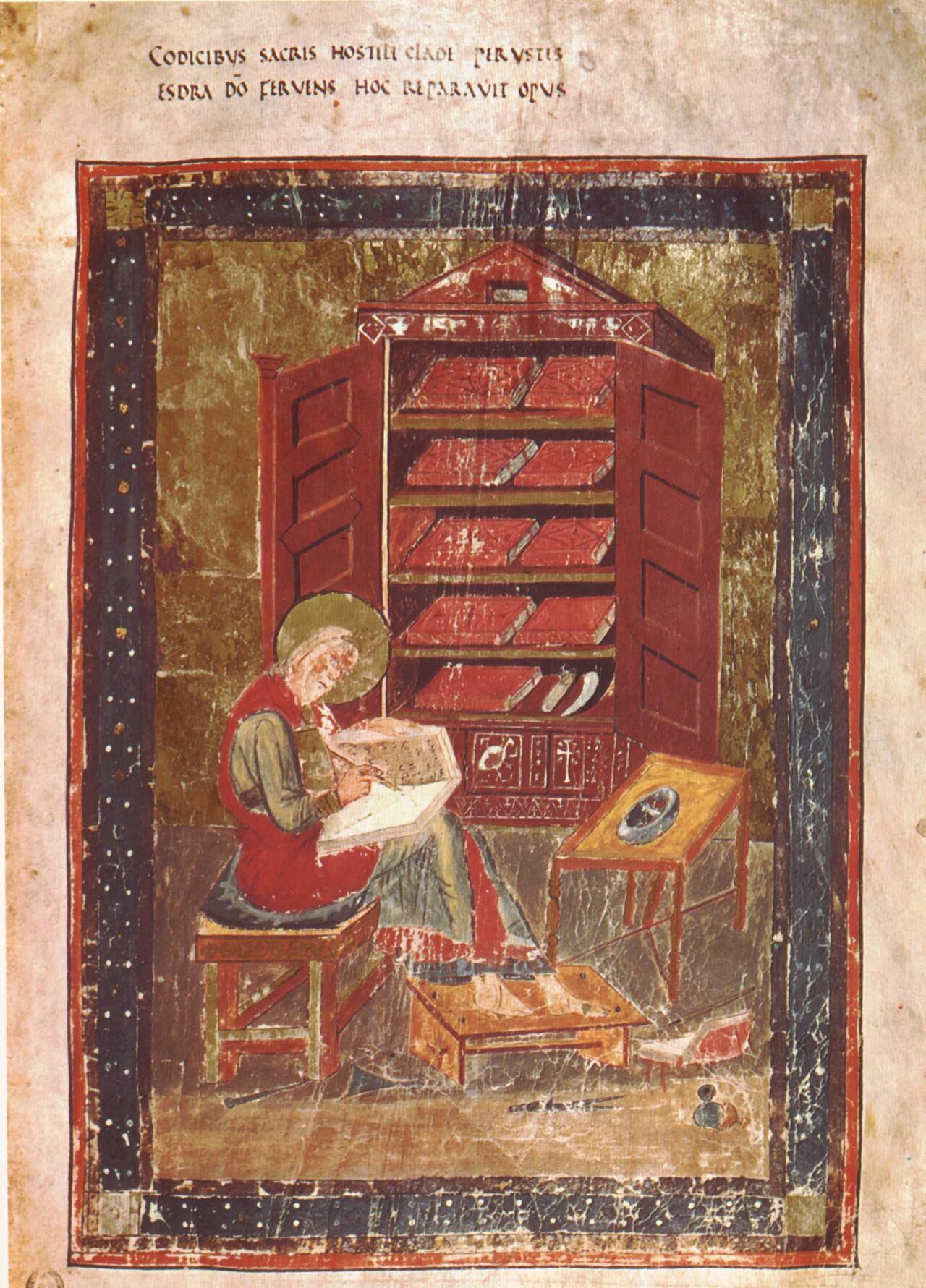
Illustration of a seated, haloed scribe in red and green robes writing in a large open book on his lap. Behind him is a red cabinet with open doors holding rows of red-bound books. Latin inscription runs across the top of the page, with a small table and footstool in the foreground.Book

Secondary source

Book of Ezra

the Chronicler · after 539 BC

Dark blue cloth book cover with a gold ornamental oval emblem containing the letters G, S and a stylized monogram. A white library label at the upper left reads University of Toronto with a barcode and number 3 1761 01515886 8.Book

Secondary source

The Persians

Aeschylus · 472 BC

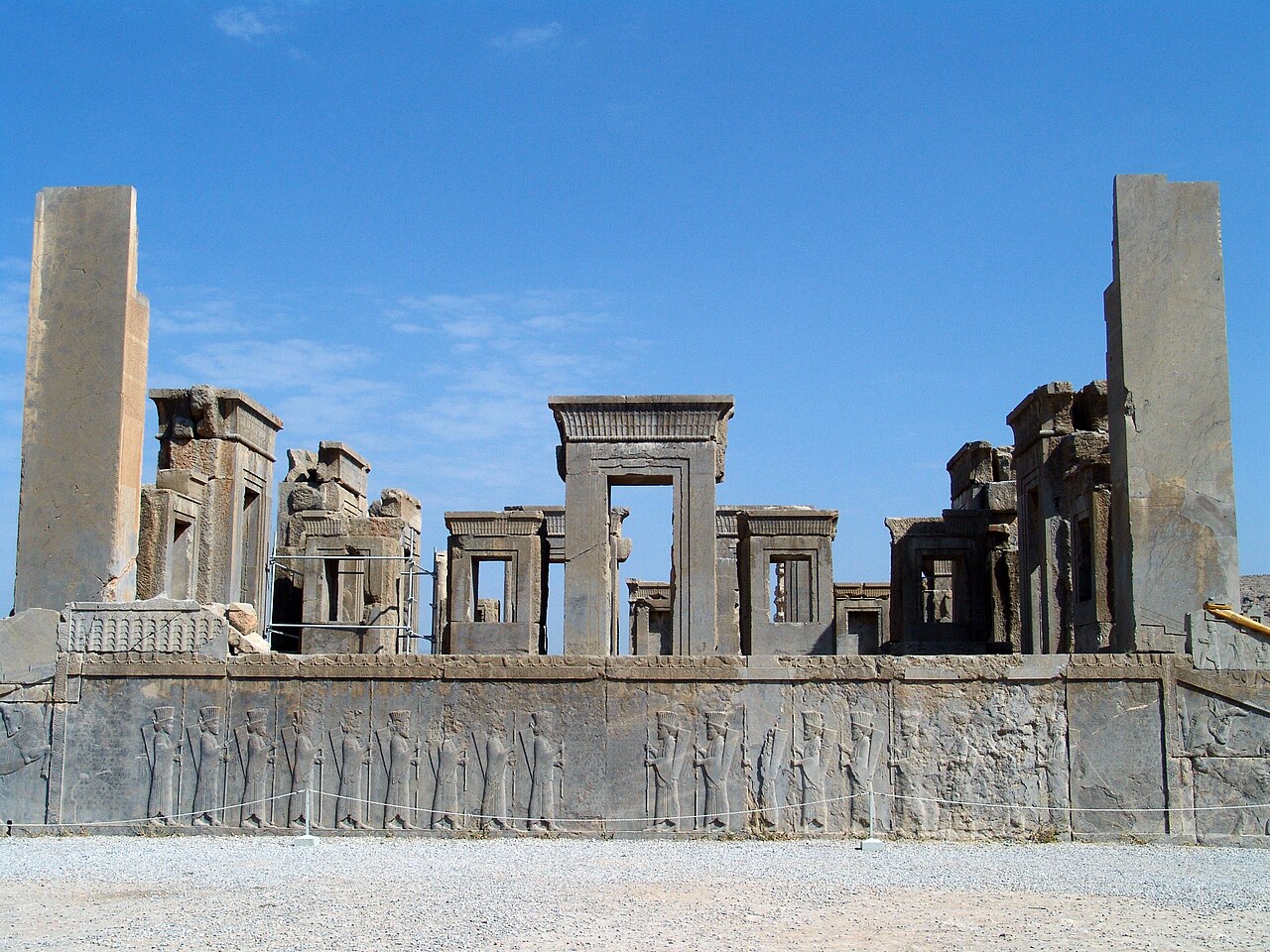
Ruins of a stone palace at Persepolis under a clear blue sky. Tall standing columns and several doorway frames remain on a raised stone platform. Below, a wall has carved relief figures of standing men in a row. Gravel ground in front.Artifact

Primary source

Tachara

Reign of Darius I, completed under Xerxes I

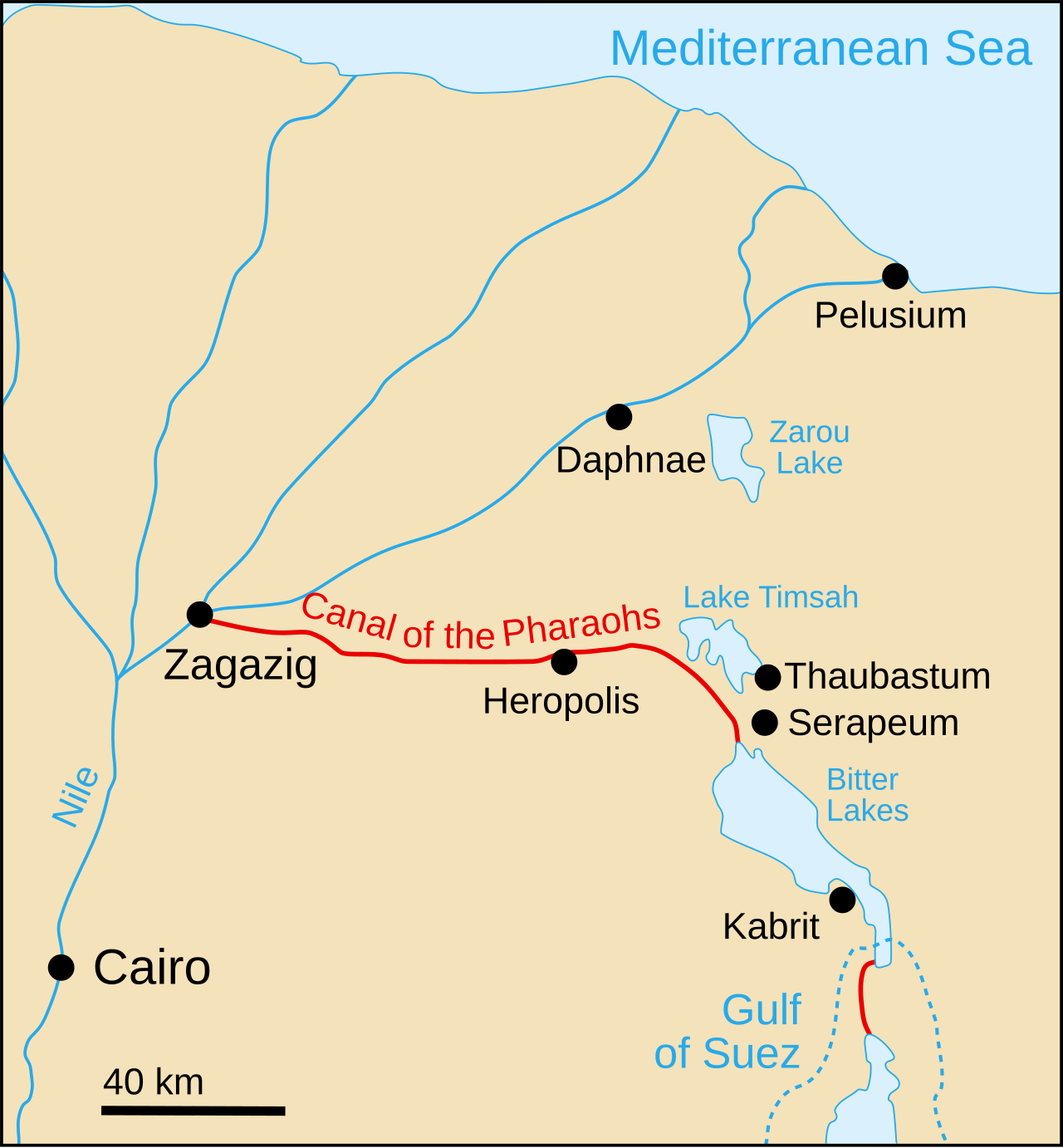
Map of northeastern Egypt showing the Nile Delta branches, the Mediterranean Sea at top right, and a red line marking the Canal of the Pharaohs running east from Zagazig past Heropolis and the Bitter Lakes to the Gulf of Suez. Labeled cities include Pelusium, Daphnae, Thaubastum, Serapeum, Kabrit, and Cairo, with a 40 km scale bar.Document

Secondary source

Canal of the Pharaohs

6th century BCE

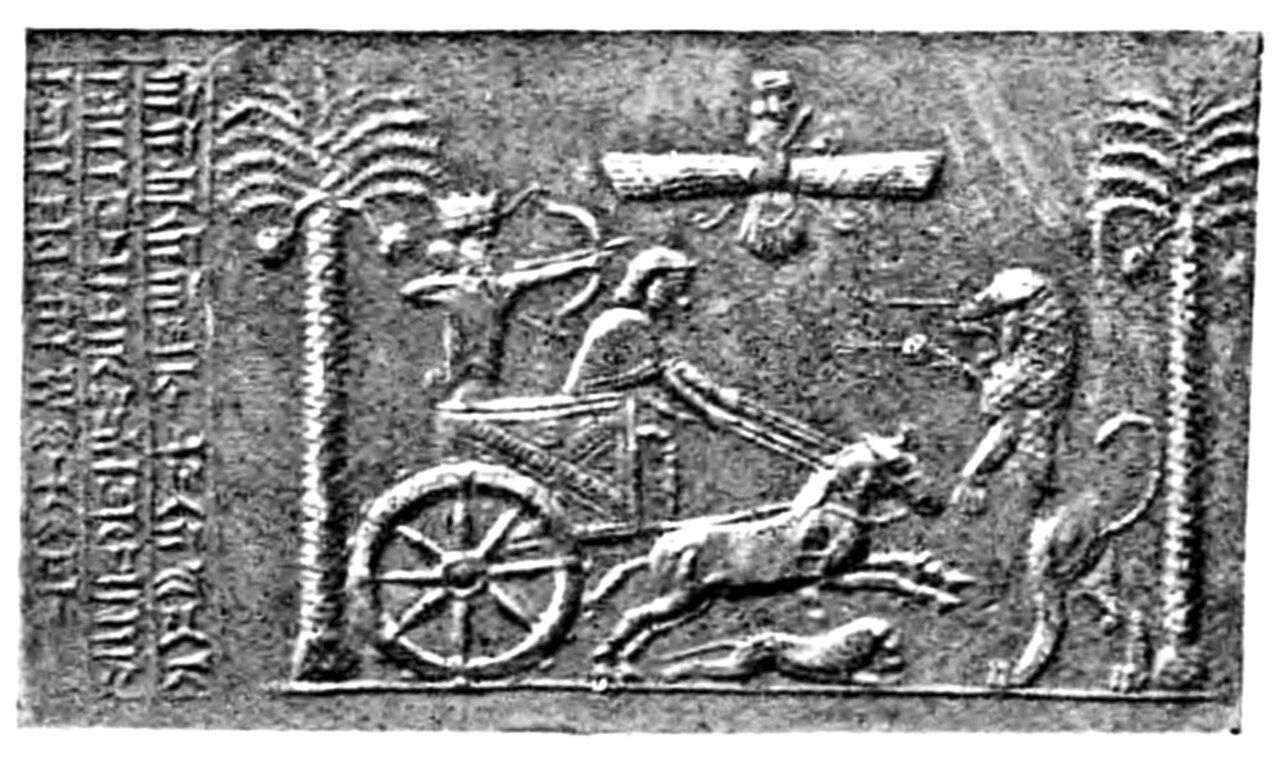
Black-and-white photo of a rectangular carved relief. Left: vertical cuneiform columns. A figure in a chariot drawn by a horse aims a bow; a lion lies beneath the horses. Winged figure above, palm trees at each side, and a standing figure on the right.Artifact

Primary source

Cylinder seal of Darius

Achaemenid seal-cutter · c. 500 BCE

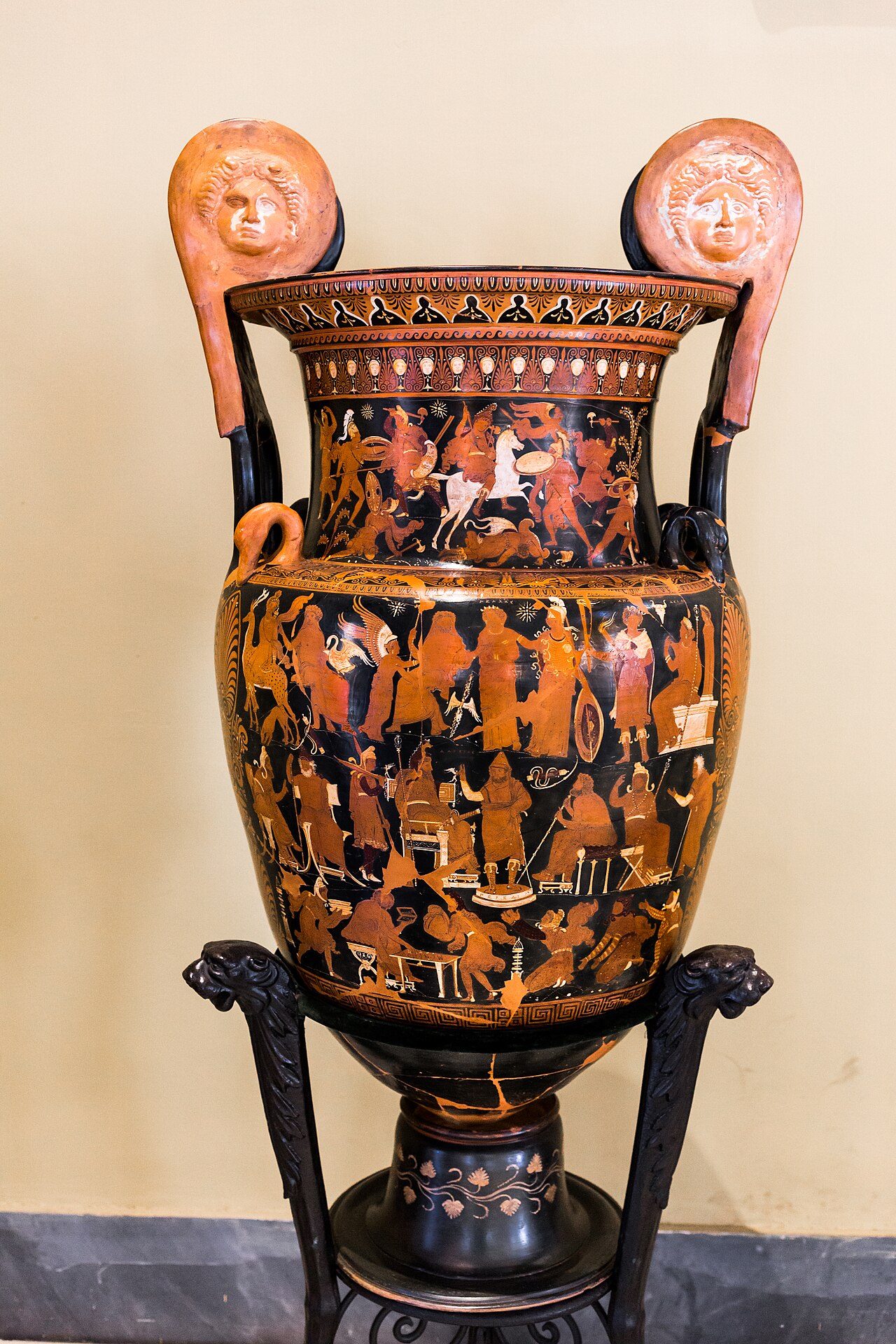
Photograph of a large red-figure volute krater vase with black background, standing on a black metal stand with ram-head supports. Two handles end in mask-like heads. The body is covered with painted figures in rows, including a central enthroned figure surrounded by standing people, and a Greek key border at the base.Artifact

Secondary source

Darius Vase

Darius Painter · c. 340-320 BCE

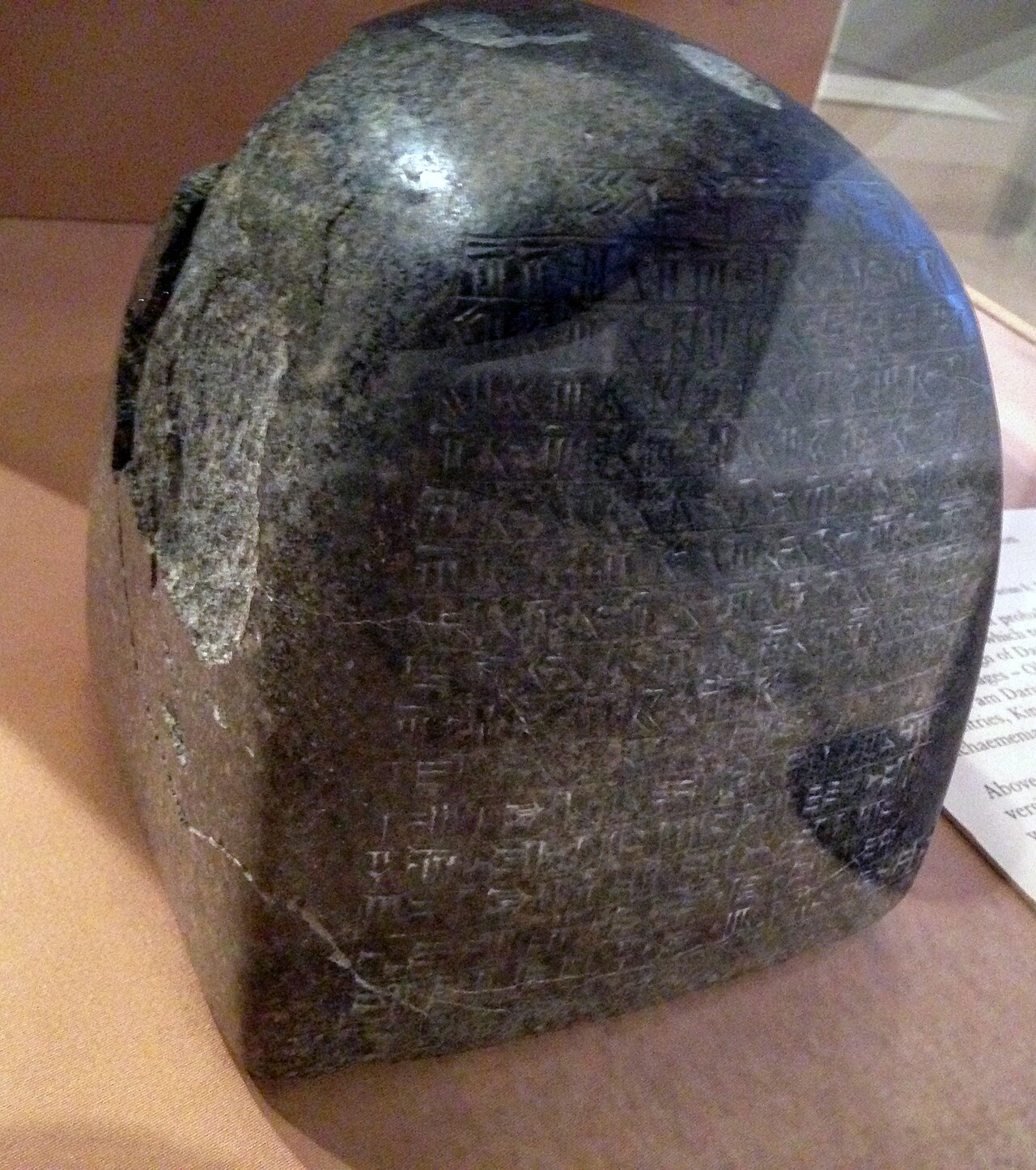
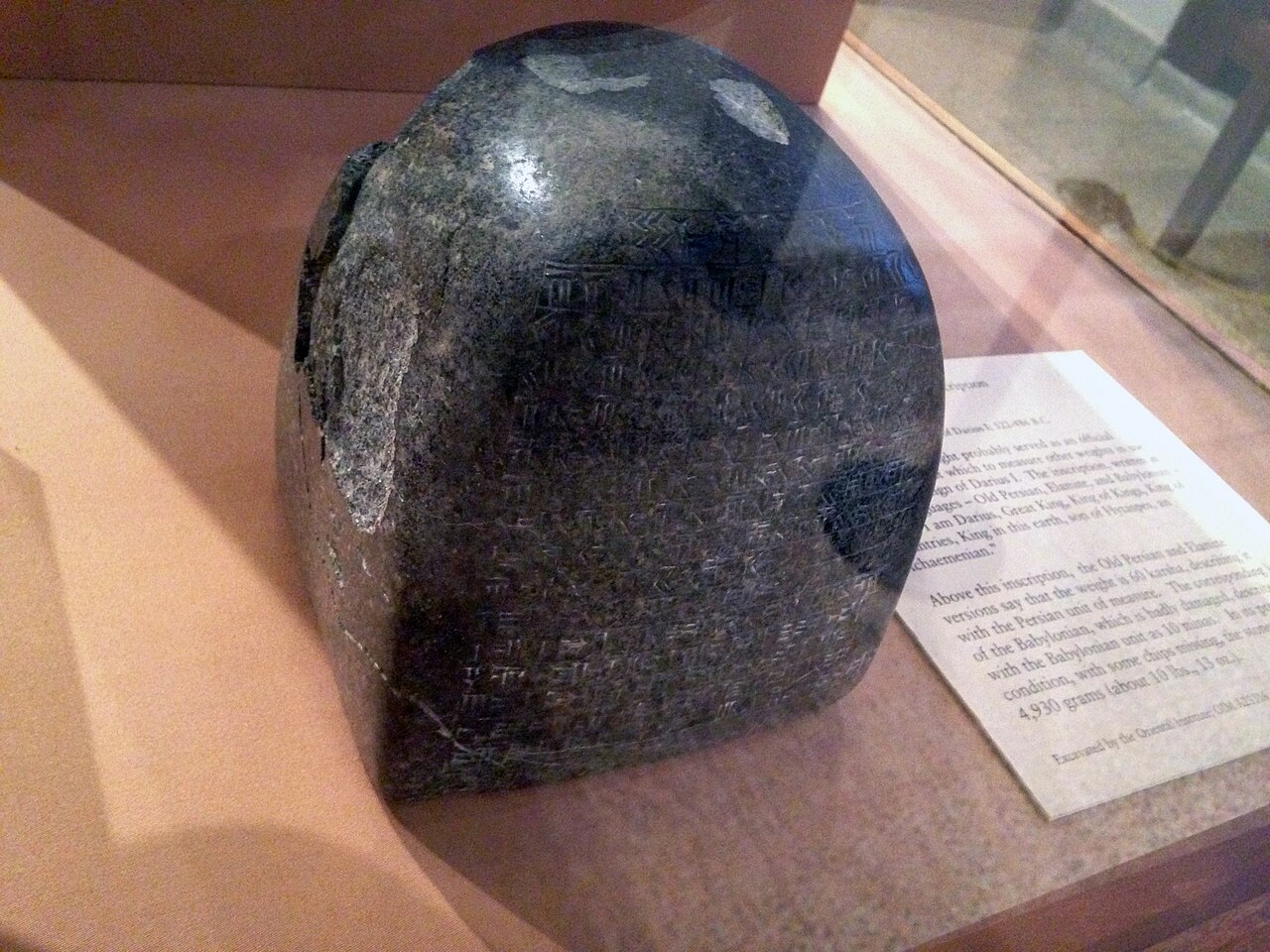
Photo of a dark grey stone object with a rounded top and flat sides, covered in rows of cuneiform-style wedge inscriptions. A white museum label sits at the right edge, and a fragment of rough stone is visible at the left.Artifact

Primary source

Weight with Trilingual Inscription of Darius

522-486 BCE

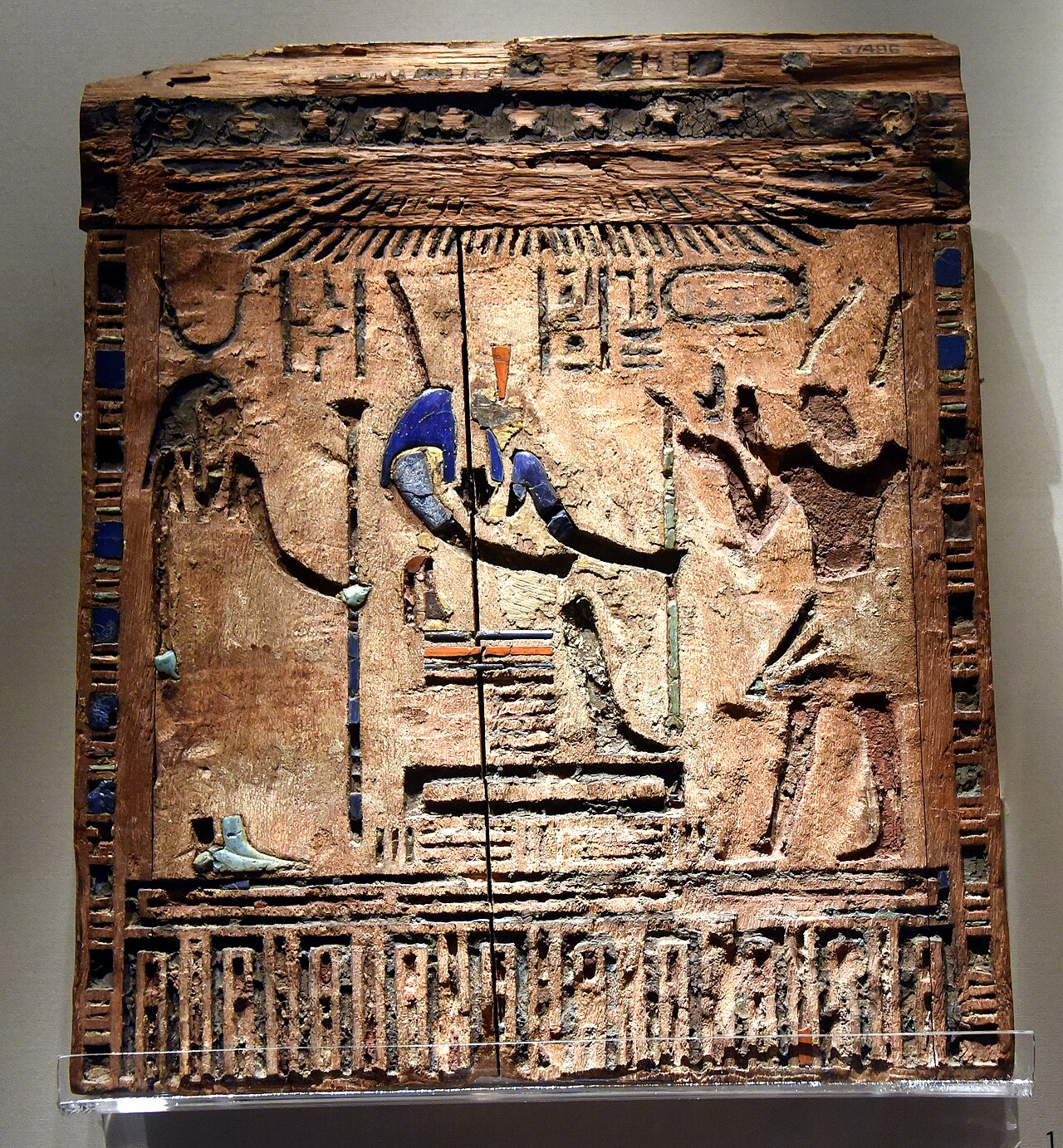
Wooden door panel from a naos, inlaid with blue and polychrome glass, showing carved relief figures and hieroglyphs. A winged cornice runs across the top and a registers of inscriptions along the bottom. Displayed in a museum case.Artifact

Primary source

Darius I Dressed as an Egyptian Pharaoh, Making an Offering to Anubis

521-486 BCE

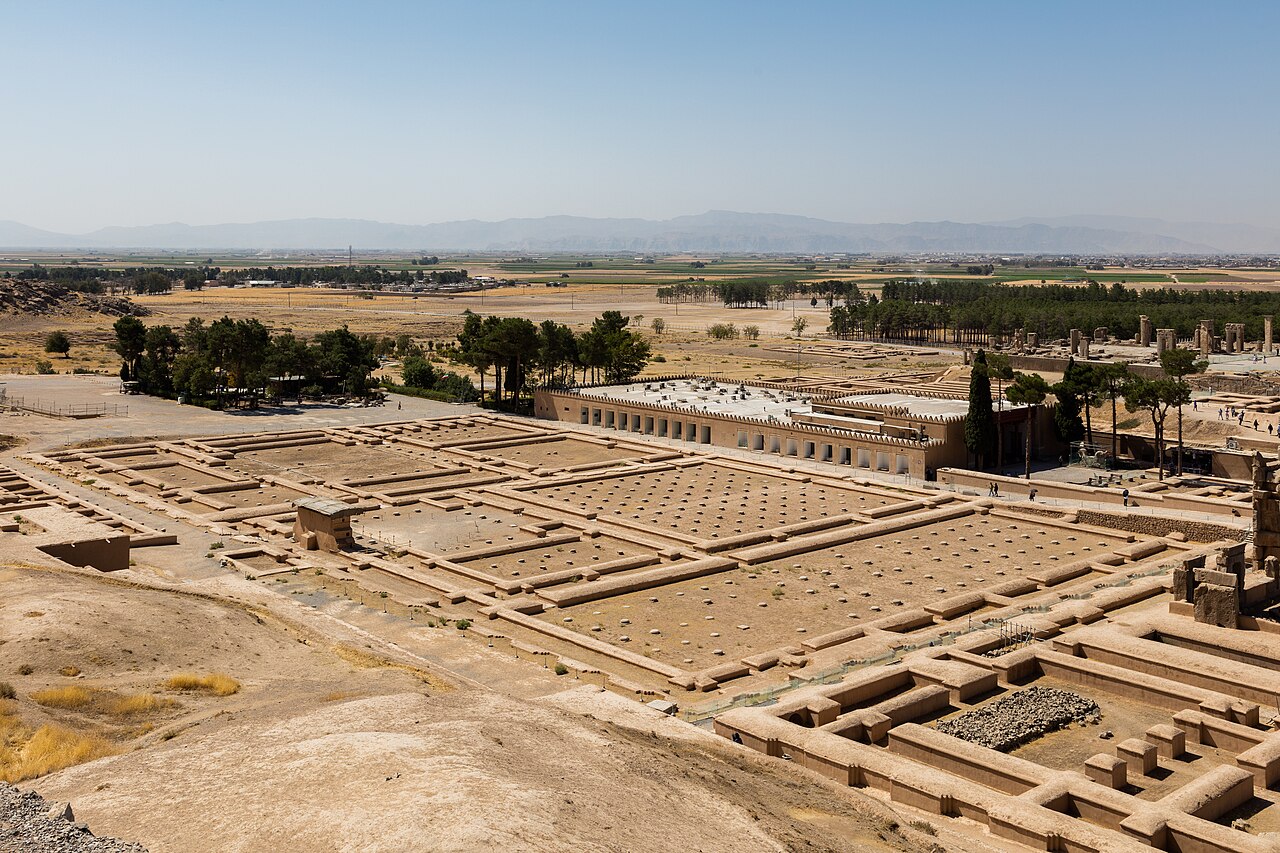
Aerial view of the ruins of Persepolis in Iran. Low mud-brick and stone foundations form a large rectangular complex with courtyards, and a long colonnaded building with a flat roof stands beside a grove of trees. Dry plains and distant mountains lie under a hazy sky.Artifact

Primary source

Treasury of Persepolis

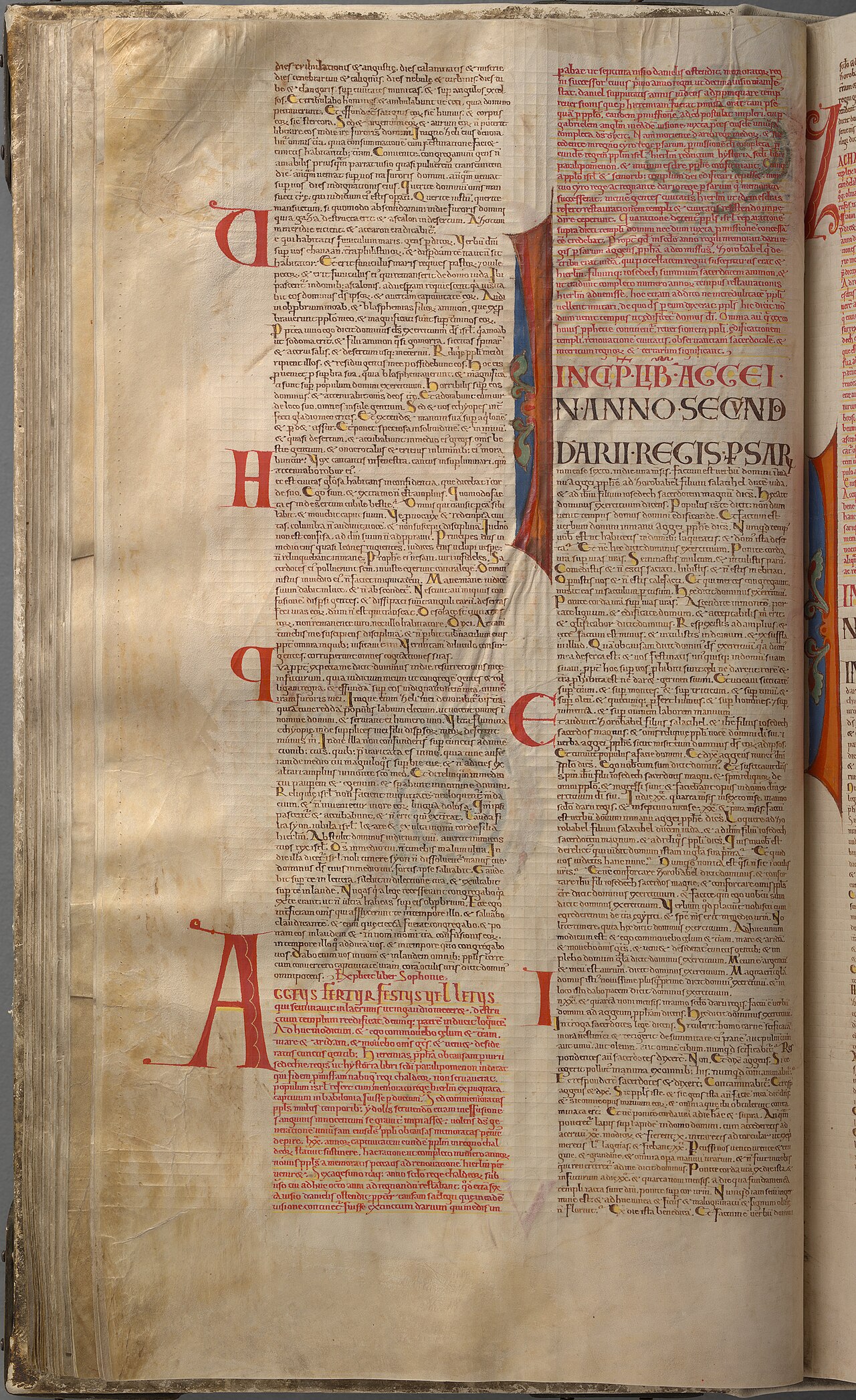
A page of a medieval illuminated manuscript in Latin with two columns of dense handwritten text in black and red ink. Large red and blue decorated initial letters mark the sections, including a large red A at lower left and a large red H-like initial. The parchment is yellowed and worn at the edges.Book

Primary source

Book of Haggai

Haggai · c. 520 BCE

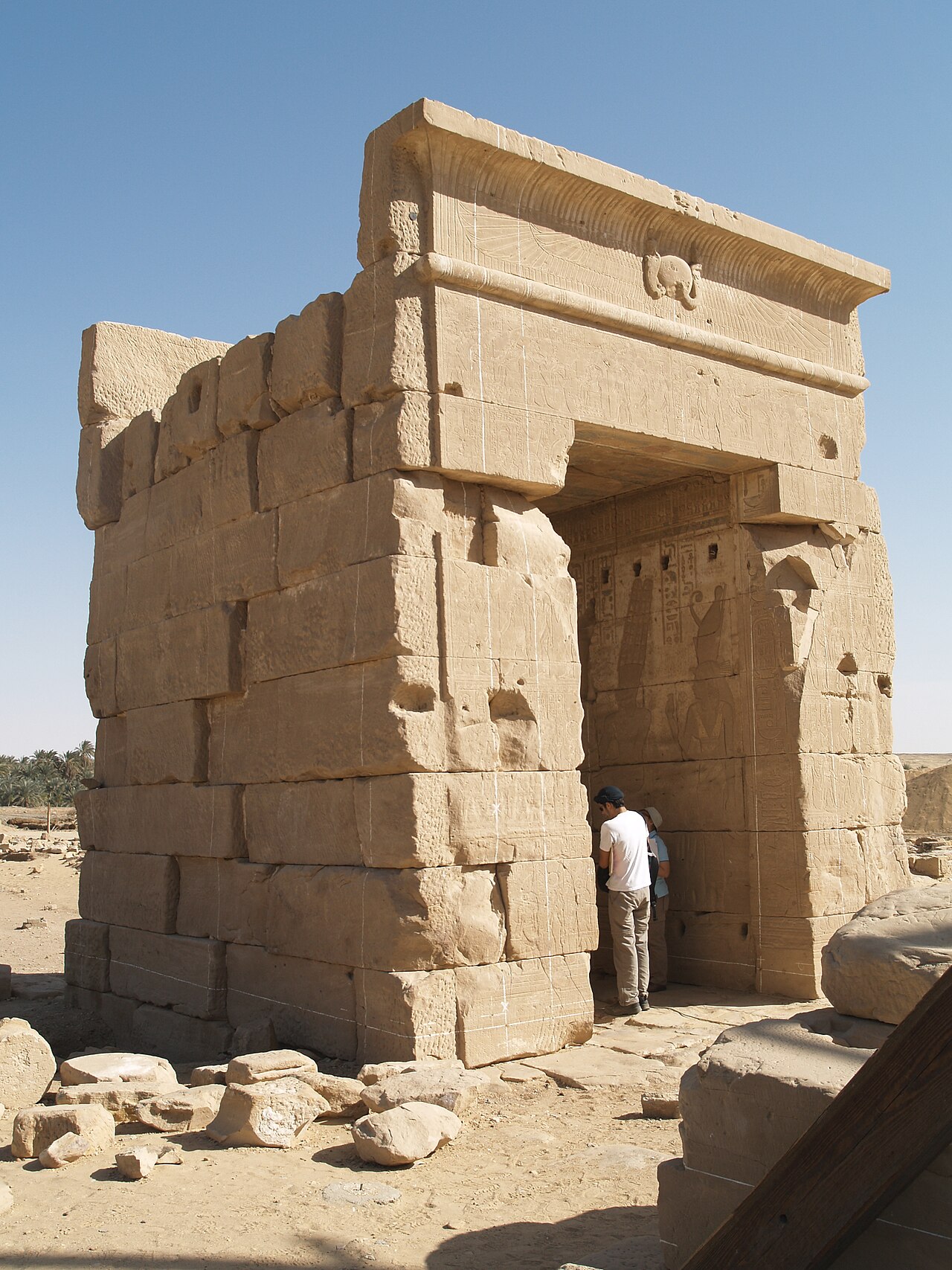
Exterior view of a sandstone gateway-style temple entrance with a projecting cornice and carved relief on the inner walls, set in desert sand with scattered stone blocks. Two people stand in the doorway; the sky is clear blue and palm trees appear at the left edge.Artifact

Primary source

Temple of Hibis

Egyptian builders under Darius I · c. 510-490 BCE

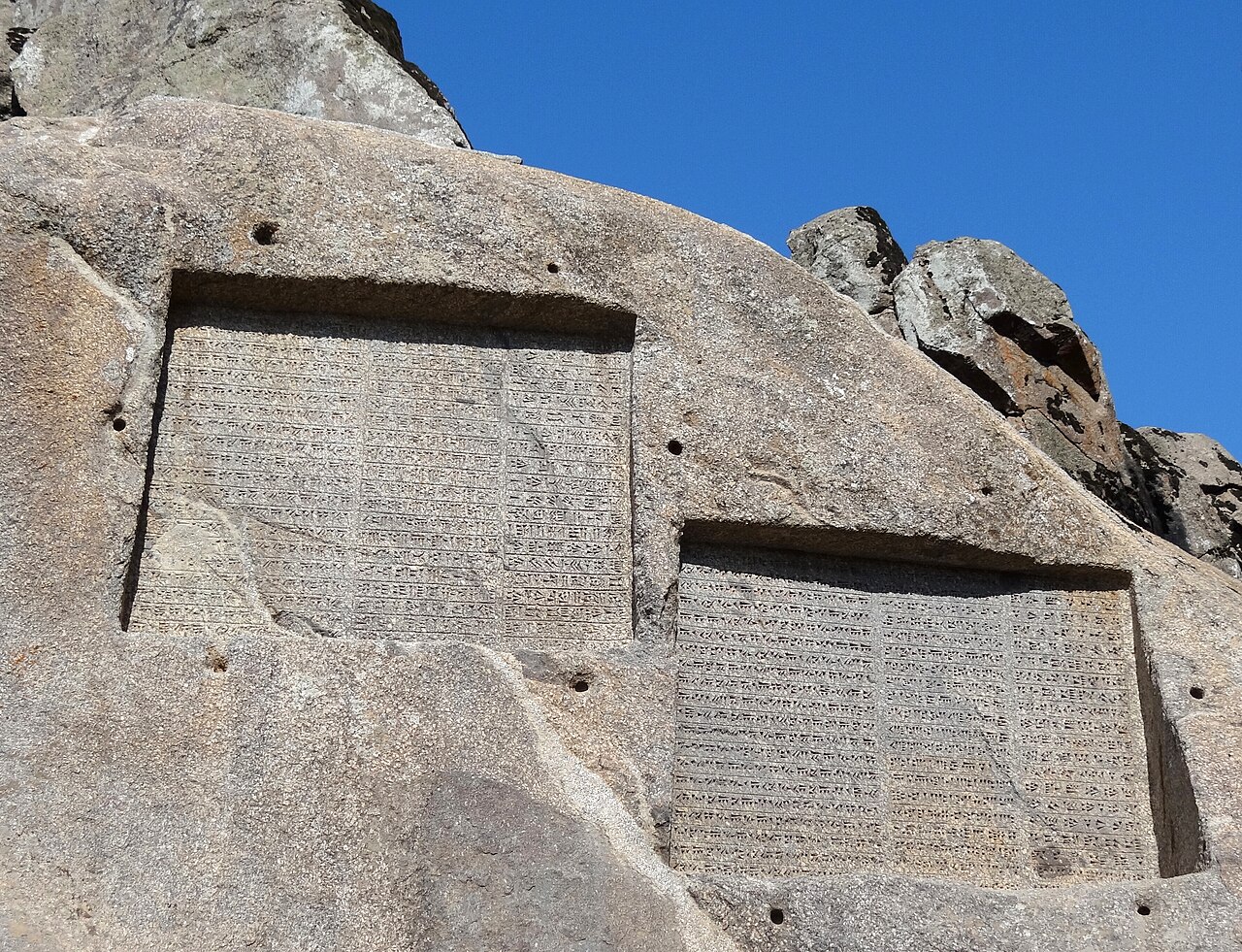
Two rectangular panels of densely carved cuneiform script cut into a weathered rock face under a clear blue sky, with rough rock outcrops visible above and to the right.Document

Primary source

Ganj Nameh Inscriptions

Darius I · c. 500 BCE

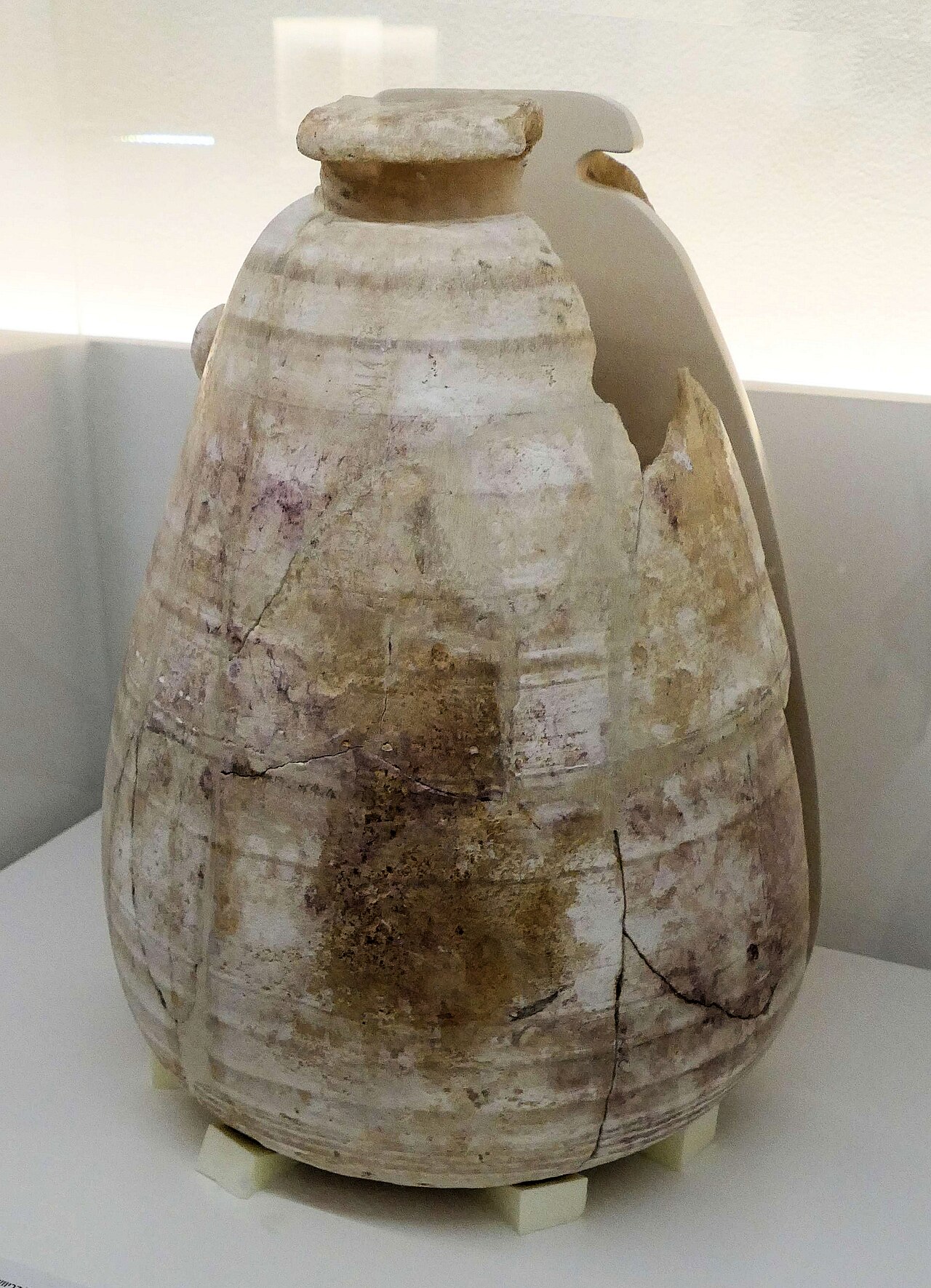
Photograph of a large pale alabaster vase with a flat-rimmed neck, ribbed body, and a tall side handle, displayed in a glass case on a white pedestal. Visible cracks and brownish stains mark its surface.Artifact

Primary source

Alabaster Vase of Darius I

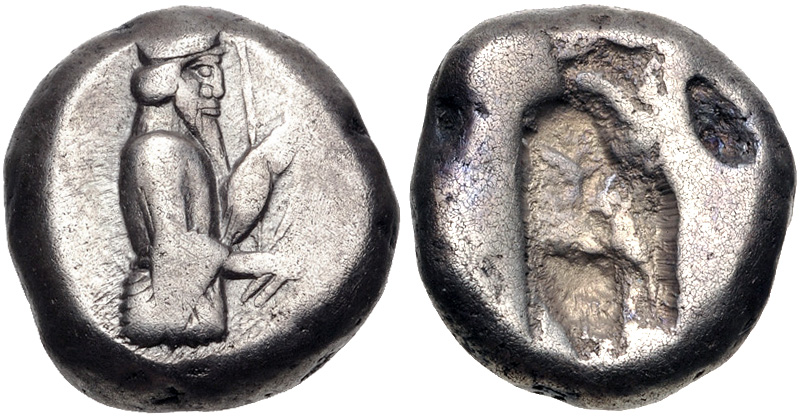
Photograph of a silver Achaemenid siglos coin of Darius I. Obverse: a half-length figure facing right wearing a kidaris headdress, holding a bow and arrows. Reverse: a rough incuse punch mark.Artifact

Primary source

Siglos Coin of Darius the Great

c. 520-505 BC

A dark grey, polished stone weight with rounded top and flat base, covered in carved cuneiform-style inscriptions, displayed in a glass case. A printed museum label sits beside it on the right.Artifact

Primary source

Trilingual Stone Weight from Persepolis

522-486 BCE

Photograph of a fragmentary clay tablet, pale tan with irregular broken edges, on a black background. Its surface is covered with rows of cuneiform wedge-shaped impressions. A few small black marks appear along its right edge.Document

Primary source

Clay Tablet Fragment of the Susa Inscription DSe

Darius I

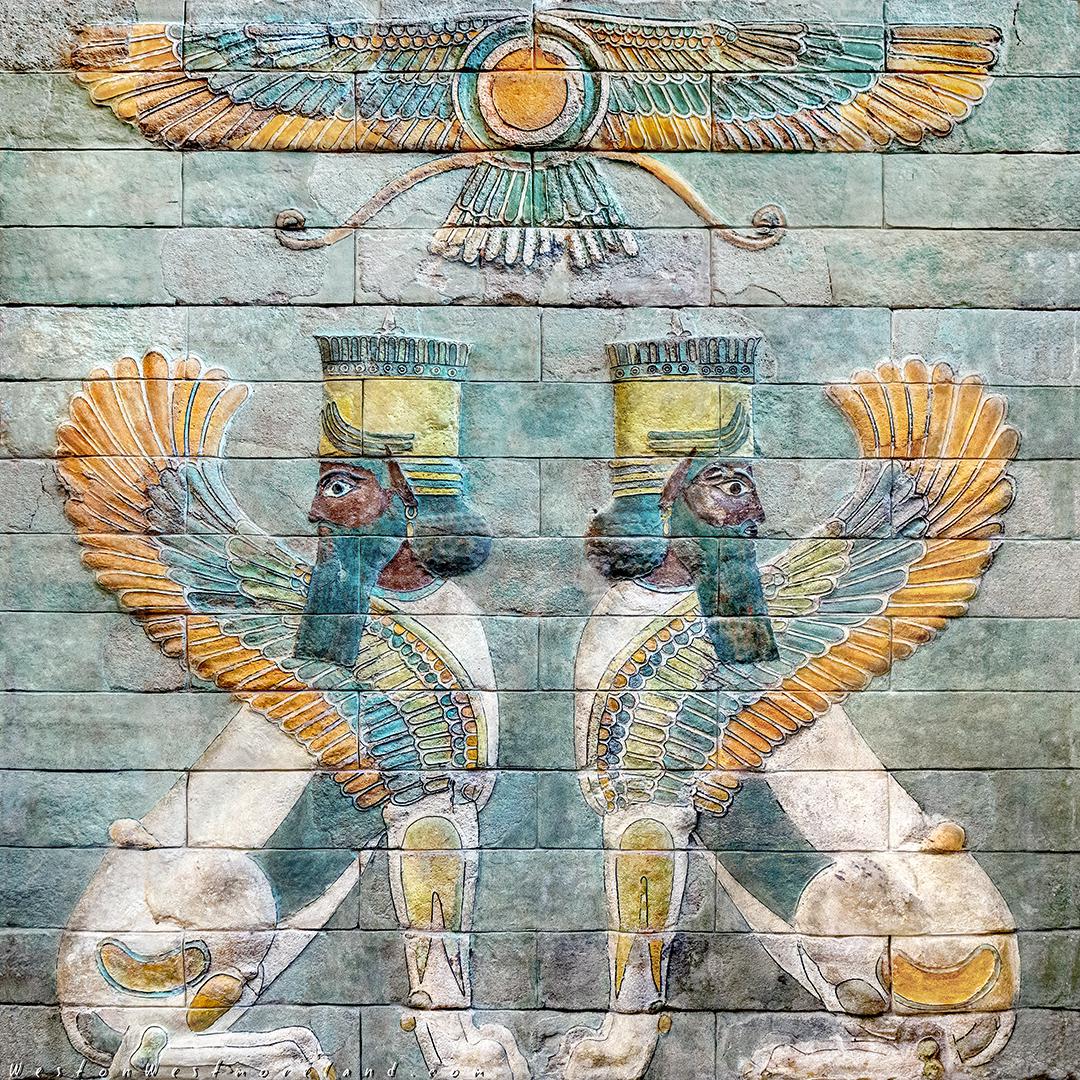
Glazed brick relief of two human-headed winged bulls (lamassu/aladlammu) facing each other, with a winged sun disk above them. Figures wear tall crowns and have feathered wings in teal, yellow and orange on a pale green brick wall.Artifact

Primary source

Glazed Brick Guardian Figures from the Palace of Darius at Susa

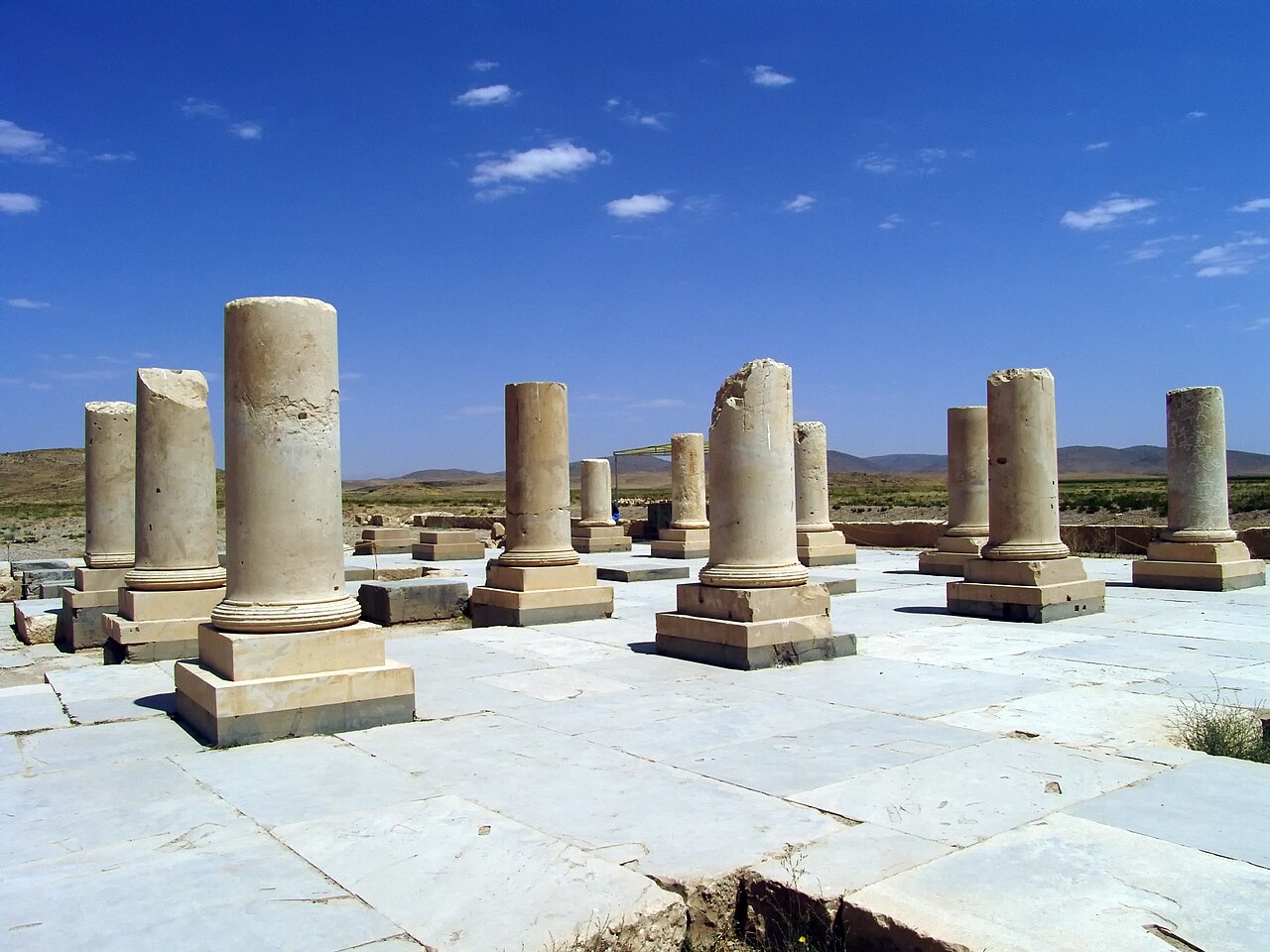
Ruins of stone columns on square bases standing on a flat paved stone platform under a bright blue sky with scattered clouds. Some columns are broken and shortened, and low dry hills lie in the background.Artifact

Primary source

Palace P at Pasargadae

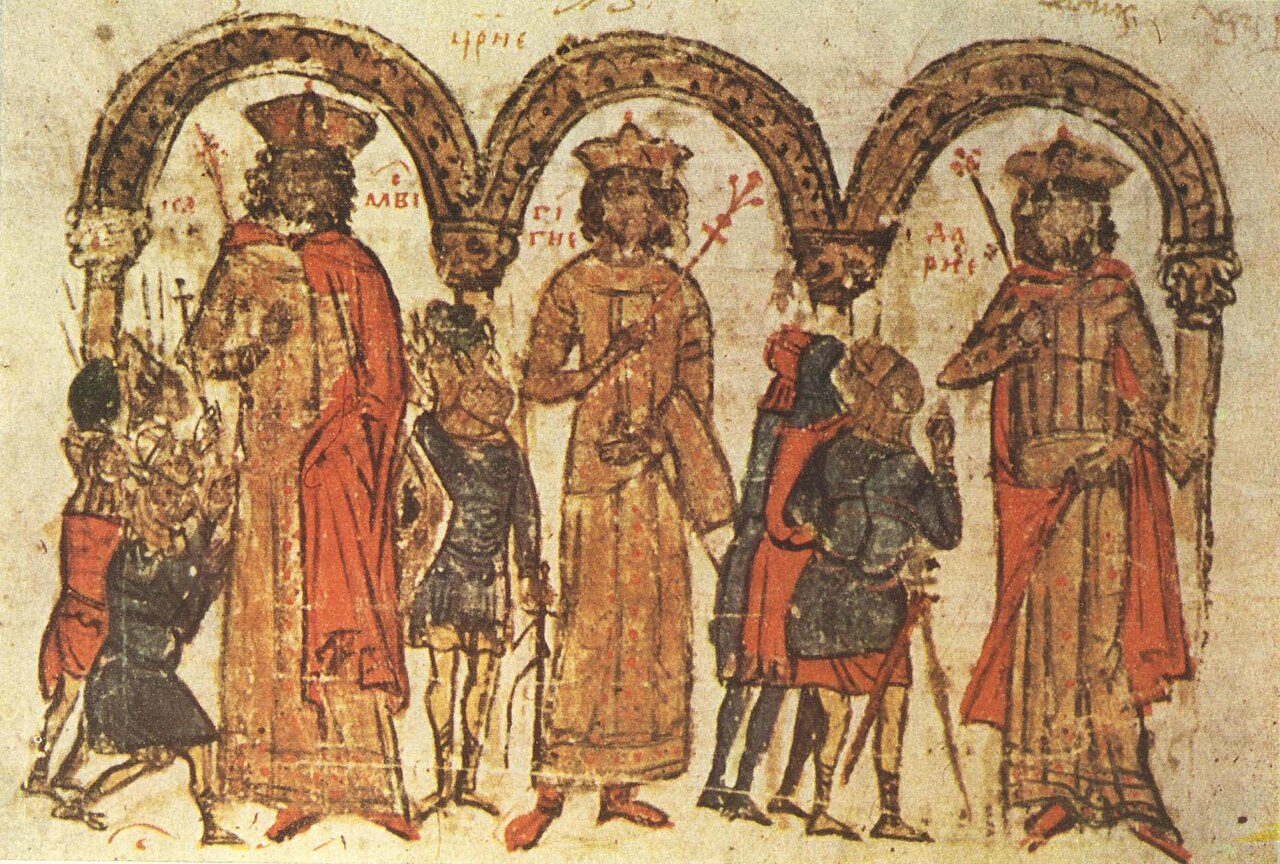
Medieval manuscript miniature with three crowned, bearded kings standing under decorated arches, with Greek inscriptions above and beside them. Attendants in armor and red cloaks stand at the sides. Painted in warm earth tones.Painting

Secondary source

Miniature of Kings Cambyses, Gyges and Darius from the Constantine Manasses Chronicle

Constantine Manasses · 14th century

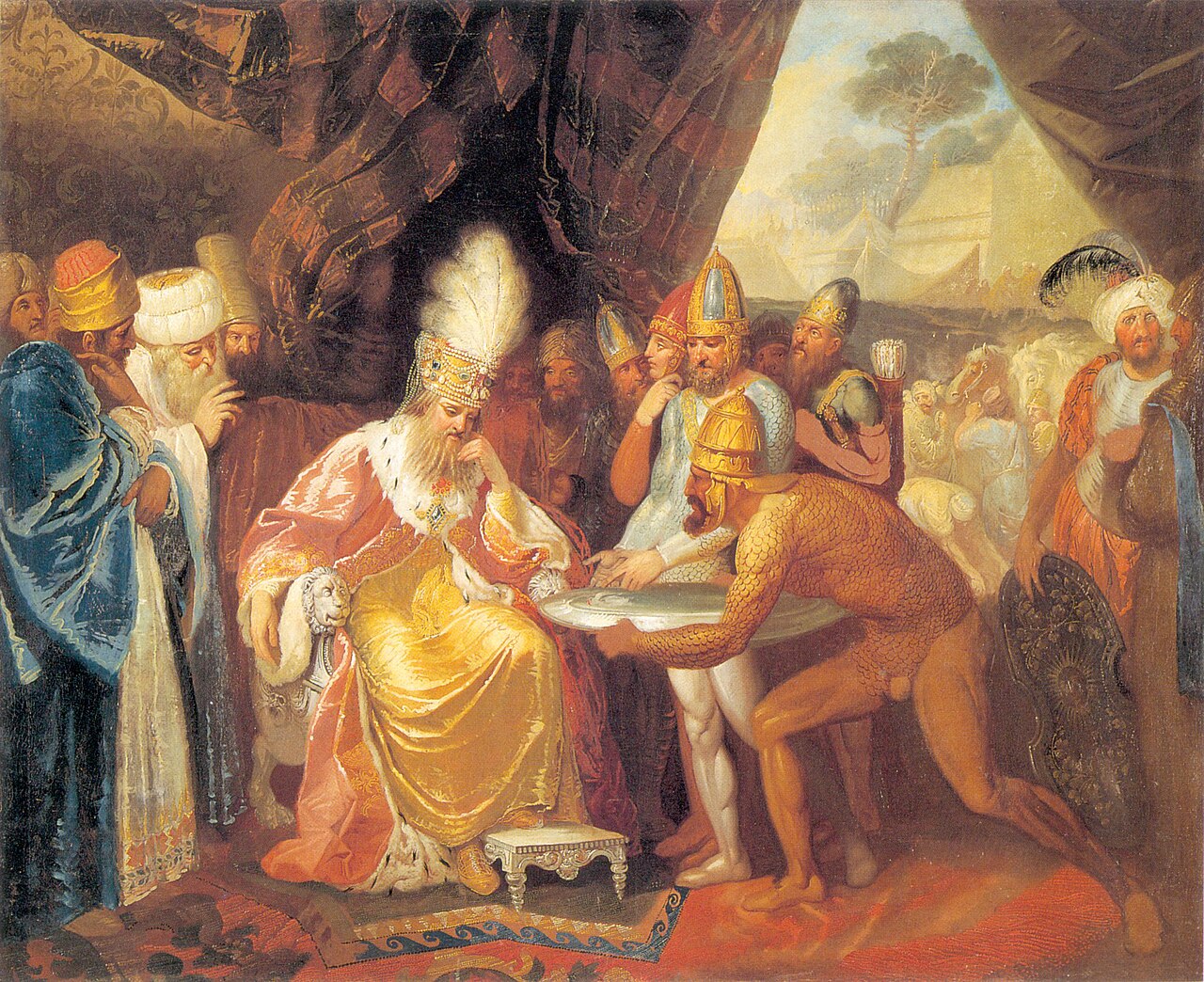
Oil painting of a seated bearded king in a yellow robe with a red cloak and a tall white plumed crown, surrounded by turbaned courtiers. In the foreground, a kneeling man in scaled armor holds a tray, with tents and horses in the background.Painting

Secondary source

Scythian Messengers Meet the Persian King Darius I

Franciszek Smuglewicz · 1785

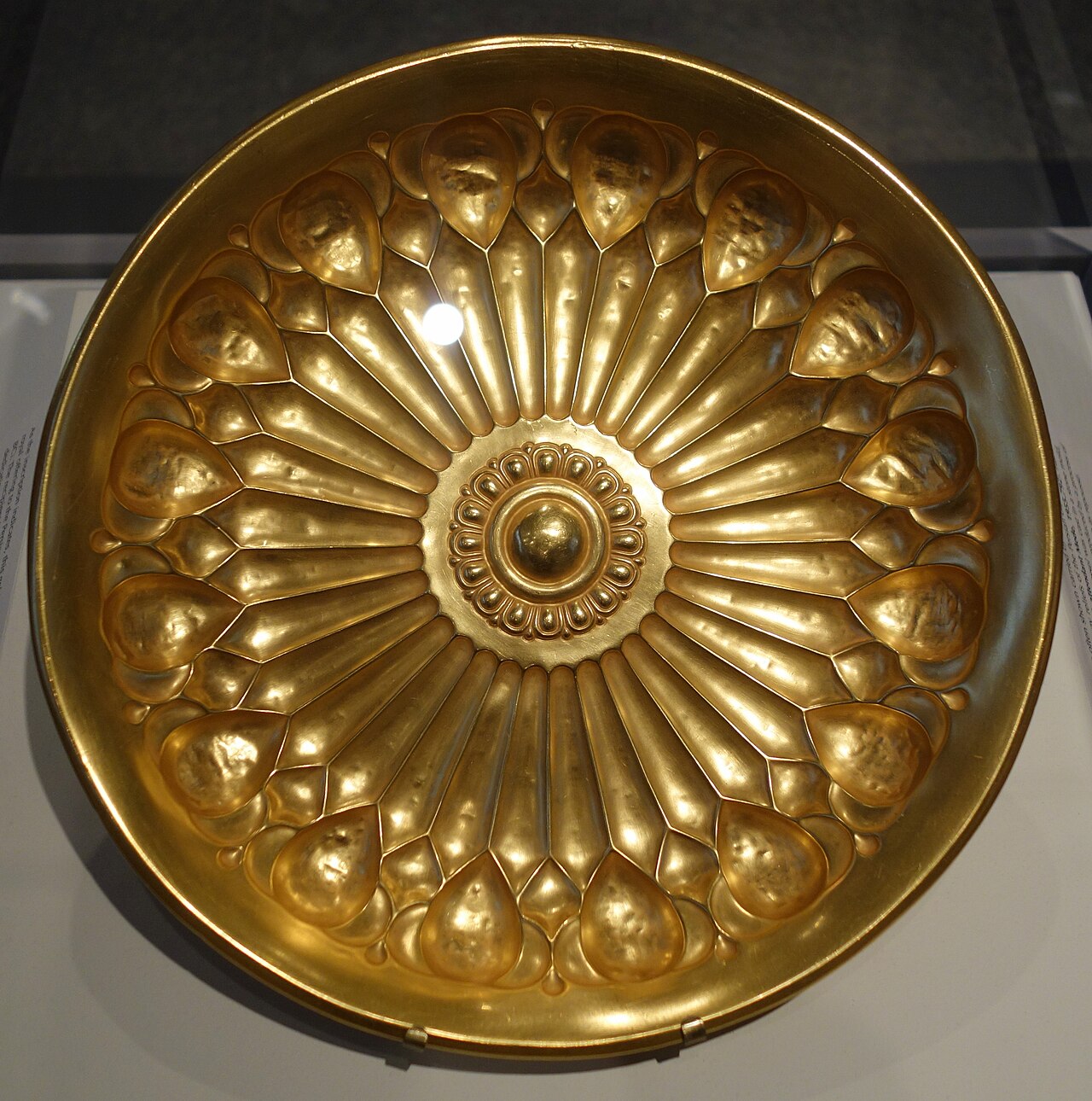
Photograph of a gold bowl displayed on a white pedestal in a museum case. Its interior has a central boss surrounded by a ring of petal-like motifs, then rows of teardrop-shaped bulges and radiating fluted ridges around the rim.Artifact

Primary source

Bowl of Darius the Great

522-486 BC

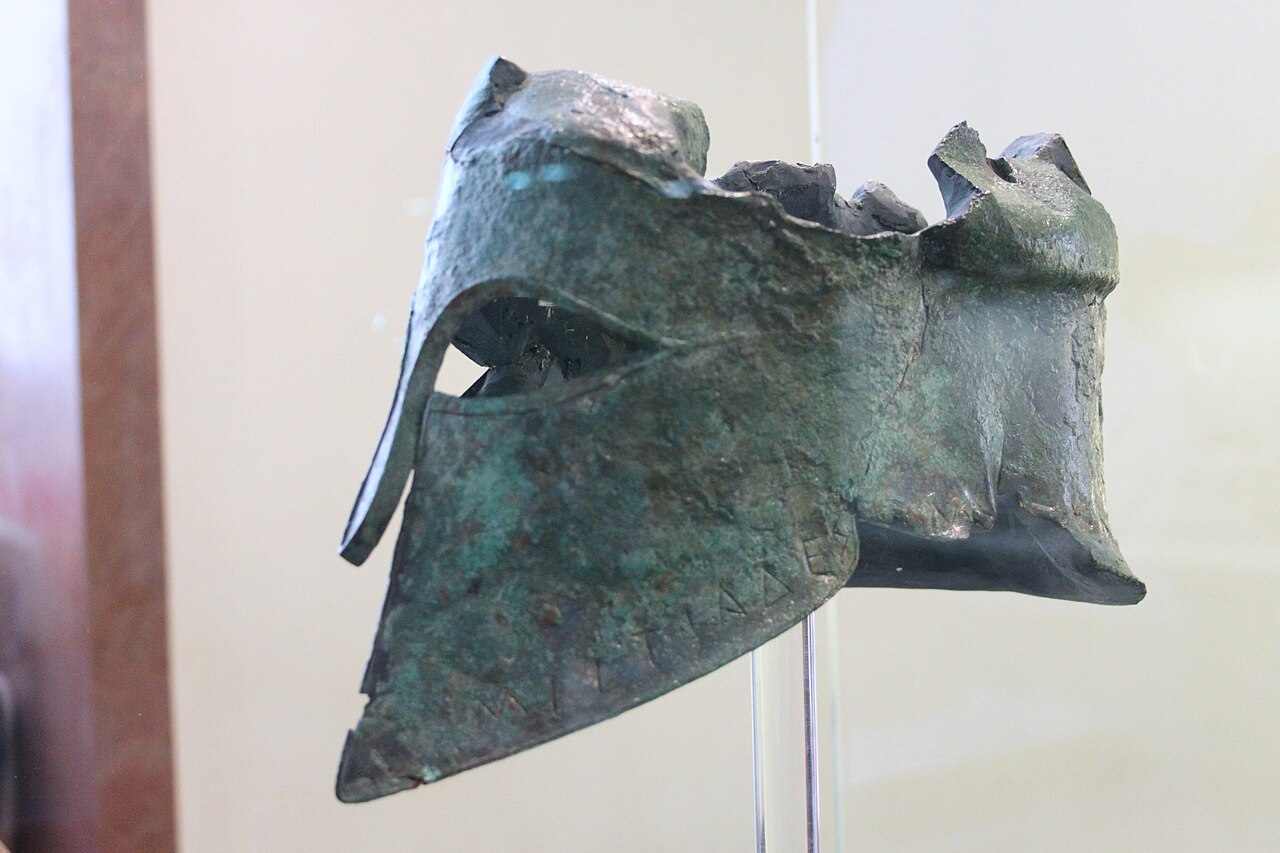
A corroded green bronze Greek helmet displayed in a glass case on a metal stand. The cheek plates are intact and a partly visible inscription is scratched on the front. The top and crest area is broken and jagged.Artifact

Primary source

Helmet of Miltiades

490 BC

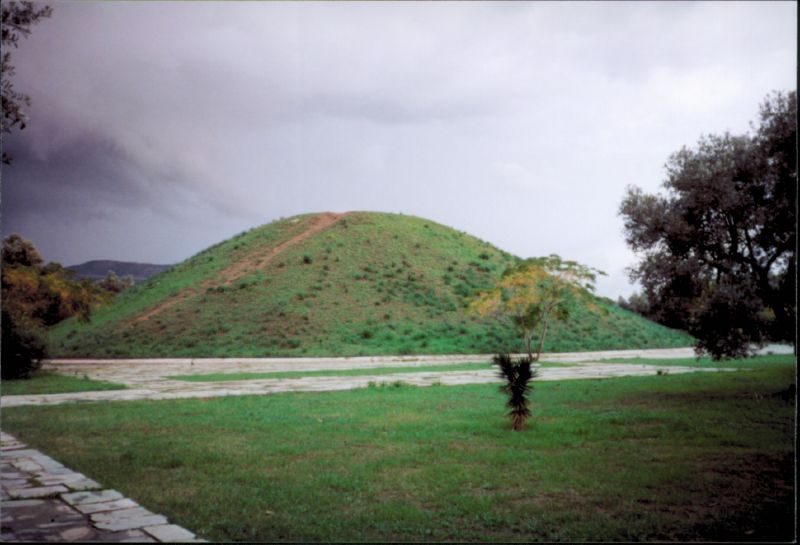
A large grassy, dome-shaped earth mound rises under a cloudy sky, with a reddish dirt path winding up one side. In the foreground are pale stone paving slabs, a small young tree, and green lawn, with trees at the right edge.Artifact

Primary source

Soros (Tumulus of Marathon)

490 BC

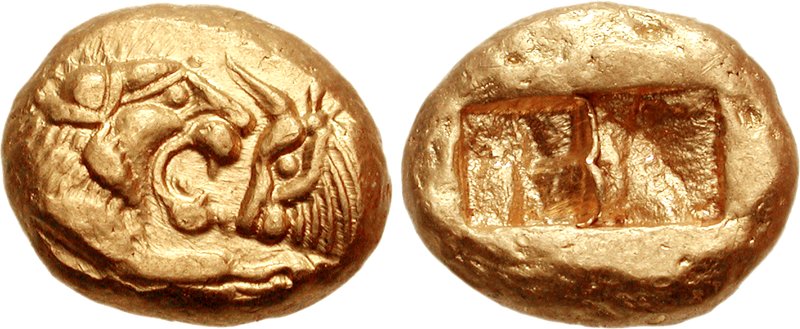
Two views of a small oval gold coin. The left side shows a lion's head and forepart facing right, with a curled mane and open jaws. The right side shows an incuse square punch with a pattern of rectangular divisions.Artifact

Primary source

Lydian Croeseid Gold Coin

Circa 545-520 BC

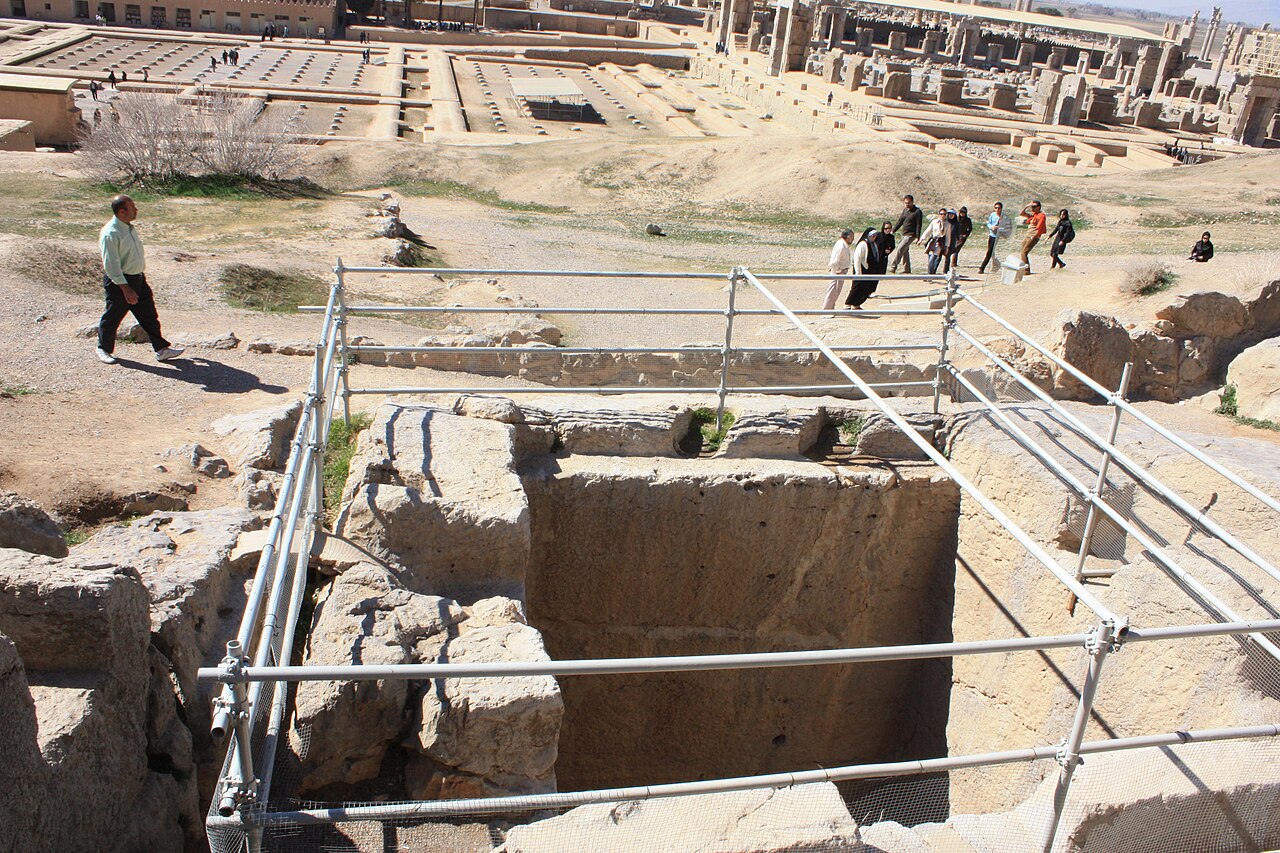
Visitors walk along a metal railing beside a deep, rectangular stone-lined pit at the Persepolis ruins. Excavated ruins and stone platforms stretch across the dry landscape behind, with a man in a green shirt walking on the left.Artifact

Primary source

Cistern of Persepolis

The Behistan Inscription of King DariusBook

Secondary source

The Behistan Inscription of King Darius

1908

Old Persian Inscriptions of Darius at BagistanBook

Secondary source

Old Persian Inscriptions of Darius at Bagistan

Artur Hoffmann-Kutschke · 1908

Book

Secondary source

Herodotus's Histories, Book III (Macaulay Translation)

Herodotus (translated by G. C. Macaulay) · 1890

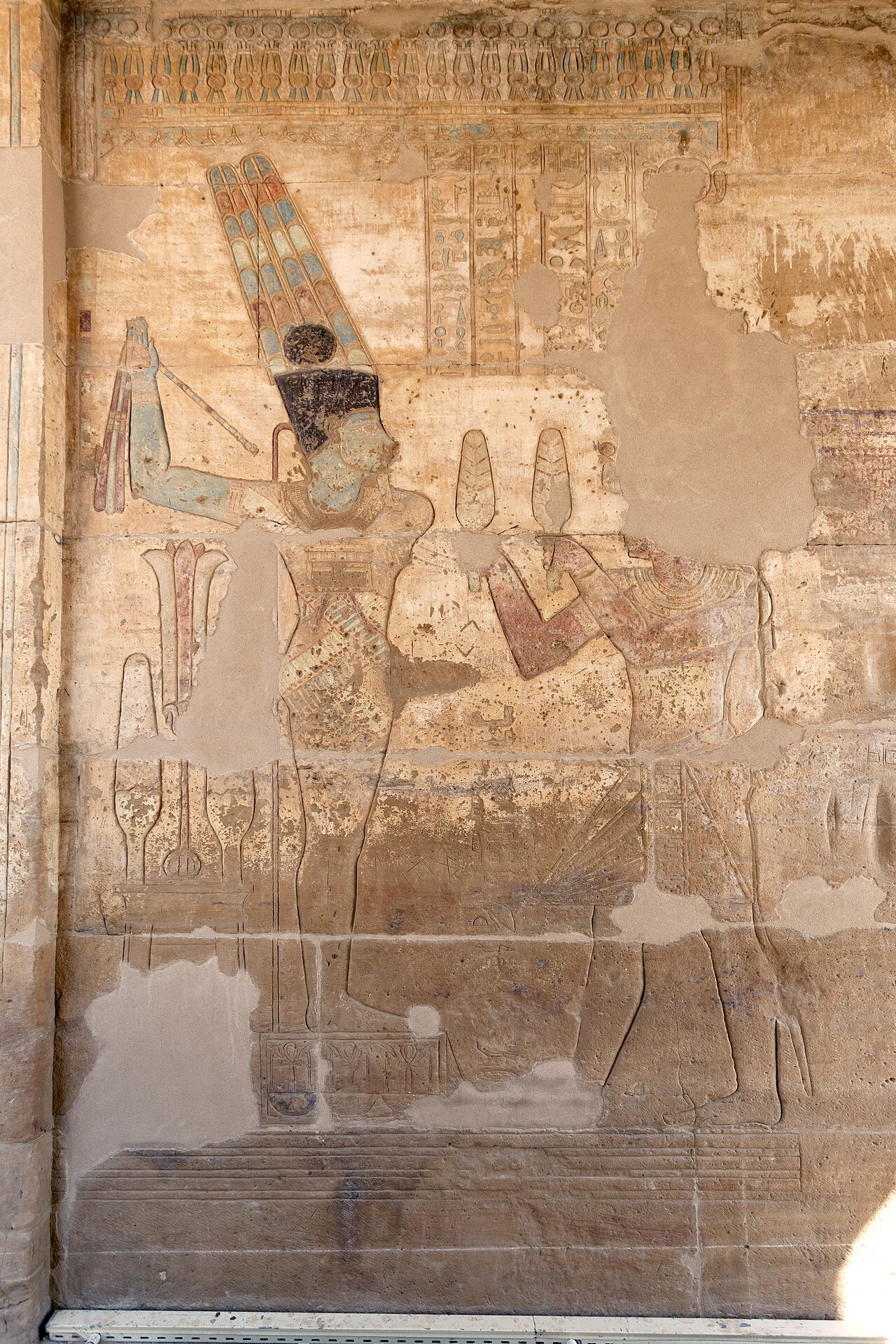
Painted and carved sandstone temple relief in Egypt showing a seated figure in a tall crown with a crook and flail, facing a standing figure making an offering. Hieroglyphic columns and a lotus frieze surround the scene.Sculpture

Primary source

Relief of Darius Offering to Amun-Ra, Temple of Hibis

c. 522-486 BCE

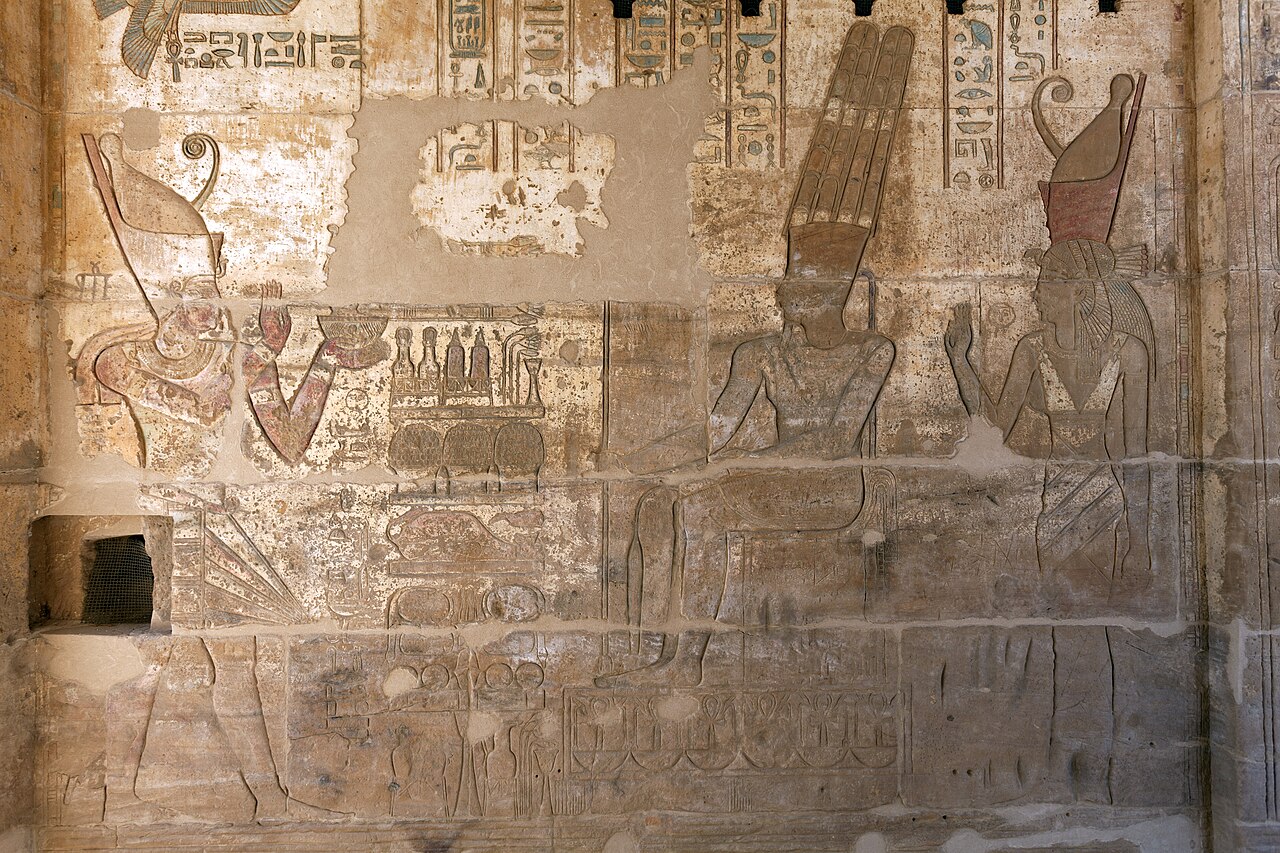
Ancient Egyptian temple wall relief in sandstone with traces of paint. Left: a figure in profile with a feathered headdress offering to a seated figure on the right, with offering vessels between them. Right: a seated crowned god and a standing goddess with a tall headdress, with hieroglyphic inscriptions above and a niche with a grille at lower left.Sculpture

Primary source

Relief of Darius Offering to Amun-Re and Mut, Hibis Temple

c. 522-486 BCE

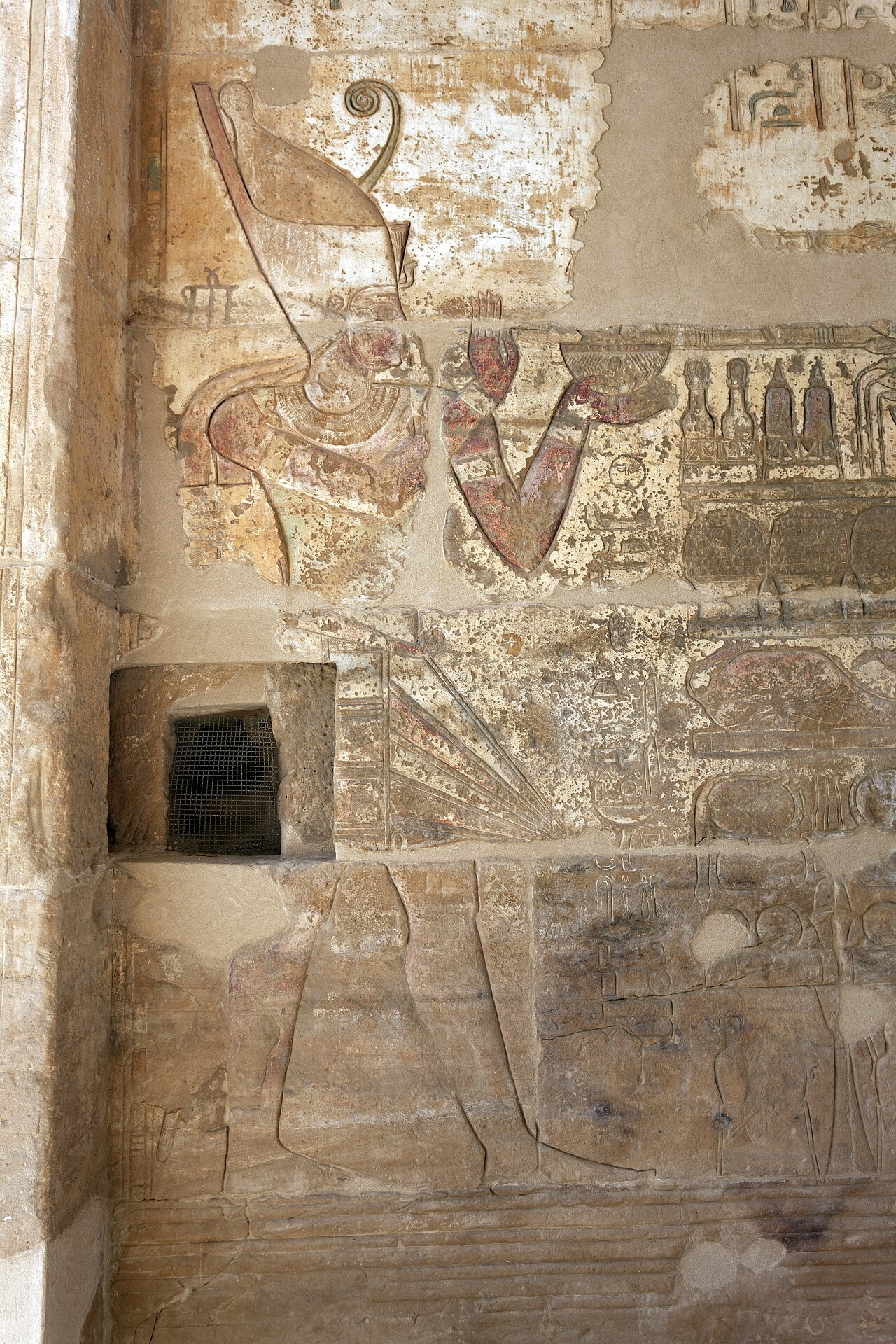
Photograph of a sandstone temple wall with carved and partly painted relief figures, hieroglyphic inscriptions, and a small barred window opening with a metal grille set into the lower center.Photograph

Primary source

Darius the Great Offering Maat, Temple of Hibis Relief

c. 522-486 BCE

Darius the GreatBook

Secondary source

Darius the Great

Jacob Abbott · 1878

Document

Tertiary source

Darius entry in Encyclopaedia Britannica, 11th edition

1911

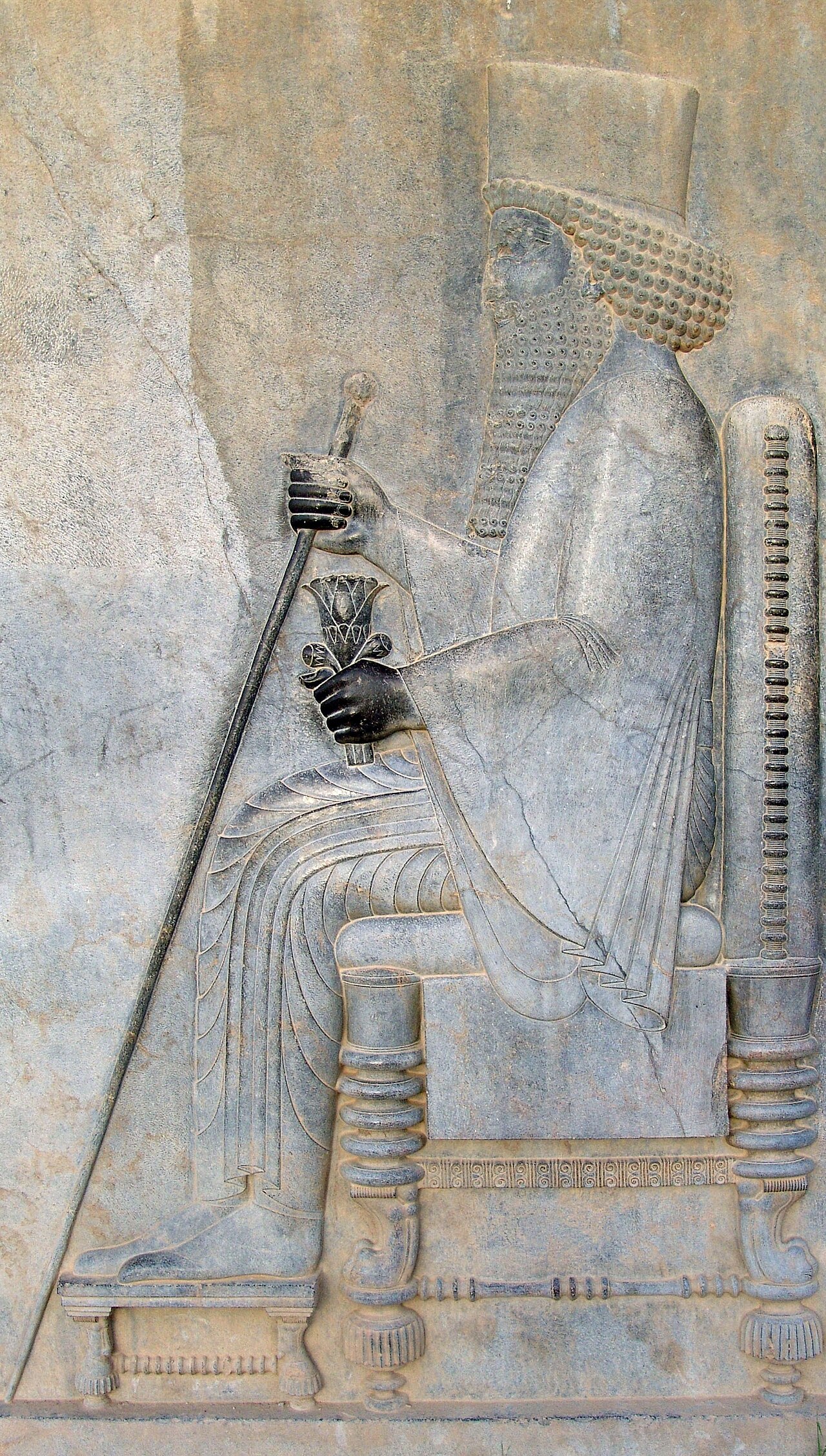
Stone relief carving of a bearded man seated on a throne with a tall cylindrical crown, holding a staff in one hand and a lotus flower in the other. Footstool below, and a carved column-like pillar behind the throne.Sculpture

Primary source

Relief of Darius I at Persepolis

c. 2008 photograph of relief from Darius's reign

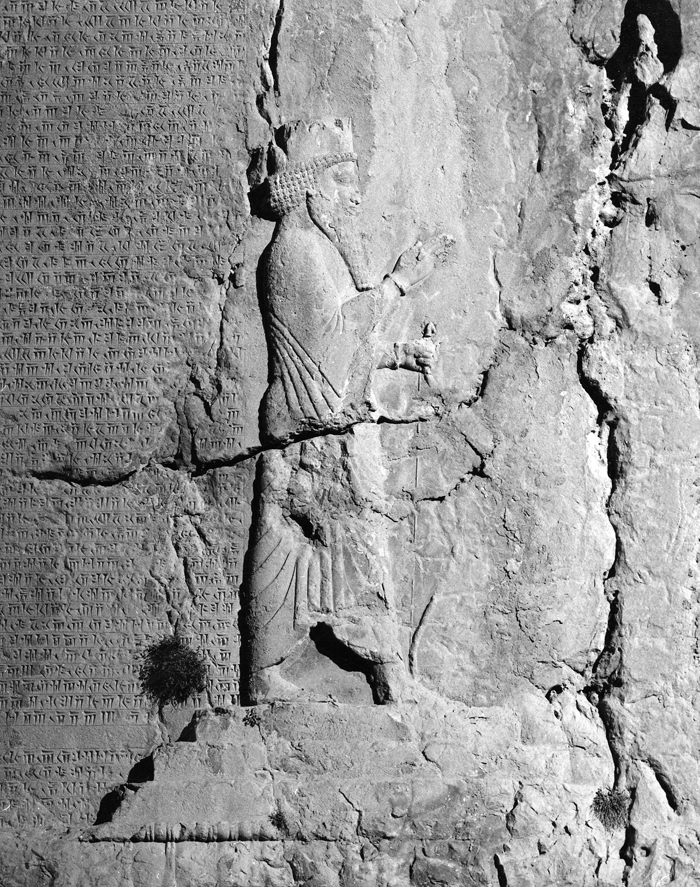
Black-and-white photograph of a rock-cut relief of a bearded man in a tall crown and fringed robe, facing right and raising one hand, with cuneiform inscription columns on the left and a worn stone base below.Sculpture

Primary source

Relief of Darius I at his tomb, Naqsh-e Rostam

photographed 2009, relief from Darius's reign

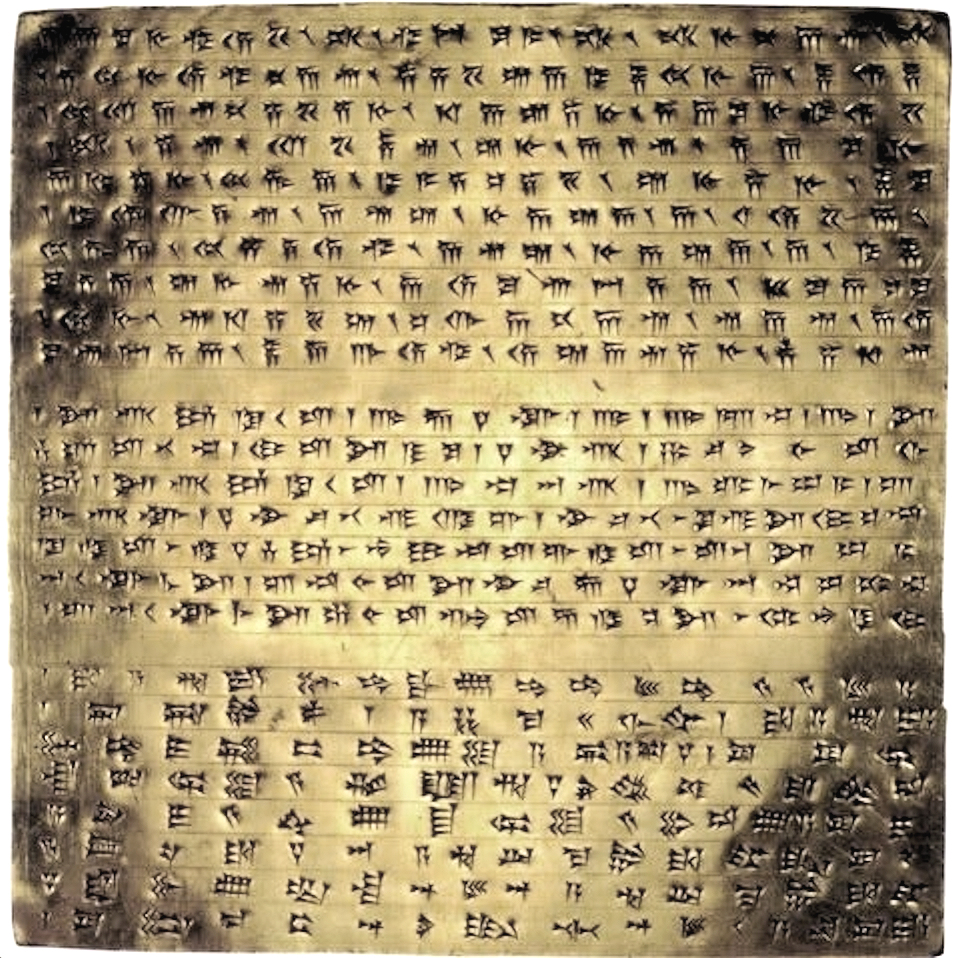
Photograph of a square, golden-brown inscribed plate covered in rows of cuneiform wedge-shaped characters, with darker scorched or stained areas at the edges and corners.Artifact

Primary source

Deposition Plate of Darius I from Persepolis

Unknown

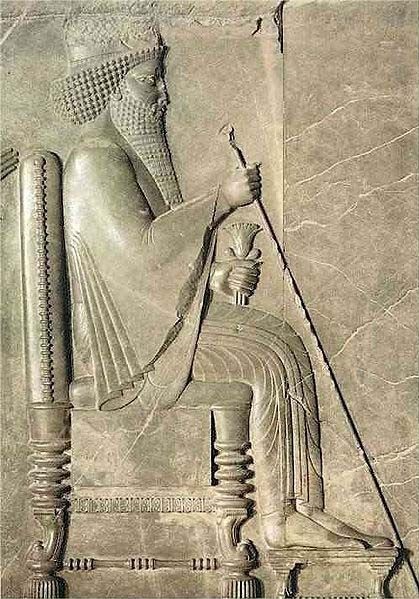
Carved stone relief showing a bearded figure with a tall layered crown seated on an ornate throne, holding a long staff and a lotus flower. Behind him a standing figure holds a fan-like object. The stone surface shows cracks and wear.Sculpture

Primary source

Relief of Darius the Great on His Throne

Unknown

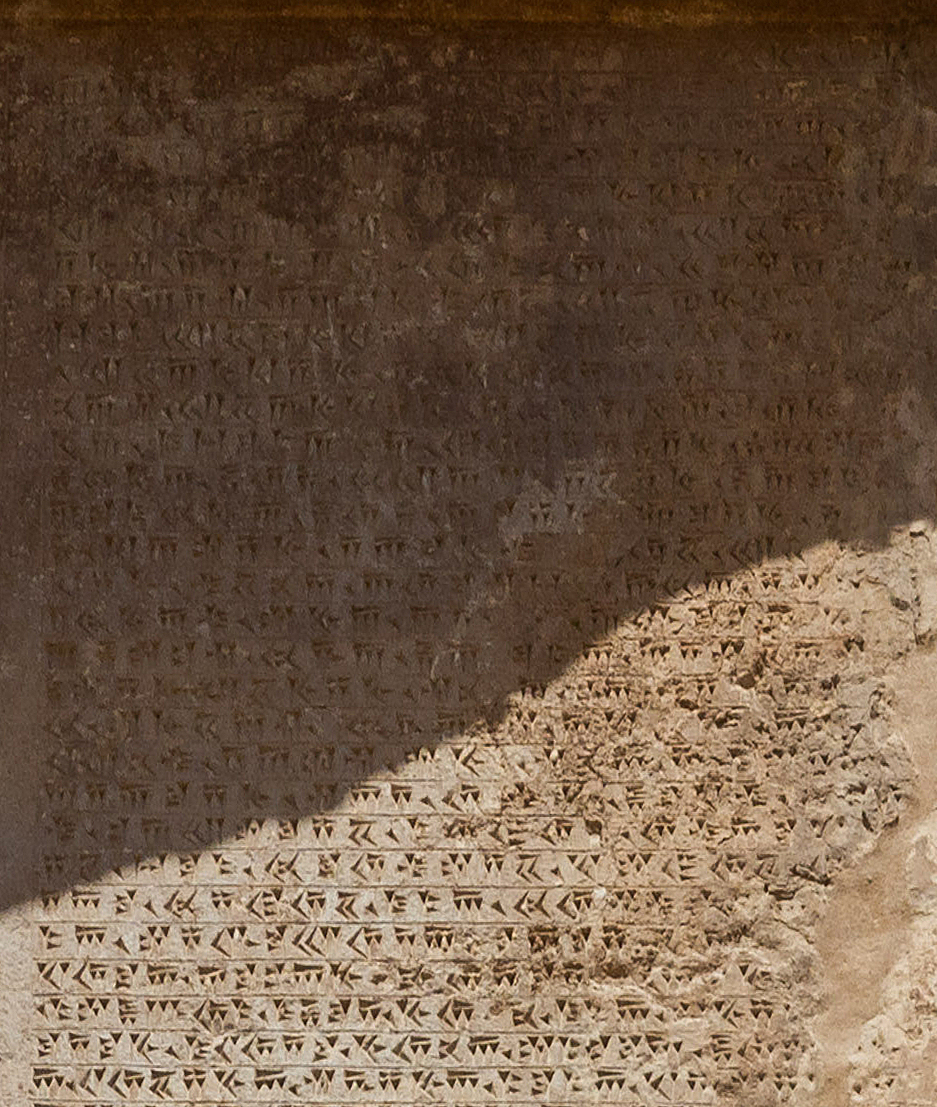
Close-up photograph of a carved stone surface covered in rows of cuneiform wedge-shaped inscriptions. Upper area is in shadow and darker; lower area is sunlit and lighter tan stone.Document

Primary source

DNa Inscription on the Tomb of Darius I, Part I

Darius I

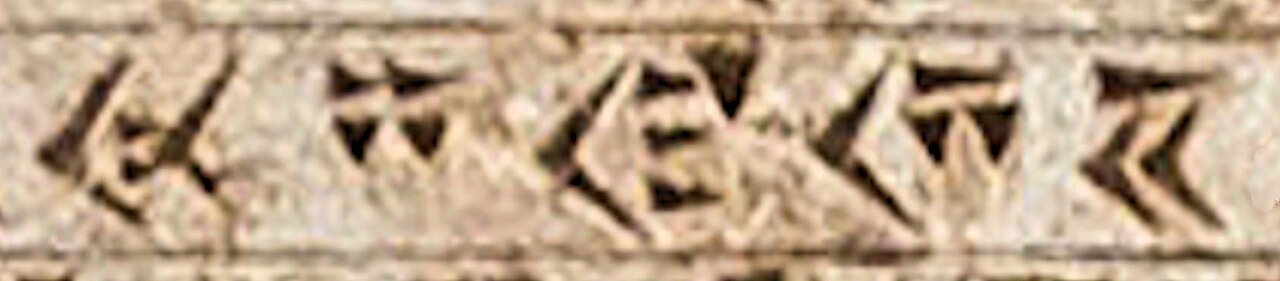
Close-up of carved cuneiform wedge-shaped signs in a horizontal band on pale weathered stone, showing the Old Persian inscription text on the tomb of Darius I.Document

Primary source

DNa Inscription on the Tomb of Darius I Naming the Ionians

Darius I

Close-up of weathered cuneiform-style carved inscription on pale stone, showing a row of wedge-shaped Old Persian signs. The image is a detail of the carving, not the full monument.Document

Secondary source

DNa Inscription Naming Hidush, Naqsh-e Rustam

Darius I

Close-up of weathered carved cuneiform wedge-shaped signs on a pale stone surface, with deep shadows in the grooves. The inscription is worn and only partly legible in this crop.Document

Secondary source

DNa Inscription Naming Arabaya, Naqsh-e Rustam

Darius I

Book

Secondary source

History of Darius the Great

Jacob Abbott · 1850

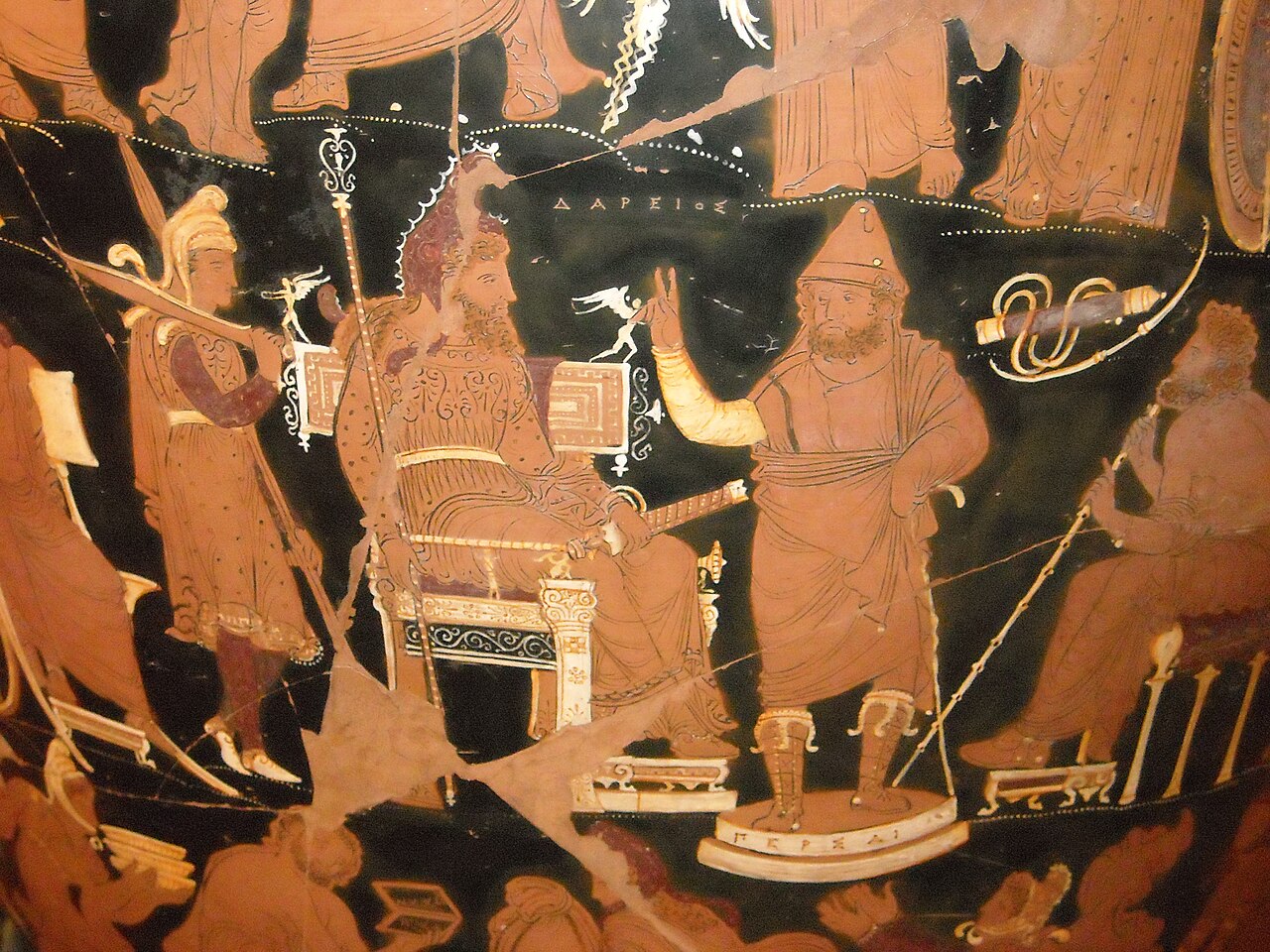
Detail of a red-figure vase showing a seated, bearded figure in ornate robes on a throne, labeled with the Greek inscription 'ΔΑΡΕΙΟΣ', while a standing bearded man in a cloak gestures toward him. A seated figure and a standing attendant appear on a black background with gold-colored ornaments and a Persian-style cap.Painting

Secondary source

Darius Receiving Advice, Detail of the Darius Vase

Carlo Raso · Photographed 2012 (vase ancient)

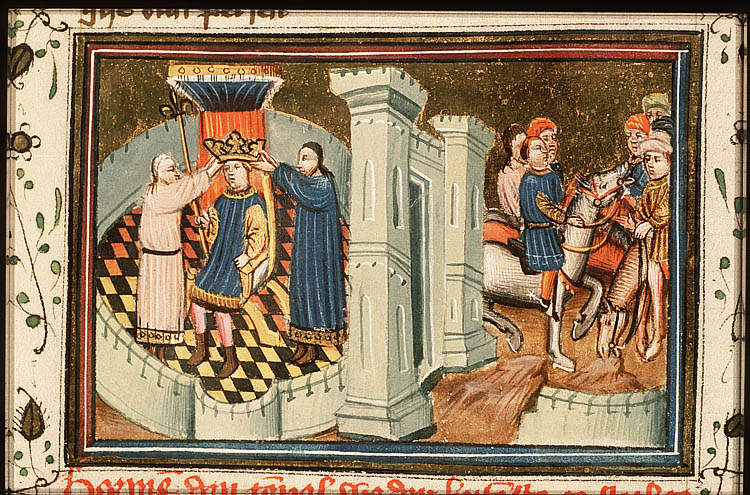
Medieval miniature painting in a decorated border. On the left, a seated crowned king in a blue robe on a checkered floor receives a crown from a figure in blue, while a robed attendant holds a staff. On the right, several richly dressed riders on horses approach a gateway with tall towers.Painting

Secondary source

The Coronation of Darius

Azor Masters · 1430

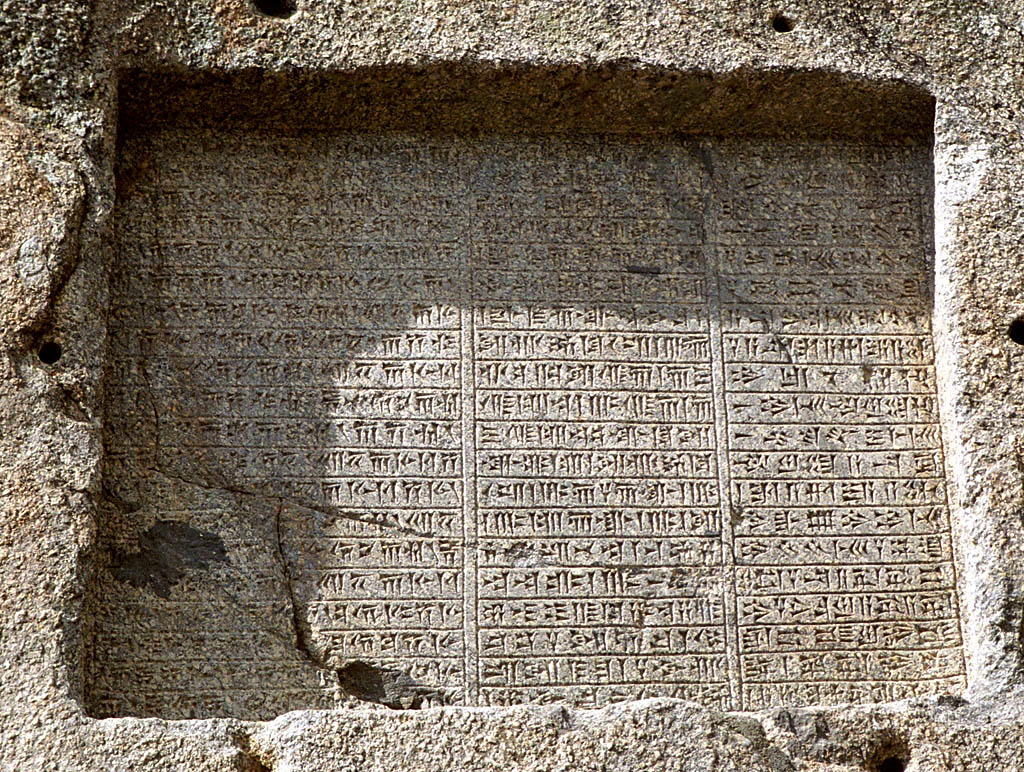
Photograph of a carved rock inscription in a rectangular recessed panel on a granite cliff face, with rows of cuneiform wedge-shaped characters in multiple columns. Shadow falls across the left side of the panel.Artifact

Primary source

Darius I Trilingual Inscription at Ganj Nameh

6th-5th century BC (photographed 2002)

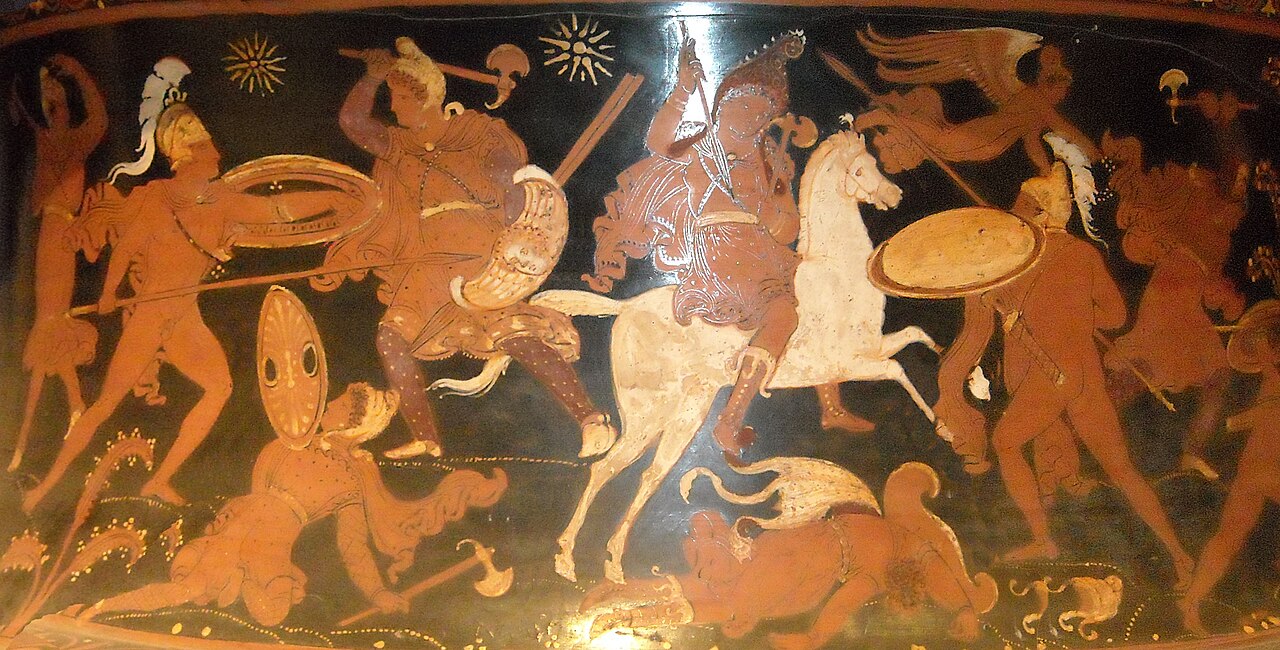
Photograph of a section of a red-figure vase showing a battle scene on a black background. A rider on a white horse and several armed warriors with shields and spears fight, and fallen figures lie on the ground.Painting

Primary source

Darius Vase: Persians Fighting Greeks

Carlo Raso · Photographed 2012 (vase ancient)

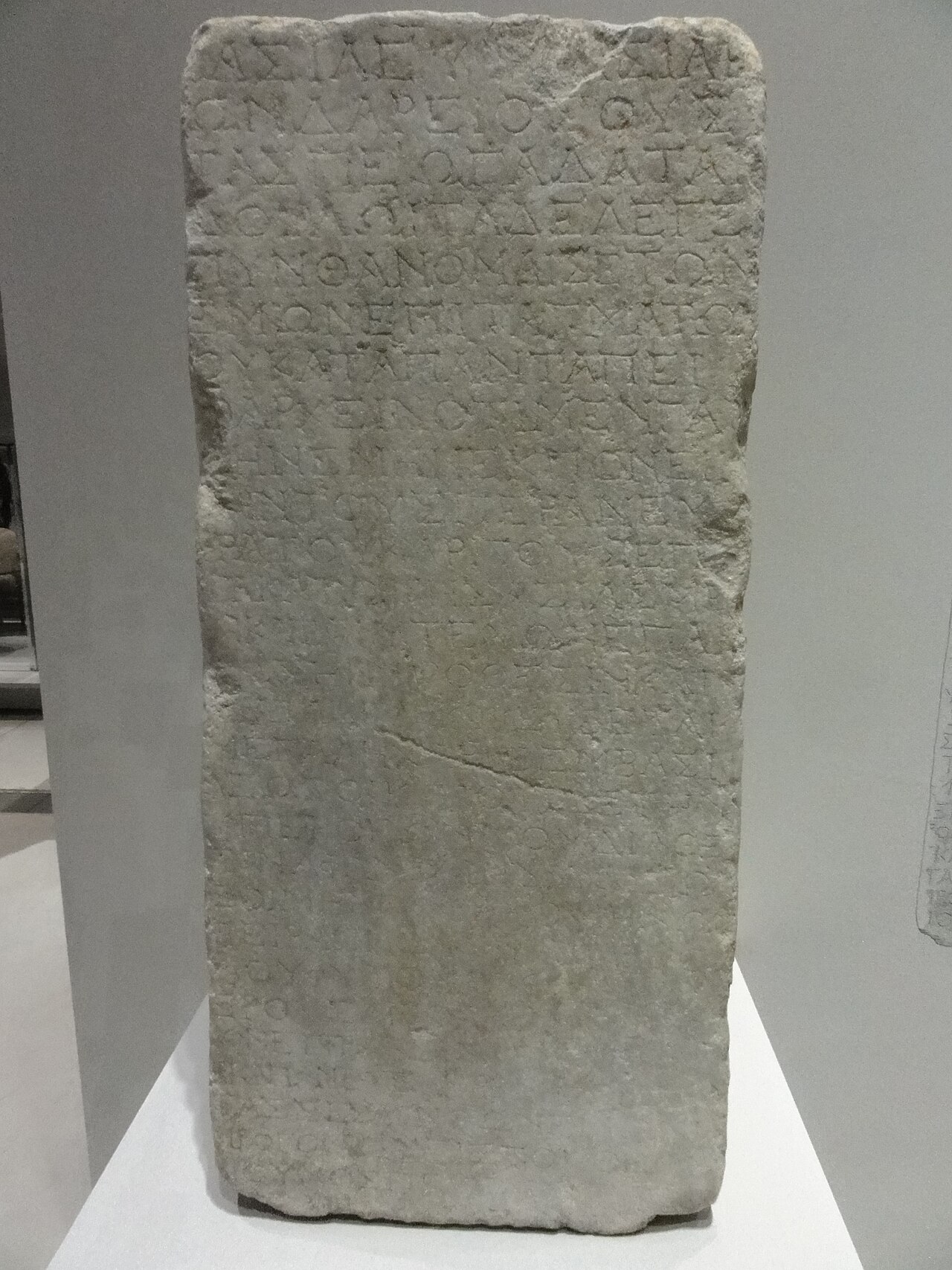
Photograph of a tall, rectangular pale marble or limestone stele displayed on a white pedestal in a museum gallery. Its face is covered with rows of incised Greek inscription lettering, with a diagonal crack across the lower-middle part. The background is a plain gray wall.Document

Primary source

Letter from Darius I to a Satrap of Asia Minor

Darius I · c. 496-492 BC

Records of the Past, Volume 2Book

Secondary source

Records of the Past, Volume 2

Samuel Birch · 1873

Book

Secondary source

Reign of Cyrus the Great, Myers General History for Colleges

1890

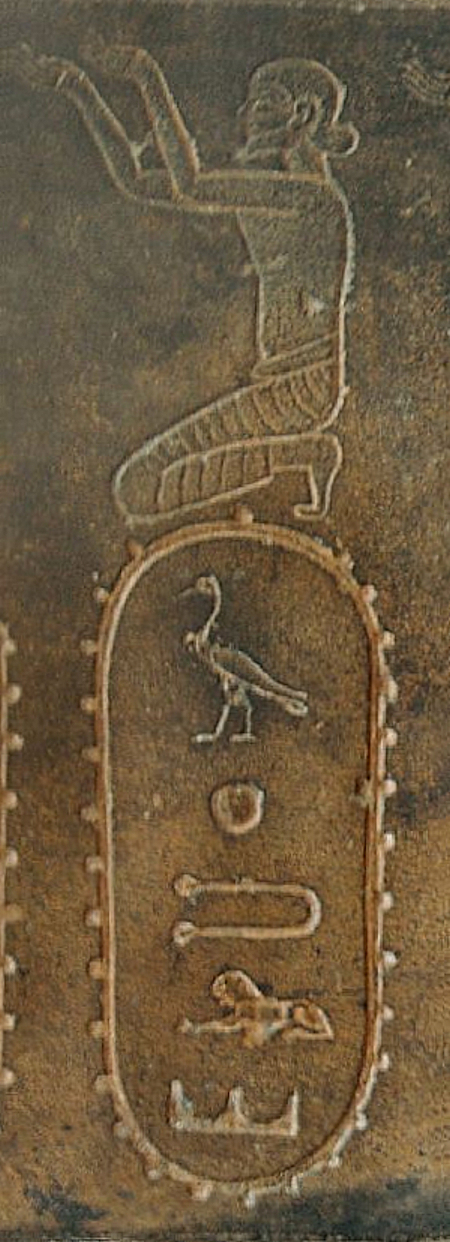
Close-up of a carved relief on a dark stone surface: a kneeling figure with raised arms and a short beard sits above an oval cartouche containing hieroglyphic signs, including a bird, a circle, a bracket shape, a lion, and a basket-like sign.Sculpture

Secondary source

placeholder

Jona Lendering · 2018-10-13

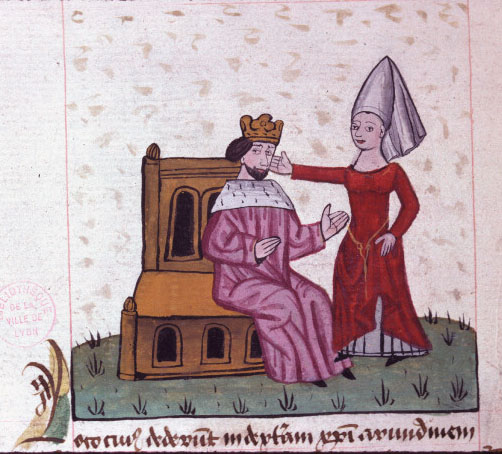
Manuscript miniature: a crowned seated king in a pink robe on a gold throne, gesturing with one hand, while a woman in a red dress and tall white headdress touches his head. Latin caption text runs along the bottom. A round library stamp is at left.Painting

Secondary source

placeholder

Unknown author · 1461

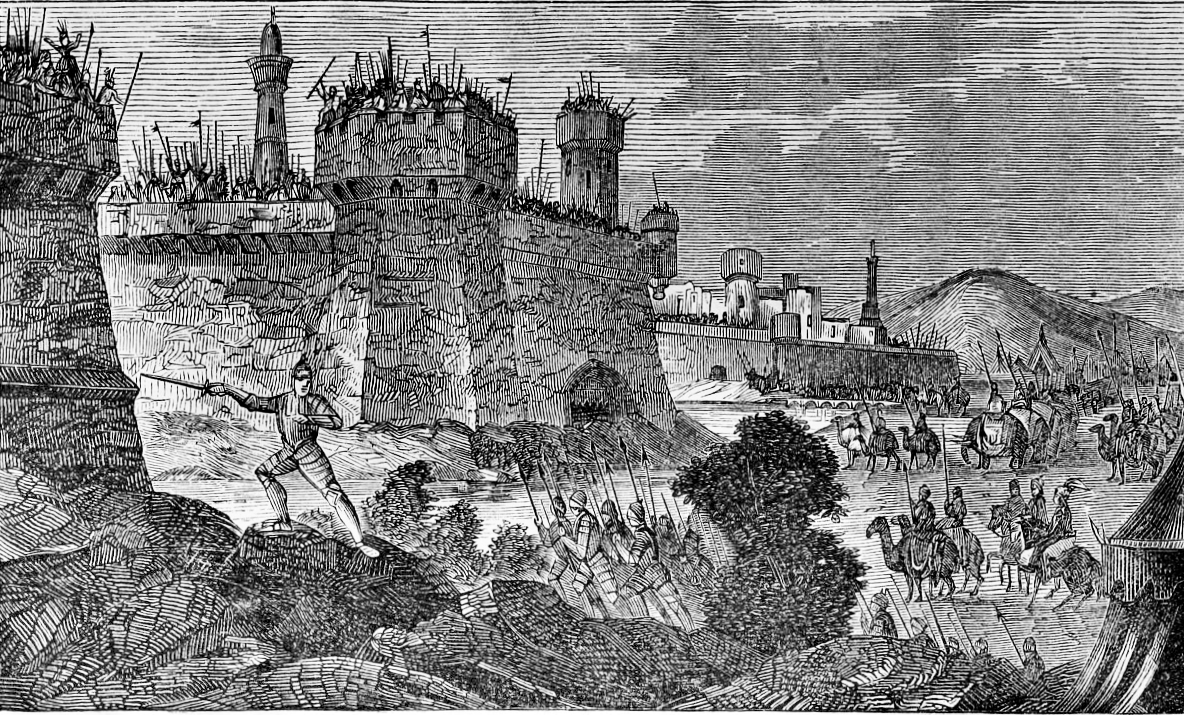
Black-and-white engraving of a walled city on a hill. Robed figures line the high walls and towers. In the foreground, a helmeted man in armor gestures toward the city while a column of soldiers with raised spears advances. Camels and riders with lances cross a plain on the right.Painting

Secondary source

The Babylonians in their city deriding Darius

Jacob Abbott · 1854

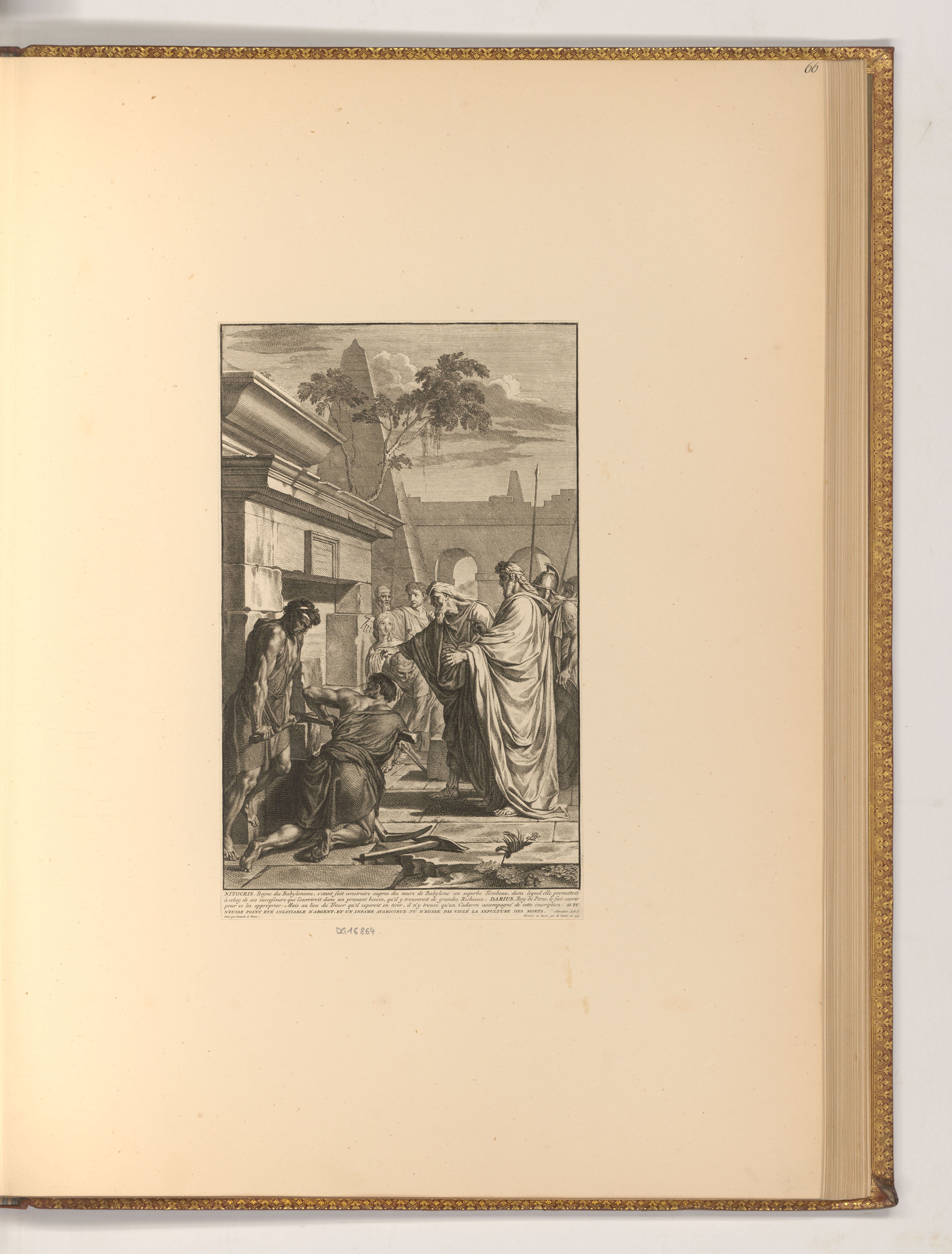
Engraving on a book page showing an ancient scene: men at left work with tools to open a stone tomb, while a bearded robed king and a helmeted soldier stand at right near a woman and onlookers, with a tree and ruined walls behind. Caption text is printed below the image.Painting

Secondary source

Dareios I Opens the Tomb of Nitocris

1725

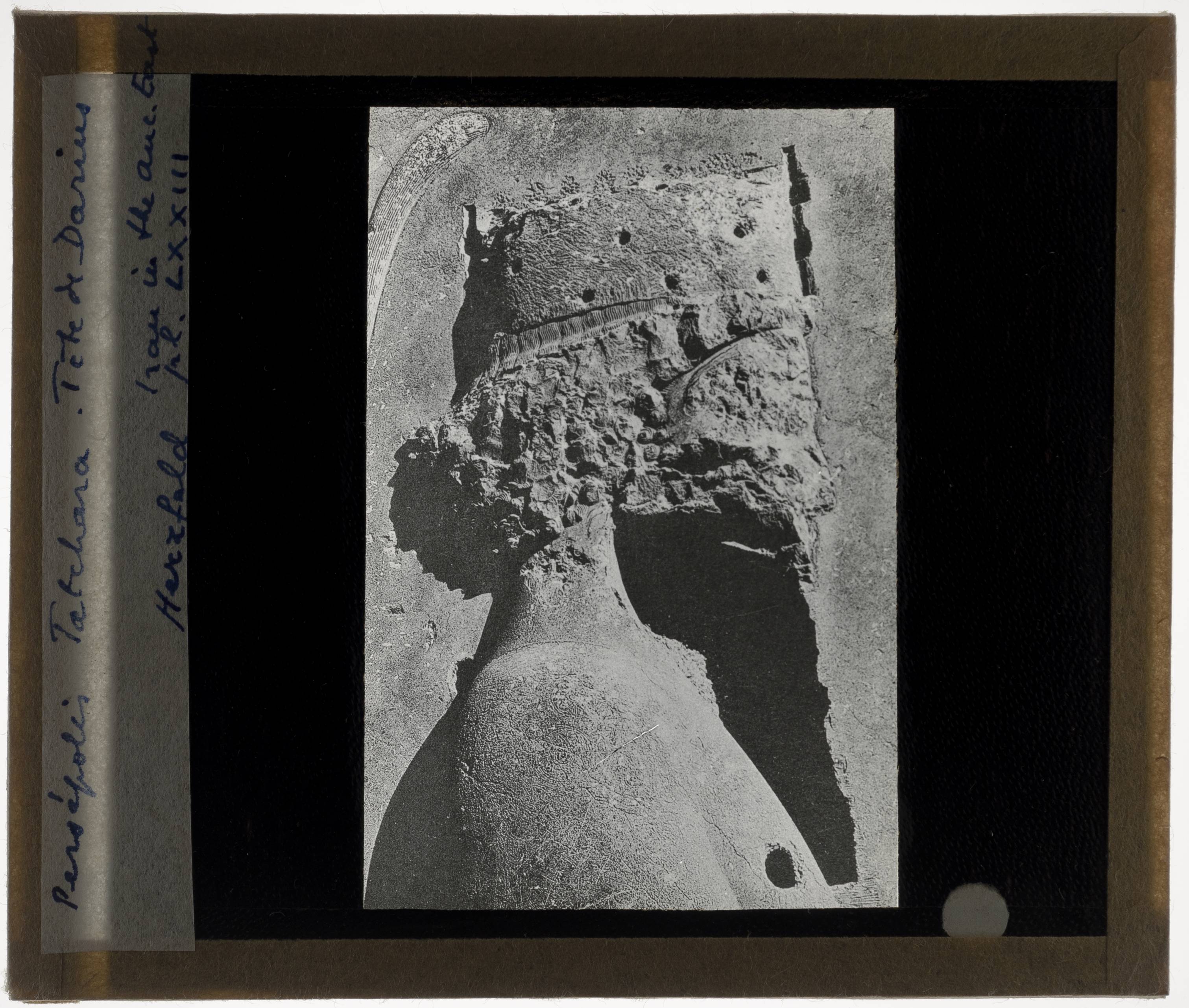
Black-and-white glass lantern slide photograph of a damaged stone relief detail showing a carved head with a curled beard and a tall crown or headdress, with a large pitted block beside it. Handwritten label on the left reads Persepolis, Tete de Darius.Photograph

Secondary source

Persepolis Relief, Head of Darius

between 1839 and 1939 (depicting a relief from c. 500 BCE)

Two sides of a gold daric coin. The obverse shows a kneeling archer in a crown or headdress holding a bow and a spear-like staff, facing right. The reverse shows a large irregular incuse square punch with no design.Artifact

Primary source

Persian Daric Coin, Reign of Darius I to Xerxes I

c. 505-480 BCE

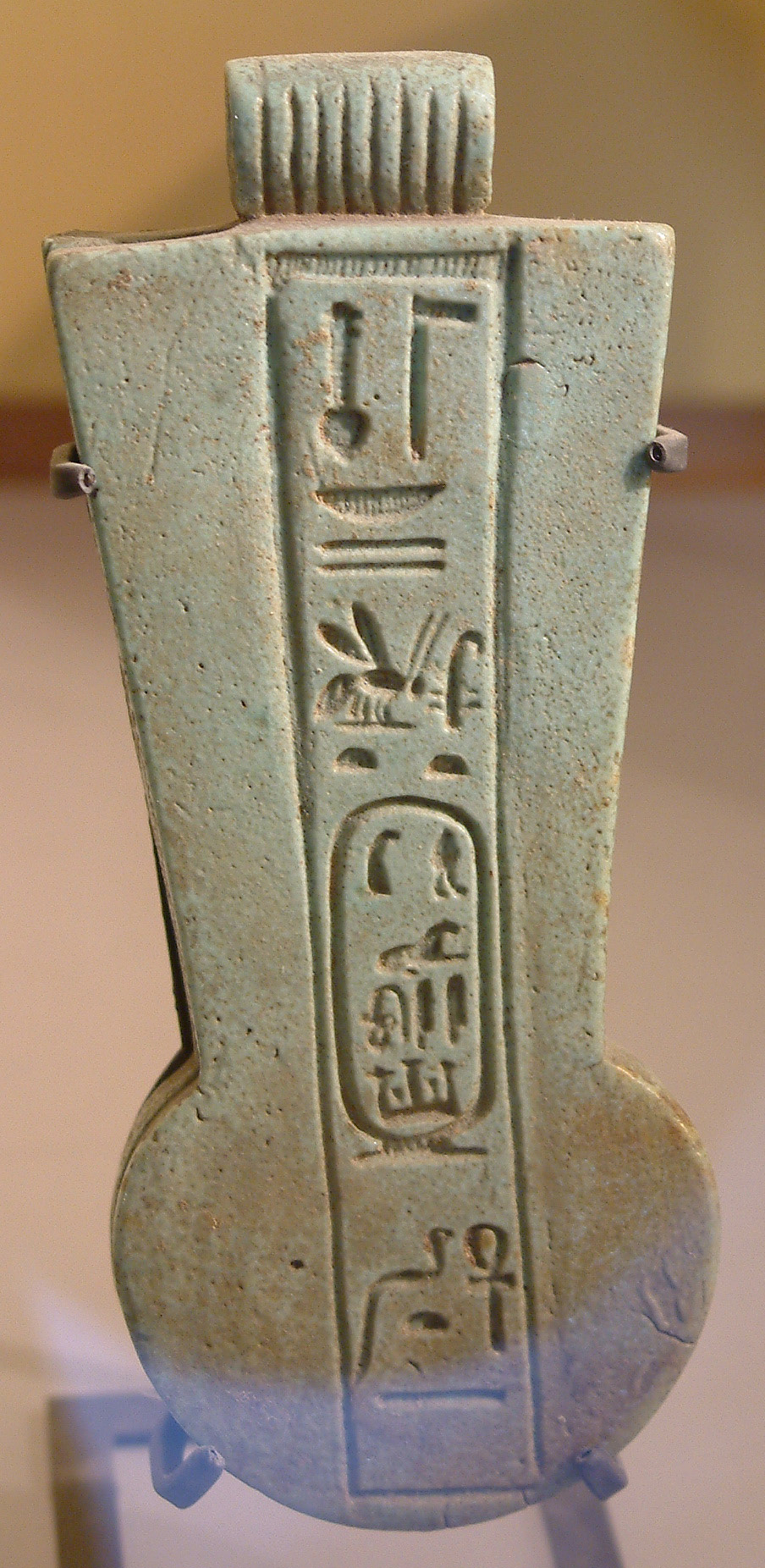
Light blue-green faience amulet with a ribbed top knob and a flat rectangular body widening into a round base. Carved hieroglyphs run down the front, including a cartouche near the center and an ankh symbol near the bottom.Artifact

Primary source

Counterpoise Amulet of Pharaoh Darius I

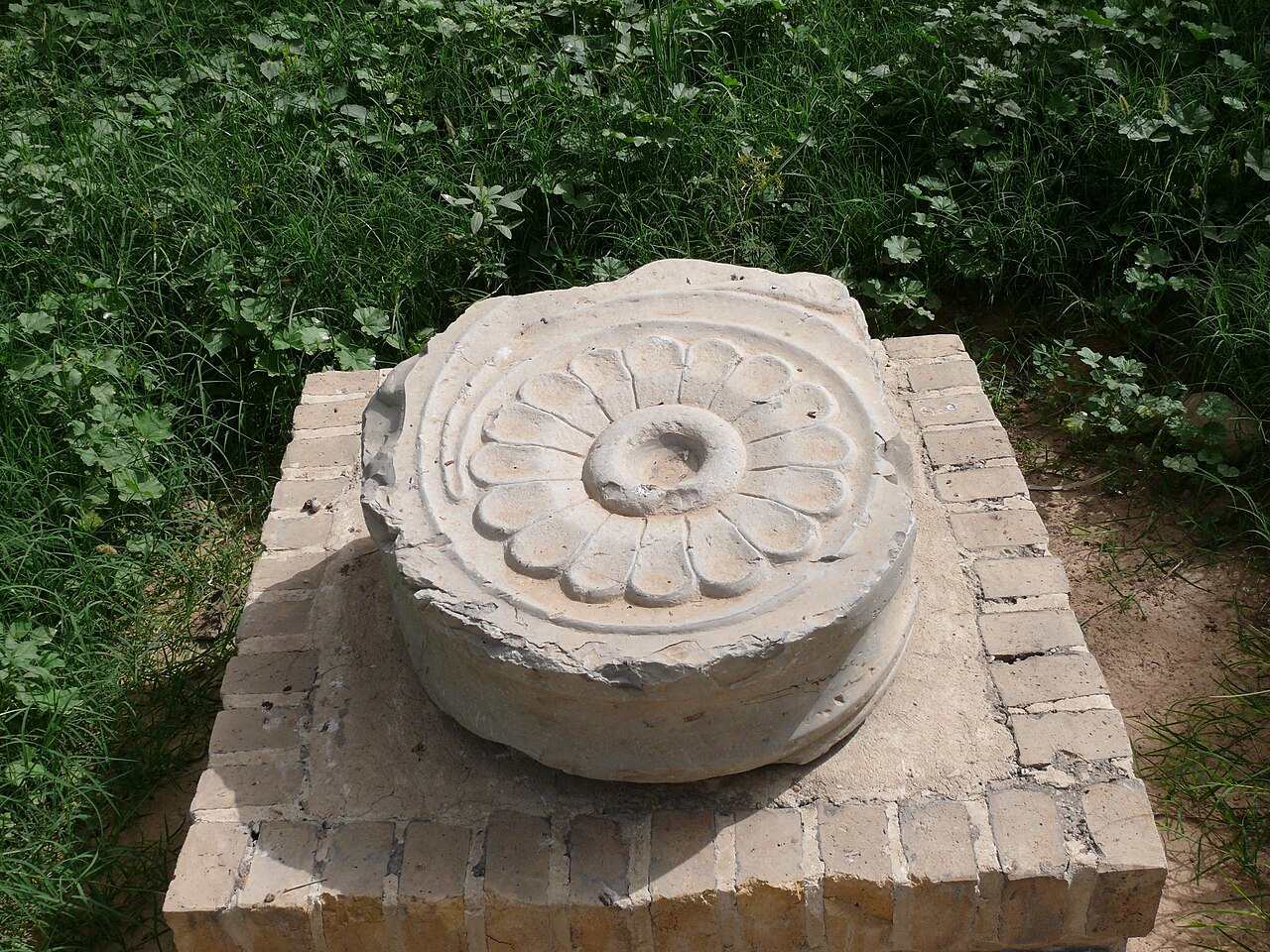
A carved pale stone disc with a raised rosette of petals around a central boss, set on top of a square brick plinth in grass with green leafy plants around it. The stone's edges are chipped.Artifact

Primary source

Carved Stone Rosette from the Apadana at Susa

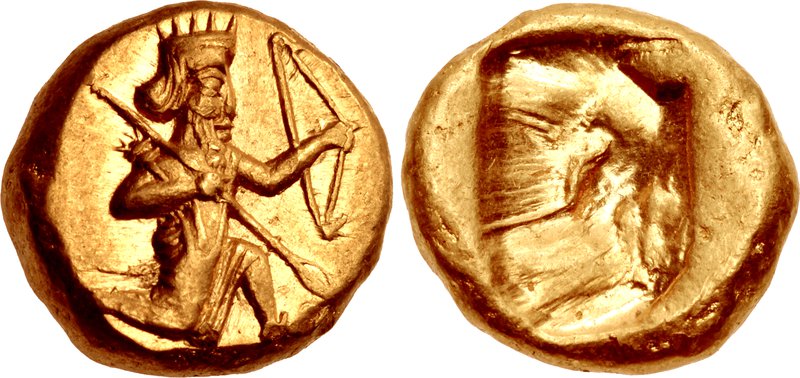
Two sides of a gold daric coin. The obverse shows a kneeling figure facing right in a crowned headdress, holding a spear in one hand and a drawn bow in the other. The reverse shows a rough incuse square punch mark.Artifact

Primary source

Daric Coin of Darius I to Xerxes II

c. 485–420 BC

Close-up of weathered cuneiform wedge signs carved into pale stone, showing a detail of the inscription. Dark wedge-shaped marks are visible across the horizontal band of the carving.Document

Primary source

DNa Inscription of Darius I at Naqsh-e Rostam

Darius I

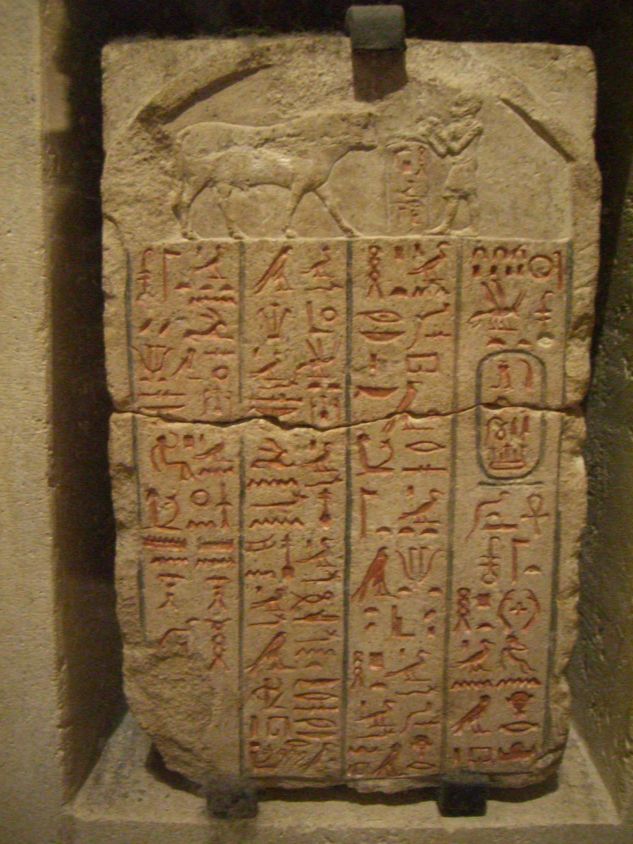
Limestone stele with a carved relief of a bull (Apis) at top, standing before a figure, above four columns of red and black hieroglyphic inscriptions. Mounted on a stone base in a dim museum display.Artifact

Primary source

Apis Stele from the Reign of Darius I

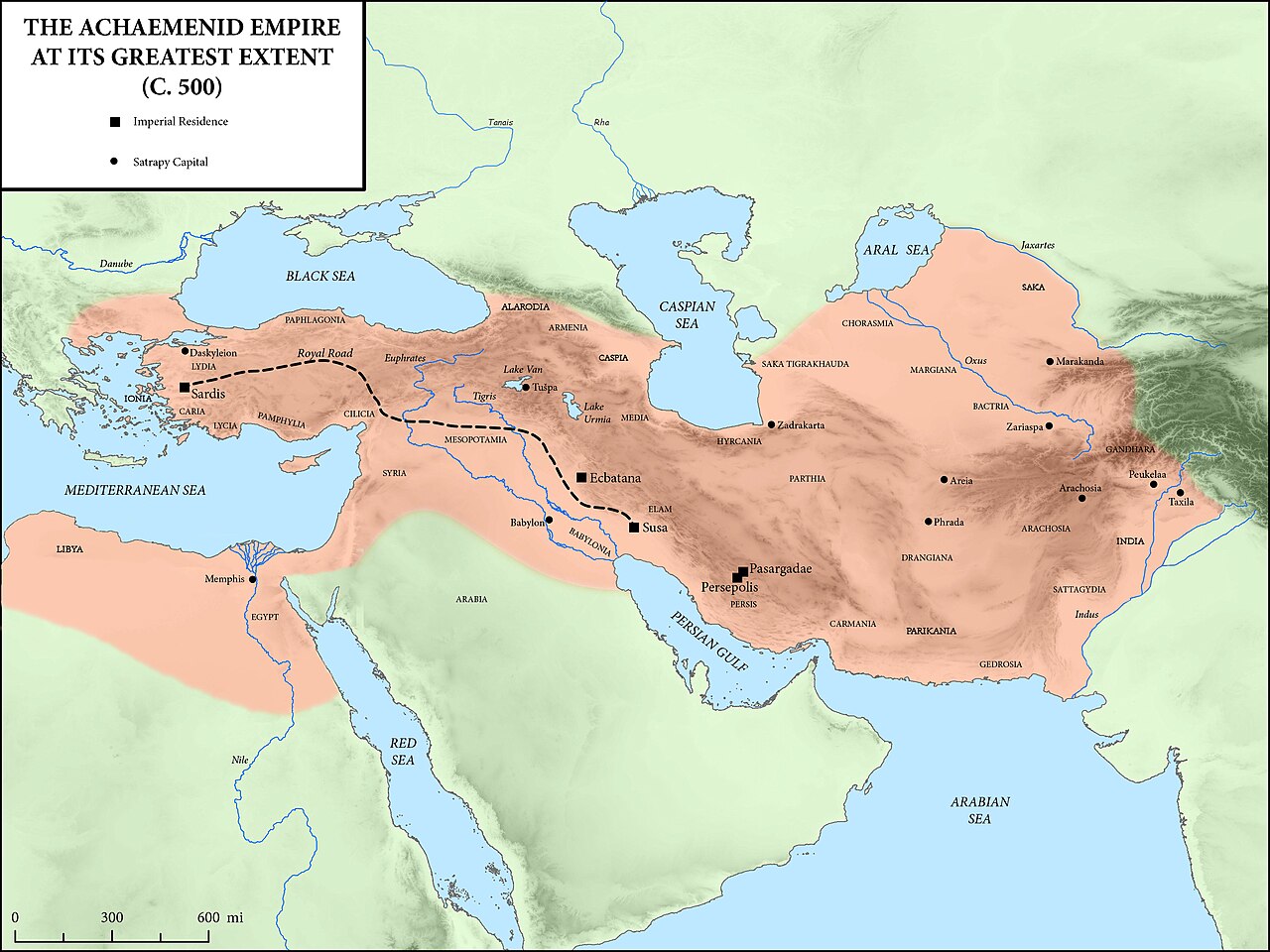
Map titled 'The Achaemenid Empire at its greatest extent (c. 500)' showing shaded territory from Greece and Egypt east to India and Central Asia, with the Black, Caspian, and Red Seas, royal roads, and imperial residences and satrapy capitals marked.Document

Secondary source

Achaemenid Empire at Its Greatest Extent

Mossmaps · c. 500 BC (map subject); created 2018

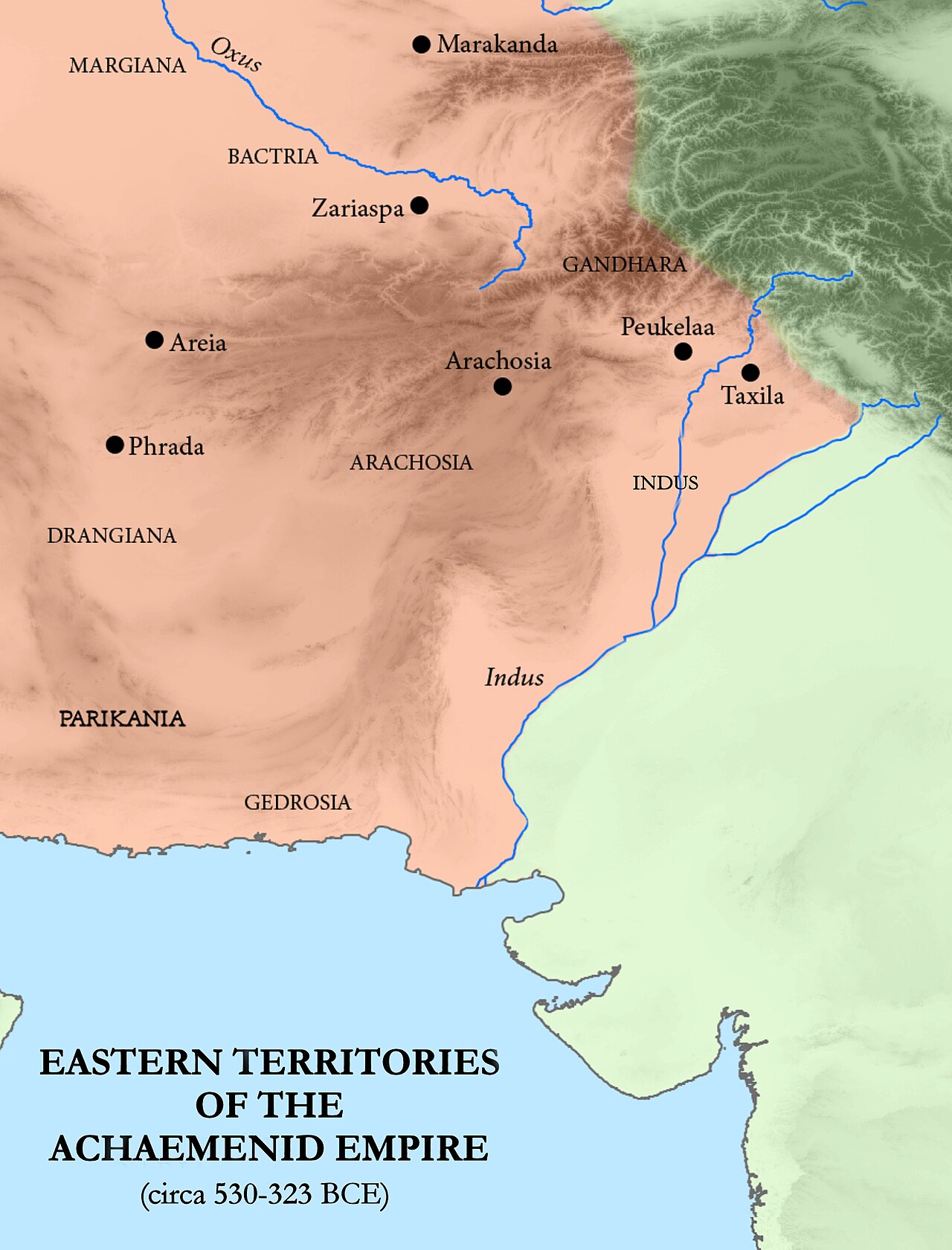
Shaded relief map titled Eastern Territories of the Achaemenid Empire, circa 530-323 BCE. Shows regions such as Margiana, Bactria, Gandhara, Arachosia, Drangiana, Parikania, Gedrosia, and Indus, with cities marked and the Oxus and Indus rivers traced. Pink land, green highlands, blue sea.Document

Secondary source

Eastern Satrapies of the Achaemenid Empire

Mossmaps · c. 530-323 BCE (map subject); created 2018

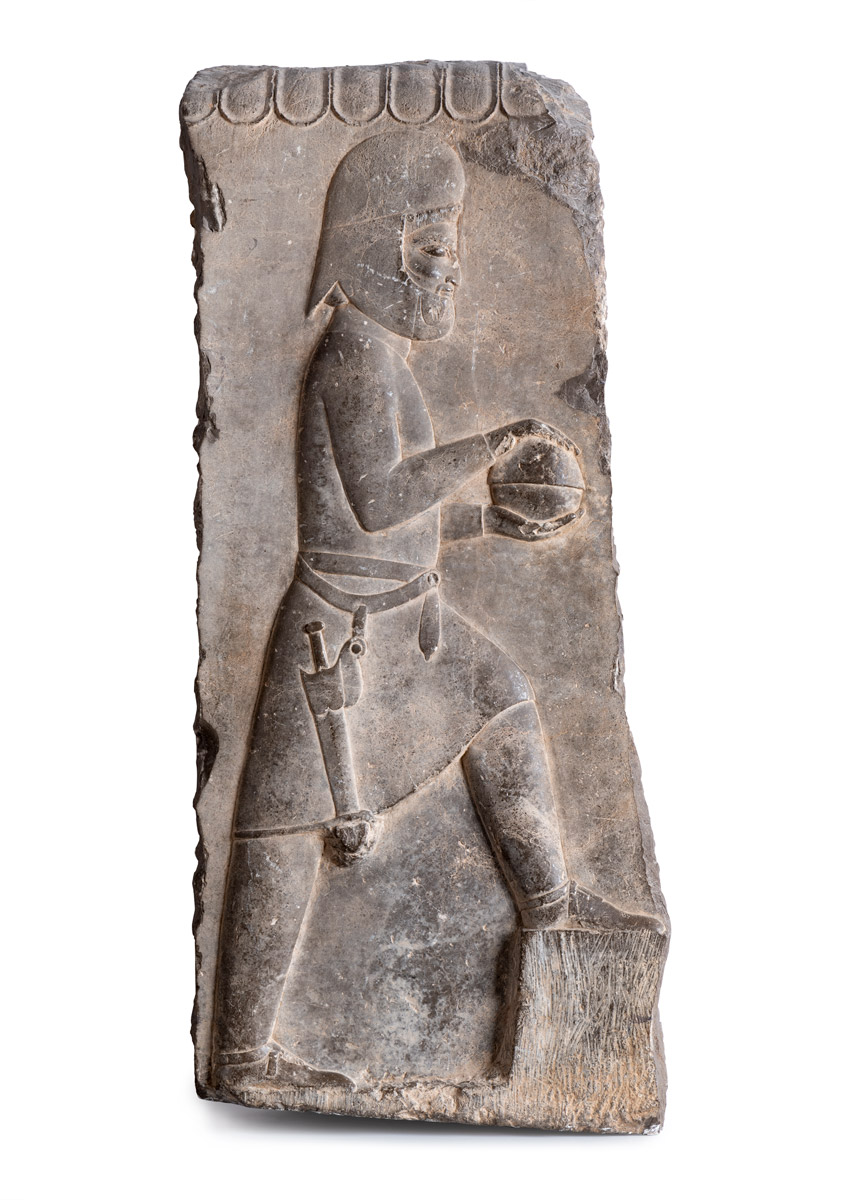
A carved stone relief of a bearded man in a tall cap and long robe with a belt and dagger, walking and holding a round object in both hands. The relief has a row of scalloped decoration along its top edge.Sculpture

Primary source

Gift-bearer Relief from the Palace of Darius

Daniel, Darius the Median, Cyrus the GreatBook

Secondary source

Daniel, Darius the Median, Cyrus the Great

Joseph Horner · 1901

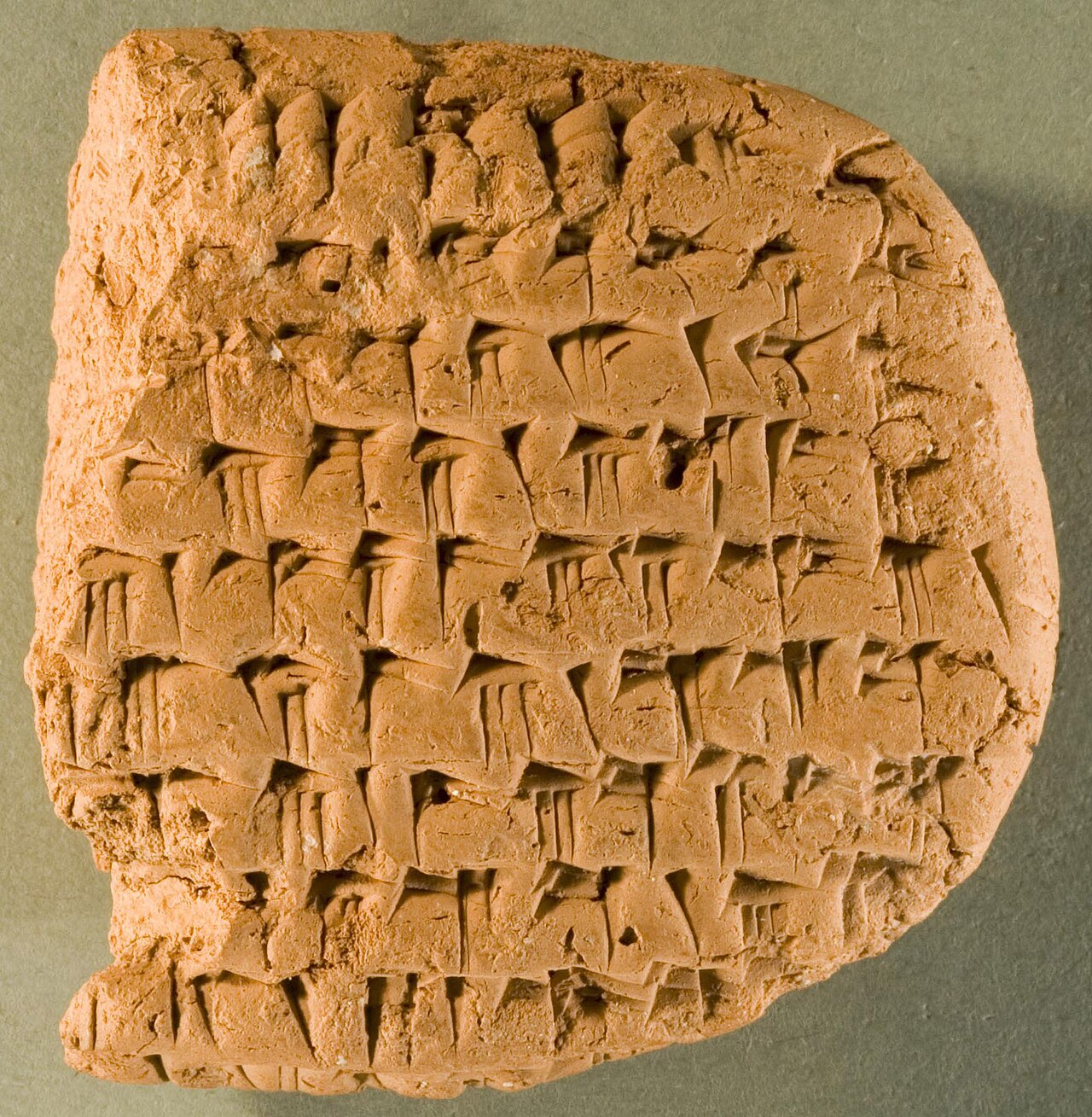
Photograph of a reddish-orange clay tablet covered in rows of wedge-shaped cuneiform impressions, set against a grey-green background. The tablet's edges are irregular and broken on the left side.Document

Primary source

Old Persian administrative clay tablet PTF 1208-101

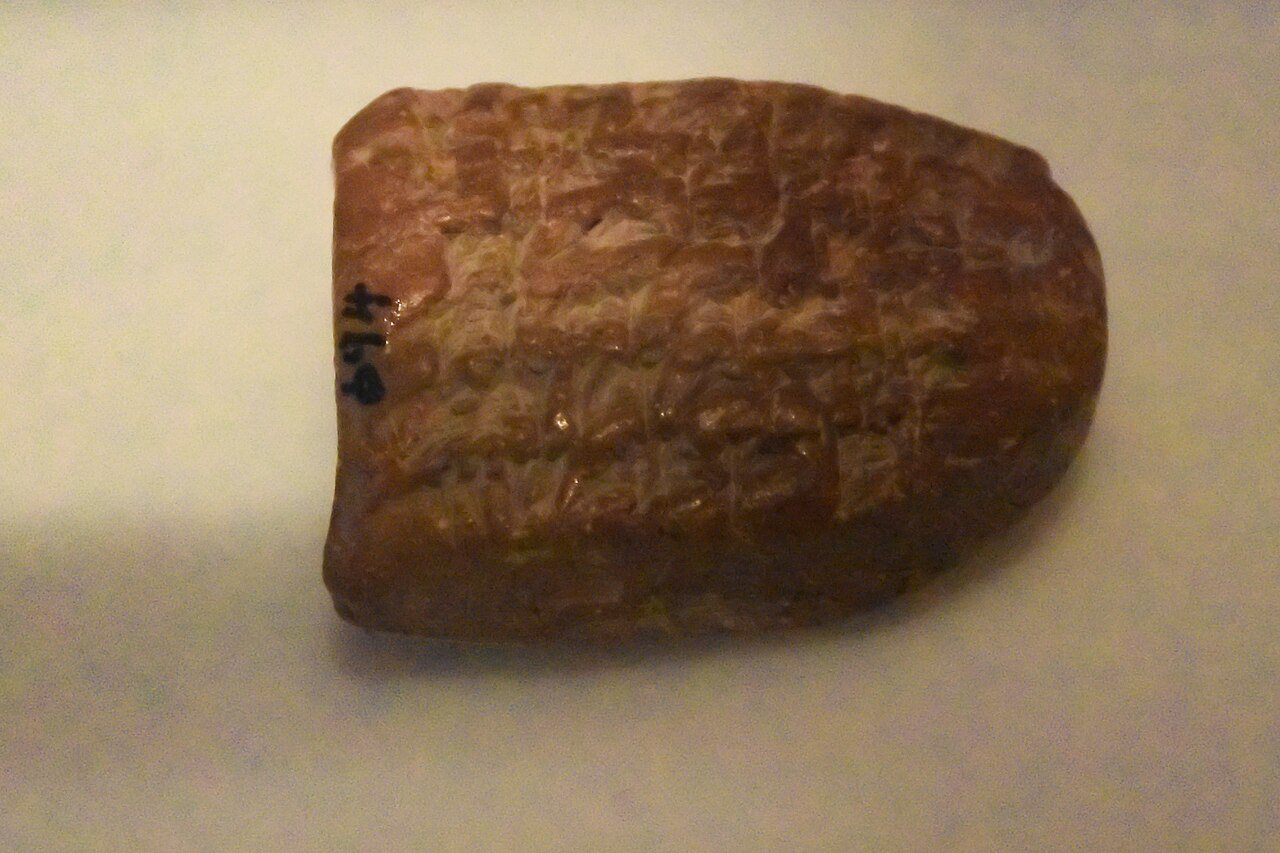
Photograph of a small, brownish clay cuneiform tablet with rows of wedge-shaped impressions on its face. The tablet is roughly rectangular with a rounded right edge, lying on a pale surface. A small dark handwritten label mark appears on its left edge.Document

Primary source

Elamite cuneiform tablet from Persepolis

559-331 BCE

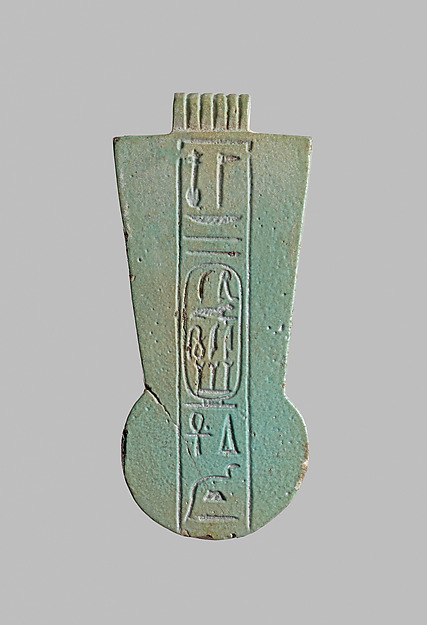
Photo of a pale blue-green faience menat counterpoise against a grey background. It has a fan-like top with five ridges, a tapering body, a rounded base, and a column of incised Egyptian hieroglyphs including a cartouche.Artifact

Primary source

Menat counterpoise of Darius I

521–486 BCE

Two sides of a gold daric coin. Front shows a kneeling-running figure in a crown and robe holding a spear in one hand and a bow in the other, with a quiver on the shoulder. Back shows an irregular incuse punch mark.Artifact

Primary source

Daric gold coin, Sardes mint

Circa 485-420 BC

Want the full shelf? Chat with Darius the Great in the app and open the Sources panel — every quote links back to the original.

Use Darius the Great in class

1 collection

A ready-made collection from the Humy team that features Darius the Great. Preview it, then try it free.

Trusted by educators worldwide

Conversations
375,000+
Real exchanges between students and historical figures
Messages exchanged
4,142,000+
Across every figure, classroom and language
Historical figures
100,000+
Each informed by a curated biography and selected sources
Languages supported
50+
From English and Spanish to Arabic and Korean

Paying customers

Used by 98 schools and universities

Partner school logo
Tecnológico de Monterrey logo
Hyper Island logo
Partner school logo
Chambersburg Area School District logo
Broward County Public Schools logo
Nebo School District logo
National Louis University logo
South Florida PBS logo
Punahou School logo
University of Wisconsin–River Falls logo
Partner school logo
Partner school logo
Archbishop Mitty High School logo
Kingsburg High School logo
Norwalk Public Schools logo
Partner school logo
Connections logo
Partner school logo
Moore Public Schools logo
Partner school logo
Partner school logo
Partner school logo
Partner school logo
Robbinsville Public Schools logo
Partner school logo
Partner school logo
Partner school logo
Tecnológico de Monterrey logo
Hyper Island logo
Partner school logo
Chambersburg Area School District logo
Broward County Public Schools logo
Nebo School District logo
National Louis University logo
South Florida PBS logo
Punahou School logo
University of Wisconsin–River Falls logo
Partner school logo
Partner school logo
Archbishop Mitty High School logo
Kingsburg High School logo
Norwalk Public Schools logo
Partner school logo
Connections logo
Partner school logo
Moore Public Schools logo
Partner school logo
Partner school logo
Partner school logo
Partner school logo
Robbinsville Public Schools logo
Partner school logo
Partner school logo

What educators are saying

“We enjoyed the program last year and used it frequently.”
“My students say it’s a welcome change of pace. I’m not a fan of the “sage on the stage” model, so I try to incorporate research-oriented and self-paced activities. With Humy, students have to take charge of their learning. They’ve become more adept at critical thinking, forming better questions, and improving their reading comprehension. The interview feature has been my go-to tool. I create assignments where students must ask historical figures a set number of questions, then summarize the responses to ensure they’re truly absorbing the material. This approach lets them actively explore the past rather than passively consuming information.”
“Humy has helped me bring historical figures, sometimes long past, to life. When my students interact with these figures in real-time, it eliminates some of the perceived “ancient” characteristics of my curriculum. This has shifted my students’ thinking away from viewing history as abstract or irrelevant. Real-time interactions make historical figures relatable, even allowing students to ask off-topic questions that help put historical lives in a more relevant context for 13-year-olds. The feature I use the most is the interview feature. After teaching a topic, most recently Gandhi and Joan of Arc, I have the students ask pointed, focused questions. We practice good conversation techniques beforehand, teaching them to listen (or read) carefully and formulate thoughtful follow-up questions rather than just interrogating. It helps students practice effective conversation skills.”

FAQ

Frequently asked questions

Who is Darius the Great?
King of the Achaemenid Empire, known for expanding the empire and for his construction projects. On Humy.ai you can chat with an AI version of Darius the Great that draws on a short biography and 83 historical sources during the conversation — by text or voice, in 42 languages.
Is Darius the Great AI free?
Darius the Great is part of Humy's full library of more than 100,000 figures, which comes with a paid plan. A free account (no credit card) includes 20 messages a month with the free library's figures, so you can try how the conversations work first.
What sources does the Darius the Great AI use?
It draws on a short biography and 83 historical sources (artifacts, documents and books), including “Behistun Inscription”, “Histories” and “Tomb of Darius I”. Each source has its own page on Humy.ai.
How historically accurate is the AI version of Darius the Great?
Each figure uses a short biography and a small set of selected historical sources as context (retrieval-augmented generation), so answers stay closer to known material than the model's general knowledge alone. It isn't a citation-grade research tool — like any LLM, the AI can get details wrong or extrapolate. Treat it as a strong starting point for inquiry and cross-reference important claims.
Can I talk to Darius the Great by voice?
Yes. In addition to text chat, you can call Darius the Great and hear their voice respond in real time — useful for auditory learners, interview practice and Socratic dialogue.
Is Humy.ai safe and compliant for schools?
Yes. Humy.ai is used by more than 100 schools, universities and organisations. The platform is FERPA- and GDPR-aligned, supports SSO, and offers an IT-approval pack tailored for school procurement teams.

Cross-reference Darius the Great

Like any LLM, the AI version of Darius the Great can get details wrong. Open one of these sources in a new tab to verify what you’ve read.

Ready when you are

Start chatting with Darius the Great now.

20 messages free · No credit card · Available in 50+ languages.