


Primary sourceArtifactc. 500 BCE
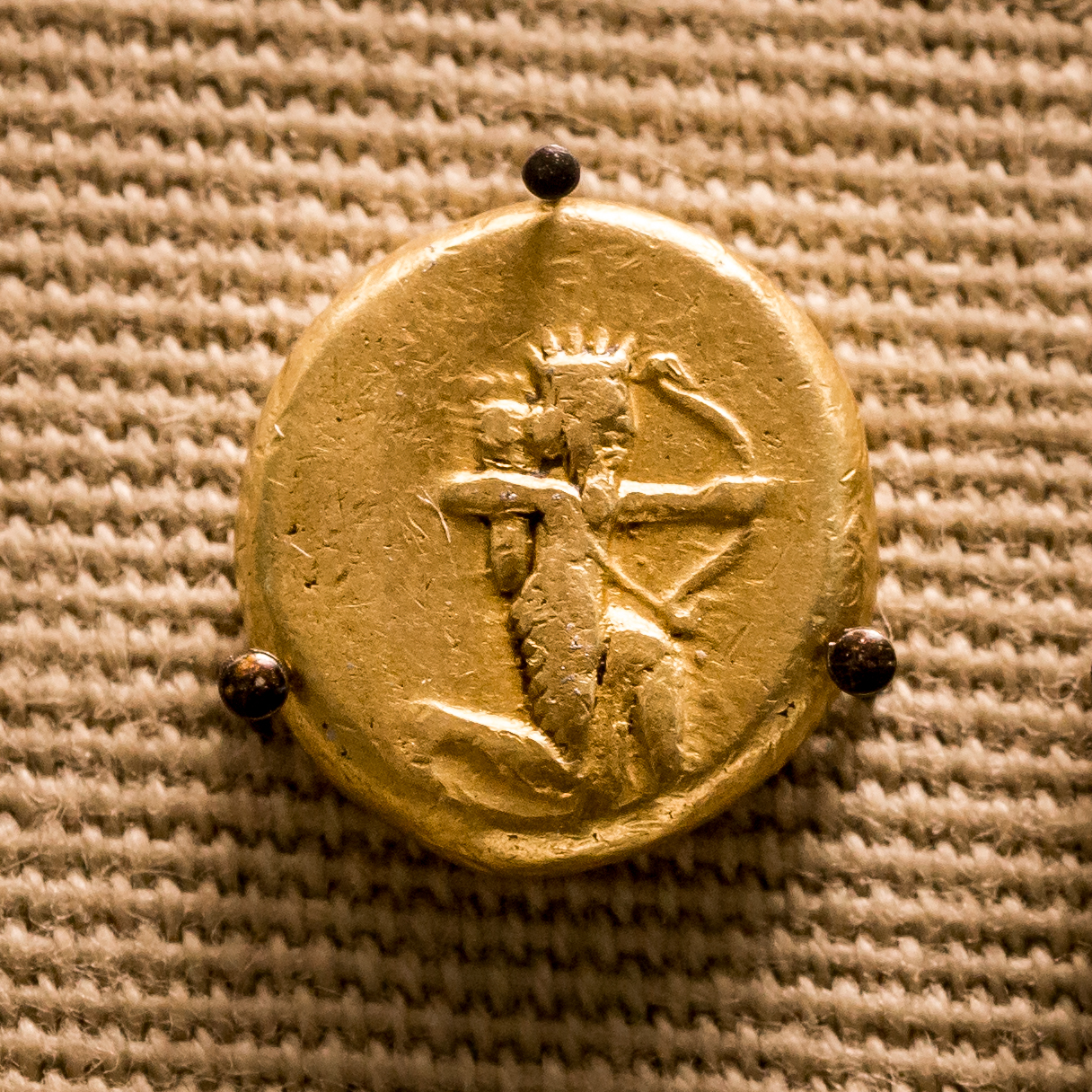
Gold Daric Coin
Achaemenid royal mint · c. 500 BCE
A gold coin introduced by Darius I, showing the Persian king as a running archer, symbolizing his monetary reform.
Darius I commissioned this coinage, and the kneeling archer shown is understood to represent the king himself.
About this source
What it is
This is a gold daric coin, struck at an Achaemenid mint, likely in Sardis, Lydia, around 500 BCE. It shows a kneeling king, identified as Darius I or Xerxes I, drawing a bow. Coins like this are held today in collections such as the British Museum.
Why it matters
Darius I introduced this gold coinage, alongside a silver coin called the siglos, creating a bimetallic monetary standard across his empire. The image of the king as an archer became a powerful symbol of royal authority, spread wherever these coins circulated.
Look closer
- What does the pose of the king on the coin suggest about how he wanted to be seen?
- Why might a ruler want his image stamped on money used across a huge empire?
- What does the coin not tell us about daily life under Darius's rule?
This artifact is part of the curated material that grounds the AI version of Darius the Great on Humy.ai — when students ask about related events, the AI can quote it and cite it.
More Darius the Great sources
Meet the AI Darius the Great →

Ready when you are
Start chatting with Darius the Great now.
20 messages free · No credit card · Available in 50+ languages.