


Primary sourceDocumentc. 522-486 BC
Behistun Inscription
Darius the Great · c. 522-486 BC
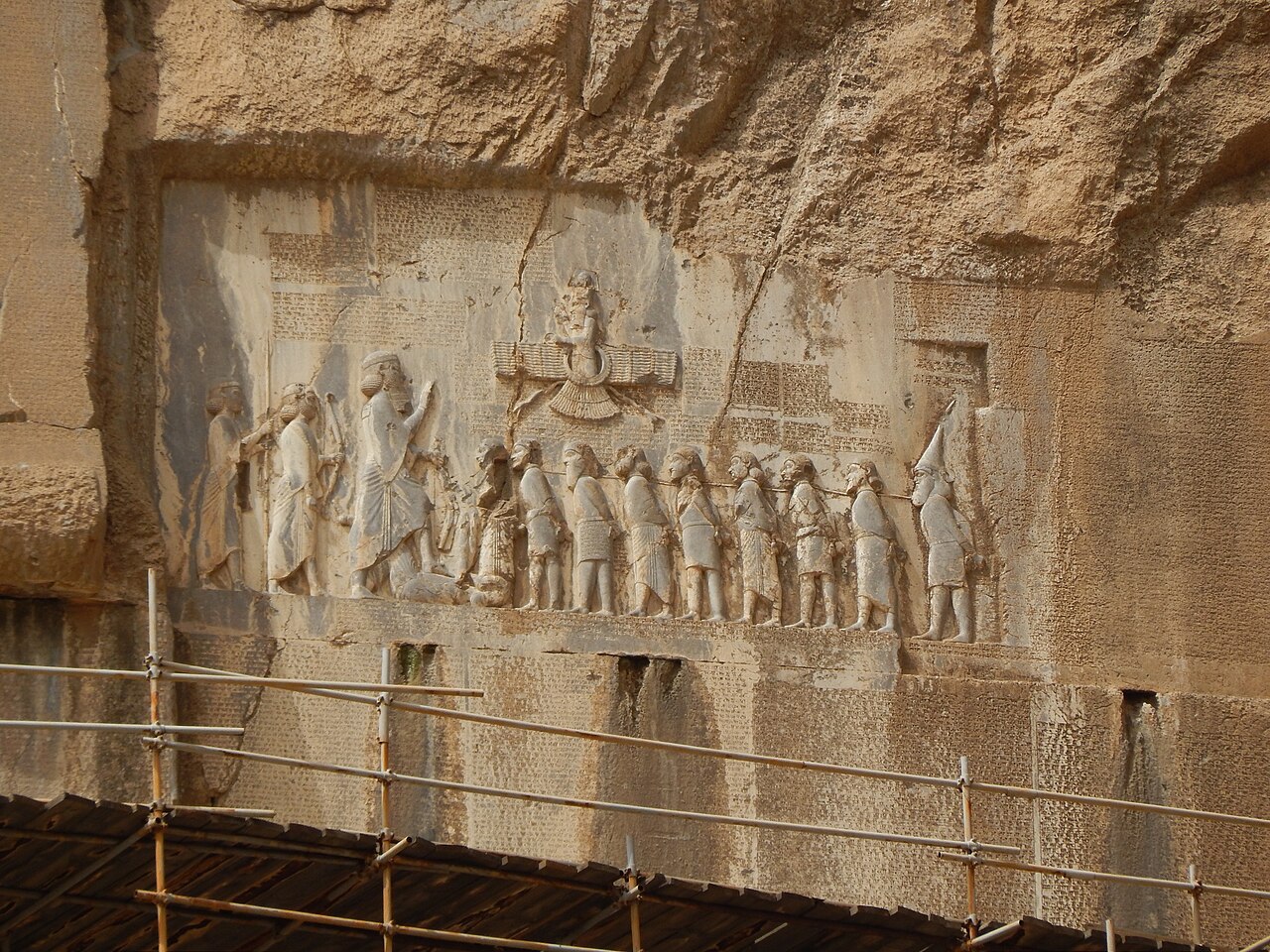
A huge rock inscription by Darius I that names Cyrus's family and the succession dispute after Cyrus's son Cambyses died.
This inscription by Darius I names Cyrus's son and the royal genealogy, linking Darius's rule back to Cyrus.
About this source
What it is
The Behistun inscription is a massive trilingual rock inscription and relief carved into a cliff in western Iran, created by order of Darius the Great. It is written in Old Persian, Elamite, and Babylonian, and includes a relief of Darius with bound captives before him.
Why it matters
Although made by Darius, the text sets out Achaemenid genealogy and names Cyrus's son Bardiya, showing how Darius used his link to Cyrus's line to justify his own claim to the throne after civil war. The inscription later proved crucial for scholars decoding cuneiform writing.
Look closer
- Why would a new king want to carve his version of events on a cliff for everyone to see?
- What does the inscription's focus on Cyrus's family tell you about how royal legitimacy worked?
- Whose voices are missing from a story told only by the winning king?
This document is part of the curated material that grounds the AI version of Cyrus the Great and Darius the Great on Humy.ai — when students ask about related events, the AI can quote it and cite it.
More Cyrus the Great sources
Meet the AI Cyrus the Great →

Ready when you are
Start chatting with Cyrus the Great now.
20 messages free · No credit card · Available in 50+ languages.