


Primary sourceArtifactc. 490 BCE
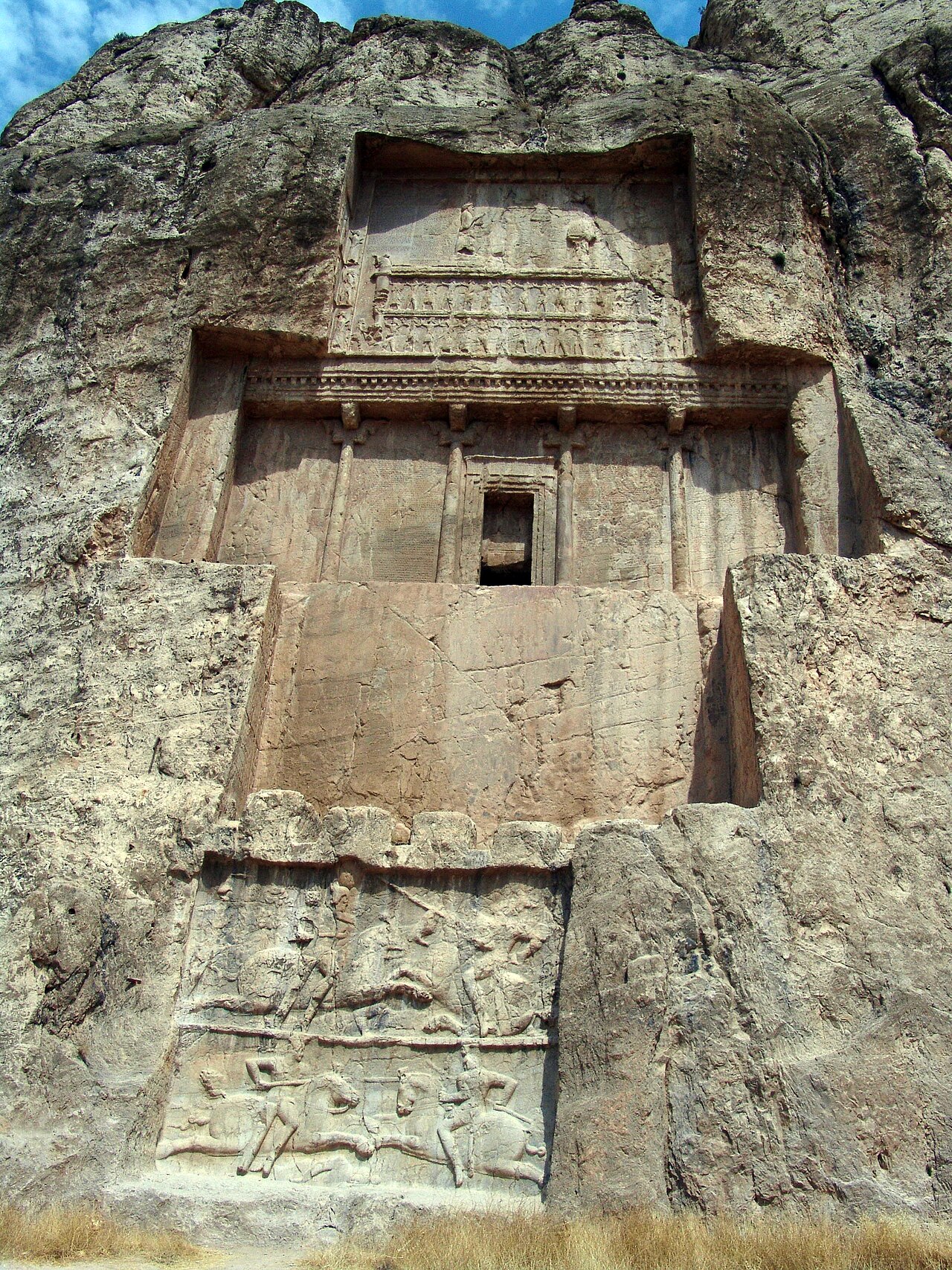
Tomb of Darius I
c. 490 BCE
The rock-cut tomb Darius had carved for himself at Naqsh-e Rustam, showing him supported by the peoples of his empire.
The tomb Darius commissioned for himself, decorated with his image and inscriptions expressing his ideals of kingship.
About this source
What it is
A tomb cut into a cliff face at Naqsh-e Rustam, near Persepolis in Iran, built for Darius the Great. An inscription identifies it as his, and it stands alongside tombs of later Achaemenid kings.
Why it matters
The facade shows Darius standing on a platform held up by rows of soldiers representing the many peoples of his empire, each labelled by nationality in the accompanying inscription. Together with the inscription setting out his ideals of just rule, self-control and skill as a warrior, the tomb is a carefully designed statement of how Darius wanted his kingship and his empire to be seen forever.
Look closer
- Why might Darius have chosen to show so many different peoples supporting his throne?
- What does the location, cut high into a cliff, suggest about the importance given to this monument?
- What has survived of the tomb's decoration, and what has been lost or damaged over time?
This artifact is part of the curated material that grounds the AI version of Darius the Great on Humy.ai — when students ask about related events, the AI can quote it and cite it.
More Darius the Great sources
Meet the AI Darius the Great →

Ready when you are
Start chatting with Darius the Great now.
20 messages free · No credit card · Available in 50+ languages.