


Primary sourceArtifactc. 500 BCE
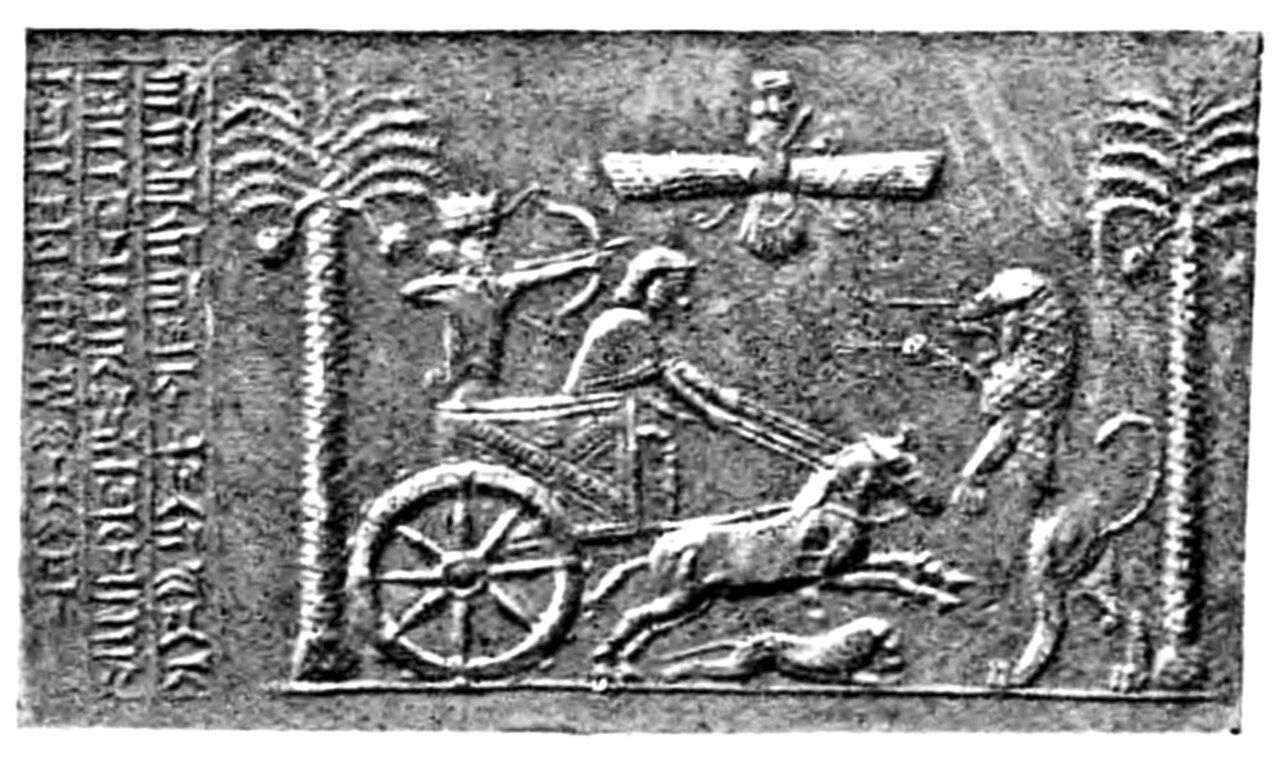
Cylinder seal of Darius
Achaemenid seal-cutter · c. 500 BCE
A royal seal inscribed 'I am Darius, the Great King' in three languages, showing the king hunting lions from a chariot.
This personal seal names and belonged to Darius I, used to authenticate his royal commands.
About this source
What it is
This carved seal belonged to Darius I and bears his name and title in three languages. Seal impressions like this were used to authenticate royal documents. The carved scene shows the king hunting lions from a chariot beneath the winged symbol of the god Ahura Mazda, with a standing figure nearby. It is kept in the British Museum.
Why it matters
Royal seals were tools of government, proving that an order genuinely came from the king. The trilingual inscription shows how the Achaemenid empire worked across many languages and peoples. The lion hunt scene, a traditional image of royal courage going back to earlier Near Eastern kings, and the presence of Ahura Mazda, show how Darius connected his rule to both ancient tradition and divine favour.
Look closer
- Why would a king need a personal seal, and what might it have been used for?
- What does the choice of three languages tell us about the empire Darius ruled?
- What is the winged figure above the scene, and why might Darius have included it?
This artifact is part of the curated material that grounds the AI version of Darius the Great on Humy.ai — when students ask about related events, the AI can quote it and cite it.
More Darius the Great sources
Meet the AI Darius the Great →

Ready when you are
Start chatting with Darius the Great now.
20 messages free · No credit card · Available in 50+ languages.