


Primary sourceArtifactc. 505-480 BCE
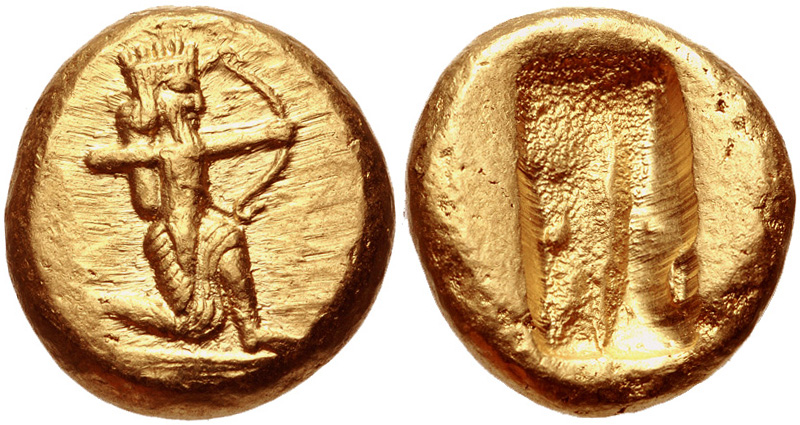
Persian Daric Coin, Reign of Darius I to Xerxes I
c. 505-480 BCE
A gold daric coin minted during the reign of Darius I and his successor Xerxes I, showing a kneeling archer.
This coin type was minted during the reign of Darius I and shows the imperial currency of his empire.
About this source
What it is
This gold coin, called a daric, was minted in the Achaemenid Empire sometime between about 505 and 480 BCE, spanning the reign of Darius I and into that of his son Xerxes I. One side shows a kneeling archer-king; the other shows a blank incuse punch mark.
Why it matters
The daric was a major gold coin of the Achaemenid Empire, used across Darius I's vast territory to pay soldiers and officials and to show royal authority. Coins like this spread the image of the Persian king far and wide, making them an early form of royal propaganda and a sign of a highly organized economy.
Look closer
- What does the image of the archer tell us about how the king wanted to be seen?
- Why might a government want a standard gold coin across its empire?
- What can coins tell historians that written records cannot?
This artifact is part of the curated material that grounds the AI version of Darius the Great on Humy.ai — when students ask about related events, the AI can quote it and cite it.
More Darius the Great sources
Meet the AI Darius the Great →

Ready when you are
Start chatting with Darius the Great now.
20 messages free · No credit card · Available in 50+ languages.