


Primary sourceArtifact522-486 BCE
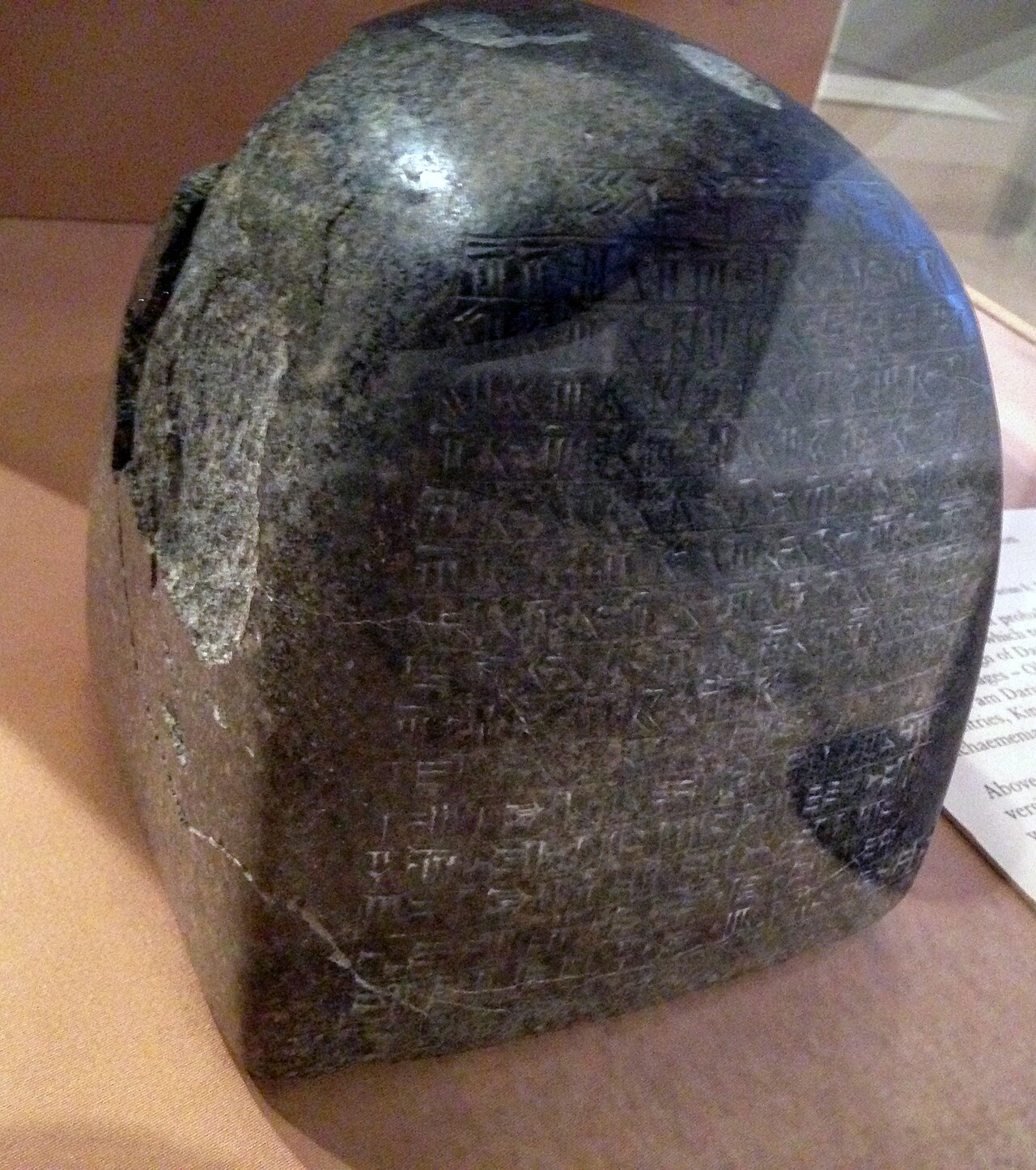
Weight with Trilingual Inscription of Darius
522-486 BCE
A stone weight from Persepolis inscribed in Darius I's name, used as a standard measure in the empire.
This weight standard, inscribed in his name, reflects Darius I's efforts to standardise measures across his empire.
About this source
What it is
This is a stone weight from Persepolis dating to the reign of Darius I, carved with an inscription in three languages. It weighs about 4930 grams and was used as a standard for measuring weight across the empire.
Why it matters
Everyday objects like this weight show the practical side of ruling a vast empire: Darius needed standardised weights and measures so that trade, taxes and payments worked the same way everywhere. The trilingual inscription, like those on his palaces and seals, reflects the many languages and peoples under his rule.
Look closer
- Why would a king care about weights and measures being the same everywhere?
- What does the cuneiform inscription on the object tell us, and why might it be written in several languages?
- What does an ordinary object like this reveal about empire that a grand monument might not?
This artifact is part of the curated material that grounds the AI version of Darius the Great on Humy.ai — when students ask about related events, the AI can quote it and cite it.
More Darius the Great sources
Meet the AI Darius the Great →

Ready when you are
Start chatting with Darius the Great now.
20 messages free · No credit card · Available in 50+ languages.