


Primary sourceArtifactCirca 545-520 BC
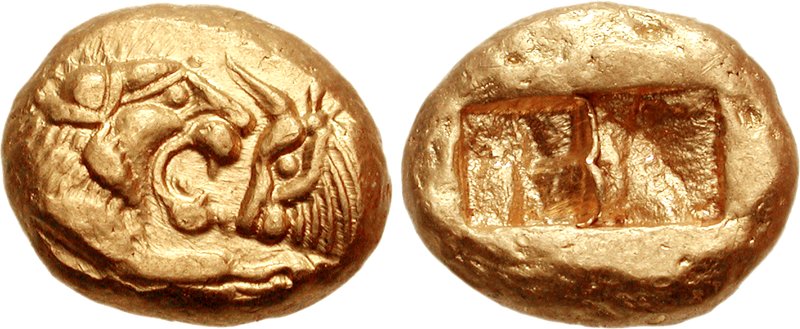
Lydian Croeseid Gold Coin
Circa 545-520 BC
A gold coin minted in Lydia that the Persians continued to produce after Cyrus the Great conquered the Lydian kingdom.
This coin type continued to circulate in the Lydian territory that Cyrus conquered, showing his empire's rule over the region.
About this source
What it is
This is a gold Croeseid coin from the Kingdom of Lydia, struck in the period from the time of Cyrus to Darius I. One side shows a lion's head and forepart, the other an incuse square punch mark.
Why it matters
After Cyrus conquered Lydia, the Persians kept minting this Lydian coin type rather than replacing it immediately. This shows how Cyrus's empire often absorbed local systems instead of erasing them, a practical approach to ruling many different peoples.
Look closer
- Why might a conqueror choose to keep using the coins of the people he defeated?
- What does continuing local currency suggest about how Cyrus managed his empire?
- What can a coin tell us that a written record cannot?
This artifact is part of the curated material that grounds the AI version of Cyrus the Great and Darius the Great on Humy.ai — when students ask about related events, the AI can quote it and cite it.
More Cyrus the Great sources
Meet the AI Cyrus the Great →

Ready when you are
Start chatting with Cyrus the Great now.
20 messages free · No credit card · Available in 50+ languages.