


Primary sourceArtifact522-486 BCE
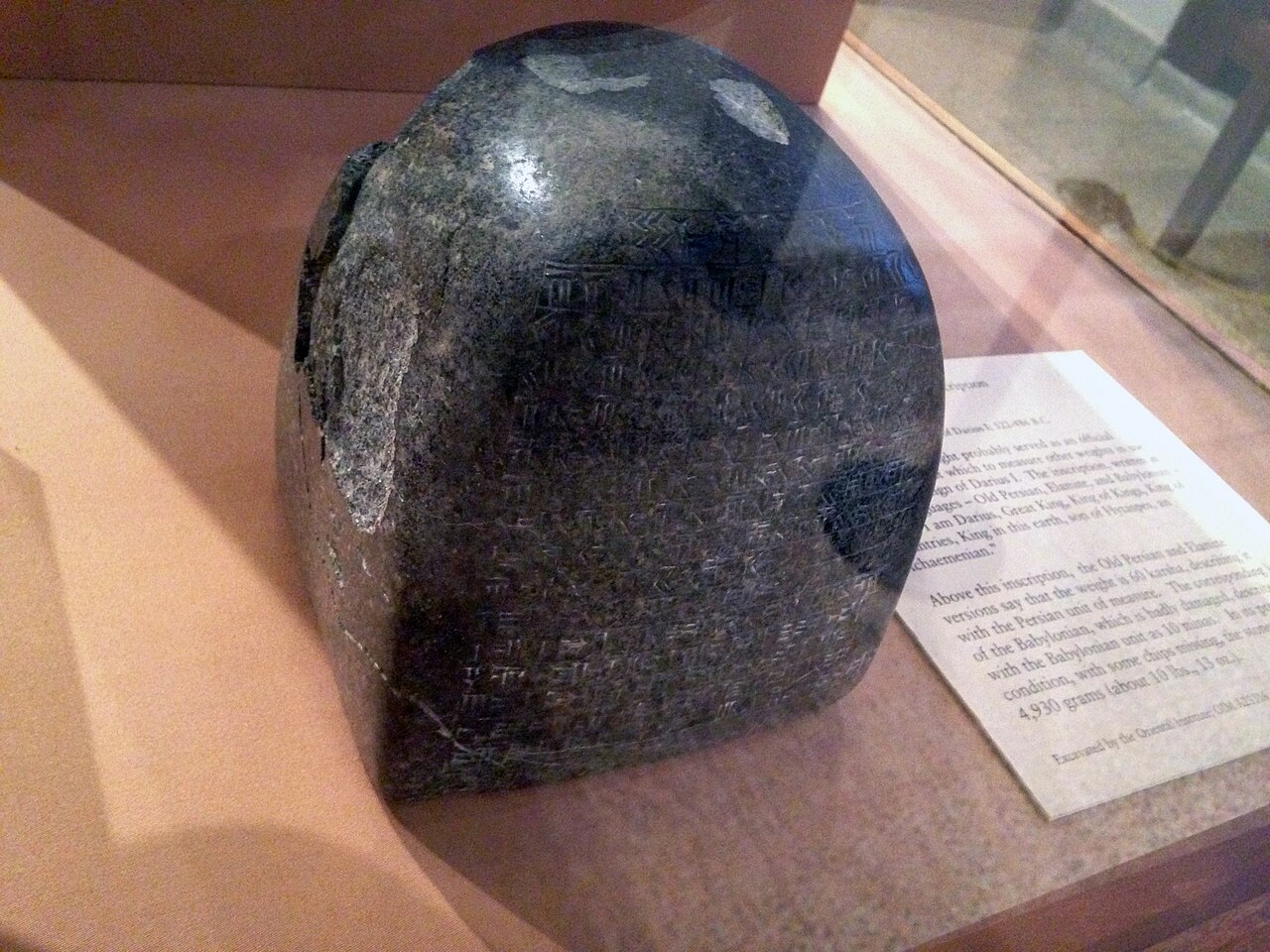
Trilingual Stone Weight from Persepolis
522-486 BCE
A stone weight inscribed in three languages with the name of Darius I, used as a standard for weights in the Achaemenid Empire.
This weight, inscribed with Darius's name, shows his role in standardizing measures across the empire.
About this source
What it is
This is a stone weight with a trilingual cuneiform inscription from Persepolis, dating to the Achaemenid period under Darius I (522-486 BCE). It currently weighs about 4930 grams and is held in a museum collection.
Why it matters
Darius I is known for standardizing administration across his vast empire, including weights, measures, and coinage. This object is physical evidence of that effort, showing how the empire tried to create consistent systems of trade and taxation across many different peoples and languages.
Look closer
- Why would a ruler want the same weight standard used across his whole empire?
- Why do you think the inscription appears in three languages?
- What would happen if weights like this were not standardized?
This artifact is part of the curated material that grounds the AI version of Darius the Great on Humy.ai — when students ask about related events, the AI can quote it and cite it.
More Darius the Great sources
Meet the AI Darius the Great →

Ready when you are
Start chatting with Darius the Great now.
20 messages free · No credit card · Available in 50+ languages.