


Primary sourceDocument559-331 BCE
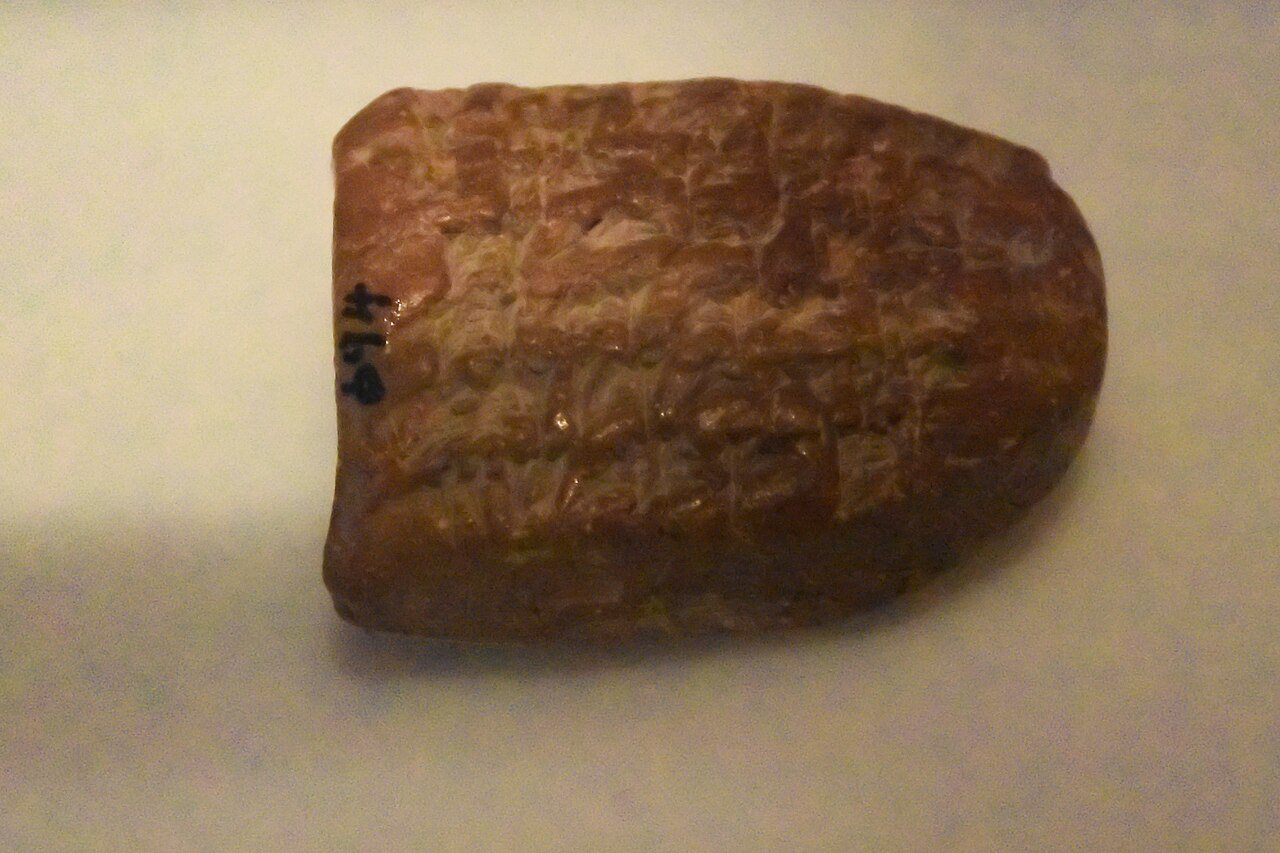
Elamite cuneiform tablet from Persepolis
559-331 BCE
A small brownish clay tablet with cuneiform writing in the Elamite language, from Persepolis in the Achaemenid period. It is an administrative record from the reign of Darius I.
An Elamite administrative tablet from Persepolis, from the record-keeping archive of Darius I's reign, showing the empire's bureaucracy.
About this source
What it is
This is a small clay tablet inscribed in cuneiform with the Elamite language. The Museo Nacional de Irán record describes it as coming from Persepolis and dating to 559-331 BCE, the Achaemenid period. It is shown in the MARQ exhibition Irán, cuna de civilizaciones, and the Commons record places it in the Museo Nacional de Irán. The image is a photograph, so students see the tablet only as a picture.
Why it matters
Elamite was used in the administration of the Persian empire, and tablets like this one show that the state recorded its affairs in more than one language. The catalogue links it to the archive of Darius I's reign, which shows how his government handled information on a large scale.
Look closer
- What can you see in the rows of wedge-shaped marks, and what can you not read from a photograph?
- Why might an empire use several languages for its records?
- What does an image of an object in an exhibition leave out compared with holding the tablet itself?
This document is part of the curated material that grounds the AI version of Darius the Great on Humy.ai — when students ask about related events, the AI can quote it and cite it.
More Darius the Great sources
Meet the AI Darius the Great →

Ready when you are
Start chatting with Darius the Great now.
20 messages free · No credit card · Available in 50+ languages.