


Primary sourceDocumentc. 515 BCE
Apadana hoard
Darius I · c. 515 BCE
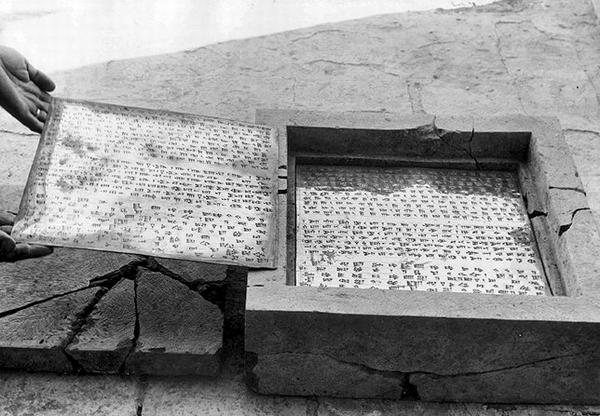
A hoard of gold and silver coins and trilingual foundation tablets buried beneath Darius's Apadana palace at Persepolis, describing his empire's vast extent.
These foundation deposits were commissioned by Darius himself to declare the extent of his empire.
About this source
What it is
Deposits of coins and inscribed gold and silver tablets were found under stone boxes beneath the Apadana Palace at Persepolis, discovered in 1933 during excavations. The tablets carry a trilingual inscription by Darius I, written in Old Persian, Elamite and Akkadian, dated to around 515 BCE.
Why it matters
The inscription describes Darius's kingdom in sweeping geographic terms, 'from the Sacae beyond Sogdia to Kush, from Sind to Lydia,' showing how he wanted his empire remembered and legitimized by the god Ahuramazda. The coins placed with the tablets came from distant regions and were chosen for symbolic meaning rather than just value, revealing how Achaemenid rulers used ritual and imagery to express power.
Look closer
- Why might a king bury treasure and a written claim under a palace instead of displaying them?
- What does the choice of three languages tell you about who Darius wanted to reach?
- What do the coin designs (a lion, a griffin, a turtle) suggest about their symbolic meaning?
This document is part of the curated material that grounds the AI version of Darius the Great on Humy.ai — when students ask about related events, the AI can quote it and cite it.
More Darius the Great sources
Meet the AI Darius the Great →

Ready when you are
Start chatting with Darius the Great now.
20 messages free · No credit card · Available in 50+ languages.