


Primary sourceArtifactCirca 485-420 BC
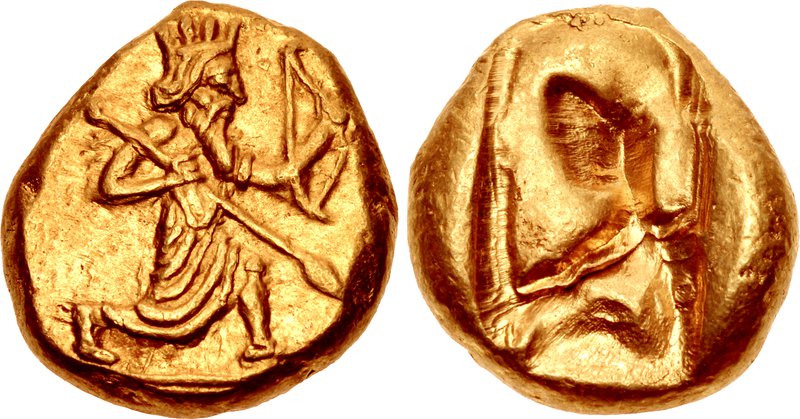
Daric gold coin, Sardes mint
Circa 485-420 BC
A gold daric from the Achaemenid Empire, struck at the Sardes mint during the period of Darius I. It shows a kneeling-running Persian king or hero with a bow and spear.
A gold daric from the period Darius I's monetary reform began, showing the uniform gold coinage he introduced across the empire.
About this source
What it is
This is a gold coin called a daric, weighing 8.36 grams and about 14.5 millimeters across. It was struck at the Sardes mint in the Achaemenid Empire, in the period from Darius I to Xerxes II, around 485-420 BCE. The front shows a kneeling-running figure wearing a kidaris crown and kandys robe, holding a spear and a bow, with a quiver over the shoulder. The back has an incuse punch mark. The coin is described in the Commons record as being in excellent condition for its issue.
Why it matters
The daric was part of a uniform gold coinage that the empire used across its territory. The coin was issued during the period when Darius I's monetary reform began, so it shows how his government organized money and trade.
Look closer
- What do the crown, robe, bow and spear tell you about how the Persian ruler wanted to be seen?
- Why might a coin like this carry a royal image rather than only a value?
- Who used this coin, and what does the figure on it leave out about daily life in the empire?
This artifact is part of the curated material that grounds the AI version of Darius the Great on Humy.ai — when students ask about related events, the AI can quote it and cite it.
More Darius the Great sources
Meet the AI Darius the Great →

Ready when you are
Start chatting with Darius the Great now.
20 messages free · No credit card · Available in 50+ languages.