


Primary sourceDocumentc. 500 BCE
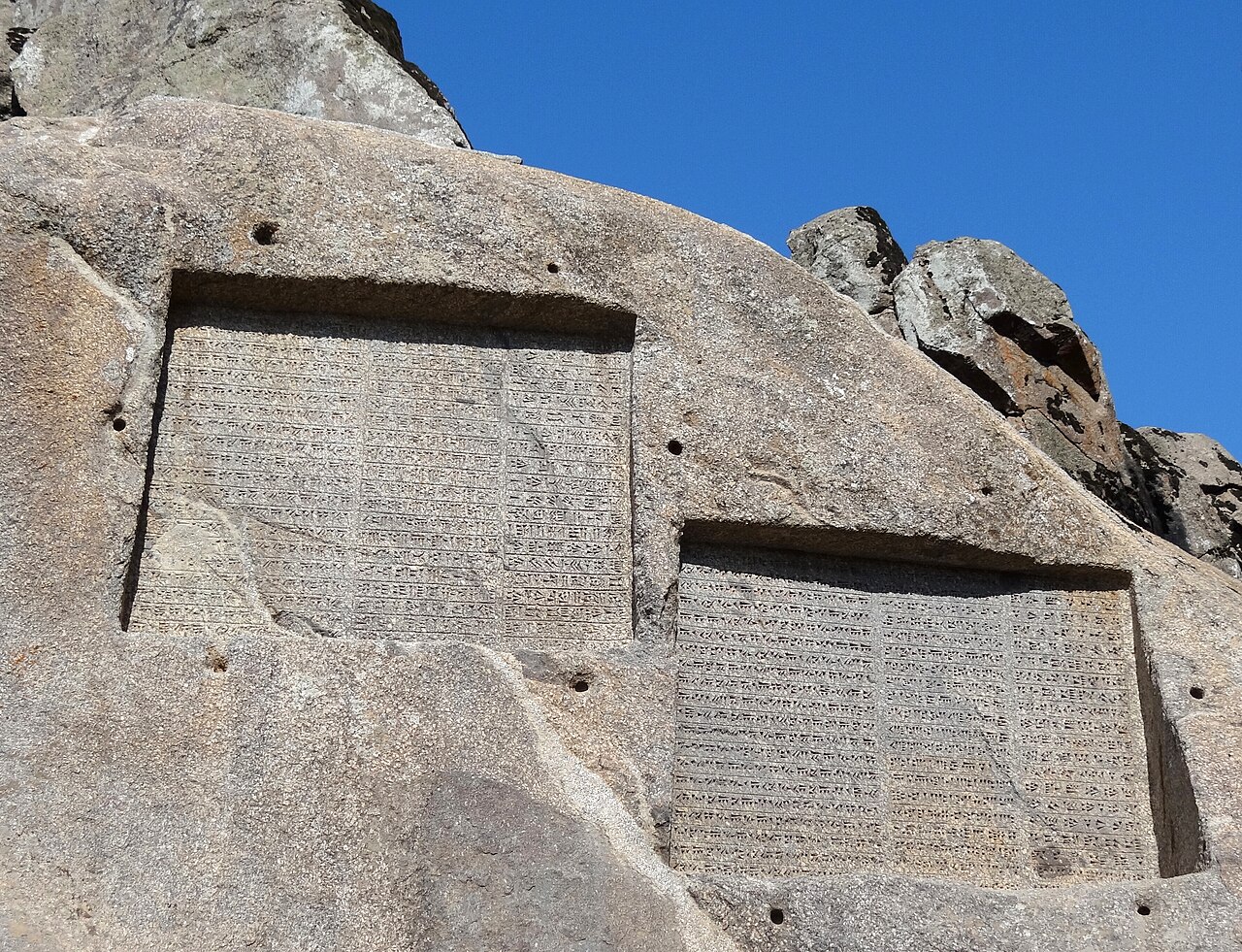
Ganj Nameh Inscriptions
Darius I · c. 500 BCE
Trilingual rock inscriptions near ancient Ecbatana in which Darius I praises Ahura Mazda and states his royal lineage.
This inscription was commissioned by Darius I himself, in his own words praising Ahura Mazda and declaring his lineage.
About this source
What it is
Ganjnameh is a site near Hamadan (ancient Ecbatana) in western Iran with two trilingual royal inscriptions carved into a rock face. The inscription on the left was ordered by Darius I around 500 BCE; the one on the right was ordered later by his son Xerxes I. Both are written in Old Persian, Neo-Babylonian and Neo-Elamite and contain nearly identical texts praising the god Ahura Mazda and listing the king's lineage and conquests.
Why it matters
These inscriptions are direct statements in Darius's own name about his religious beliefs and royal line. Because the same text appears in three languages, inscriptions like these were crucial for scholars trying to decipher cuneiform writing, making them important both as historical sources and as keys to understanding the ancient Near East.
Look closer
- Why might a king want the same message carved in three different languages?
- What does it suggest that Darius's own son chose to carve a nearly identical inscription nearby?
- What is left out of a king's own list of his lineage and conquests?
This document is part of the curated material that grounds the AI version of Darius the Great on Humy.ai — when students ask about related events, the AI can quote it and cite it.
More Darius the Great sources
Meet the AI Darius the Great →

Ready when you are
Start chatting with Darius the Great now.
20 messages free · No credit card · Available in 50+ languages.