


Primary sourcePhotographc. 522-486 BCE
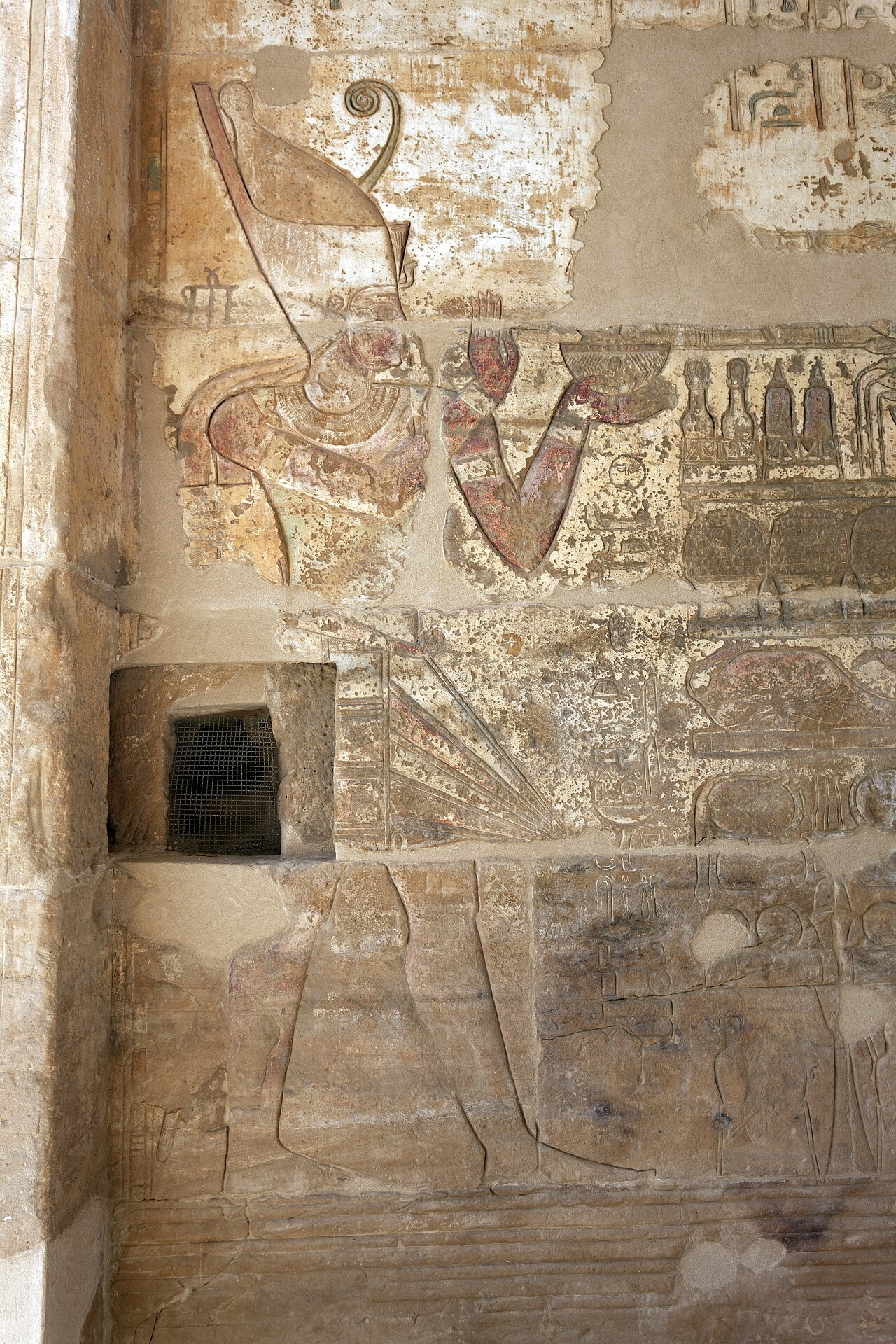
Darius the Great Offering Maat, Temple of Hibis Relief
c. 522-486 BCE
A photograph of a carved and painted relief at the Temple of Hibis in Egypt showing Darius the Great presenting an image of the goddess Maat.
Shows Darius performing a traditional pharaonic ritual, offering Maat, as evidence of his Egyptian rule.
About this source
What it is
This 2014 photograph shows part of a sandstone temple wall at the Temple of Hibis in the el-Kharga depression, Egypt. It captures carved and partly painted figures and hieroglyphic inscriptions, including a scene of Darius the Great offering an image of the goddess Maat.
Why it matters
Maat represented truth and order in Egyptian belief, and offering her image was a traditional act for pharaohs. By having himself shown this way, Darius presented his Persian rule over Egypt as legitimate and in keeping with Egyptian religious and political tradition.
Look closer
- Why might offering Maat have been an important symbol for a ruling king?
- What does this tell us about how Darius wanted to be seen by his Egyptian subjects?
- What questions can't this image answer about Darius's actual relationship with Egypt?
This photograph is part of the curated material that grounds the AI version of Darius the Great on Humy.ai — when students ask about related events, the AI can quote it and cite it.
More Darius the Great sources
Meet the AI Darius the Great →

Ready when you are
Start chatting with Darius the Great now.
20 messages free · No credit card · Available in 50+ languages.