


Secondary sourcePainting1785
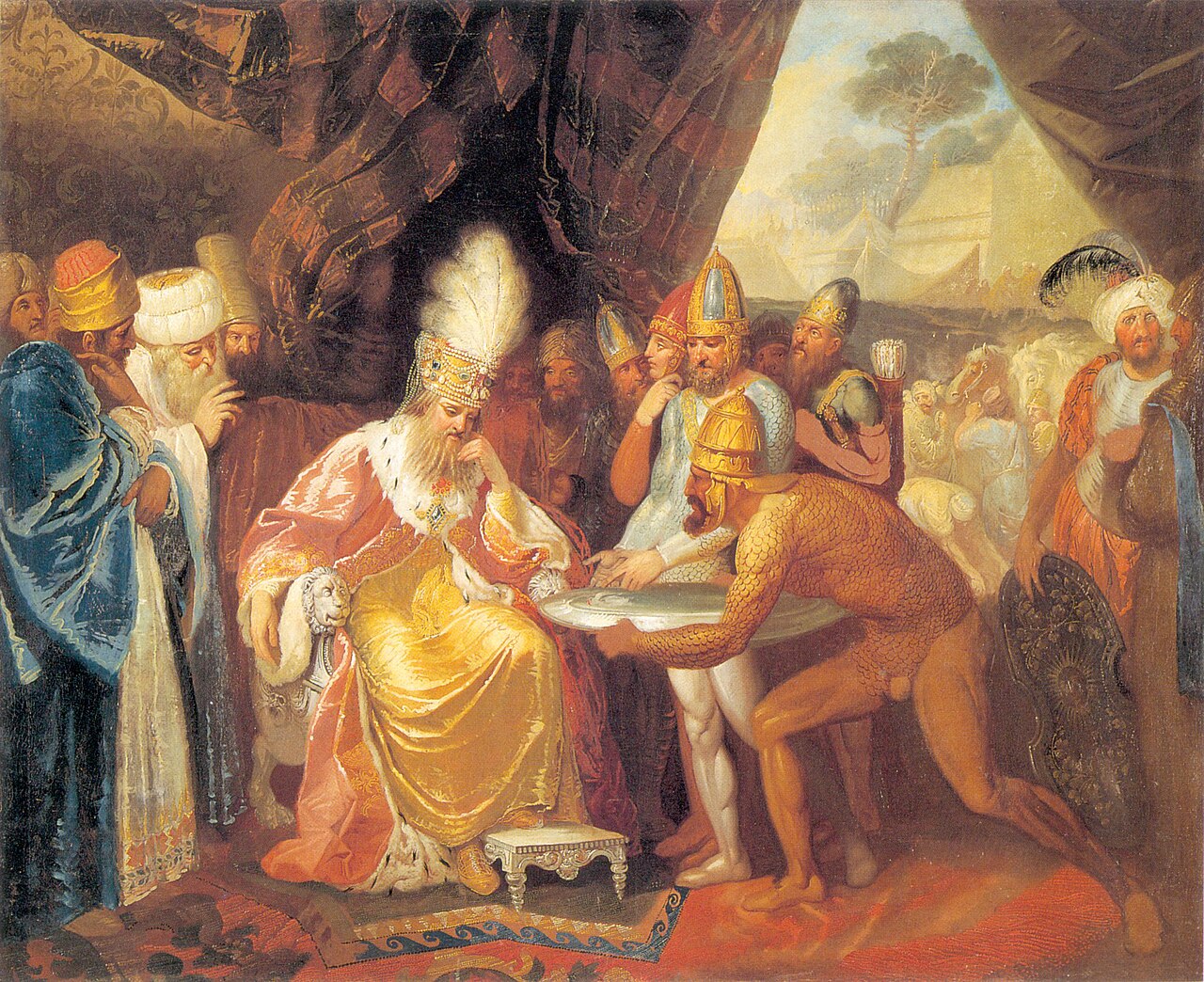
Scythian Messengers Meet the Persian King Darius I
Franciszek Smuglewicz · 1785
An 18th-century oil painting imagining Darius I receiving mysterious gifts from Scythian envoys, based on the story told by Herodotus.
The painting depicts Darius I receiving the riddling gifts from Scythian envoys during his failed Scythian campaign.
About this source
What it is
This is an oil painting made in 1785 by Franciszek Smuglewicz, held today by the Lithuanian National Museum of Art. It shows a seated bearded king in royal robes and a tall plumed crown, surrounded by courtiers, while a kneeling man in armor presents a tray of objects.
Why it matters
The scene illustrates a famous episode from Herodotus about Darius I's failed military campaign against the Scythians, in which Scythian messengers sent the Persian king a puzzling set of gifts. The painting is not from Darius's own time but from the Enlightenment era, showing how European artists and thinkers imagined and interpreted ancient Persian history centuries later.
Look closer
- What details in the king's clothing and crown suggest how the painter imagined a Persian ruler?
- Why might an 18th-century artist have been interested in this ancient story?
- What does the painting leave out about the real outcome of Darius's campaign?
This painting is part of the curated material that grounds the AI version of Darius the Great on Humy.ai — when students ask about related events, the AI can quote it and cite it.
More Darius the Great sources
Meet the AI Darius the Great →

Ready when you are
Start chatting with Darius the Great now.
20 messages free · No credit card · Available in 50+ languages.