


Primary sourceArtifact490 BC
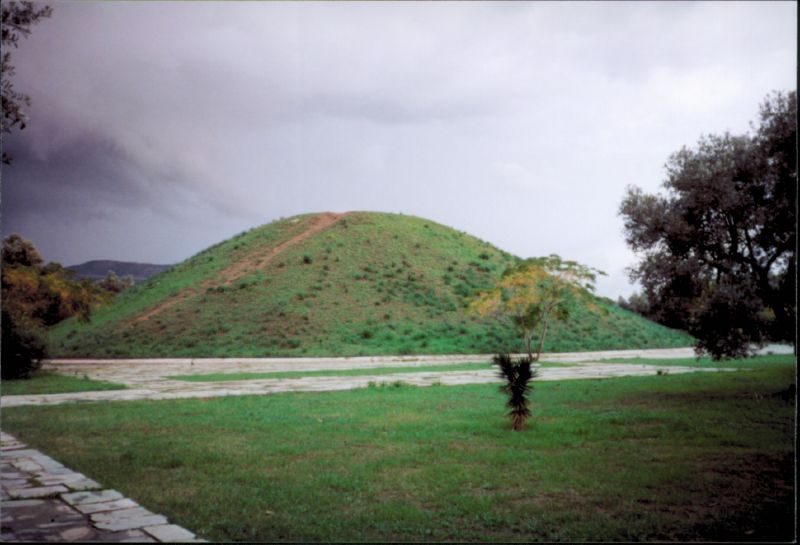
Soros (Tumulus of Marathon)
490 BC
The burial mound raised for the 192 Athenian dead after they defeated the Persian expedition sent by Darius I at the Battle of Marathon.
This mound marks the Athenian dead from their victory over the Persian expedition sent to Greece by Darius I.
About this source
What it is
The Soros is a burial mound at Marathon, Greece, housing the ashes of 192 Athenians who died in the Battle of Marathon in 490 BC. It is located at Agios Panteleimon and still dominates the plain where the battle took place.
Why it matters
This mound was raised immediately after the Athenians and their allies, the Plataeans, defeated the Persian invasion force sent by Darius I. According to Herodotus, the much larger Persian army suffered heavy losses while the Greeks lost far fewer men. The mound is an unusual monument for its time, possibly meant to evoke the heroic burial practices described in Homer, and stands as a lasting marker of this turning point against Darius's empire.
Look closer
- Why might the Athenians have chosen this unusual burial style instead of their normal practice?
- What does the survival of this mound for over two thousand years tell us about its importance to the Greeks?
- What does this monument leave out about the Persian side of the story?
This artifact is part of the curated material that grounds the AI version of Darius the Great on Humy.ai — when students ask about related events, the AI can quote it and cite it.
More Darius the Great sources
Meet the AI Darius the Great →

Ready when you are
Start chatting with Darius the Great now.
20 messages free · No credit card · Available in 50+ languages.