


Secondary sourceBook1908
Old Persian Inscriptions of Darius at Bagistan
Artur Hoffmann-Kutschke · 1908
A 1908 German academic edition presenting Darius the Great's Old Persian cuneiform text from Behistun alongside a German translation.
Presents Darius's own carved Old Persian text explaining his seizure of the throne.
About this source
What it is
This 1908 dissertation by Artur Hoffmann-Kutschke presents the Old Persian cuneiform inscription carved for Darius I at Mount Bagistan (Behistun), printed with a German translation on facing pages.
Why it matters
The Behistun inscription was commissioned by Darius to record his version of how he took the Persian throne. Having the original Old Persian text set beside a translation lets readers see exactly what Darius's scribes carved, rather than relying only on someone else's summary. It shows how later scholars worked to recover and understand ancient royal propaganda.
Look closer
- Why do you think Darius had his message carved in more than one language and script?
- What does this document tell us about who controlled official history in ancient Persia?
- How might a king's own account of events differ from what actually happened?
This book is part of the curated material that grounds the AI version of Darius the Great on Humy.ai — when students ask about related events, the AI can quote it and cite it.
More Darius the Great sources
Meet the AI Darius the Great →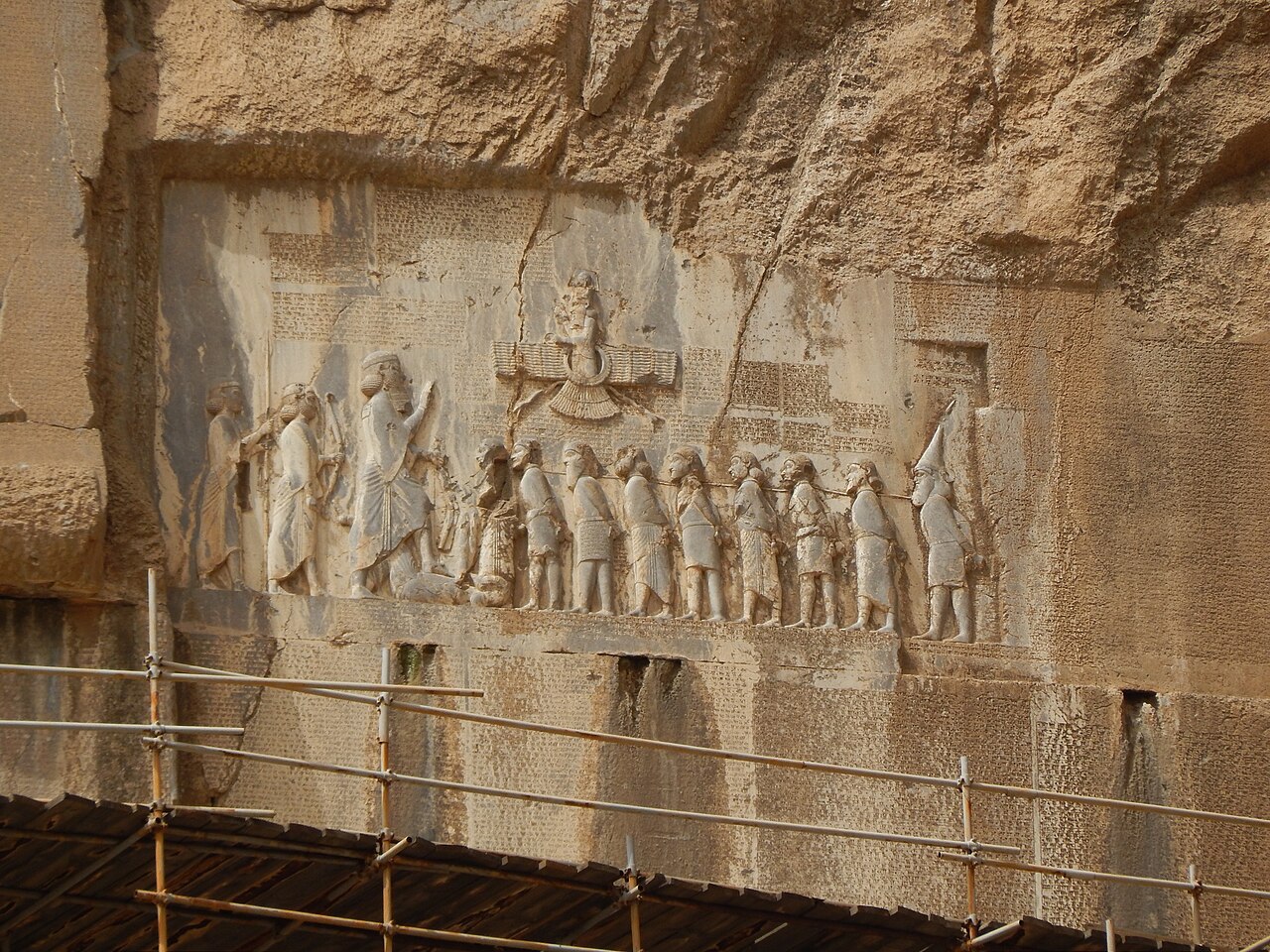

Ready when you are
Start chatting with Darius the Great now.
20 messages free · No credit card · Available in 50+ languages.