


Primary sourceArtifact
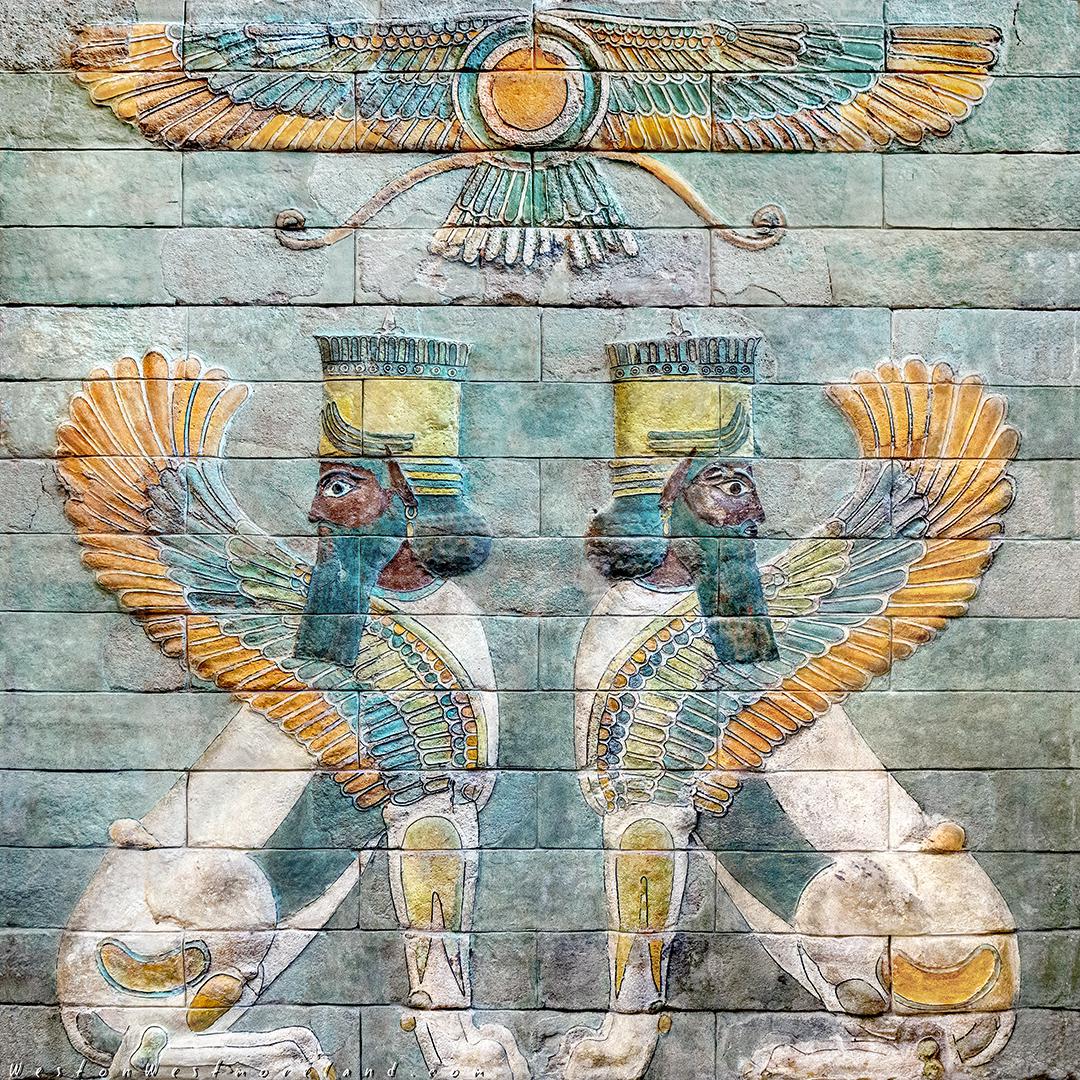
Glazed Brick Guardian Figures from the Palace of Darius at Susa
Glazed-brick panels from Darius I's palace at Susa showing winged human-headed guardian figures beneath a winged sun disc.
These glazed-brick panels decorated Darius I's palace at Susa, showing the artistic traditions he brought together under his rule.
About this source
What it is
This photograph shows glazed-brick relief panels from the royal palace of Darius I at Susa. They depict human-headed winged bulls, known as aladlammu, facing each other beneath a winged sun disc associated with the god Ahura Mazda.
Why it matters
The imagery combines Mesopotamian guardian figures with Persian religious symbolism, reflecting the diverse artistic traditions Darius drew on to decorate his palaces. This blending of styles shows how the Achaemenid Empire brought together craftsmen and ideas from many conquered regions to build a shared royal art.
Look closer
- Why might a king combine artistic styles from different cultures in his palace?
- What might these guardian figures have been meant to protect or symbolize?
- What does this decoration tell us about the resources and skilled workers available to Darius?
This artifact is part of the curated material that grounds the AI version of Darius the Great on Humy.ai — when students ask about related events, the AI can quote it and cite it.
More Darius the Great sources
Meet the AI Darius the Great →

Ready when you are
Start chatting with Darius the Great now.
20 messages free · No credit card · Available in 50+ languages.