


Secondary sourcePhotographbetween 1839 and 1939 (depicting a relief from c. 500 BCE)
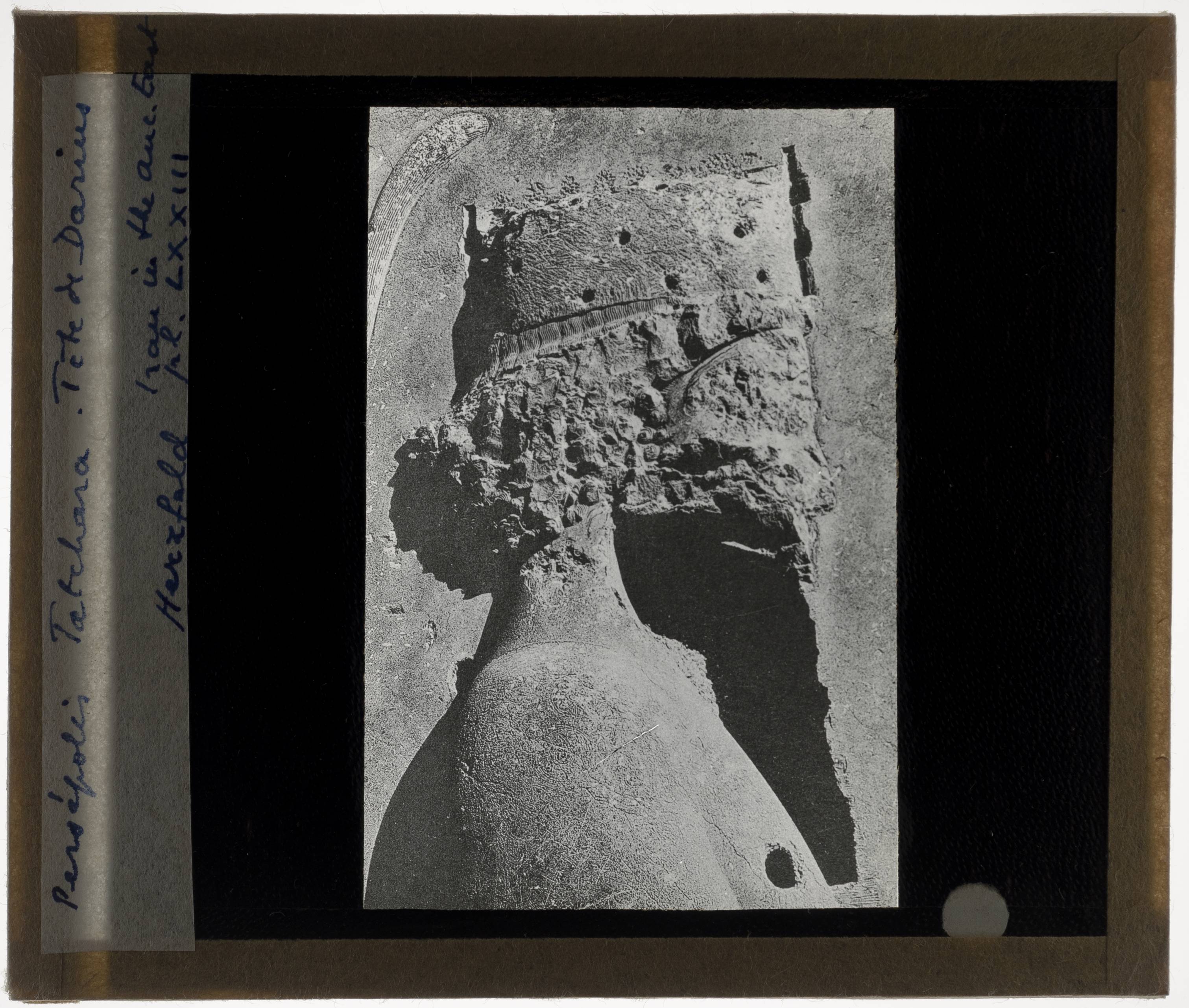
Persepolis Relief, Head of Darius
between 1839 and 1939 (depicting a relief from c. 500 BCE)
A glass lantern slide photograph of a detail from a Persepolis relief showing the head of Darius.
Shows a carved head identified as Darius I from the Persepolis palace reliefs, built under his reign.
About this source
What it is
This is a black-and-white glass lantern slide, made between 1839 and 1939 by an unknown photographer, now held by the Catholic University of Leuven. It shows a close-up of an ancient stone relief from Persepolis, depicting the carved head of King Darius with a curled beard and tall crown.
Why it matters
The relief itself dates to around 500 BCE and was carved on the northern steps at Persepolis, the ceremonial capital built under Darius I and his successors. This photograph, taken centuries later for art history teaching, shows how images of ancient monuments were studied and shared long before digital photography.
Look closer
- What details of the crown and beard might have signaled royal status to ancient viewers?
- Why would a university collect glass slides of ancient reliefs for teaching?
- What is lost or changed when we see an ancient relief only through an old photograph?
This photograph is part of the curated material that grounds the AI version of Darius the Great on Humy.ai — when students ask about related events, the AI can quote it and cite it.
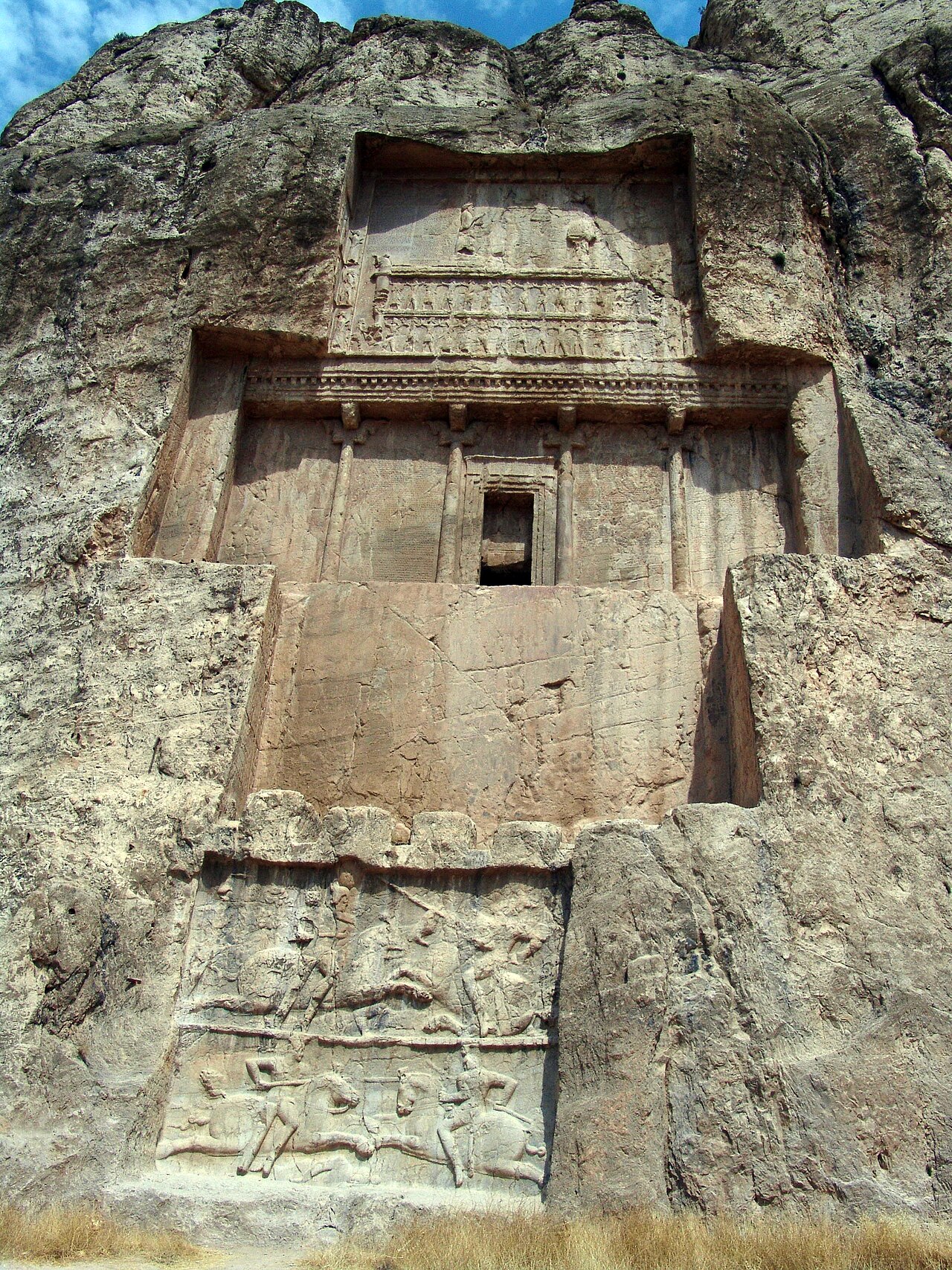
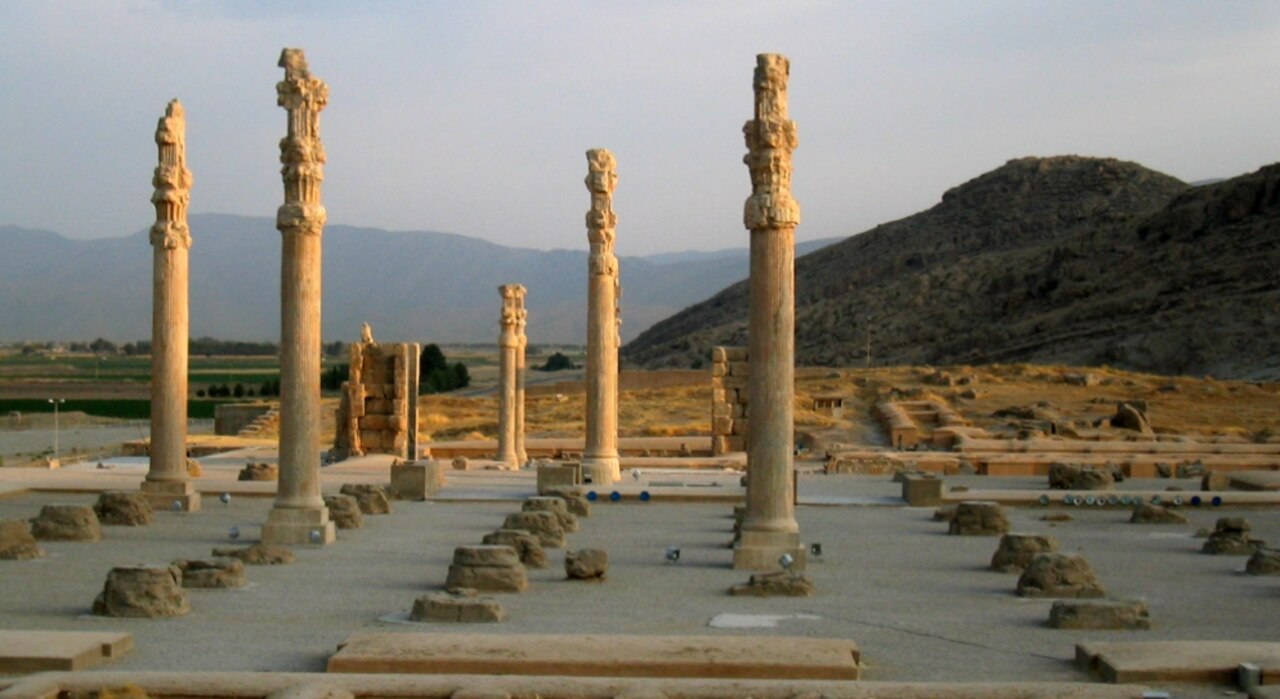
More Darius the Great sources
Meet the AI Darius the Great →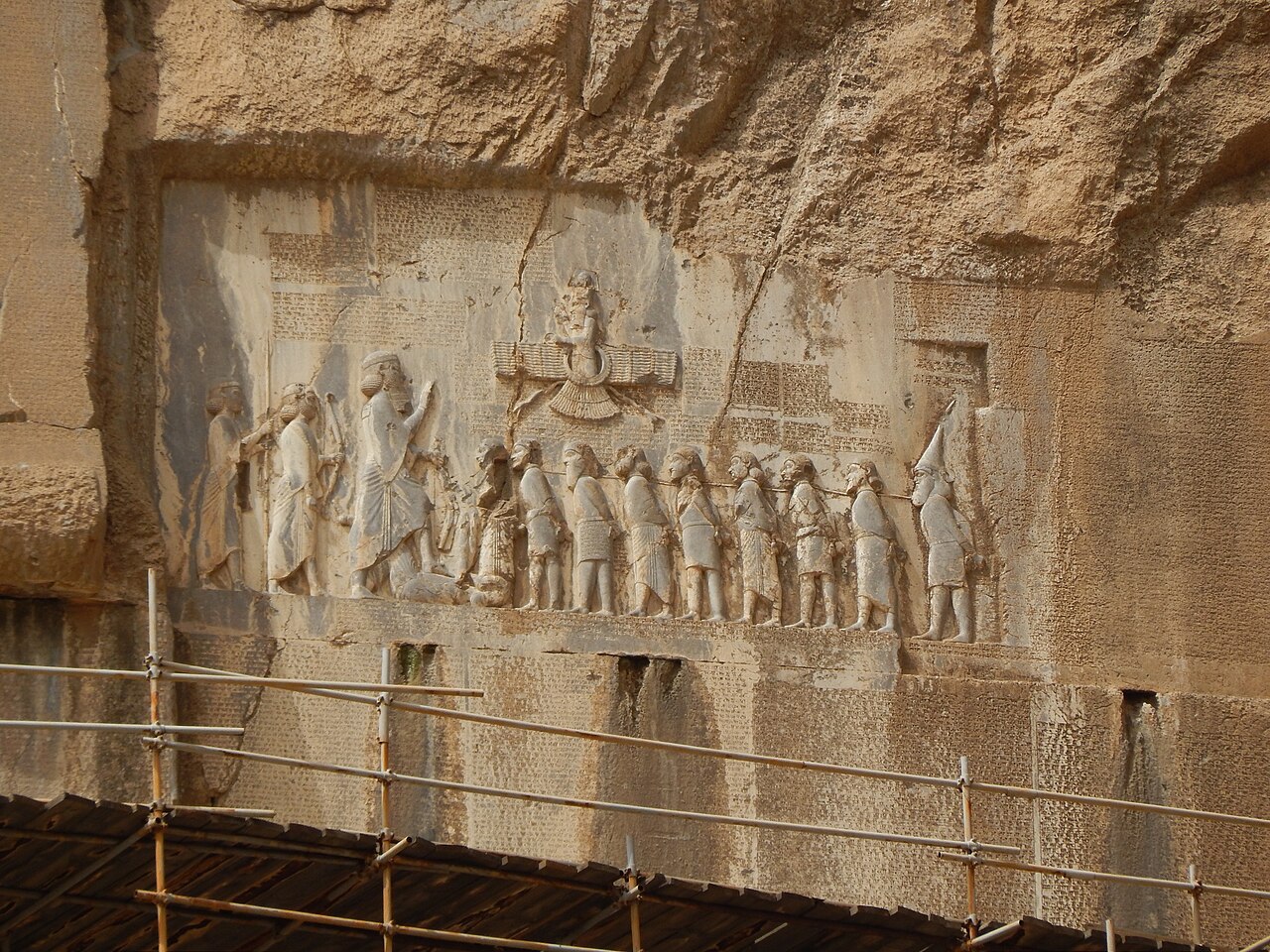

Ready when you are
Start chatting with Darius the Great now.
20 messages free · No credit card · Available in 50+ languages.