


Secondary sourceDocument
DNa Inscription Naming Hidush, Naqsh-e Rustam
Darius I
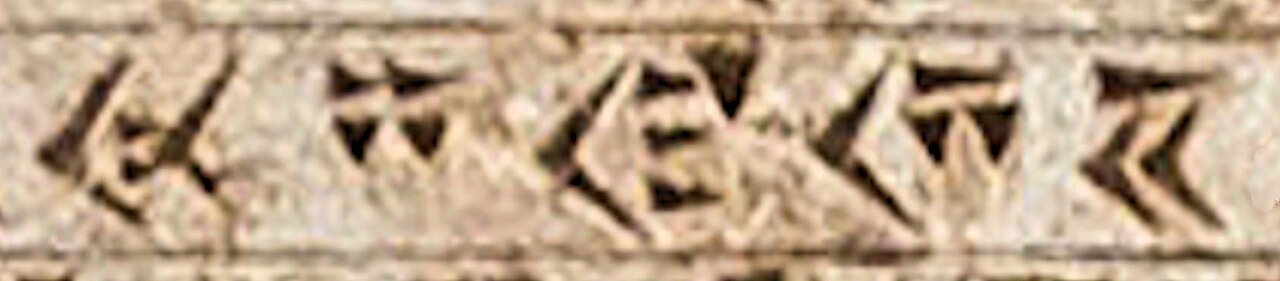
A close-up of part of Darius I's tomb inscription in Old Persian cuneiform, carved near Naqsh-e Rustam.
This detail of Darius I's tomb inscription records part of his description of the empire he ruled.
About this source
What it is
This photograph is a close-up detail of weathered cuneiform wedge-shaped carving from the inscription on Darius I's tomb at Naqsh-e Rustam. It shows only a small row of Old Persian signs rather than the full monument.
Why it matters
This fragment belongs to the larger DNa inscription in which Darius described his empire and the lands under his control. Even a small detail like this helps historians piece together the full text and understand how Achaemenid kings recorded their rule in stone.
Look closer
- Why do you think only a small section of the inscription was photographed here?
- What challenges might historians face when the carving is worn and partly unreadable?
- Why was Old Persian cuneiform used for a royal tomb inscription?
This document is part of the curated material that grounds the AI version of Darius the Great on Humy.ai — when students ask about related events, the AI can quote it and cite it.
More Darius the Great sources
Meet the AI Darius the Great →

Ready when you are
Start chatting with Darius the Great now.
20 messages free · No credit card · Available in 50+ languages.