


Primary sourceDocument
DNa Inscription on the Tomb of Darius I, Part I
Darius I
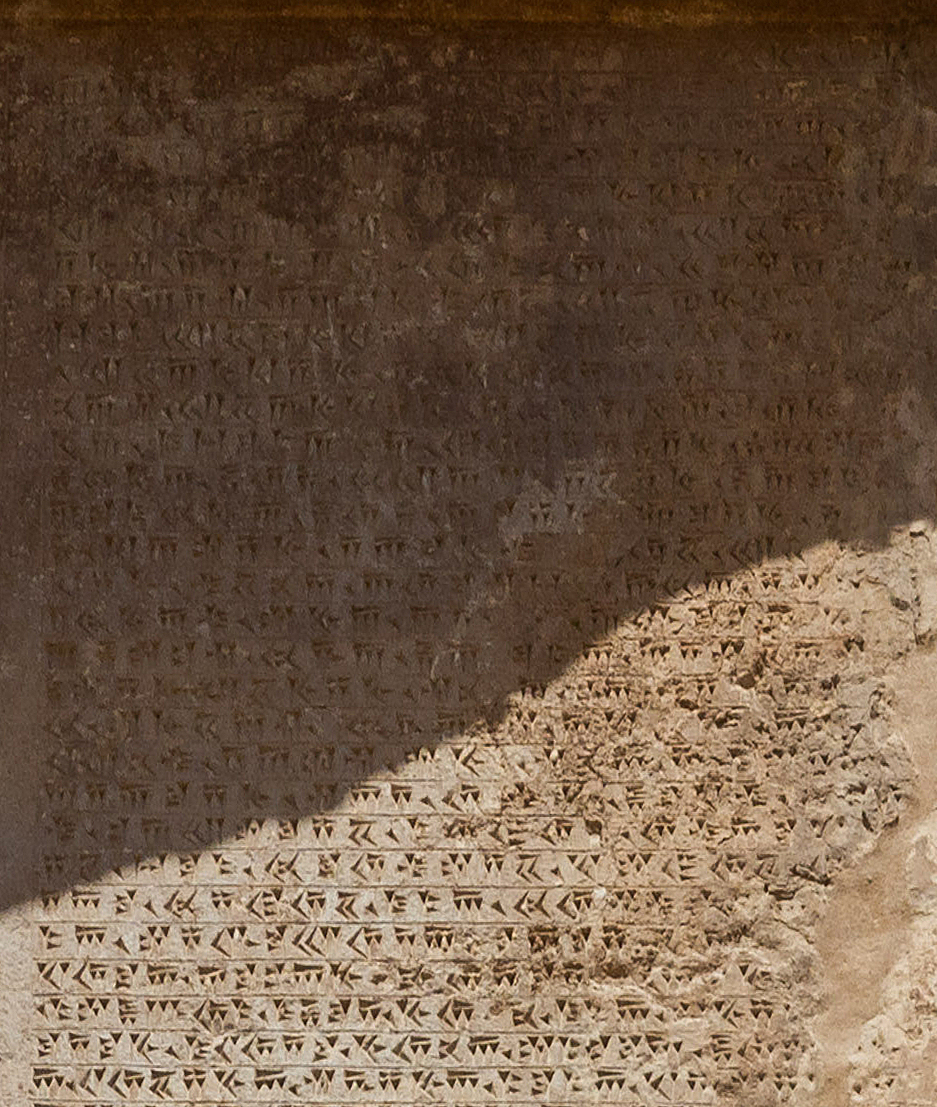
Part of Darius I's own tomb inscription in Old Persian cuneiform, listing his realm and the peoples under his rule.
This is part of Darius I's own tomb inscription, a direct primary text describing his realm.
About this source
What it is
This photograph shows a close-up of carved cuneiform wedge-shaped writing on the tomb of Darius I at Naqsh-e Rustam. This section is part of the inscription known as DNa, composed in Darius's name and describing his kingdom.
Why it matters
Because this text speaks in Darius's own voice and was carved on his own tomb, it is a direct primary source for how he described his power and empire. Inscriptions like this are rare first-hand statements from an ancient ruler about his own rule, rather than accounts written by others.
Look closer
- Why might a king choose to have a list of his realm carved on his own tomb?
- What does the contrast between the shadowed and sunlit stone tell you about where and how this photo was taken?
- What might this inscription leave out about the people actually living under Darius's rule?
This document is part of the curated material that grounds the AI version of Darius the Great on Humy.ai — when students ask about related events, the AI can quote it and cite it.
More Darius the Great sources
Meet the AI Darius the Great →

Ready when you are
Start chatting with Darius the Great now.
20 messages free · No credit card · Available in 50+ languages.