


Primary sourceSculpturephotographed 2009, relief from Darius's reign
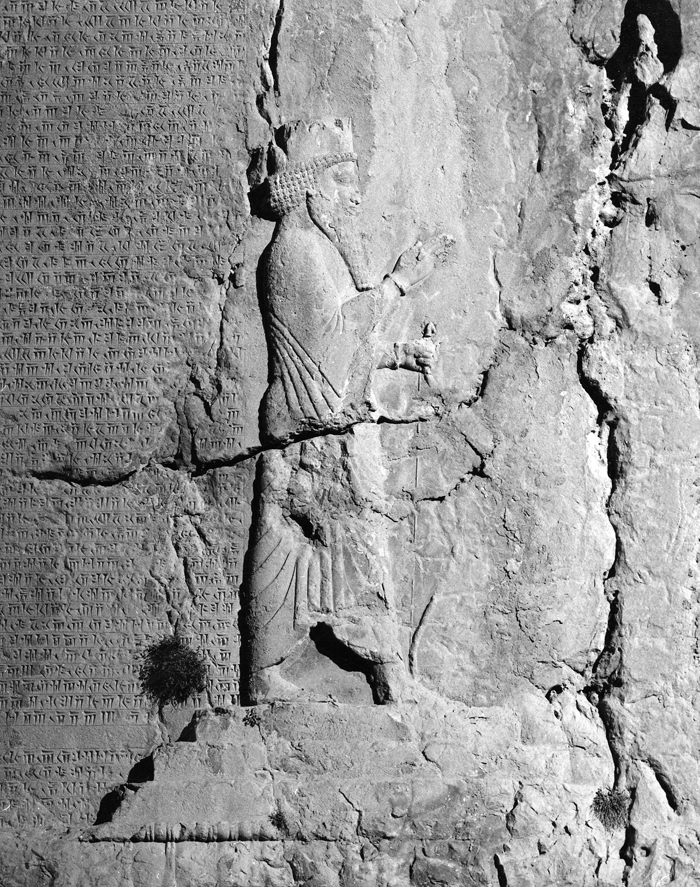
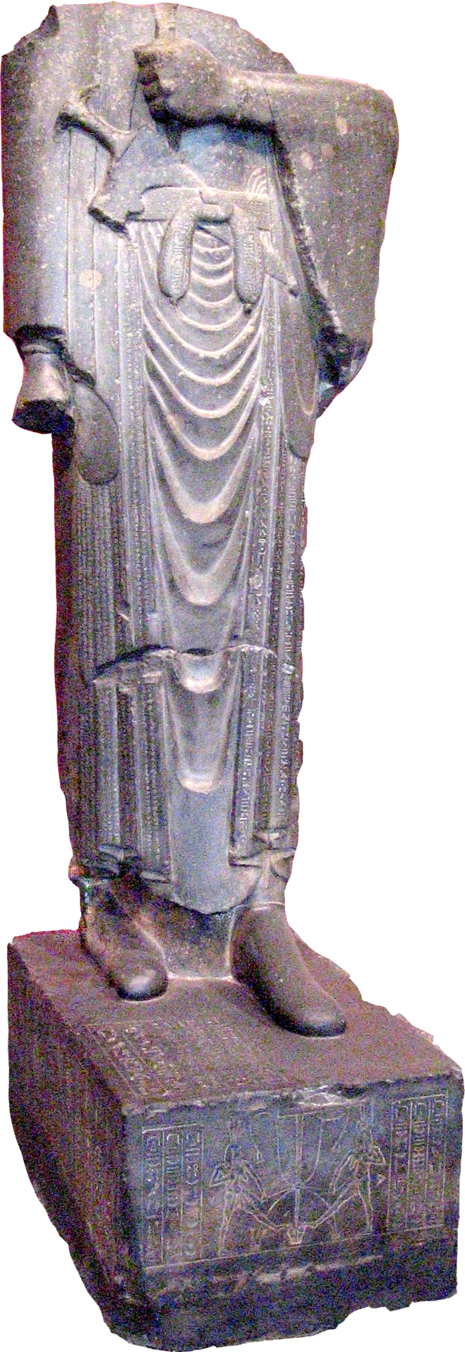
Relief of Darius I at his tomb, Naqsh-e Rostam
photographed 2009, relief from Darius's reign
A photograph of the rock-cut relief of Darius I at his tomb, carved during or soon after his reign.
The relief at Darius's own tomb at Naqsh-e Rostam, showing him with inscriptions proclaiming his titles.
About this source
What it is
This photograph shows a relief of Darius I carved into the cliff at his tomb at Naqsh-e Rostam. The carving depicts a bearded man in a tall crown and fringed robe, facing right with one hand raised, alongside cuneiform inscriptions.
Why it matters
This tomb relief is directly connected to Darius, marking his burial place and presenting his image and titles in his own words through the inscriptions beside him. It is a primary monument from his reign, meant to project royal authority even after death.
Look closer
- Why might Darius have chosen to be shown with his hand raised in this pose?
- What might the cuneiform inscriptions next to the figure be telling viewers?
- What does the choice to build a monumental tomb reveal about how Darius wanted to be remembered?
This sculpture is part of the curated material that grounds the AI version of Darius the Great on Humy.ai — when students ask about related events, the AI can quote it and cite it.
More Darius the Great sources
Meet the AI Darius the Great →

Ready when you are
Start chatting with Darius the Great now.
20 messages free · No credit card · Available in 50+ languages.