


Secondary sourcePaintingMing dynasty
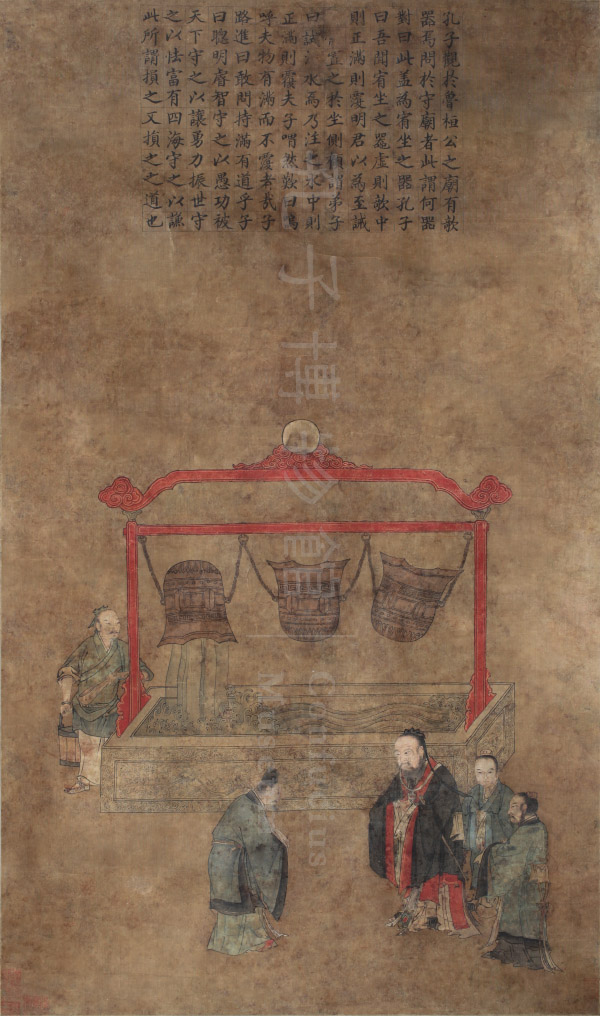
Confucius Watching the Tilting Containers
Ming dynasty
A Ming dynasty silk scroll painting showing Confucius and his disciples examining a qiqi, a tilting vessel used to teach moderation.
This scroll depicts Confucius teaching moderation through the famous tilting vessel, illustrating one of his key lessons.
About this source
What it is
This is a painted silk scroll from the Ming dynasty by an unknown artist, showing Confucius and his disciples examining a qiqi, a vessel that tips over when overfilled. The painting shows a red-framed structure holding three hanging vessels, with a bearded robed figure and attendants on one side and a calligraphy column above.
Why it matters
The qiqi was traditionally used as a teaching tool about balance and moderation, values central to Confucius's philosophy. This scroll, painted long after his lifetime, reflects how later Chinese artists illustrated classic stories about Confucius to pass on his moral lessons visually to new generations.
Look closer
- What does the tilting vessel symbolize, based on the scene shown?
- Why might an artist choose this particular story to paint rather than another?
- What role do the disciples play in the composition, and what might that suggest about how they learned from Confucius?
This painting is part of the curated material that grounds the AI version of Confucius on Humy.ai — when students ask about related events, the AI can quote it and cite it.
More Confucius sources
Meet the AI Confucius →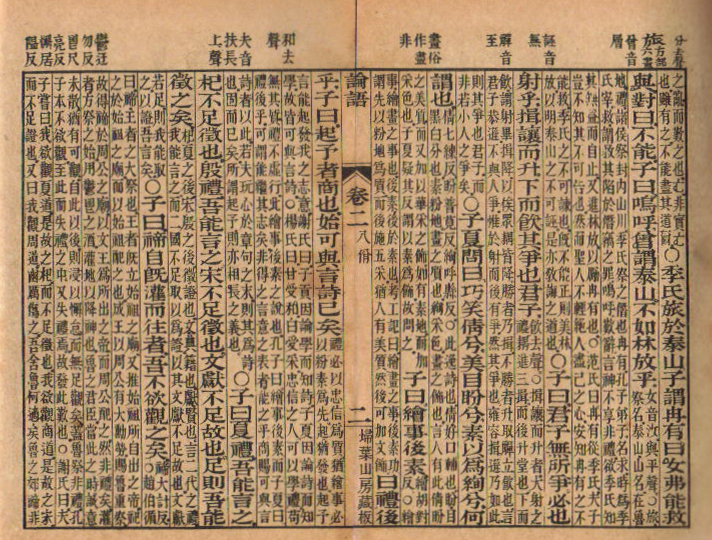 Book
Secondary source
Analects
c. 480 BCE – 2nd century BCE
 Book
Secondary source
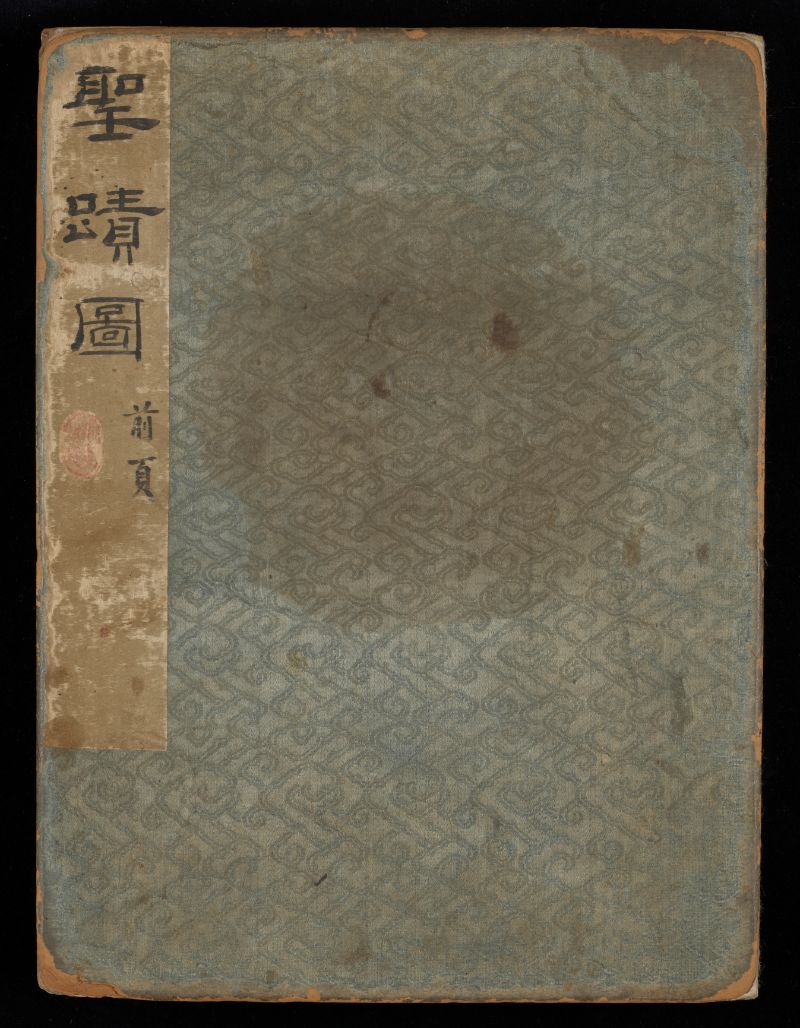
Pictures of the Sage's Traces
Unknown · 1758
Secondary source
Records of the Grand Historian, Vol. 47: Hereditary House of Confucius
Sima Qian · c. 94 BCE
 Photograph
Primary source
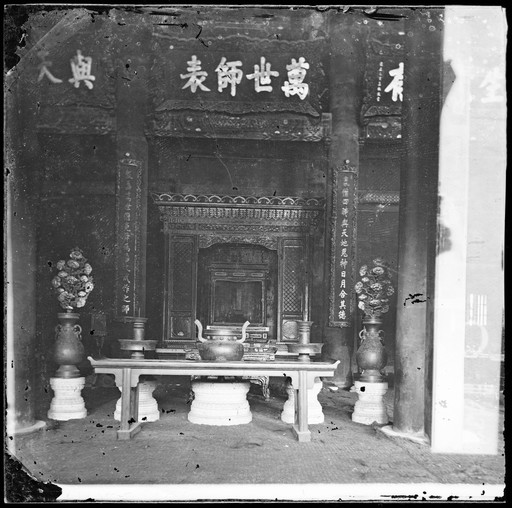
Temple of Confucius, Peking (Interior)
John Thomson · 1871
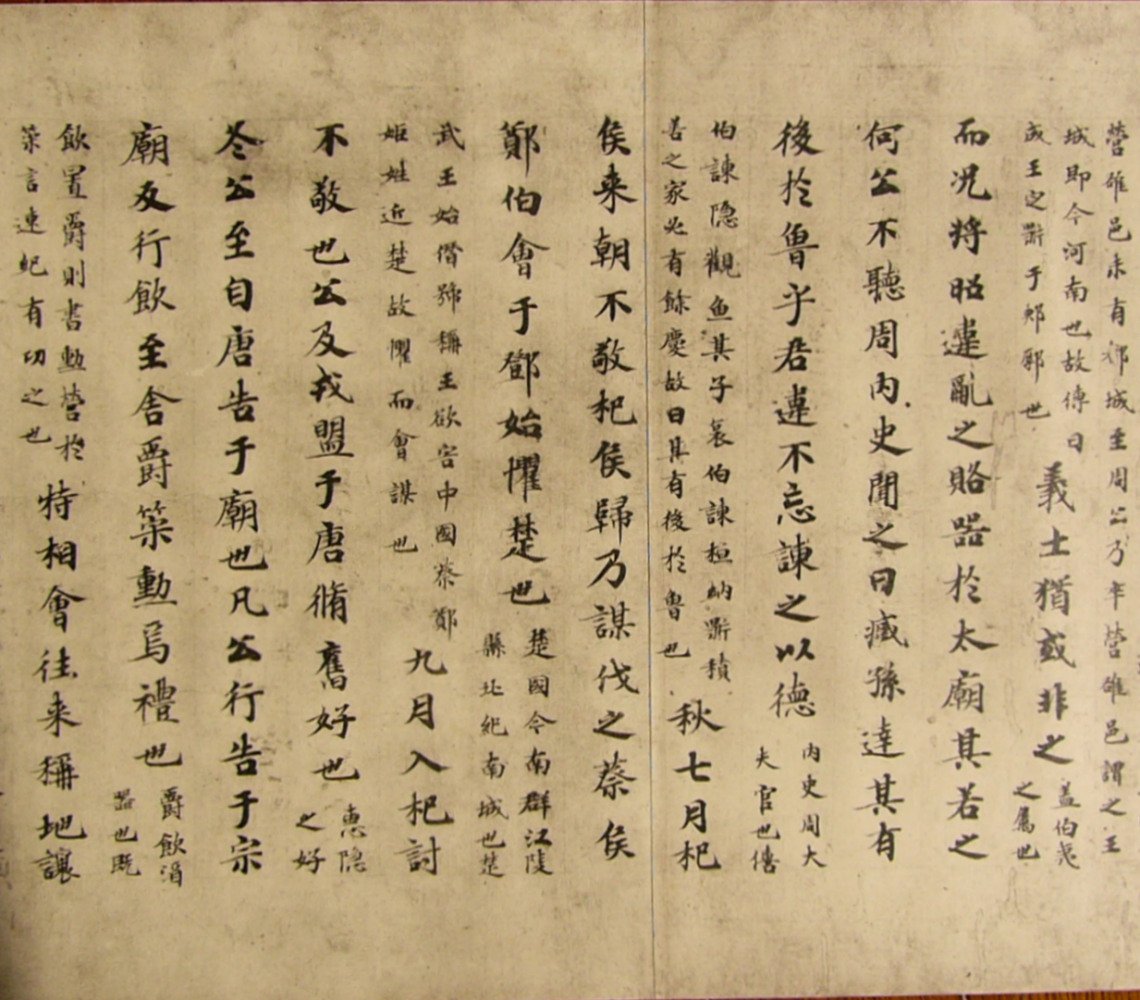 Document
Secondary source
Spring and Autumn Annals
Confucius · 5th century BCE
Ready when you are
Start chatting with Confucius now.
20 messages free · No credit card · Available in 50+ languages.