


Secondary sourcePaintingsecond half of 18th century
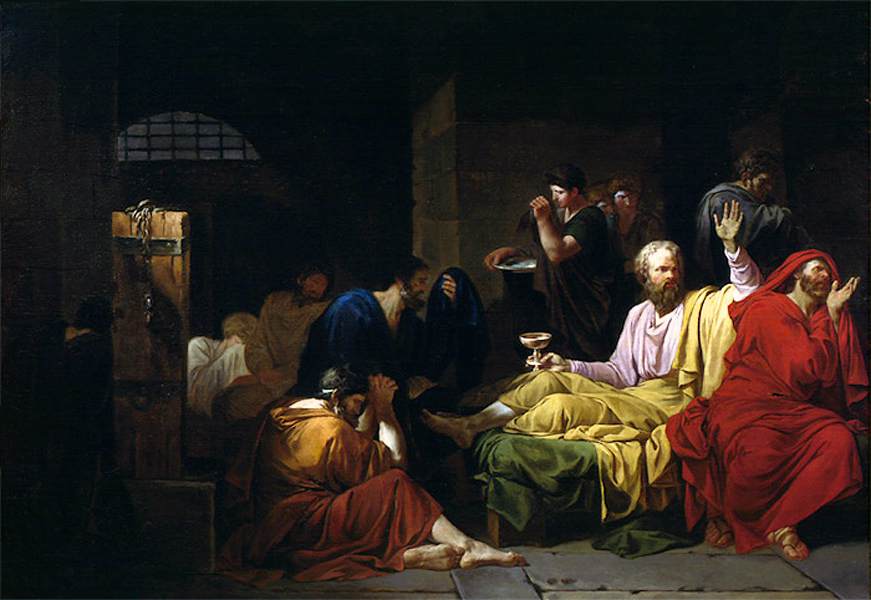
The Death of Socrates
Jean-François Pierre Peyron · second half of 18th century
A late 18th-century Neoclassical painting showing Socrates's final moments, drinking the hemlock poison surrounded by mourning friends.
Shows Socrates's death by poison, the event central to his legacy as a philosopher who accepted his sentence calmly.
About this source
What it is
This painting by Jean-François Pierre Peyron, from the second half of the 18th century, depicts Socrates in prison reaching for the cup of poison while his companions grieve around him.
Why it matters
The death of Socrates became one of the most painted scenes in Western art, drawing on Plato's writings about his teacher's final conversation and execution. Neoclassical artists like Peyron used the subject to present Socrates as a model of calm wisdom and self-control in the face of death.
Look closer
- How does the artist use light and shadow to focus attention on Socrates?
- What emotions do the different figures in the room show, and why might they differ?
- Why do you think this scene was painted so often by artists centuries later?
This painting is part of the curated material that grounds the AI version of Socrates on Humy.ai — when students ask about related events, the AI can quote it and cite it.
More Socrates sources
Meet the AI Socrates →Secondary source
Apology
Plato · c. 395 BC
 Painting
Secondary source
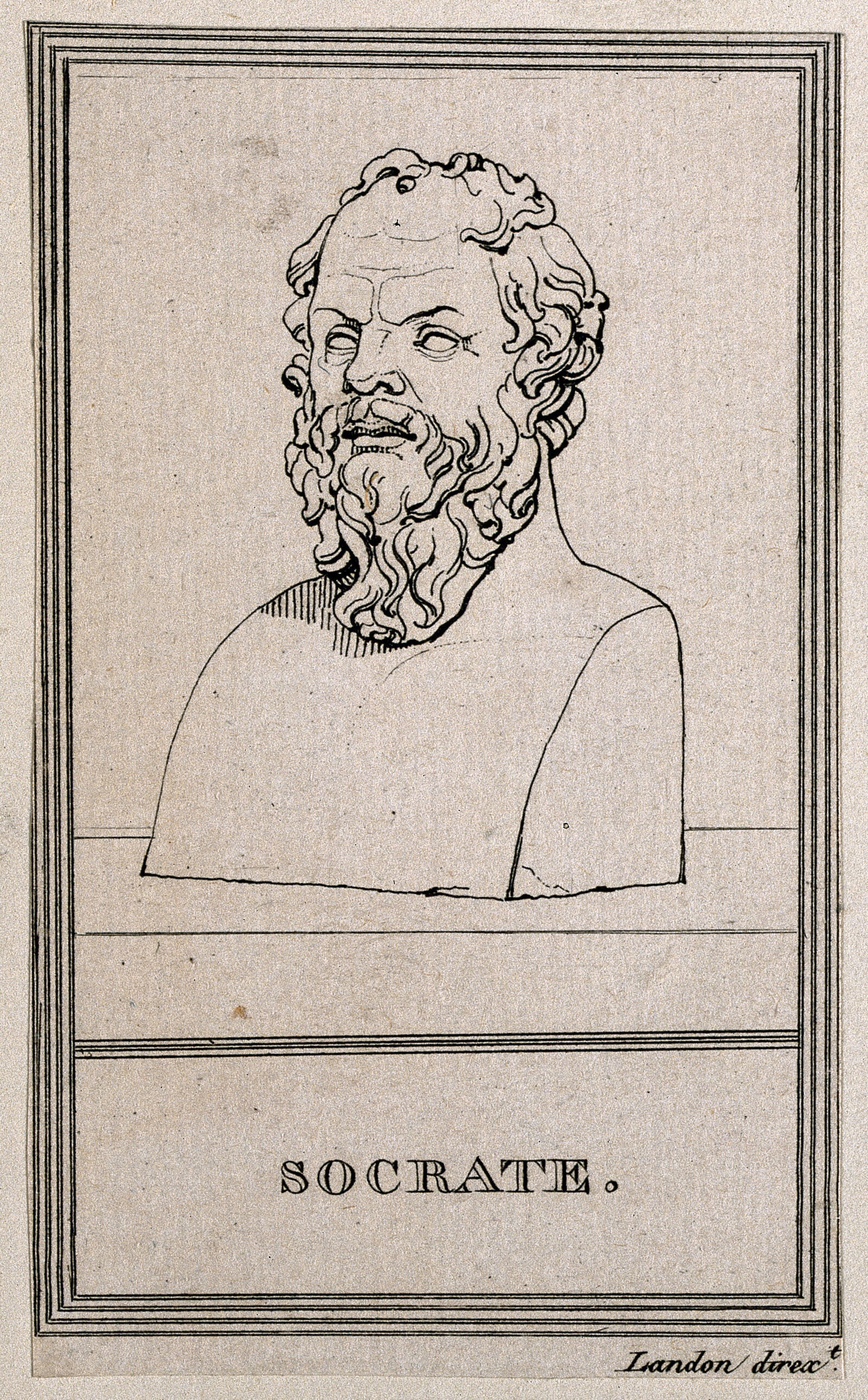
Line Engraving of Socrates by Landon
Charles Paul Landon
 Book
Secondary source
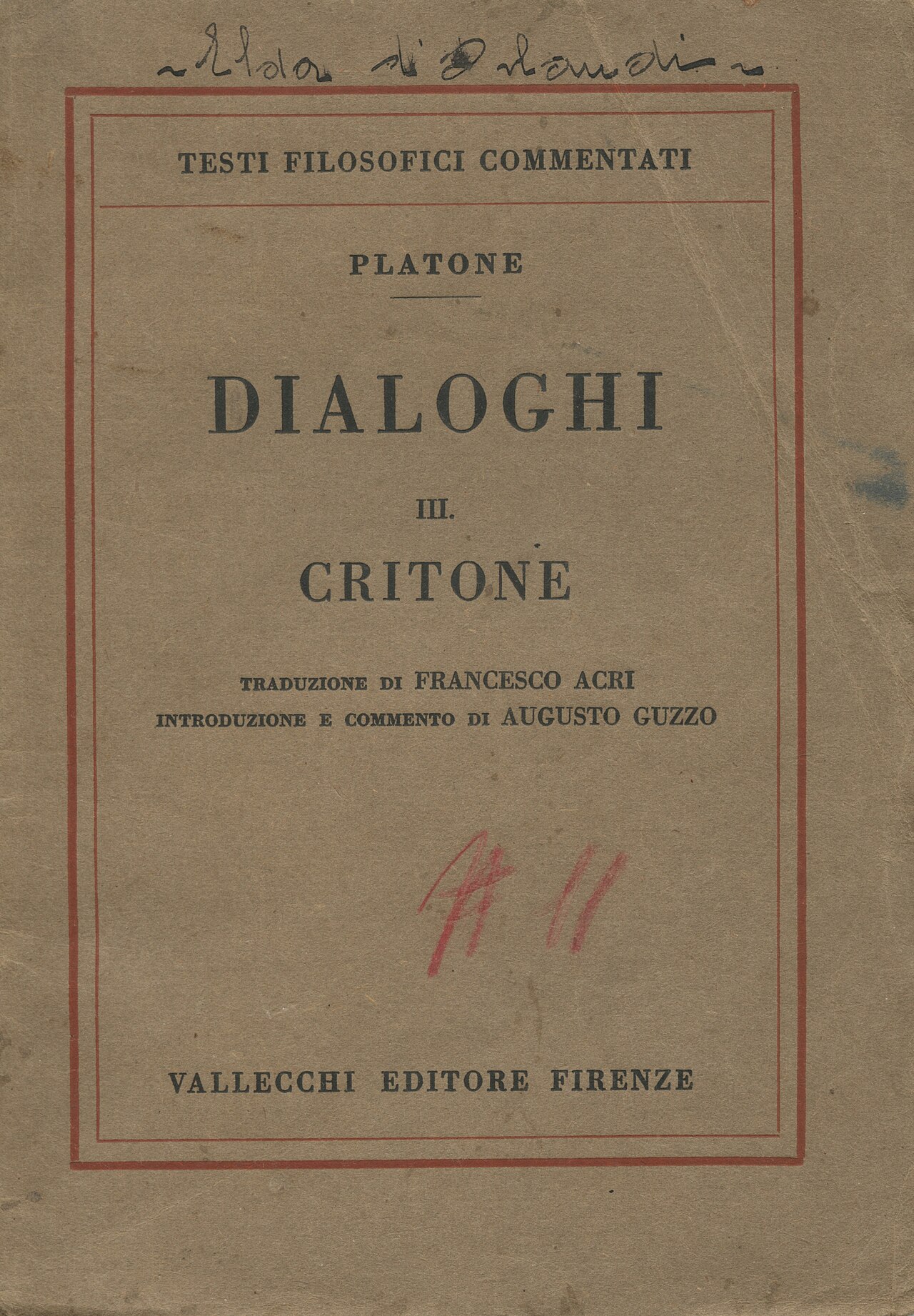
Crito
Plato · c. 400 BC
 Painting
Secondary source
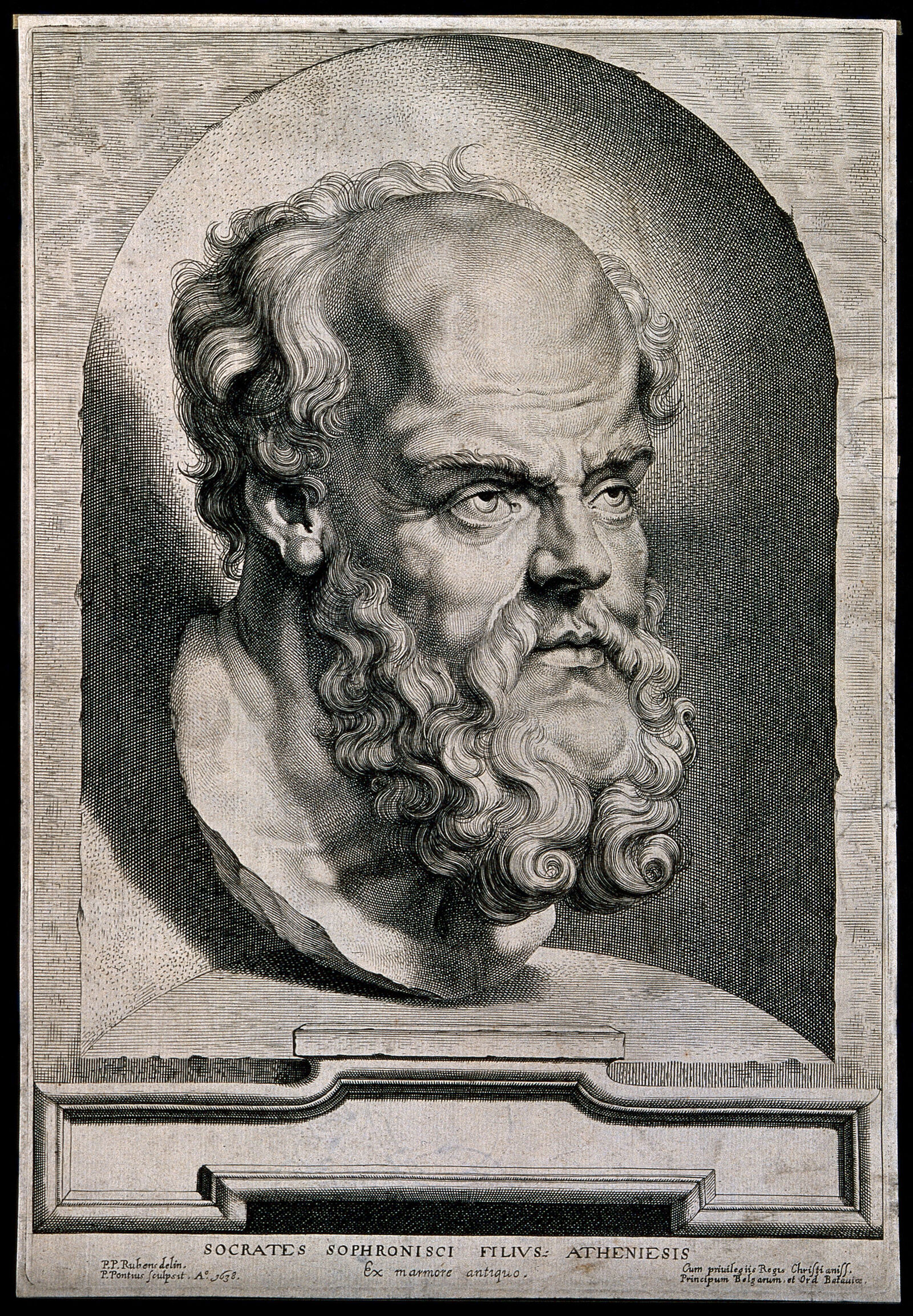
Socrates Engraving after Rubens by Pontius
Peter Paul Rubens · 1638
 Photograph
Secondary source
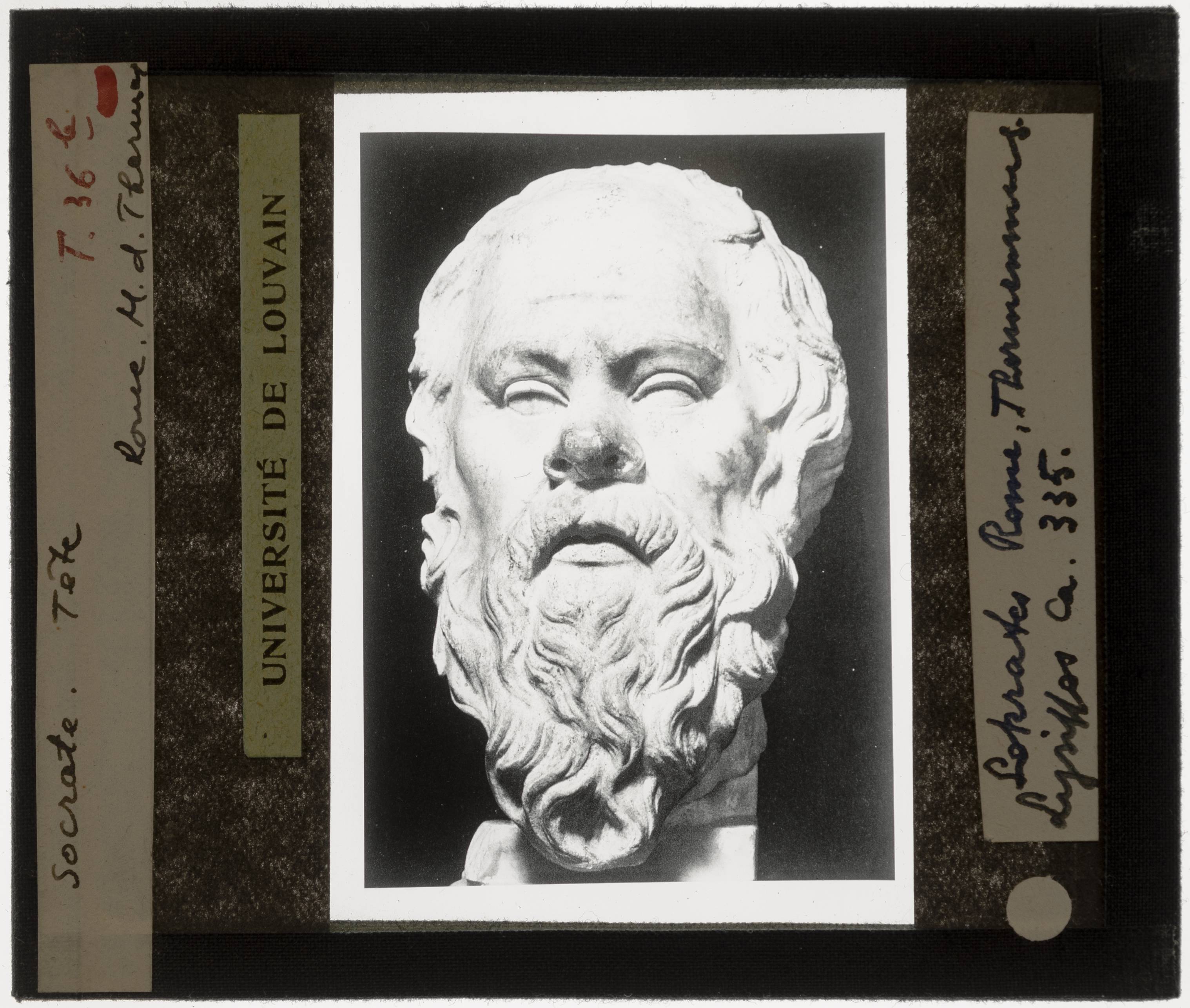
Roman Marble Bust of Socrates
between 1839 and 1939
Ready when you are
Start chatting with Socrates now.
20 messages free · No credit card · Available in 50+ languages.