


Secondary sourcePainting1791
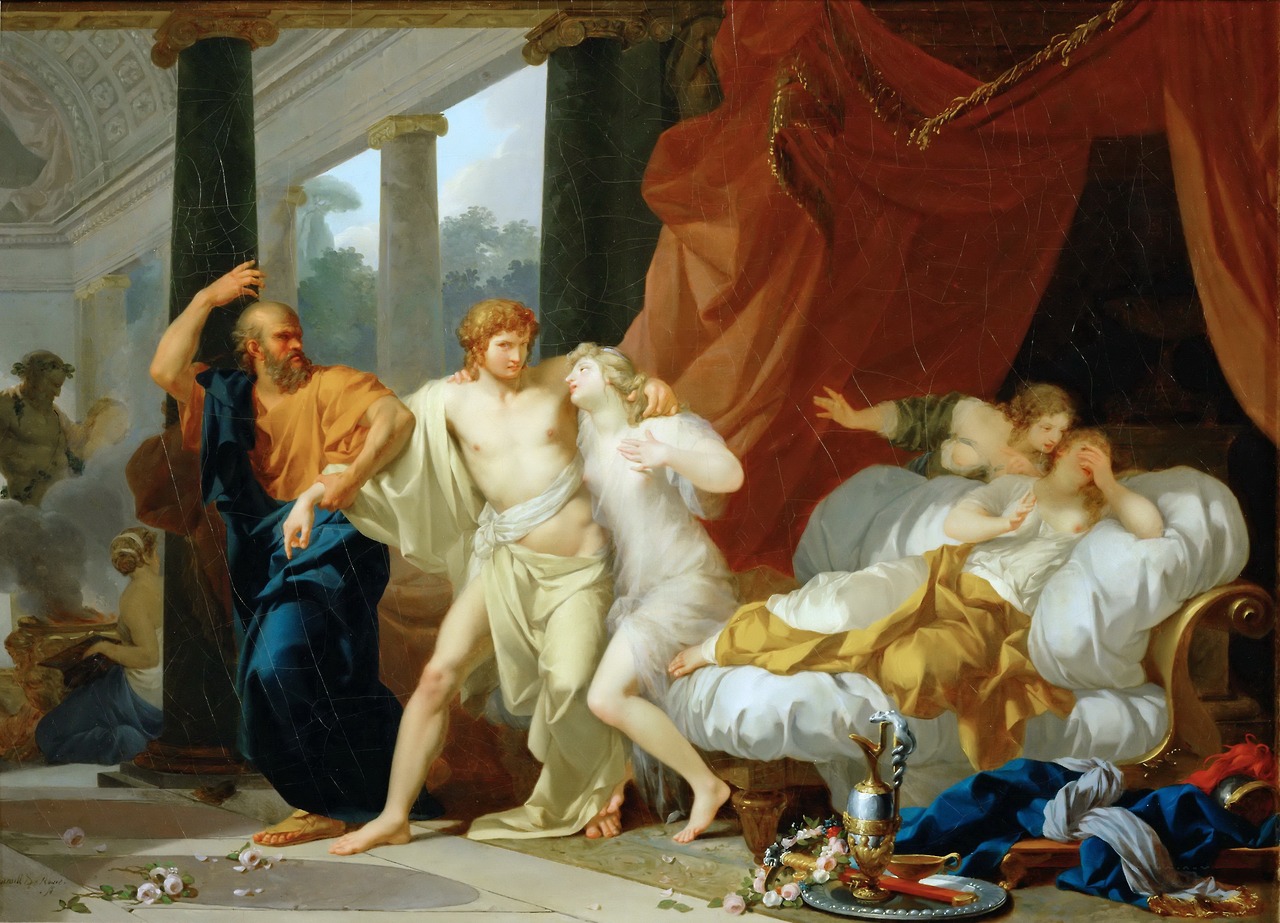
Socrates Tears Alcibiades from the Embrace of Sensual Pleasure
Jean-Baptiste Regnault · 1791
An 1791 painting by Jean-Baptiste Regnault showing Socrates pulling his pupil Alcibiades away from temptation, a relationship later used against him at his trial.
Shows Socrates as moral guide to Alcibiades, a relationship accusers later cited as evidence of corrupting the youth.
About this source
What it is
This oil painting was made in 1791 by the French artist Jean-Baptiste Regnault and is held in the Louvre. It shows an older bearded man pulling a young man away from a reclining woman, surrounded by classical columns and drapery.
Why it matters
The painting illustrates Socrates guiding his young follower Alcibiades away from indulgence toward virtue. Socrates' close relationships with young Athenian men, including Alcibiades, were later used by his accusers to claim he corrupted the youth of the city. The image reflects how later European artists used Socrates as a model of moral self-control for Enlightenment audiences.
Look closer
- Why might the artist choose this moment of pulling away rather than a scene of calm teaching?
- What does the painting suggest about the relationship between Socrates and Alcibiades?
- How does this image connect to the accusations later made against Socrates?
This painting is part of the curated material that grounds the AI version of Socrates on Humy.ai — when students ask about related events, the AI can quote it and cite it.
More Socrates sources
Meet the AI Socrates →Secondary source
Apology
Plato · c. 395 BC
 Painting
Secondary source
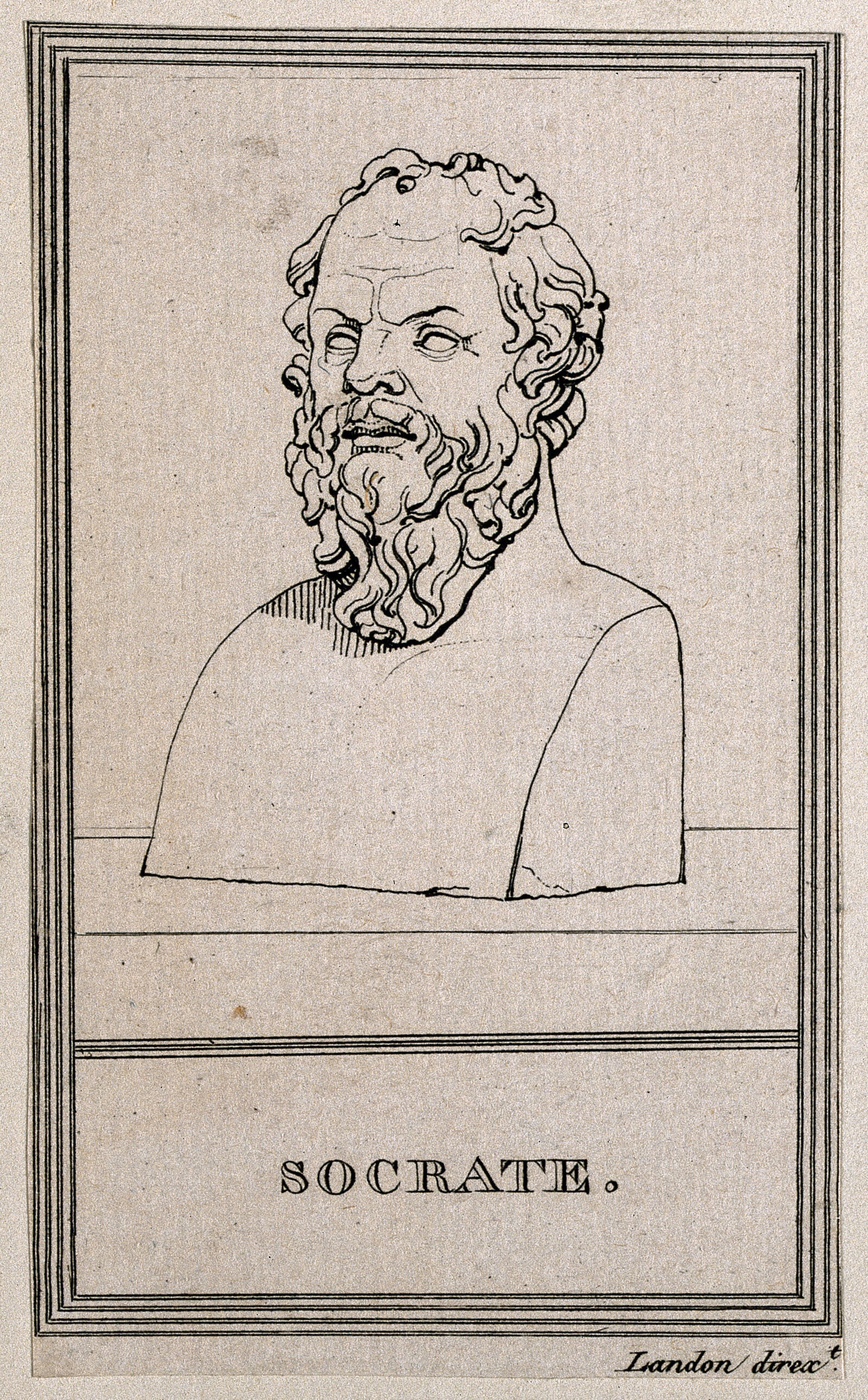
Line Engraving of Socrates by Landon
Charles Paul Landon
 Book
Secondary source
Crito
Plato · c. 400 BC
 Painting
Secondary source
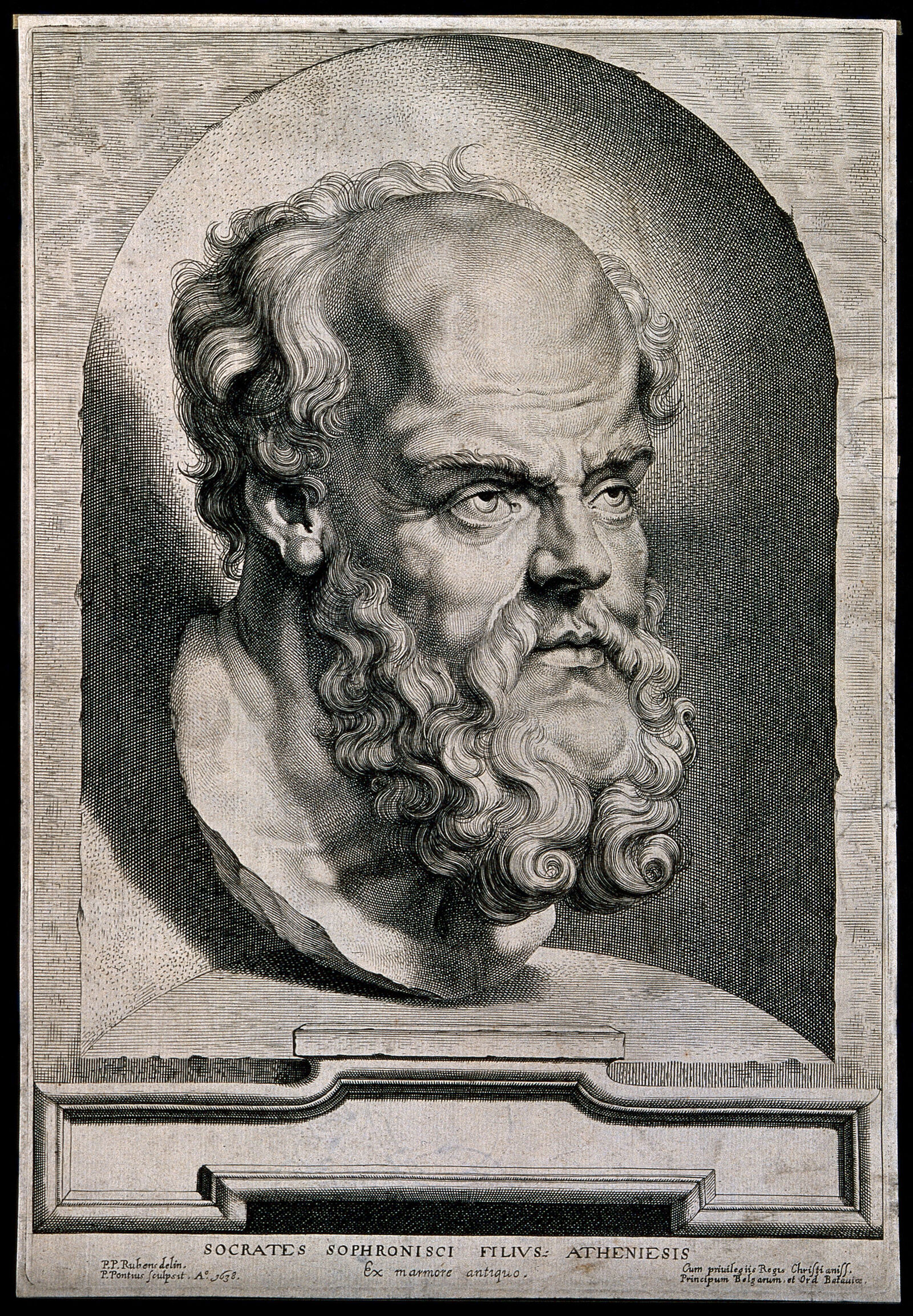
Socrates Engraving after Rubens by Pontius
Peter Paul Rubens · 1638
 Photograph
Secondary source
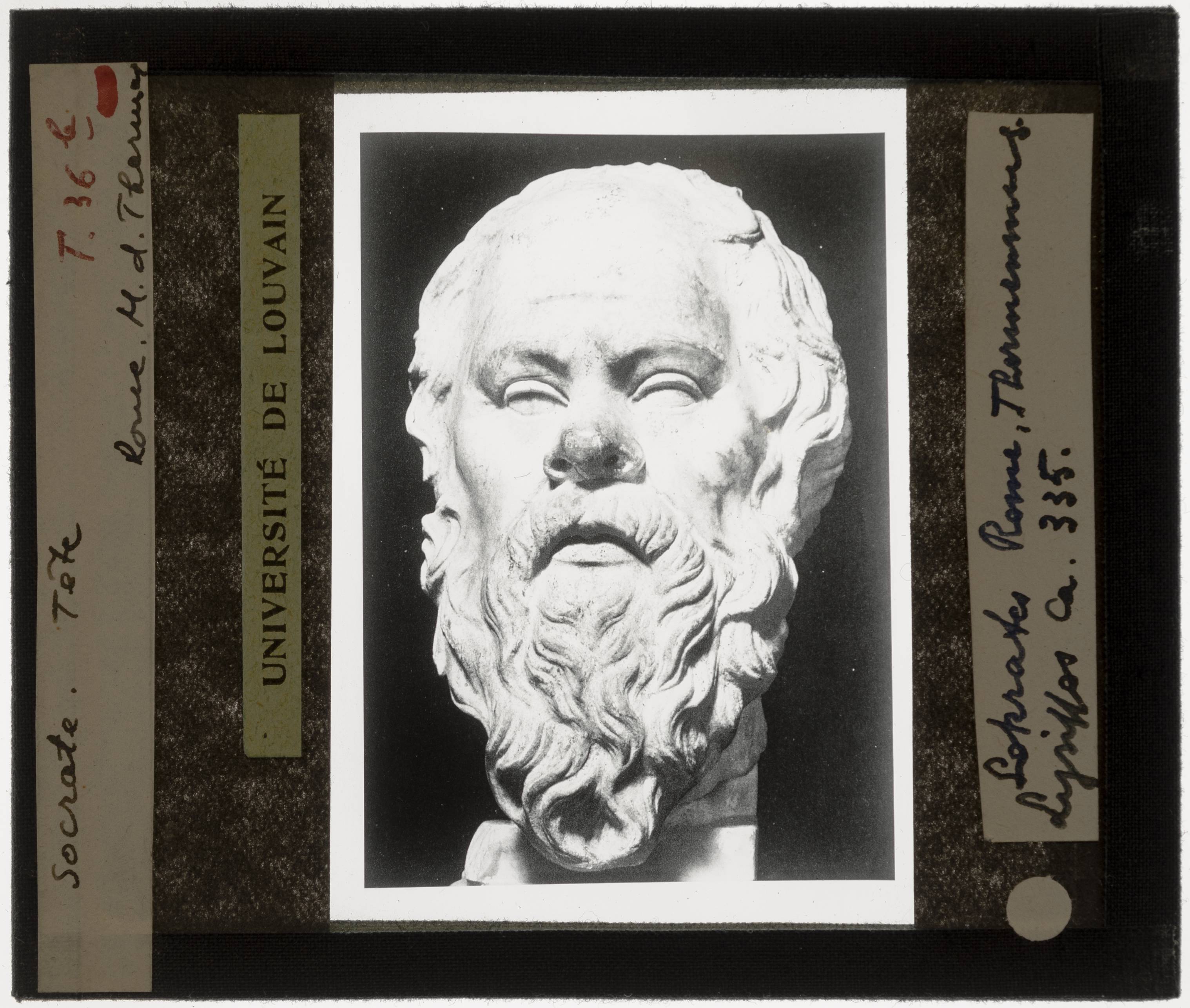
Roman Marble Bust of Socrates
between 1839 and 1939
Ready when you are
Start chatting with Socrates now.
20 messages free · No credit card · Available in 50+ languages.