


Secondary sourceArtifact3rd century AD
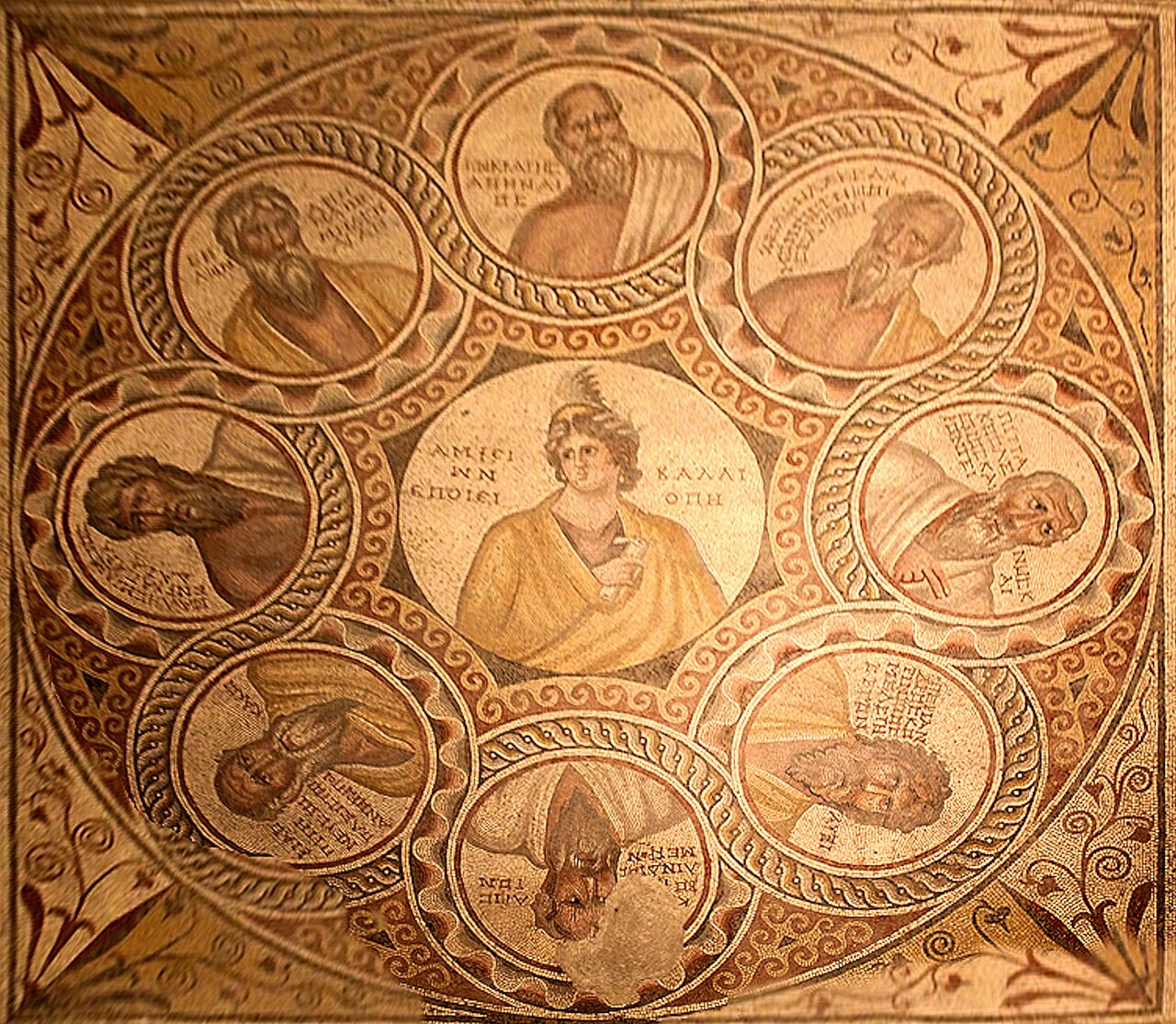
Seven Sages Mosaic of Baalbek
3rd century AD
A 3rd-century AD floor mosaic from Baalbek showing Calliope surrounded by the Seven Sages, including Socrates, honoring him as part of the canon of wisdom.
Socrates appears among the Seven Sages in this later mosaic, showing his lasting place in the canon of wisdom.
About this source
What it is
This photograph shows a floor mosaic from Baalbek, dating to the 3rd century AD. It depicts a central medallion of a figure holding a scroll, likely the muse Calliope, surrounded by seven circular medallions of bearded, older men representing famous wise men of Greek tradition.
Why it matters
Socrates was grouped among figures remembered as wise teachers, even though he himself claimed not to be wise but only to seek wisdom. This mosaic, made centuries after his death in a Roman-era city far from Athens, shows how Greek philosophical culture spread and was honored across the ancient Mediterranean world long after the philosophers themselves had died.
Look closer
- Why would someone decorate a floor with portraits of philosophers?
- What does it suggest that this mosaic was made hundreds of years after Socrates lived?
- How might being grouped with other 'sages' shape the way people remember a person?
This artifact is part of the curated material that grounds the AI version of Socrates on Humy.ai — when students ask about related events, the AI can quote it and cite it.
More Socrates sources
Meet the AI Socrates →Secondary source
Apology
Plato · c. 395 BC
 Painting
Secondary source
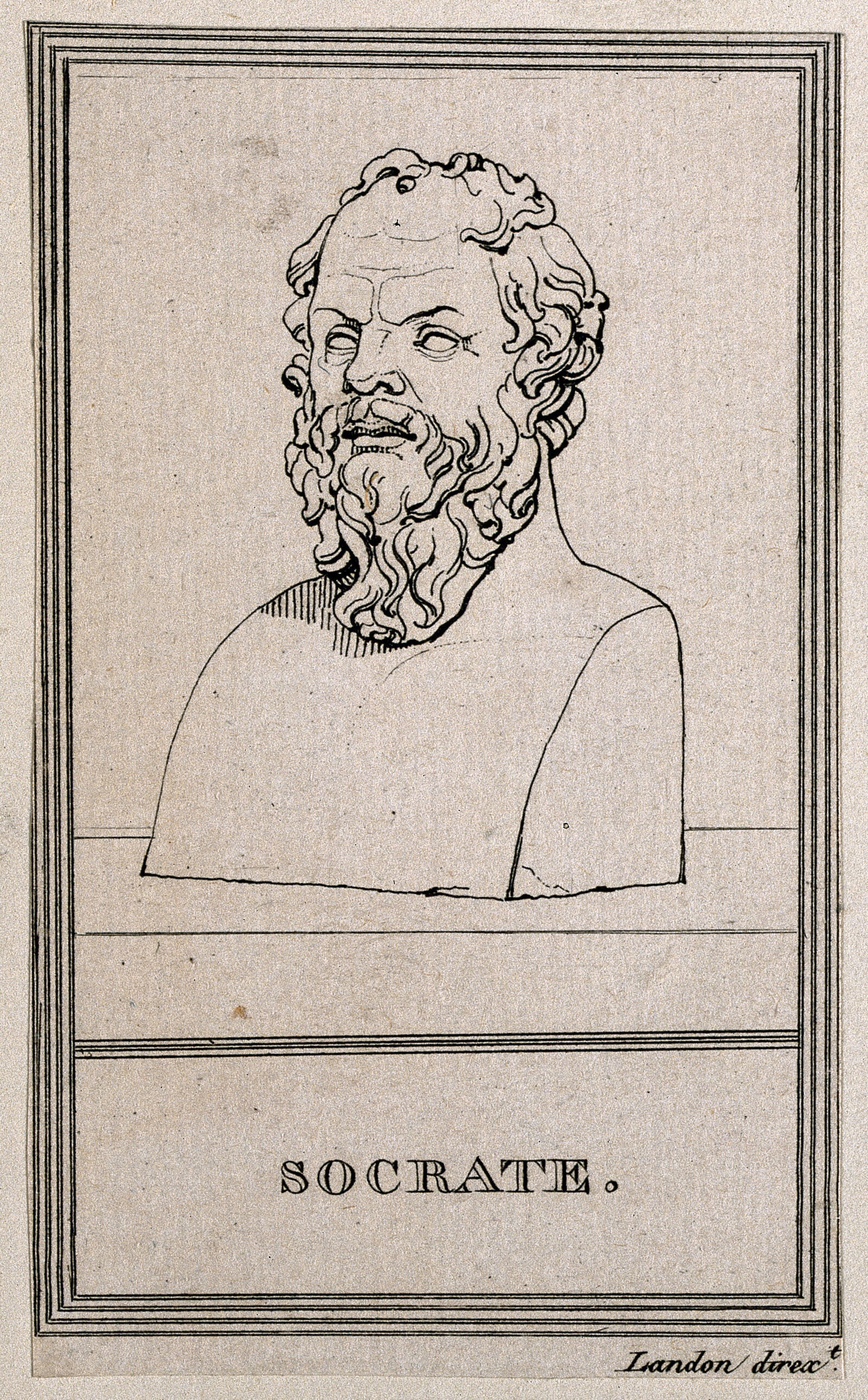
Line Engraving of Socrates by Landon
Charles Paul Landon
 Book
Secondary source
Crito
Plato · c. 400 BC
 Painting
Secondary source
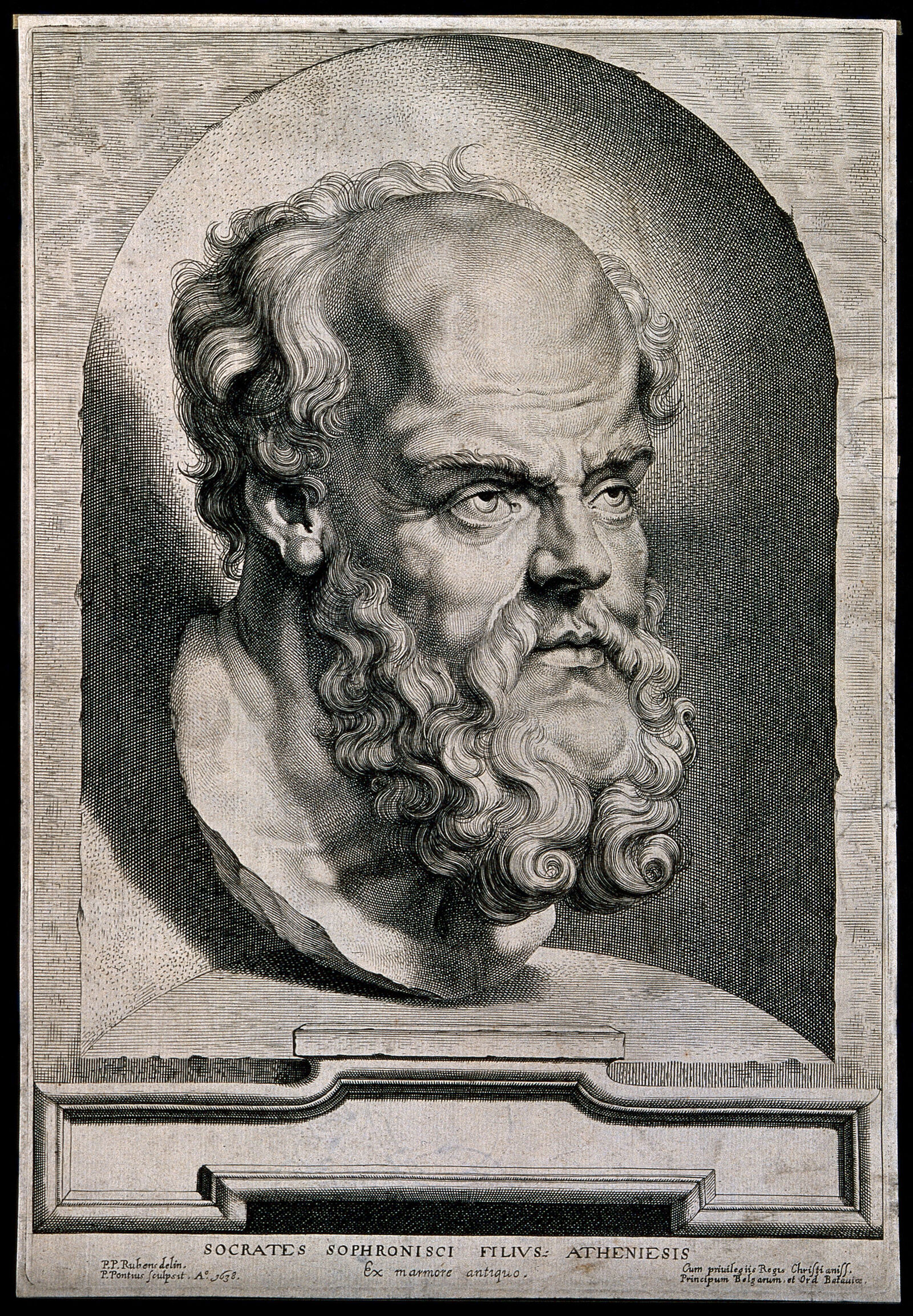
Socrates Engraving after Rubens by Pontius
Peter Paul Rubens · 1638
 Photograph
Secondary source
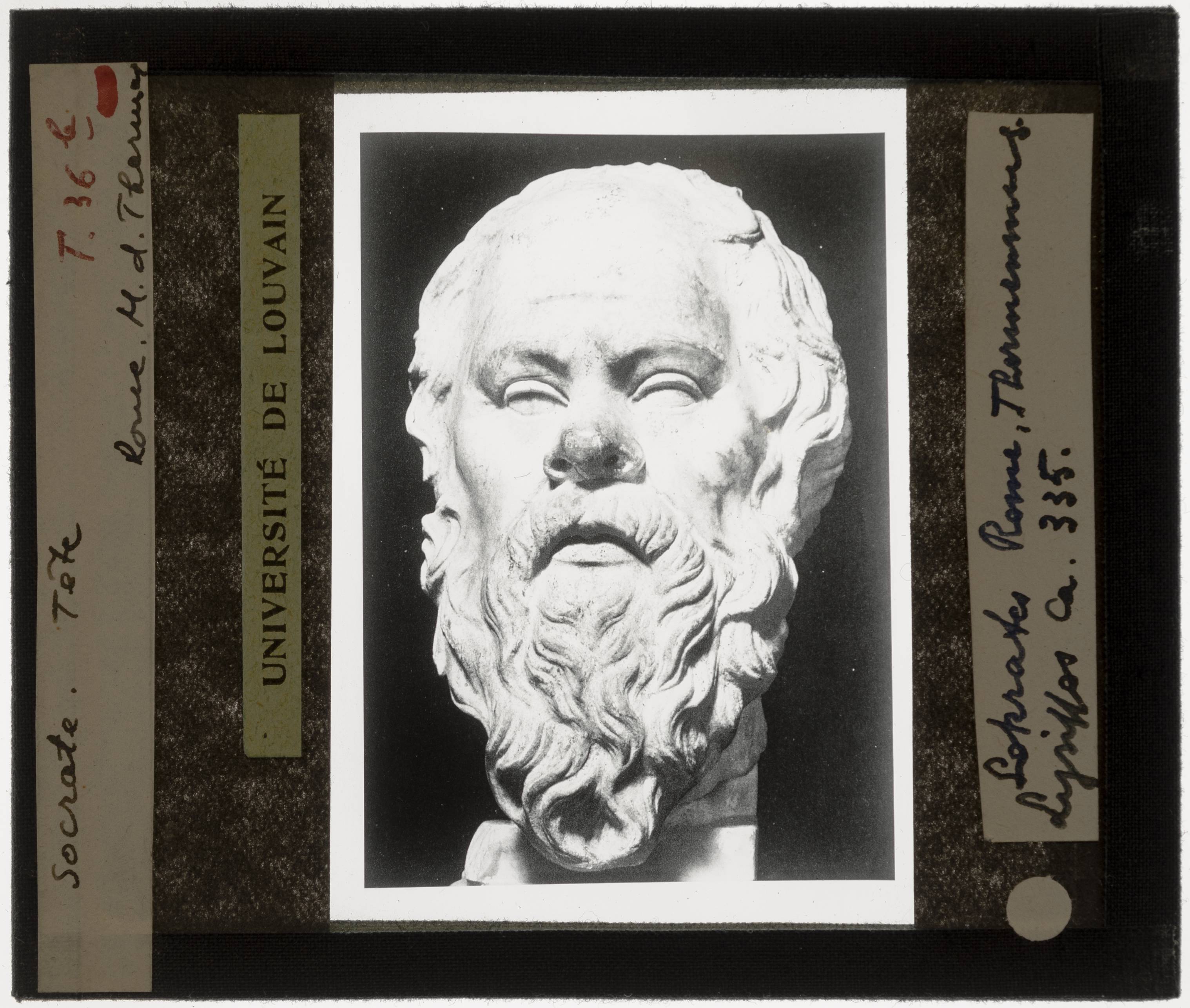
Roman Marble Bust of Socrates
between 1839 and 1939
Ready when you are
Start chatting with Socrates now.
20 messages free · No credit card · Available in 50+ languages.