


Secondary sourceSculpturec. 1787-1790
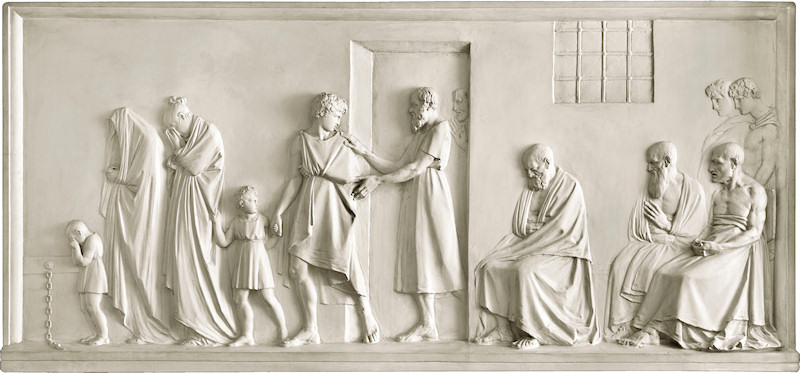
Socrates Taking Leave of His Family
Antonio Canova · c. 1787-1790
A marble relief by Antonio Canova showing Socrates saying farewell to his family in prison before his death.
A later artwork imagining Socrates' farewell to his family before his execution, based on Plato's account.
About this source
What it is
This marble relief was made by the Italian sculptor Antonio Canova between 1787 and 1790. It depicts a scene from Plato's dialogue Phaedo, showing Socrates taking leave of his family inside his prison cell shortly before his execution.
Why it matters
Canova based the scene on a translated account of Plato's writing about Socrates' final hours. The work is part of a set of neoclassical reliefs that turned Socrates' last days into solemn, almost ceremonial images, showing how his death became a model of dignity and philosophical calm for later generations.
Look closer
- What does the clasping of hands between Socrates and the woman suggest about the moment?
- Why might the artist include children and an older man in this scene?
- What parts of the real story might this image leave out or simplify?
This sculpture is part of the curated material that grounds the AI version of Socrates on Humy.ai — when students ask about related events, the AI can quote it and cite it.
More Socrates sources
Meet the AI Socrates →Secondary source
Apology
Plato · c. 395 BC
 Painting
Secondary source
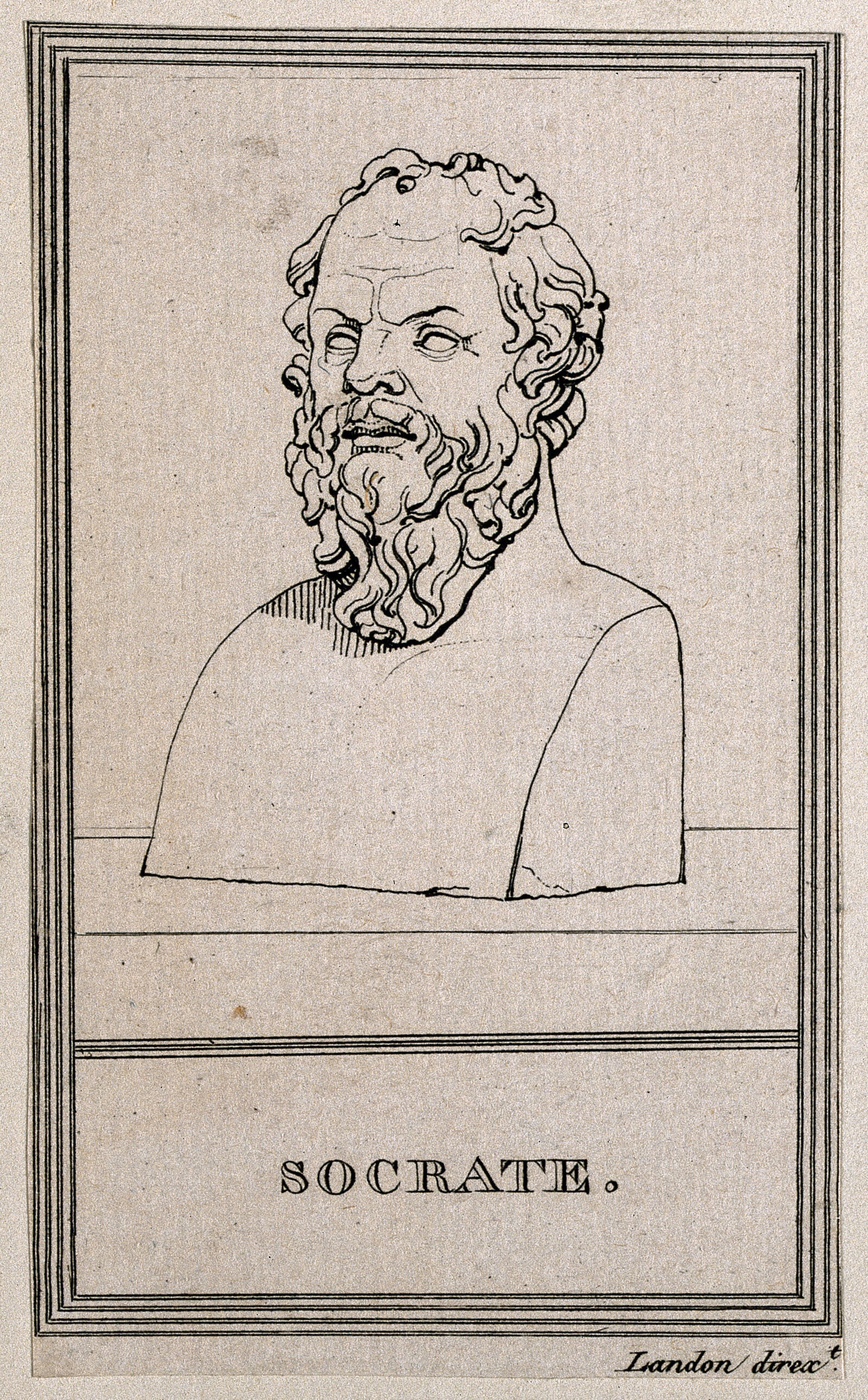
Line Engraving of Socrates by Landon
Charles Paul Landon
 Book
Secondary source
Crito
Plato · c. 400 BC
 Painting
Secondary source
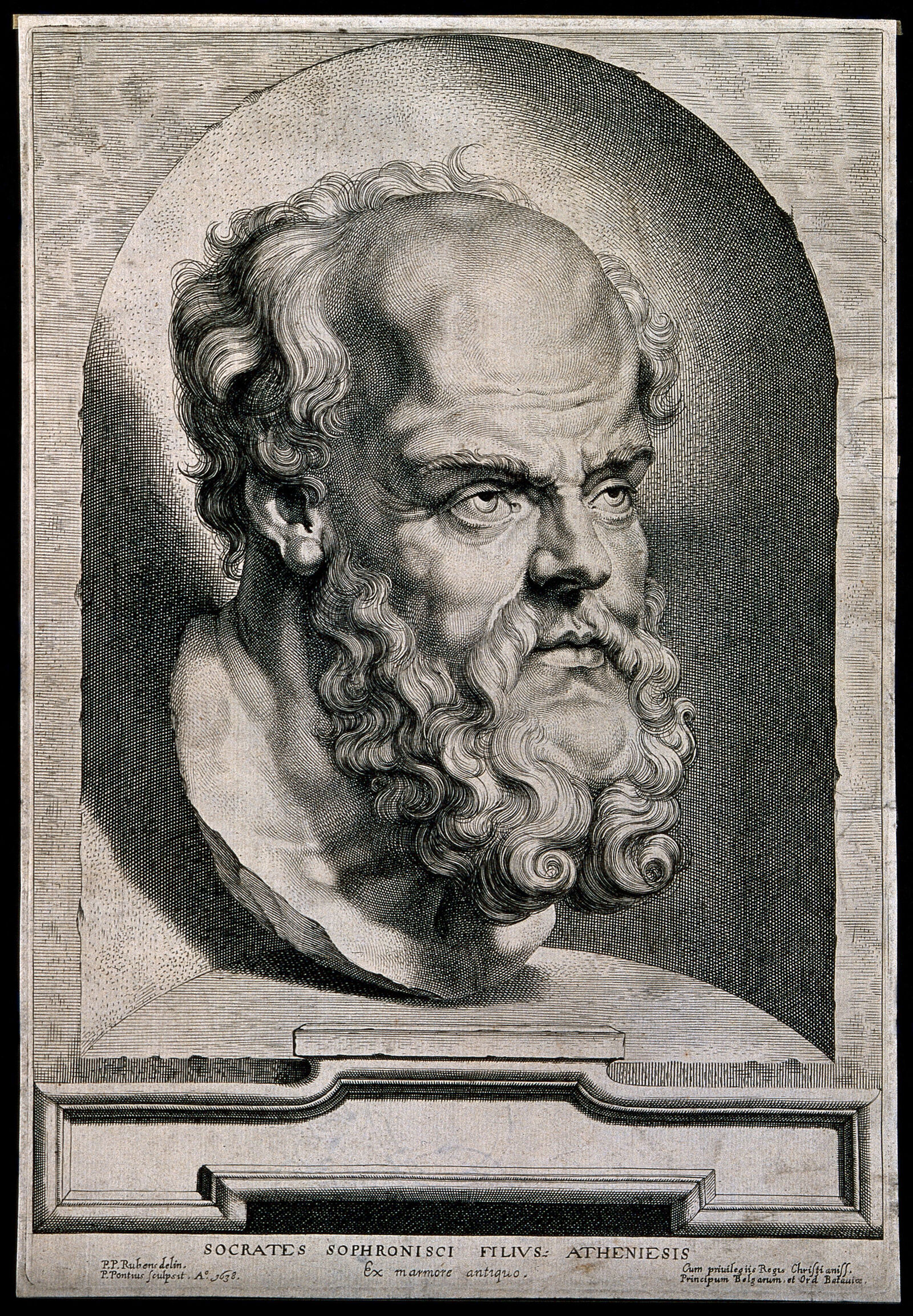
Socrates Engraving after Rubens by Pontius
Peter Paul Rubens · 1638
 Photograph
Secondary source
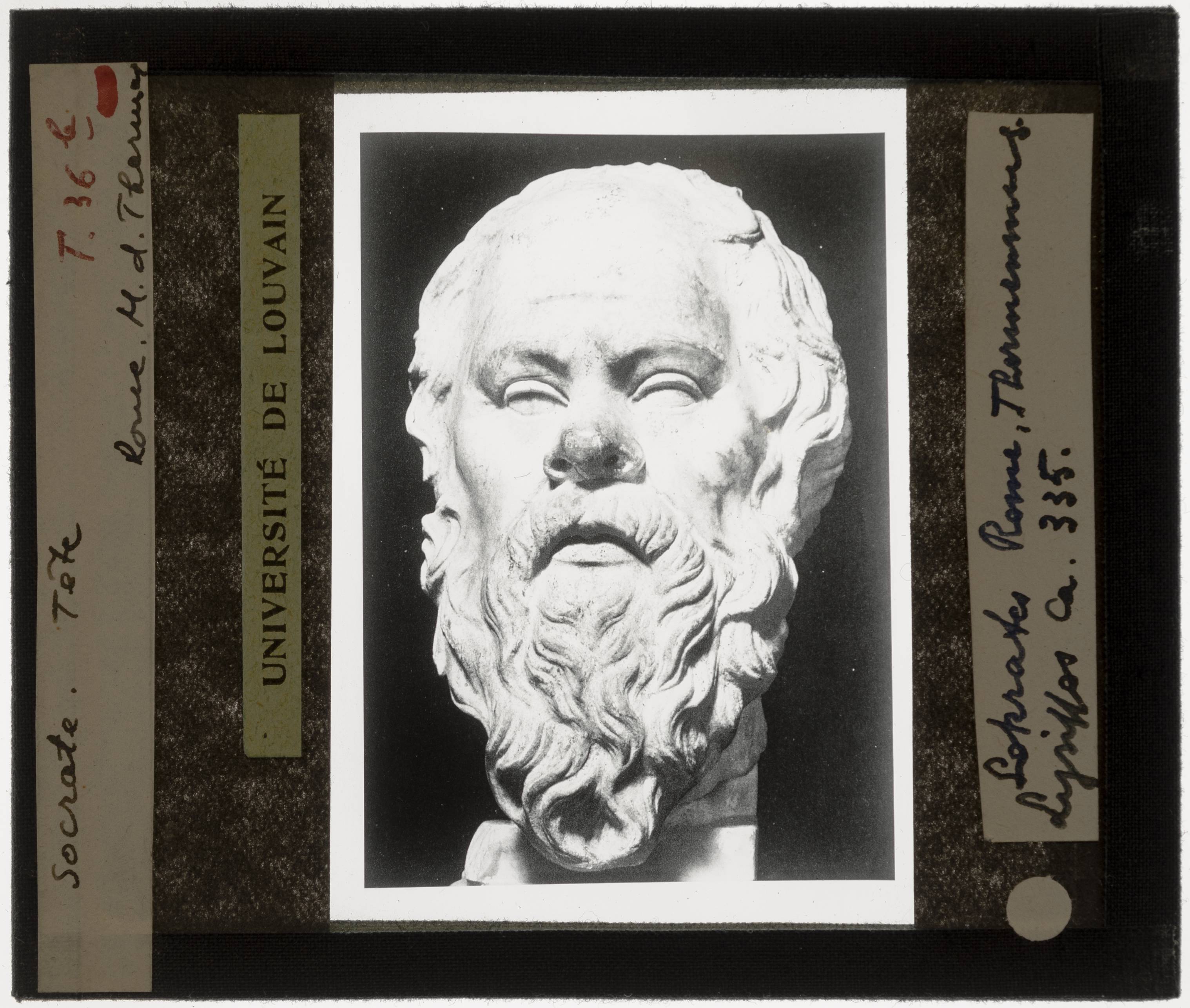
Roman Marble Bust of Socrates
between 1839 and 1939
Ready when you are
Start chatting with Socrates now.
20 messages free · No credit card · Available in 50+ languages.