


Secondary sourceArtifactc. 1st century BC/AD
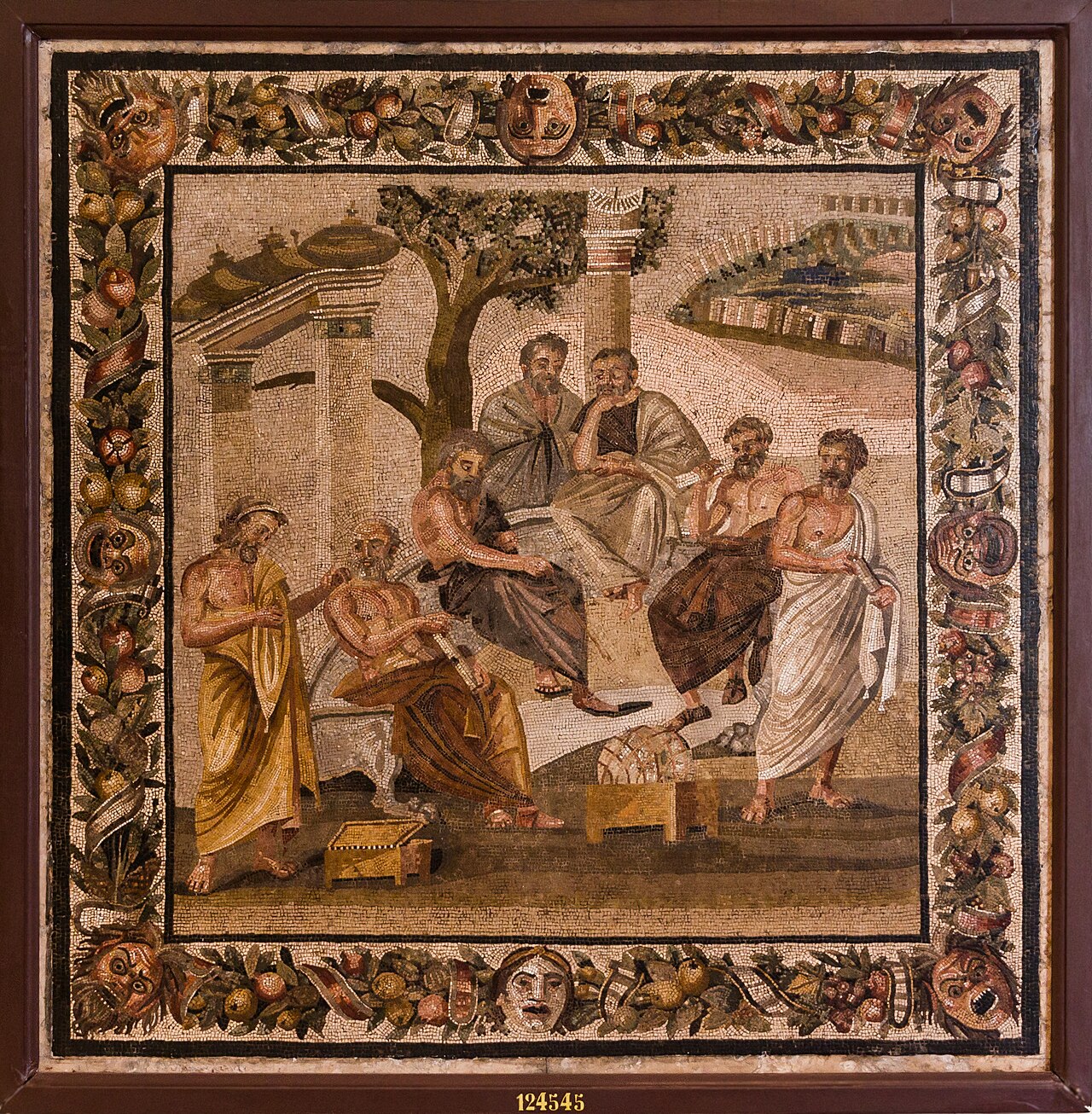
Plato's Academy mosaic
c. 1st century BC/AD
A Roman mosaic from Pompeii showing a gathering of philosophers under a tree, reflecting how the Socratic-Platonic circle was pictured in antiquity.
This Roman mosaic is generally interpreted as showing Plato teaching philosophers at his Academy.
About this source
What it is
This square mosaic panel was found in a villa in Pompeii and dates to around the 1st century BC/AD. It shows a group of bearded men in togas and sandals gathered under a tree, with columns and distant cliffs in the background. It is now kept at the National Archaeological Museum of Naples.
Why it matters
Scholars disagree about exactly who the figures represent — suggestions include Plato, Socrates' most famous student, surrounded by other philosophers and scientists such as Thales, Pythagoras, Eudoxus, or later thinkers like Aristotle and Xenocrates. Whatever the exact identities, the mosaic shows that centuries after Socrates died, Romans were still fascinated by the image of Greek philosophers gathered in discussion, a scene rooted in the tradition Socrates helped start.
Why it matters
Look closer
- Why do you think later Romans wanted mosaics of Greek philosophers in their homes?
- Since experts cannot agree on who is shown, what does that tell us about the limits of interpreting ancient art?
- What details in the mosaic suggest it is meant to show a scene of learning or teaching?
This artifact is part of the curated material that grounds the AI version of Plato and Socrates on Humy.ai — when students ask about related events, the AI can quote it and cite it.
More Plato sources
Meet the AI Plato →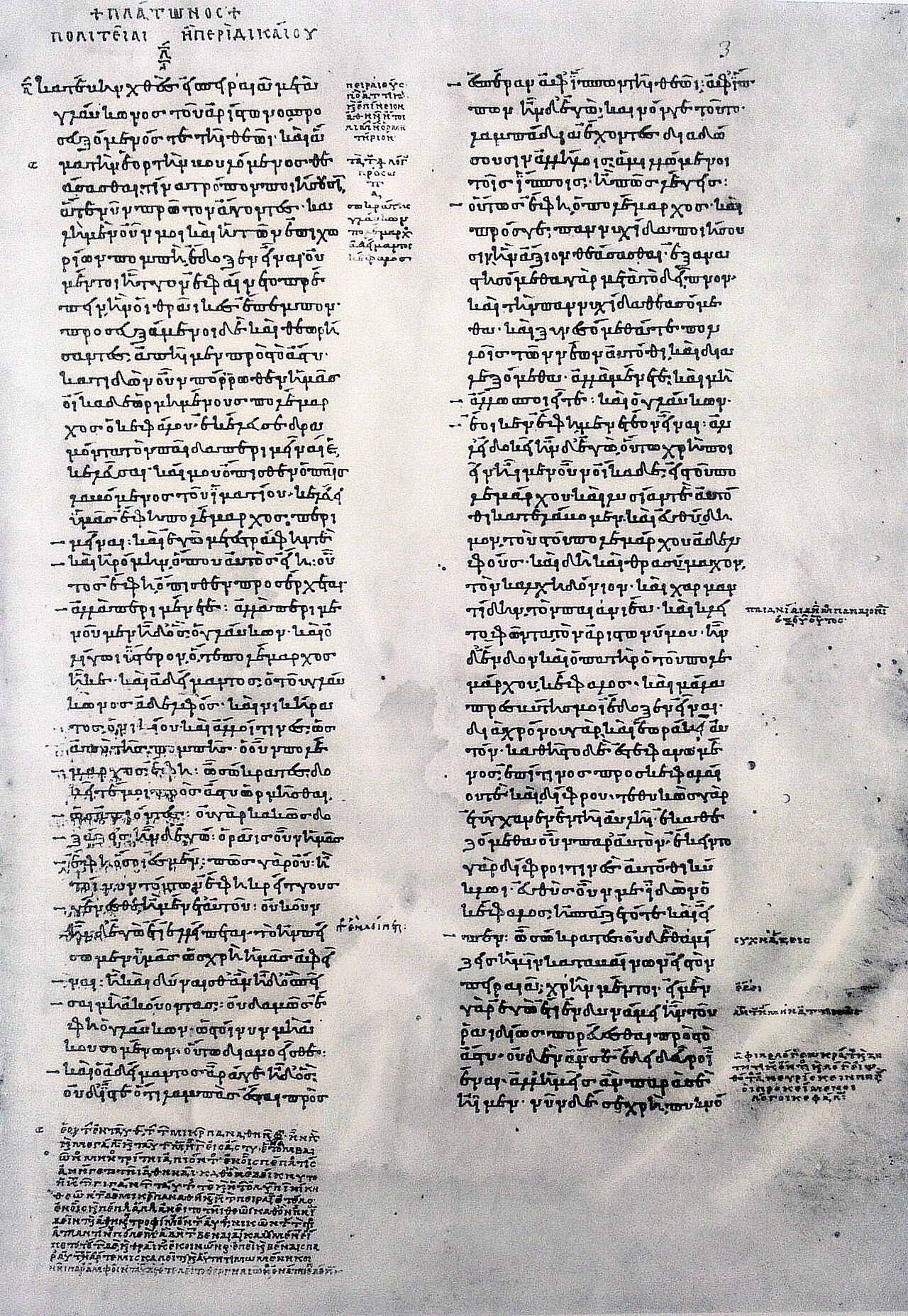 Book
Secondary source
The Republic
Plato · c. 375 BC
 Book
Primary source
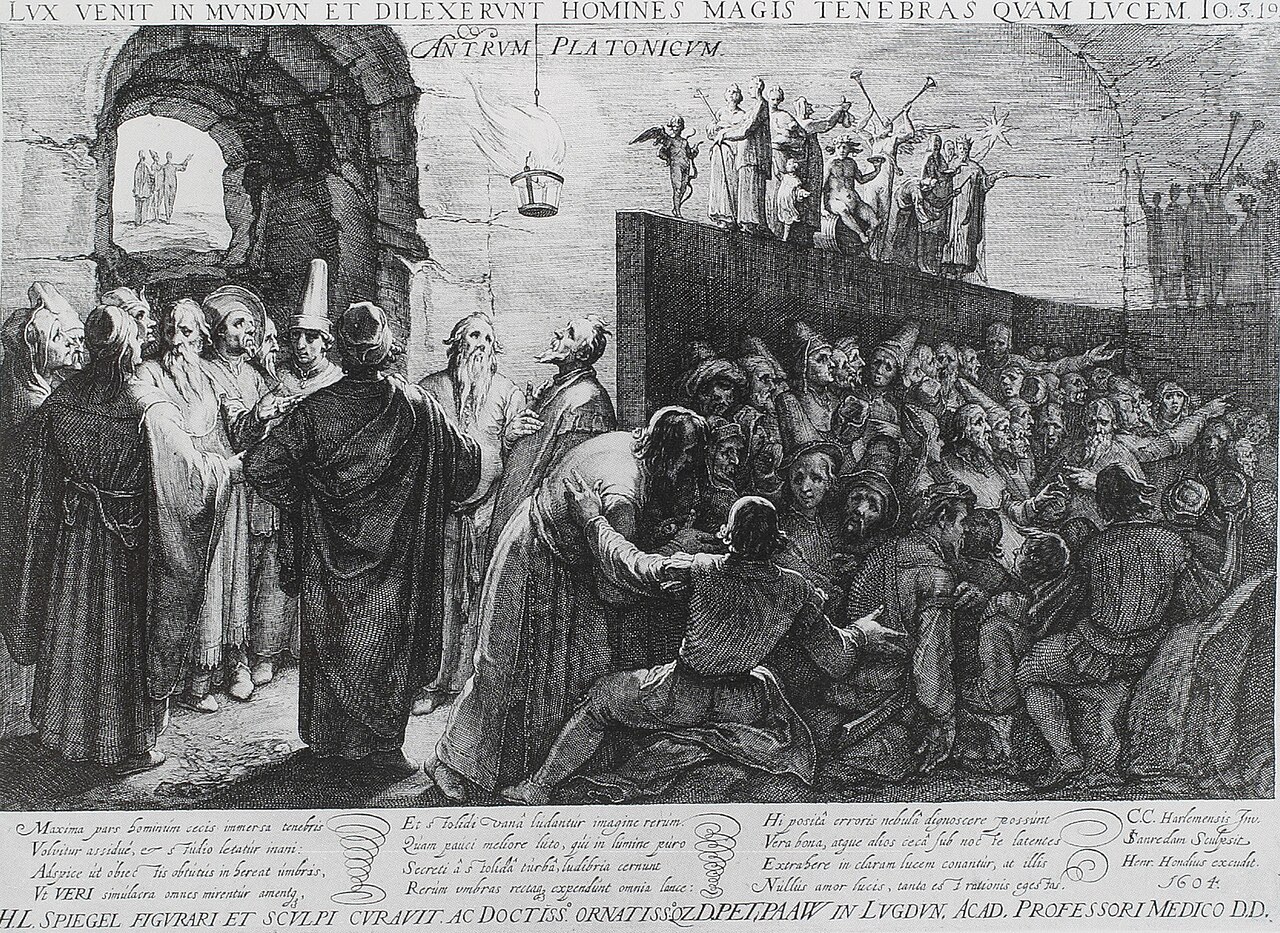
Allegory of the Cave
Plato · c. 400 BC
Secondary source
Apology
Plato · c. 395 BC
 Sculpture
Secondary source
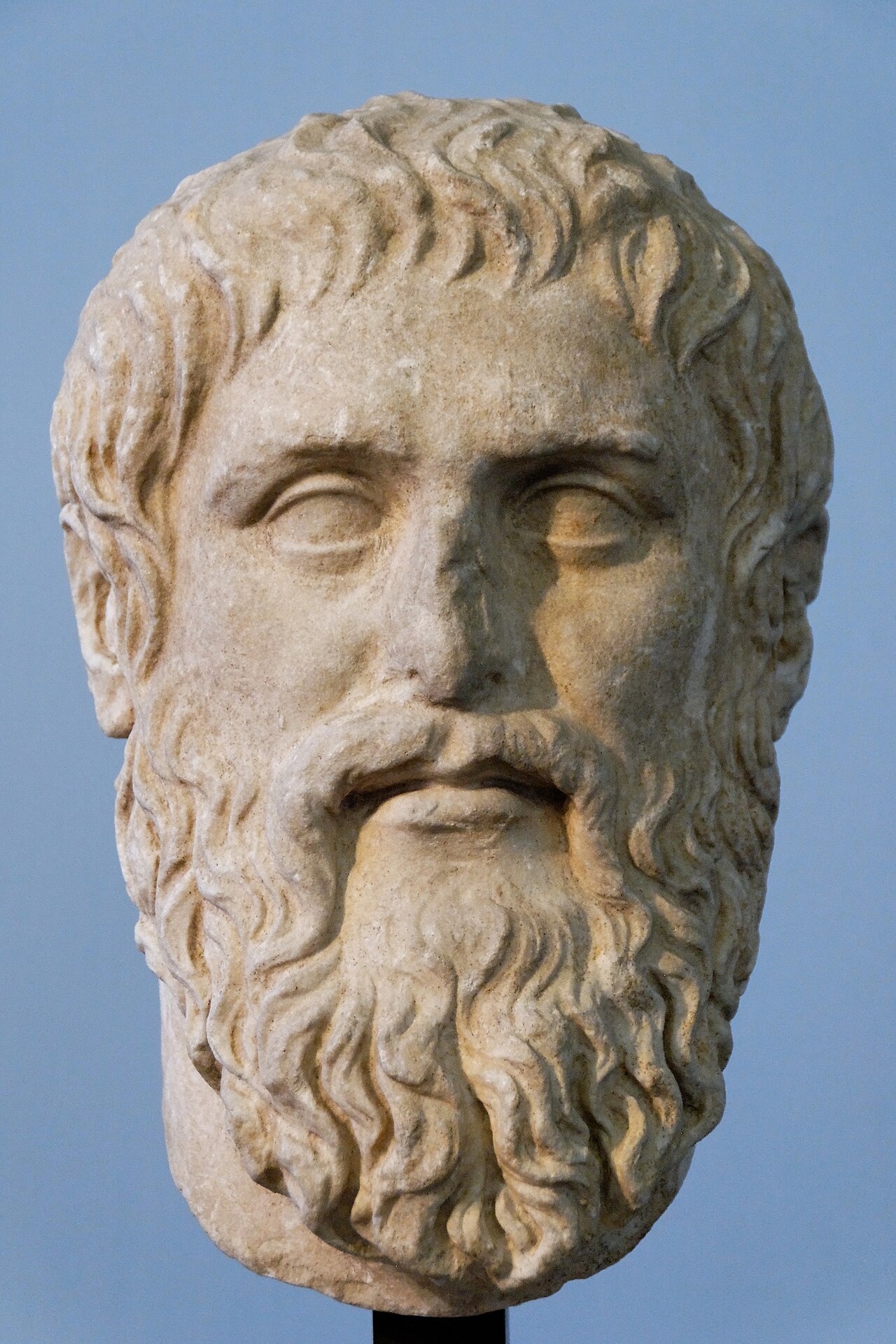
Portrait of Plato
Silanion (original type) · ca. 370 BC (original type); this copy Roman era
 Book
Secondary source
Phaedo
Plato · c. 360 BC
Ready when you are
Start chatting with Plato now.
20 messages free · No credit card · Available in 50+ languages.