


Primary sourceBookc. 400 BC
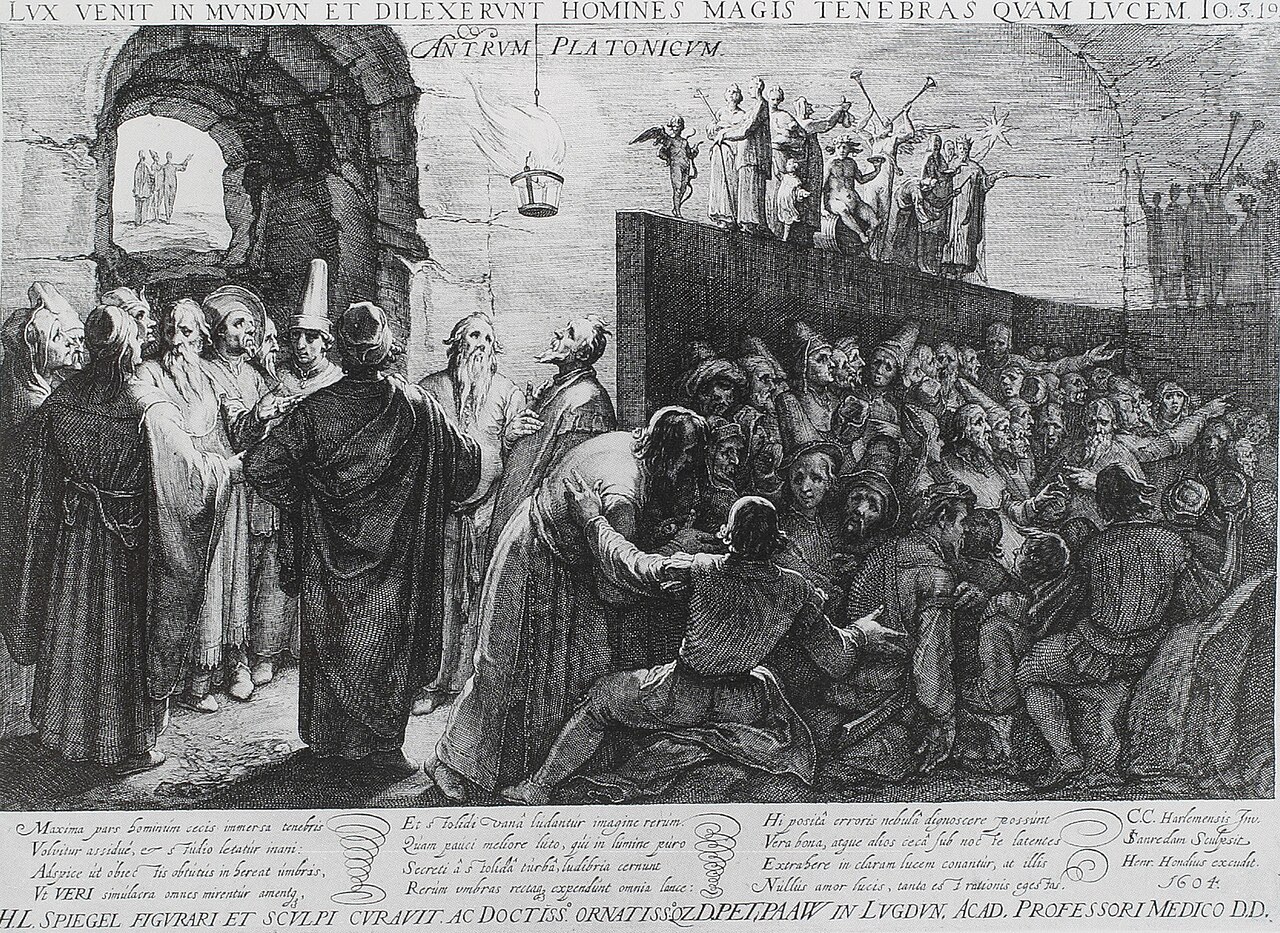
Allegory of the Cave
Plato · c. 400 BC
The famous passage from Plato's Republic picturing prisoners who mistake shadows for reality.
One of Plato's own best-known passages, illustrating his theory of knowledge and reality.
About this source
What it is
The Allegory of the Cave is a passage within Book VII of Plato's Republic, written as a dialogue between Socrates and Plato's brother Glaucon. It describes prisoners chained in a cave who see only shadows cast by a fire and mistake them for reality.
Why it matters
This image became the most widely taught illustration of Plato's distinction between the world of appearances and the world of true Forms. It shows how Plato used storytelling to explain difficult ideas about knowledge and education, and how he imagined the philosopher as someone who escapes illusion to seek truth.
Look closer
- Why do you think Plato chose a cave and shadows rather than explaining his idea directly?
- What happens to the freed prisoner when he returns to tell the others what he saw?
- What might this allegory suggest about how Plato saw ordinary people compared to philosophers?
This book is part of the curated material that grounds the AI version of Plato on Humy.ai — when students ask about related events, the AI can quote it and cite it.
More Plato sources
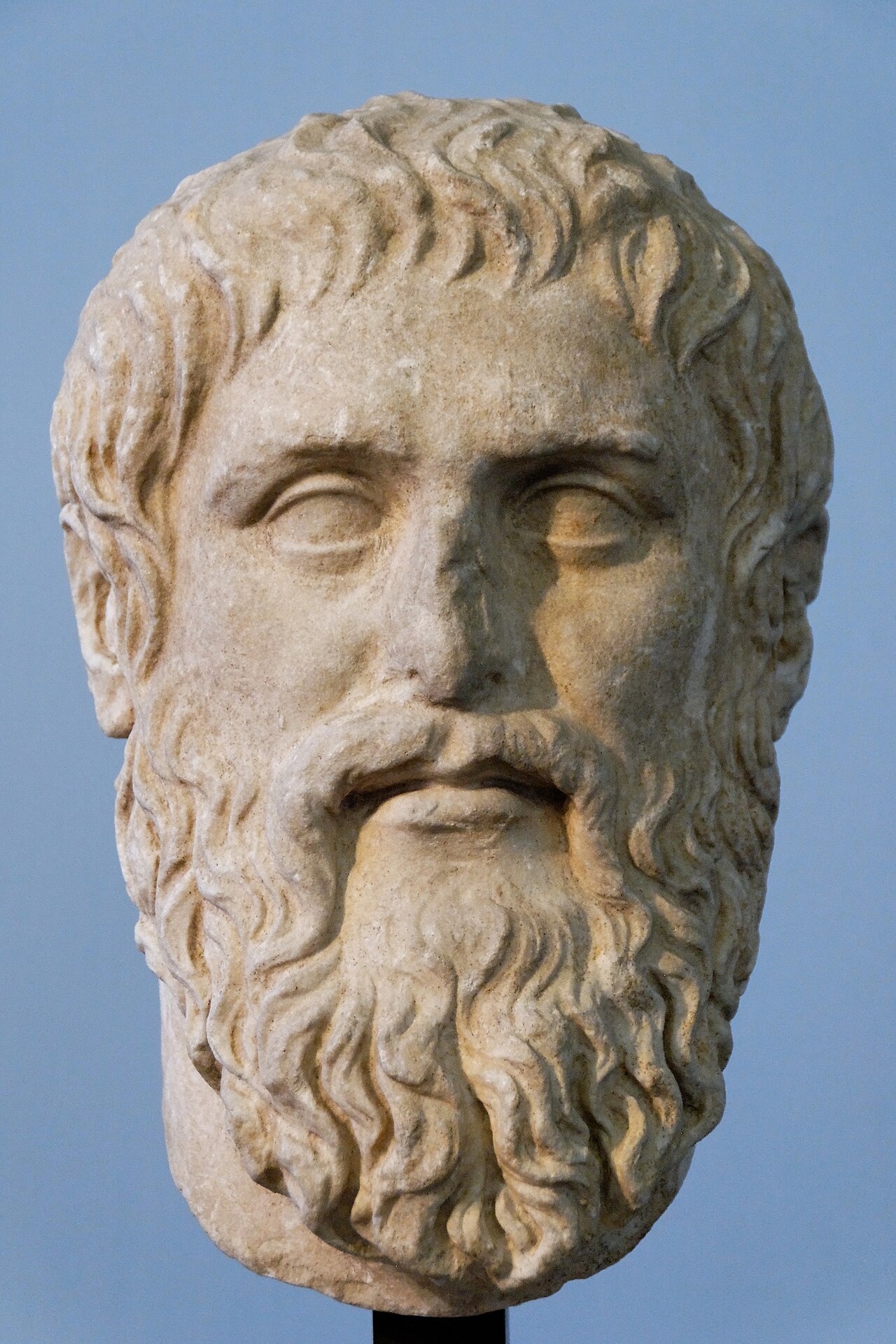
Meet the AI Plato →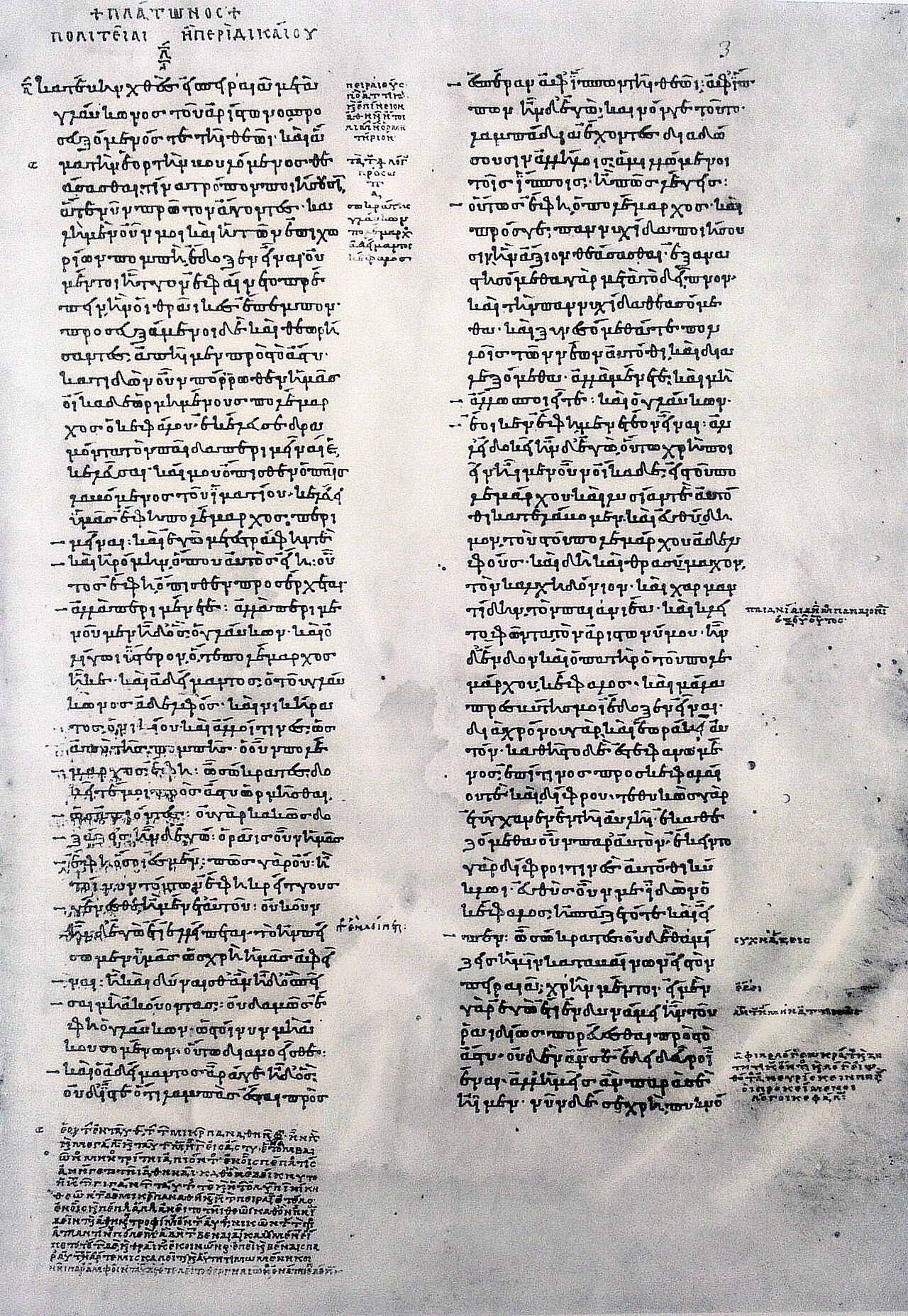
Ready when you are
Start chatting with Plato now.
20 messages free · No credit card · Available in 50+ languages.