


Secondary sourceSculpturec. 1790-1792
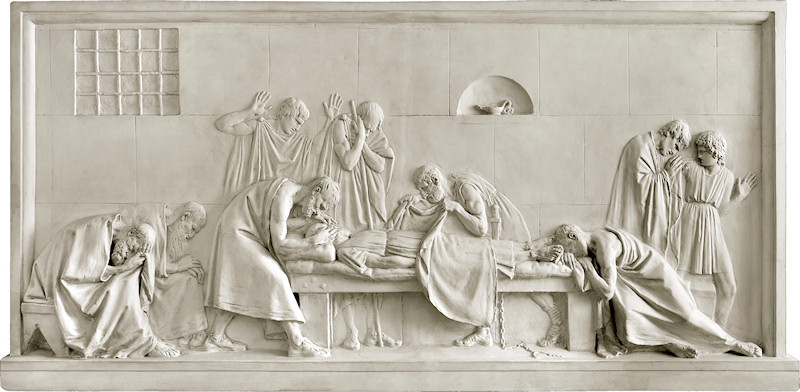
Crito Closing the Eyes of Socrates
Antonio Canova · c. 1790-1792
A marble relief by Antonio Canova showing the moment after Socrates' death, based on Plato's account in Phaedo.
A later artwork imagining the moment just after Socrates' death, based on Plato's written account.
About this source
What it is
This is a marble relief sculpture made by the Italian artist Antonio Canova between 1790 and 1792. It shows a scene from Plato's dialogue Phaedo, in which Socrates' friend Crito closes his eyes after death.
Why it matters
Canova based this work on a translation of Plato's account of Socrates' death, turning the philosopher's final moments into a scene almost like a religious image. It shows how artists in the late 1700s used ancient philosophy to express ideals of calm acceptance and classical virtue.
Look closer
- Why do you think the artist removed decorative details to focus only on the figures?
- What feelings do the mourners' poses suggest about how they viewed Socrates?
- How does this sculpted scene compare with written descriptions of Socrates' death?
This sculpture is part of the curated material that grounds the AI version of Socrates on Humy.ai — when students ask about related events, the AI can quote it and cite it.
More Socrates sources
Meet the AI Socrates →Secondary source
Apology
Plato · c. 395 BC
 Painting
Secondary source
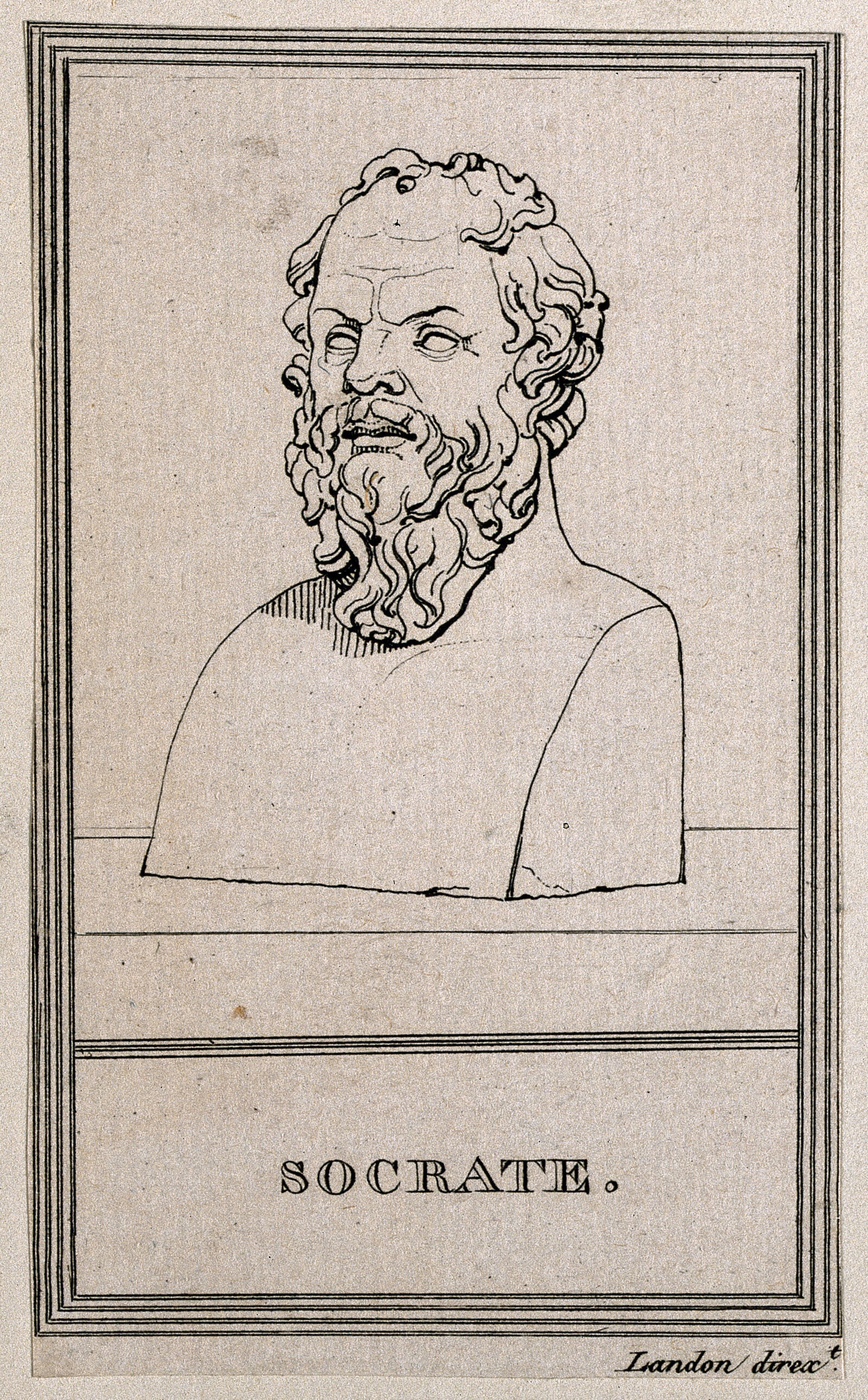
Line Engraving of Socrates by Landon
Charles Paul Landon
 Book
Secondary source
Crito
Plato · c. 400 BC
 Painting
Secondary source
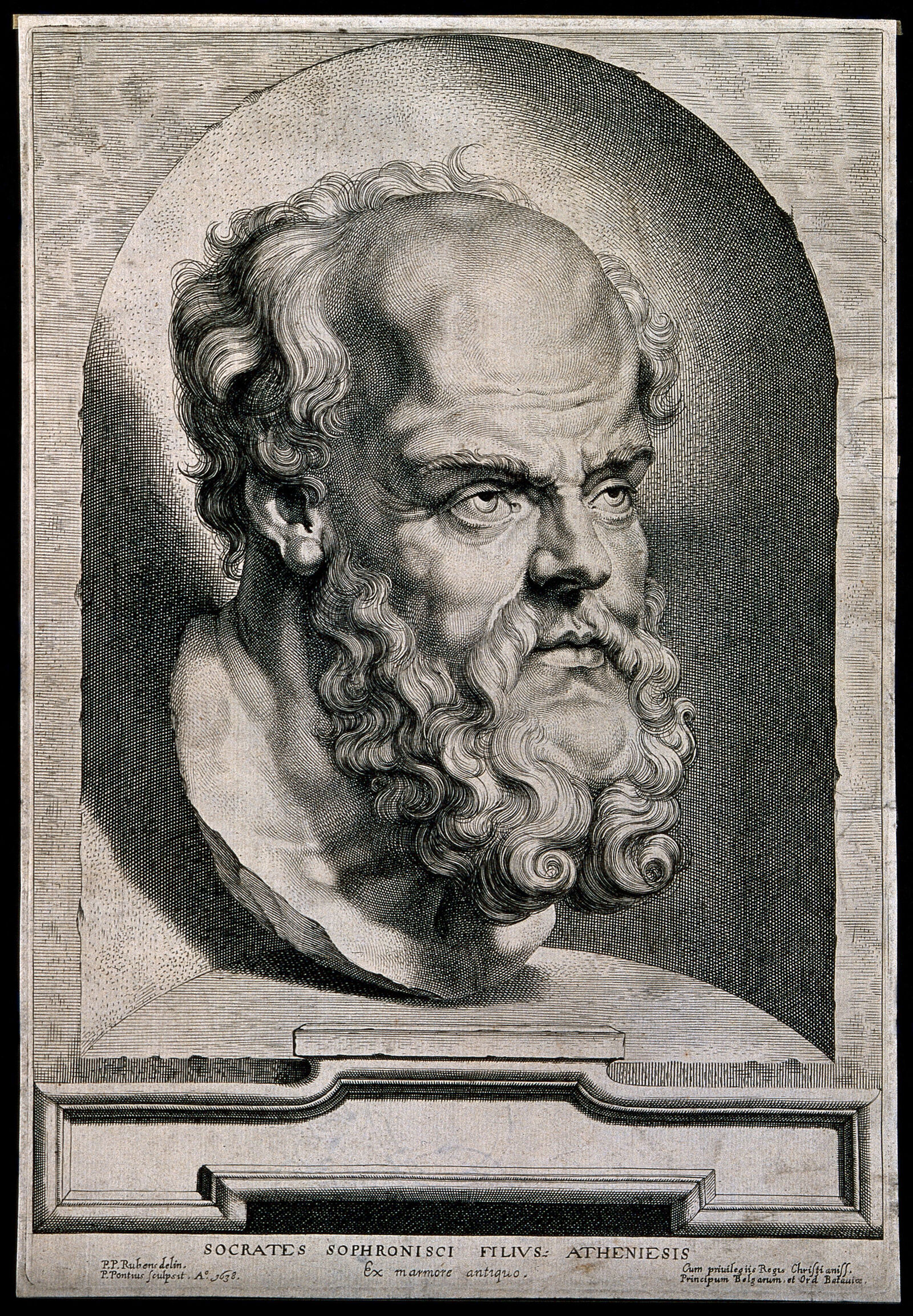
Socrates Engraving after Rubens by Pontius
Peter Paul Rubens · 1638
 Photograph
Secondary source
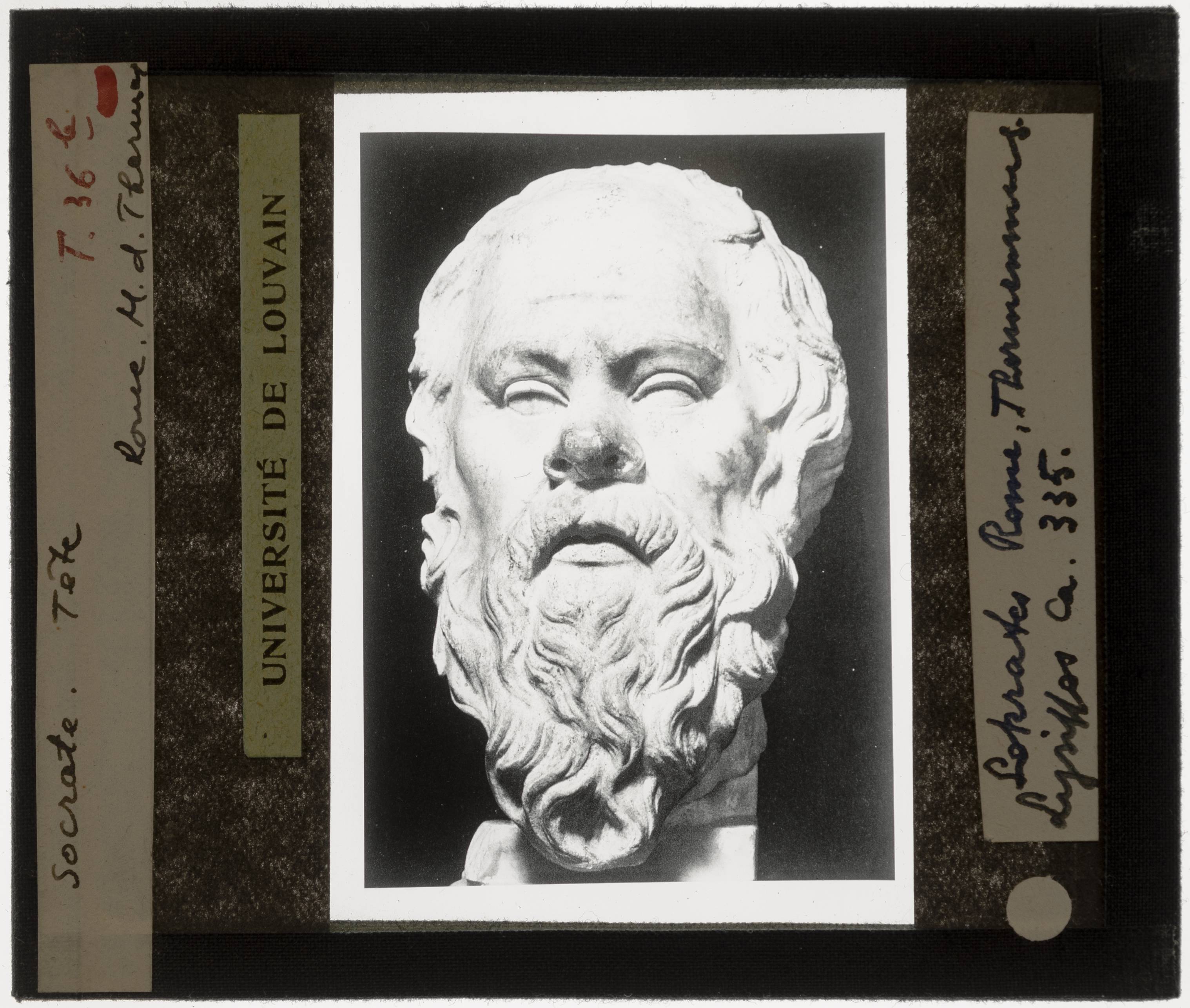
Roman Marble Bust of Socrates
between 1839 and 1939
Ready when you are
Start chatting with Socrates now.
20 messages free · No credit card · Available in 50+ languages.