


Secondary sourceSculptureTrajanic era, early 2nd century AD
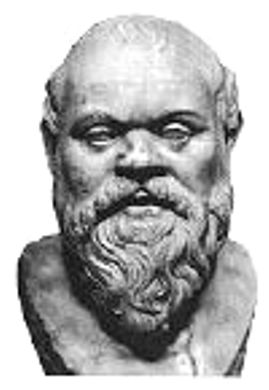
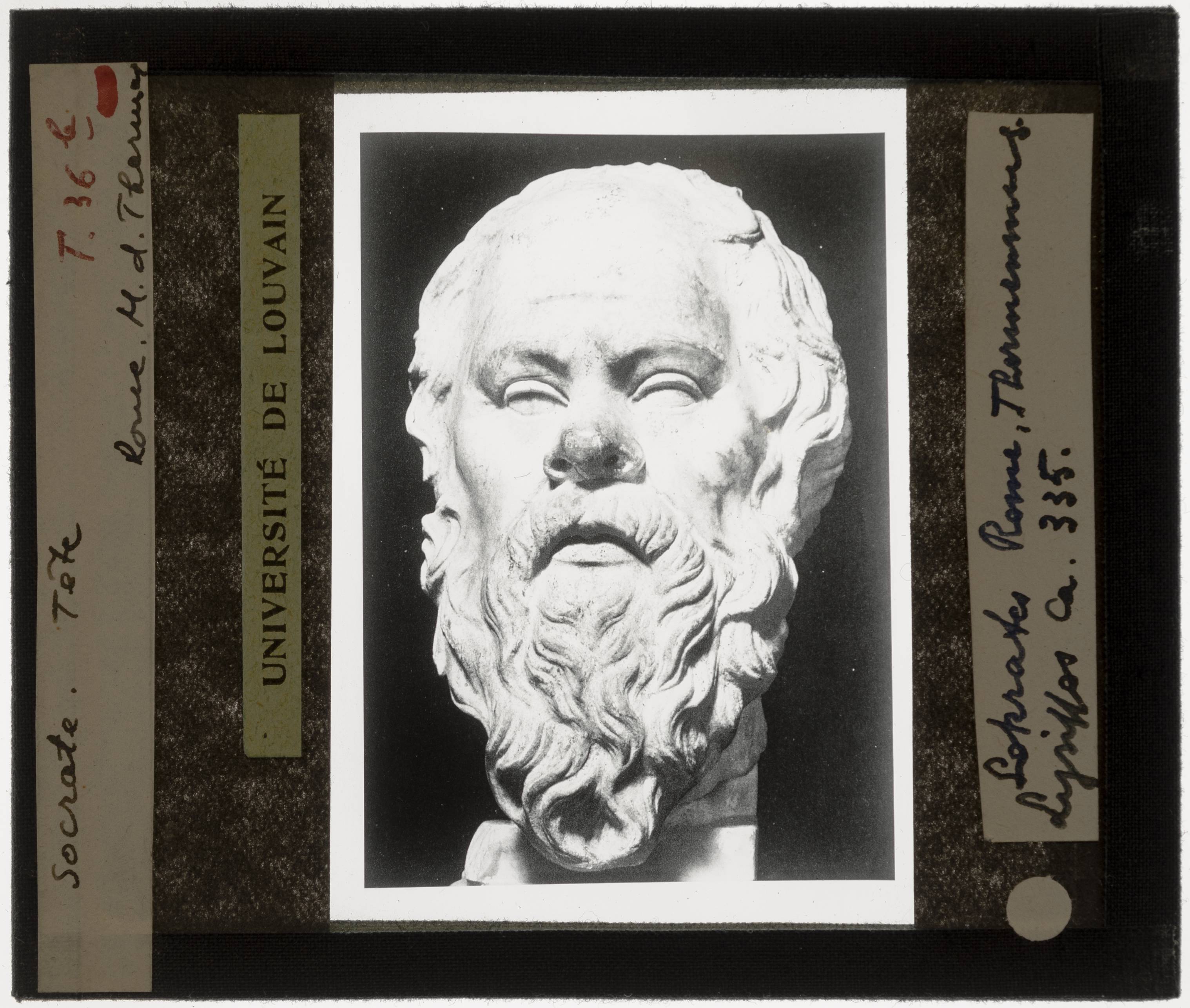
Socrate silenico
Trajanic era, early 2nd century AD
A Roman-era marble bust of Socrates shown as a Silenus, matching the comparison made of him in Plato's Symposium.
A later Roman bust imagining Socrates' face as a Silenus, part of his enduring visual legacy.
About this source
What it is
This is a marble bust made in the Trajanic era (early 2nd century AD), long after Socrates died. The sculptor is unknown. It shows an older bearded man with a bald, furrowed forehead and a broad flat nose — features linked to the Silenus-type portraits of Socrates.
Why it matters
Socrates was famously unattractive by classical standards, and ancient writers, including Plato in the Symposium, compared his looks to a Silenus, a mythical woodland spirit often shown as ugly and comic. This bust reflects how later Romans imagined and remembered Socrates centuries after his death, blending ancient description with artistic convention rather than any direct record of his appearance.
Look closer
- Why might people keep making images of someone whose actual face no one alive had ever seen?
- What does it mean that this bust was made centuries after Socrates lived?
- How does comparing a philosopher to a Silenus change how we think of him?
This sculpture is part of the curated material that grounds the AI version of Socrates on Humy.ai — when students ask about related events, the AI can quote it and cite it.
More Socrates sources
Meet the AI Socrates →Secondary source
Apology
Plato · c. 395 BC
 Painting
Secondary source
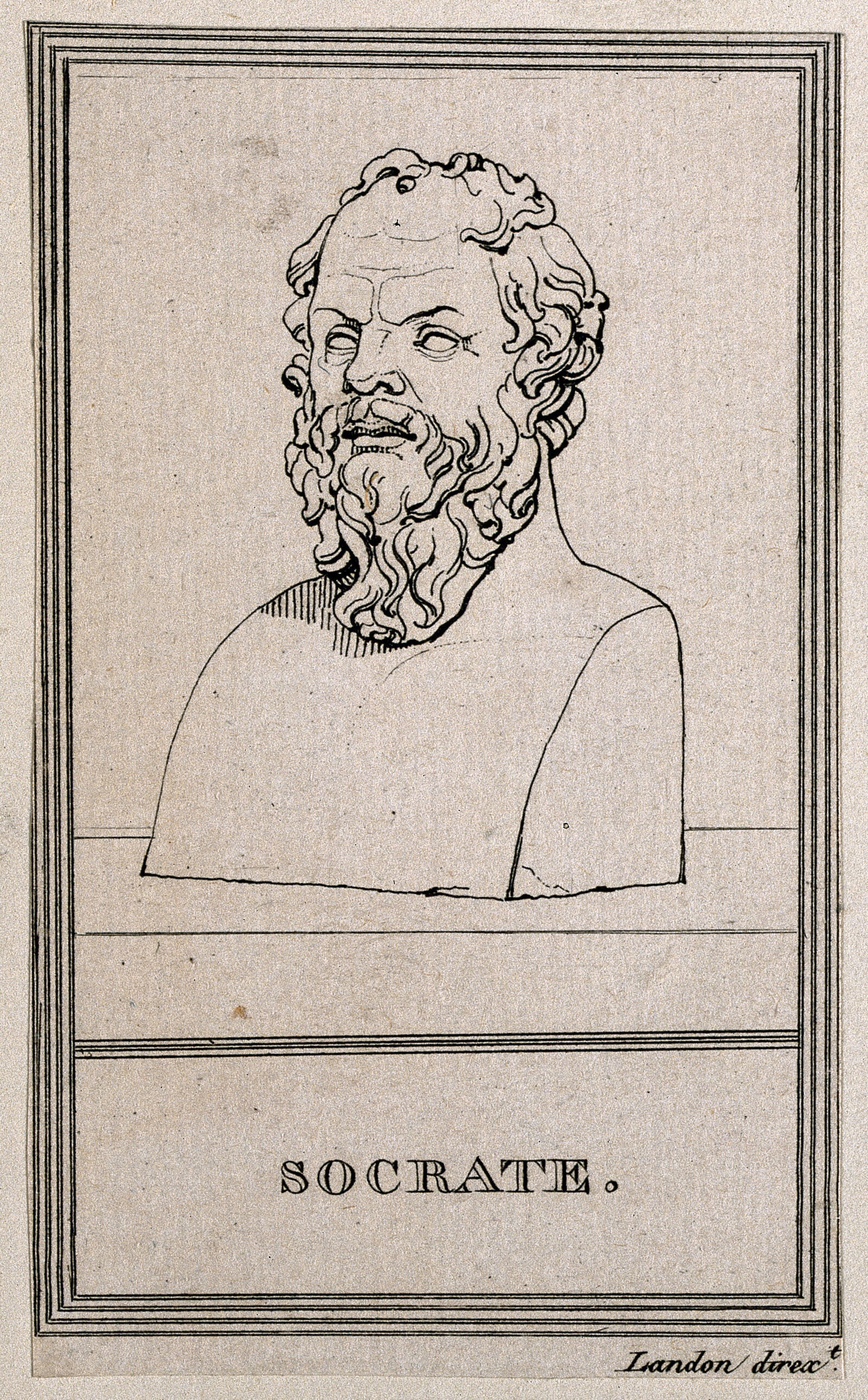
Line Engraving of Socrates by Landon
Charles Paul Landon
 Book
Secondary source
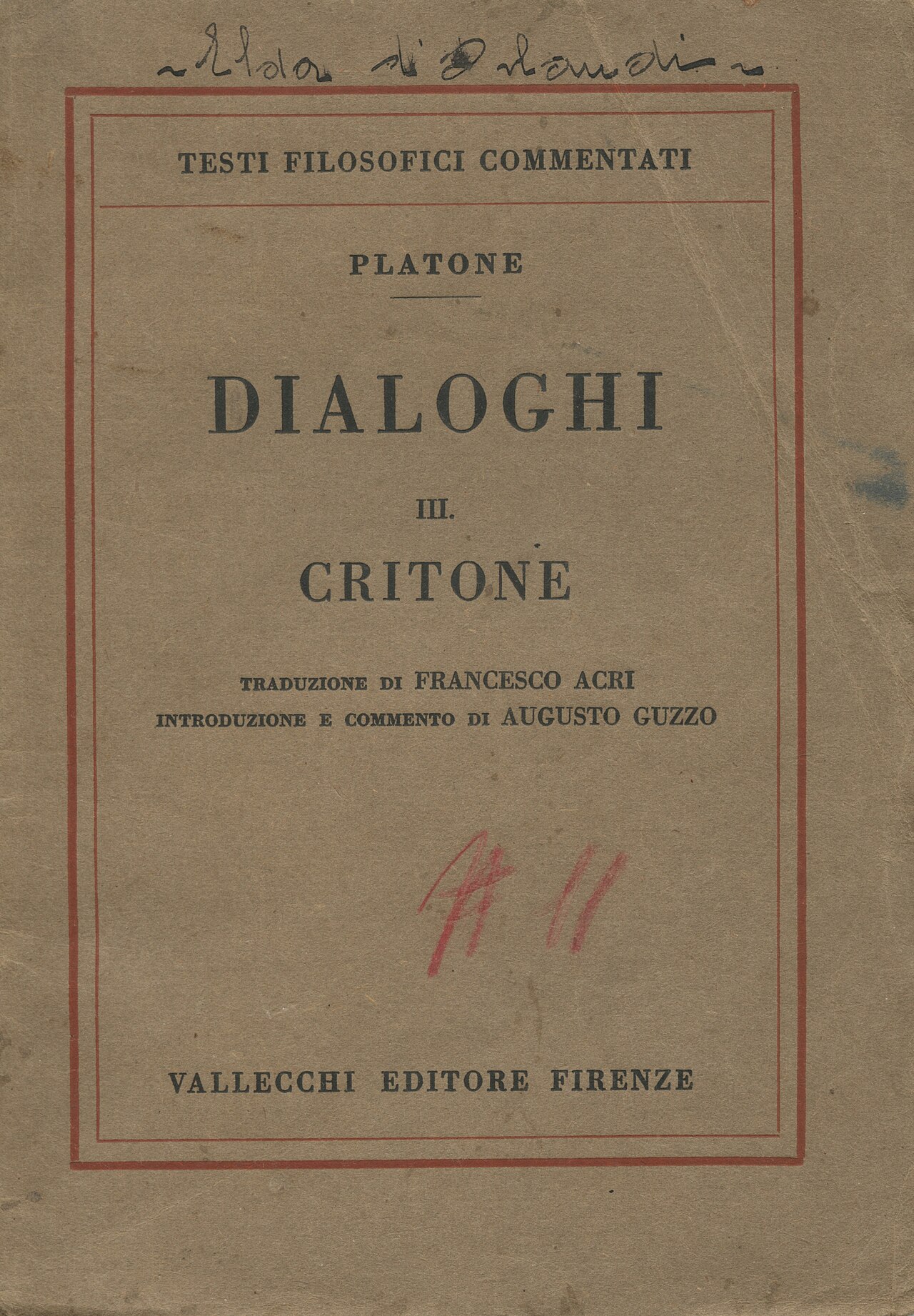
Crito
Plato · c. 400 BC
 Painting
Secondary source
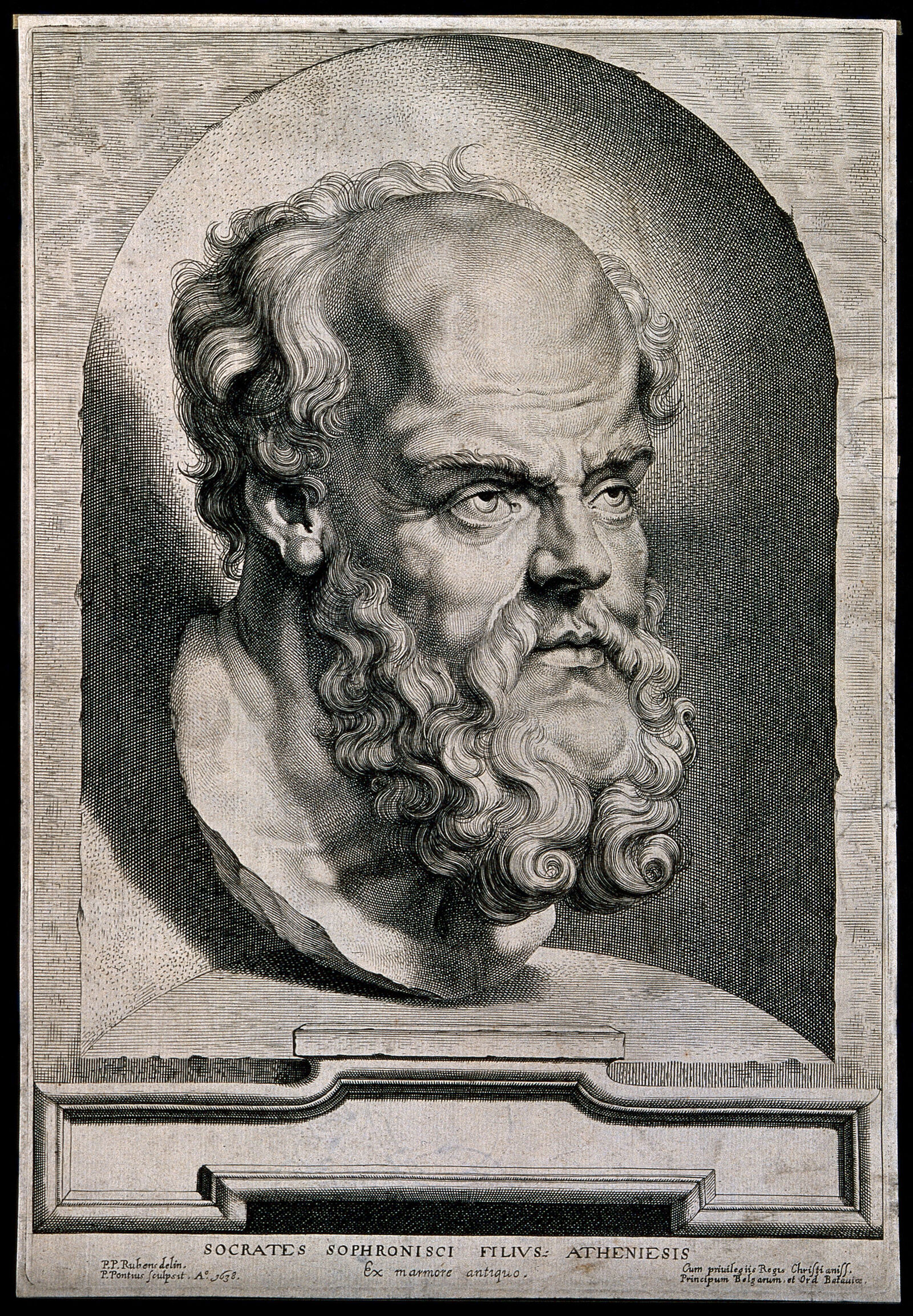
Socrates Engraving after Rubens by Pontius
Peter Paul Rubens · 1638
 Photograph
Secondary source
Roman Marble Bust of Socrates
between 1839 and 1939
Ready when you are
Start chatting with Socrates now.
20 messages free · No credit card · Available in 50+ languages.