


Secondary sourceSculptureRoman copy of a late Hellenistic original
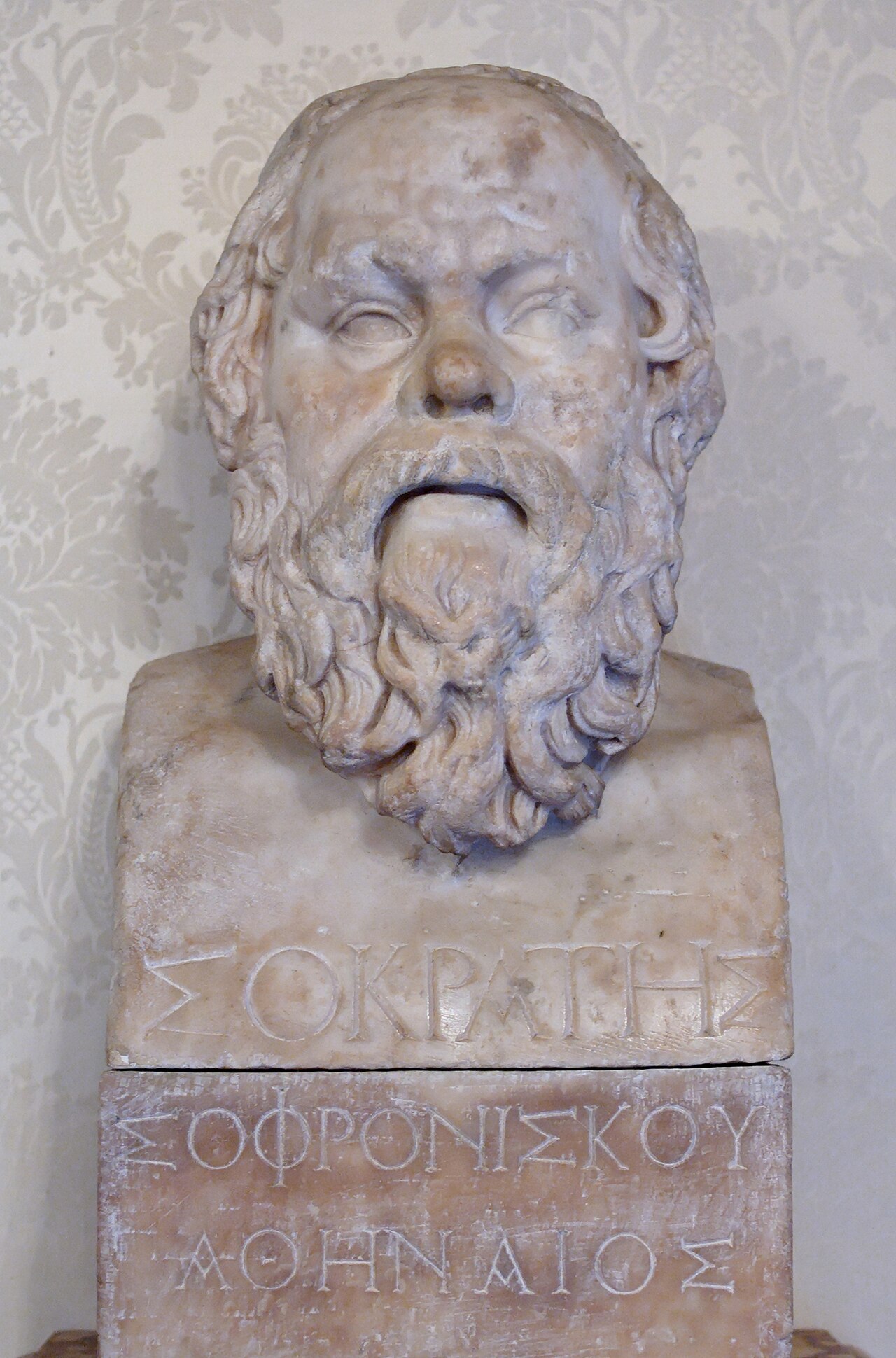
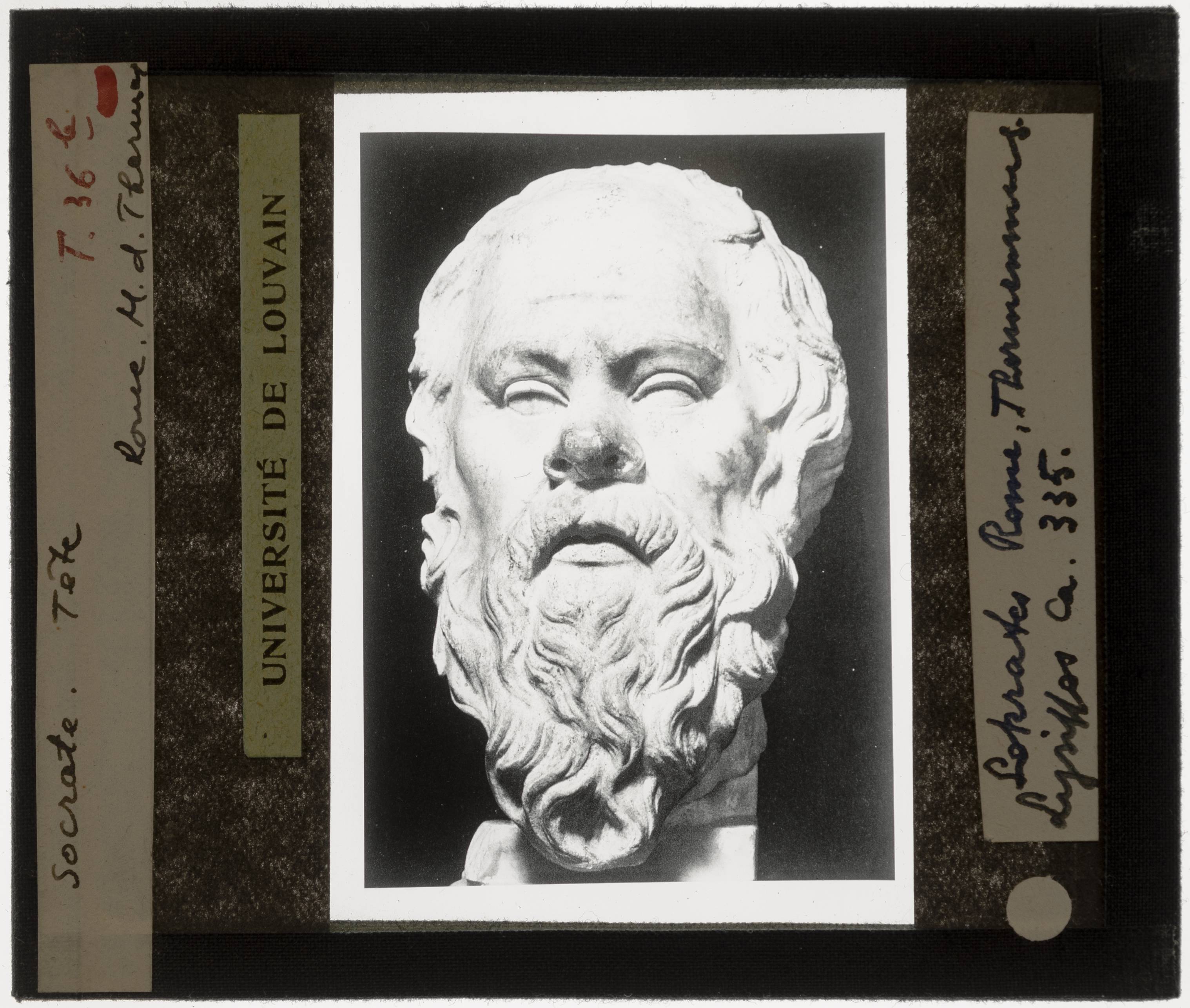
Socrates bust
Roman copy of a late Hellenistic original
A Roman marble herm bust of Socrates, copied from a Greek original, that shaped how later generations pictured him.
This herm bust, inscribed with his name, became the standard image of Socrates reproduced in later art and textbooks.
About this source
What it is
This marble herm bust shows a bearded, balding older man, identified by Greek inscriptions on its base as Socrates, son of Sophroniscus, of Athens. It is a Roman copy of a Greek original from the late Hellenistic era, held in the Capitoline/Vatican tradition.
Why it matters
Since no image of Socrates was made during his own lifetime by someone who certainly knew him, busts like this one, created centuries later, became the standard image reproduced in books and textbooks ever since. It shows how later generations imagined the philosopher's appearance, based on descriptions rather than direct observation.
Look closer
- Since this bust was made long after Socrates died, what might have shaped the sculptor's idea of what he looked like?
- Why do you think this particular image became the standard one used in textbooks?
- What can and can't a sculpture like this tell us about a real historical person?
This sculpture is part of the curated material that grounds the AI version of Socrates on Humy.ai — when students ask about related events, the AI can quote it and cite it.
More Socrates sources
Meet the AI Socrates →Secondary source
Apology
Plato · c. 395 BC
 Painting
Secondary source
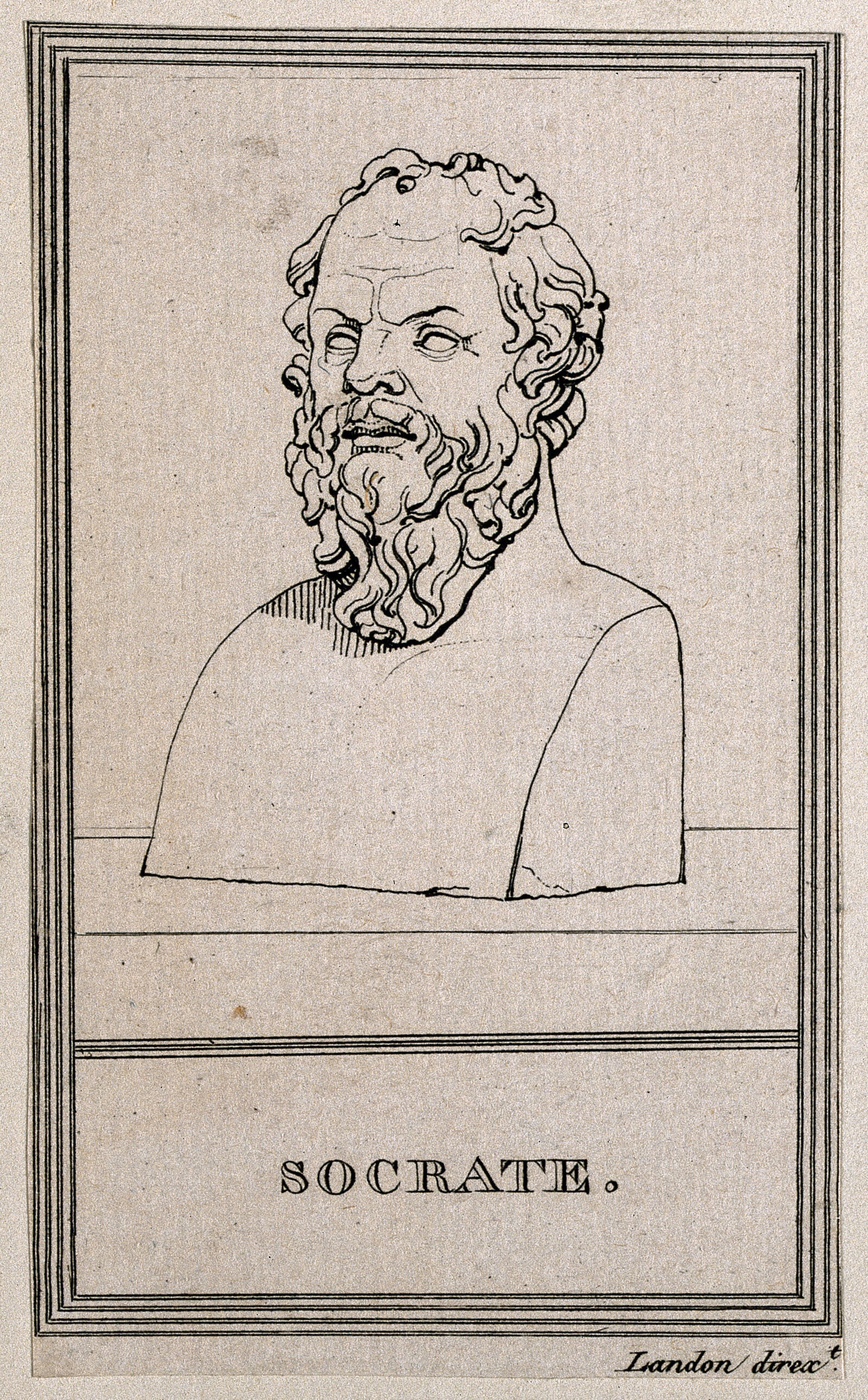
Line Engraving of Socrates by Landon
Charles Paul Landon
 Book
Secondary source
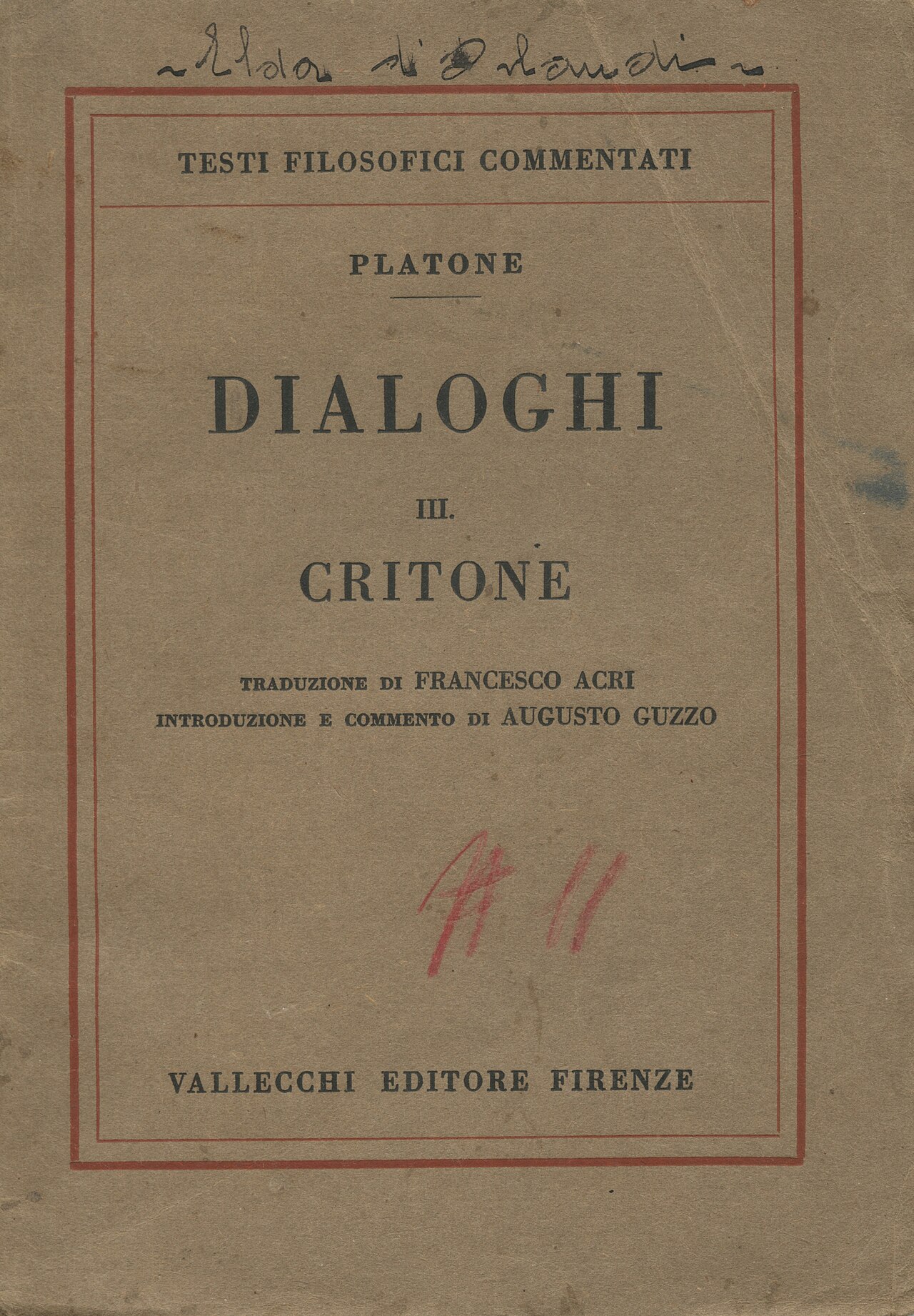
Crito
Plato · c. 400 BC
 Painting
Secondary source
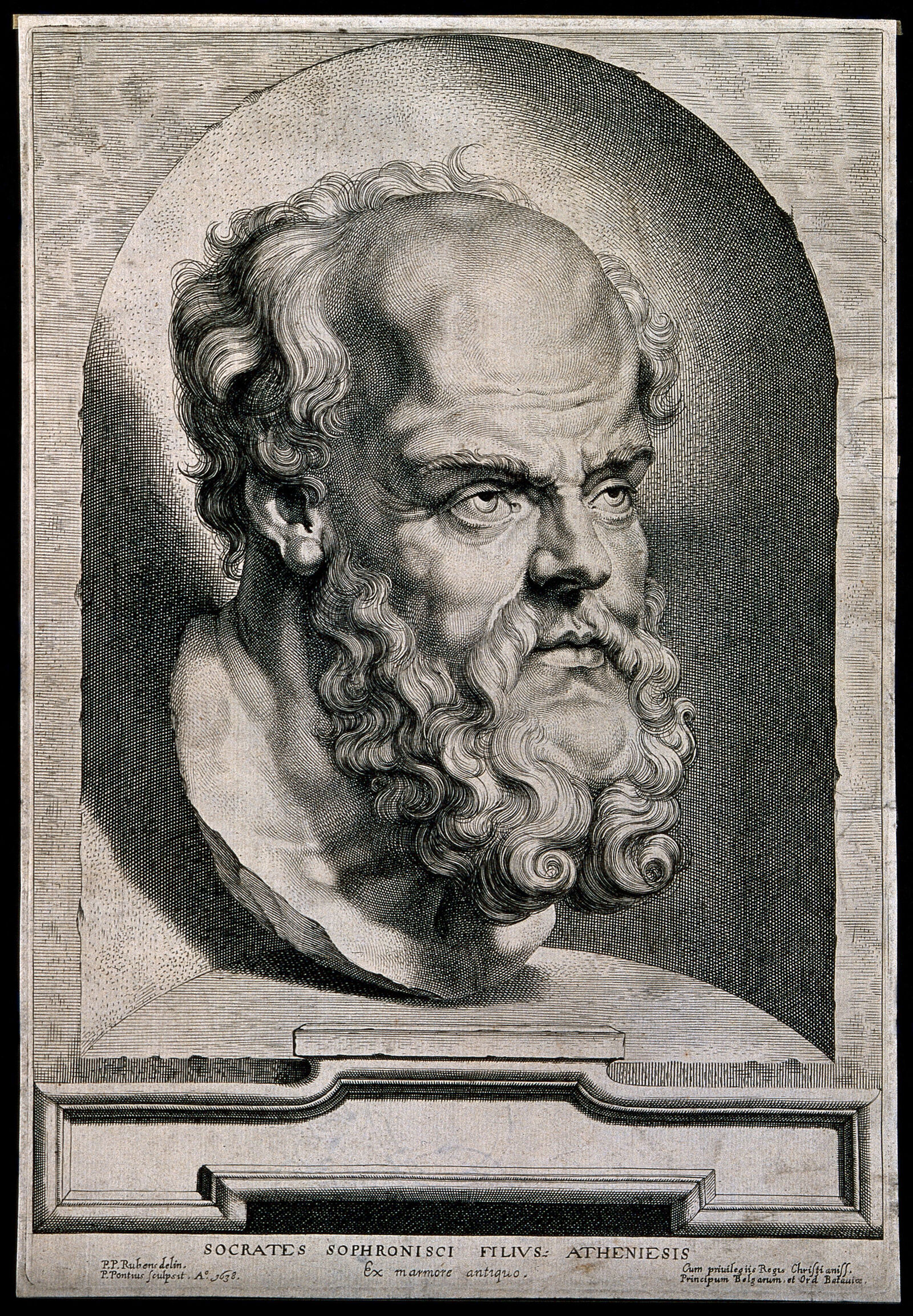
Socrates Engraving after Rubens by Pontius
Peter Paul Rubens · 1638
 Photograph
Secondary source
Roman Marble Bust of Socrates
between 1839 and 1939
Ready when you are
Start chatting with Socrates now.
20 messages free · No credit card · Available in 50+ languages.