


Secondary sourcePainting
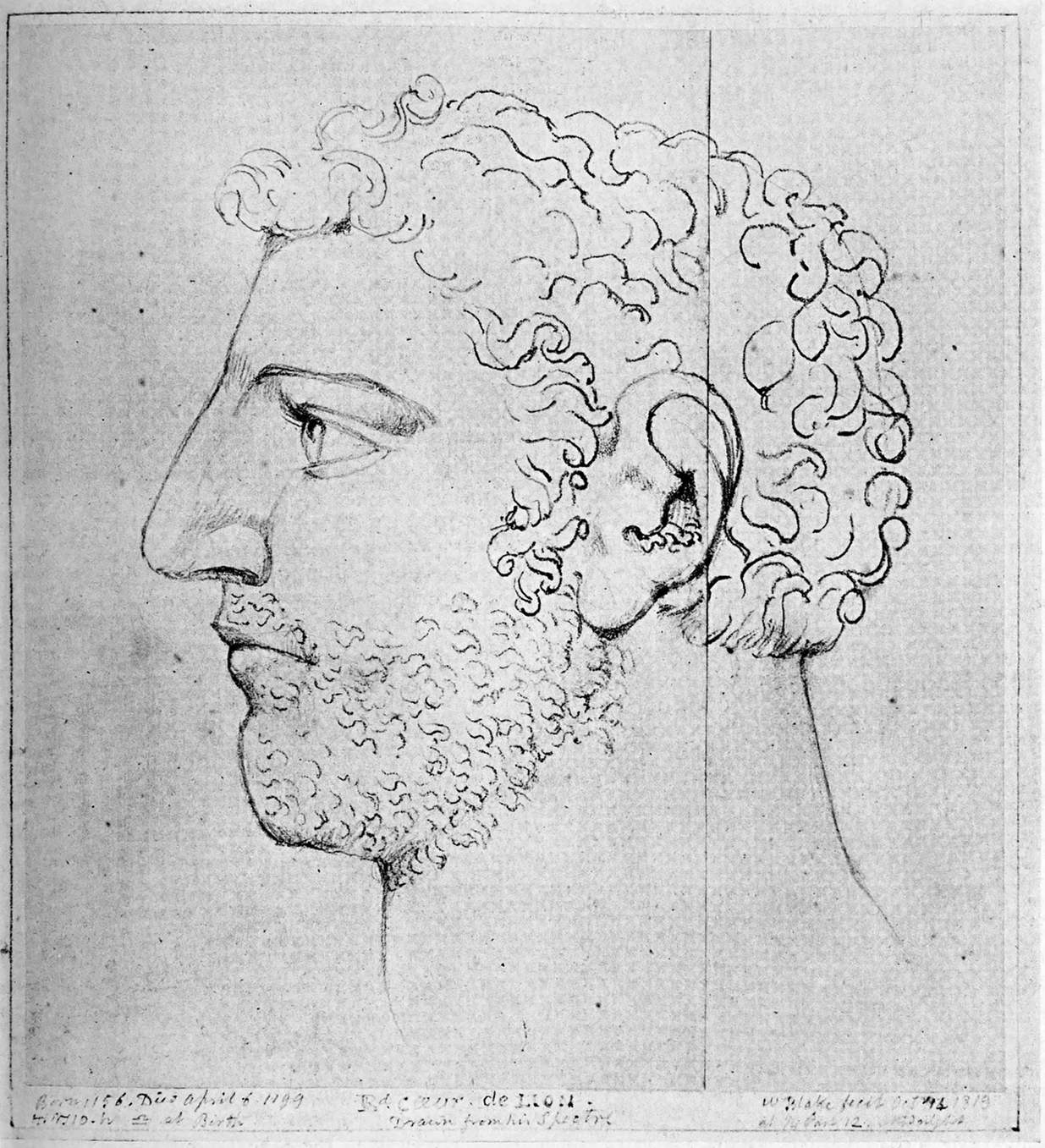
Richard Coeur de Lion, by William Blake
William Blake
A pencil drawing in profile by William Blake of a bearded man, made centuries after Richard's death. It reflects Romantic-era views of the king.
Shows how a later Romantic artist imagined Richard I, a view shaped by centuries of legend rather than by first-hand knowledge.
About this source
What it is
This is a pencil drawing in profile by William Blake, titled Richard Coeur de Lion. It shows a bearded man with curly hair and a large nose, facing left, with a vertical line dividing the composition. Handwritten inscriptions appear along the bottom margin. The catalogue entry gives no date for the drawing, but the curator notes it was made centuries after the king's death.
Why it matters
Blake was an English poet and artist of the Romantic period, and his image of Richard is an imagined portrait rather than a record of the king's appearance. It shows how writers and artists of a later age reshaped Richard into a figure of heroic legend. Comparing it with older images can show how ideas about medieval kings changed over time.
Look closer
- What features does Blake emphasise in the profile, and what kind of character do they suggest?
- Why might an artist of the Romantic era draw a king who had died centuries earlier?
- What do the handwritten inscriptions in the margin tell us, and what would you need to read them?
This painting is part of the curated material that grounds the AI version of Richard the Lionheart on Humy.ai — when students ask about related events, the AI can quote it and cite it.
More Richard the Lionheart sources
Browse all 94 →
Ready when you are
Start chatting with Richard the Lionheart now.
20 messages free · No credit card · Available in 50+ languages.