


Primary sourceArtifactc. 1407-1410
Ritual Axe
c. 1407-1410
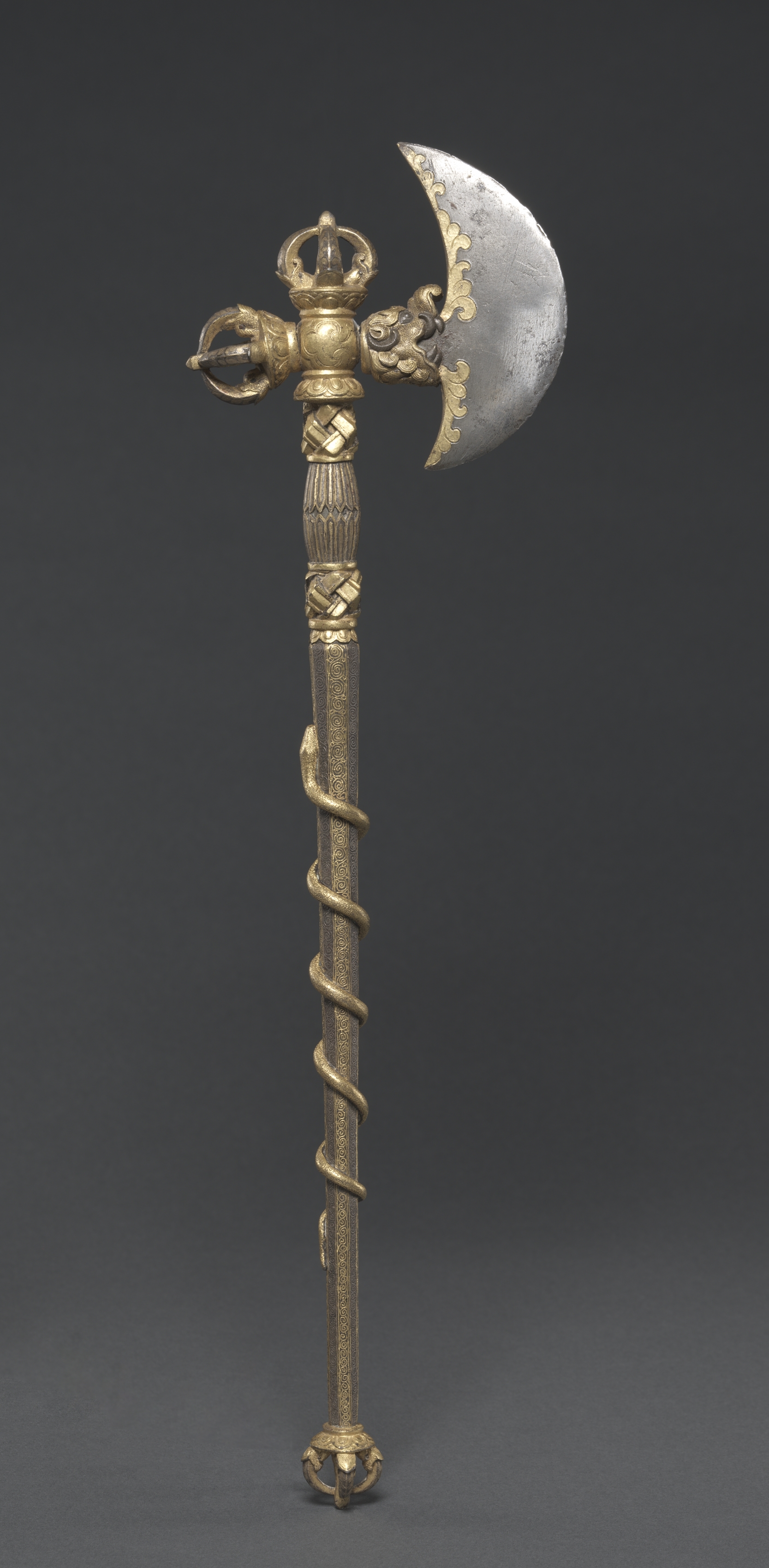
A ceremonial axe made in the Yongle Emperor's imperial workshop and given as a gift to a Tibetan Buddhist patriarch in 1407.
This axe, inscribed with his name, was a gift from the Yongle Emperor to a Tibetan patriarch, showing his Buddhist diplomacy.
About this source
What it is
This ritual axe, made around 1407-1410, bears an inscription identifying it with the Yongle Emperor. It was likely part of a set of gifts the emperor presented to a high-ranking Tibetan monastic patriarch who visited his court in 1407. The axe is held by the Cleveland Museum of Art.
It has a gold shaft with a snake motif, a vajra-shaped finial, and a crescent silver blade emerging from carved lion heads, showing fine imperial Chinese craftsmanship.
Why it matters
Ceremonial weapons like this were used in Buddhist tantric rituals. This gift shows how the Yongle Emperor used diplomacy and patronage of Tibetan Buddhism to build relationships with religious and political leaders beyond Ming China.
Look closer
- Why might an emperor give religious ritual objects as diplomatic gifts?
- What does the inscription tell us about who the object was meant to represent?
- What questions does this object raise about relations between Ming China and Tibet?
This artifact is part of the curated material that grounds the AI version of Yongle Emperor on Humy.ai — when students ask about related events, the AI can quote it and cite it.
More Yongle Emperor sources
Meet the AI Yongle Emperor →

Ready when you are
Start chatting with Yongle Emperor now.
20 messages free · No credit card · Available in 50+ languages.