


Primary sourceArtifactearly 1400s
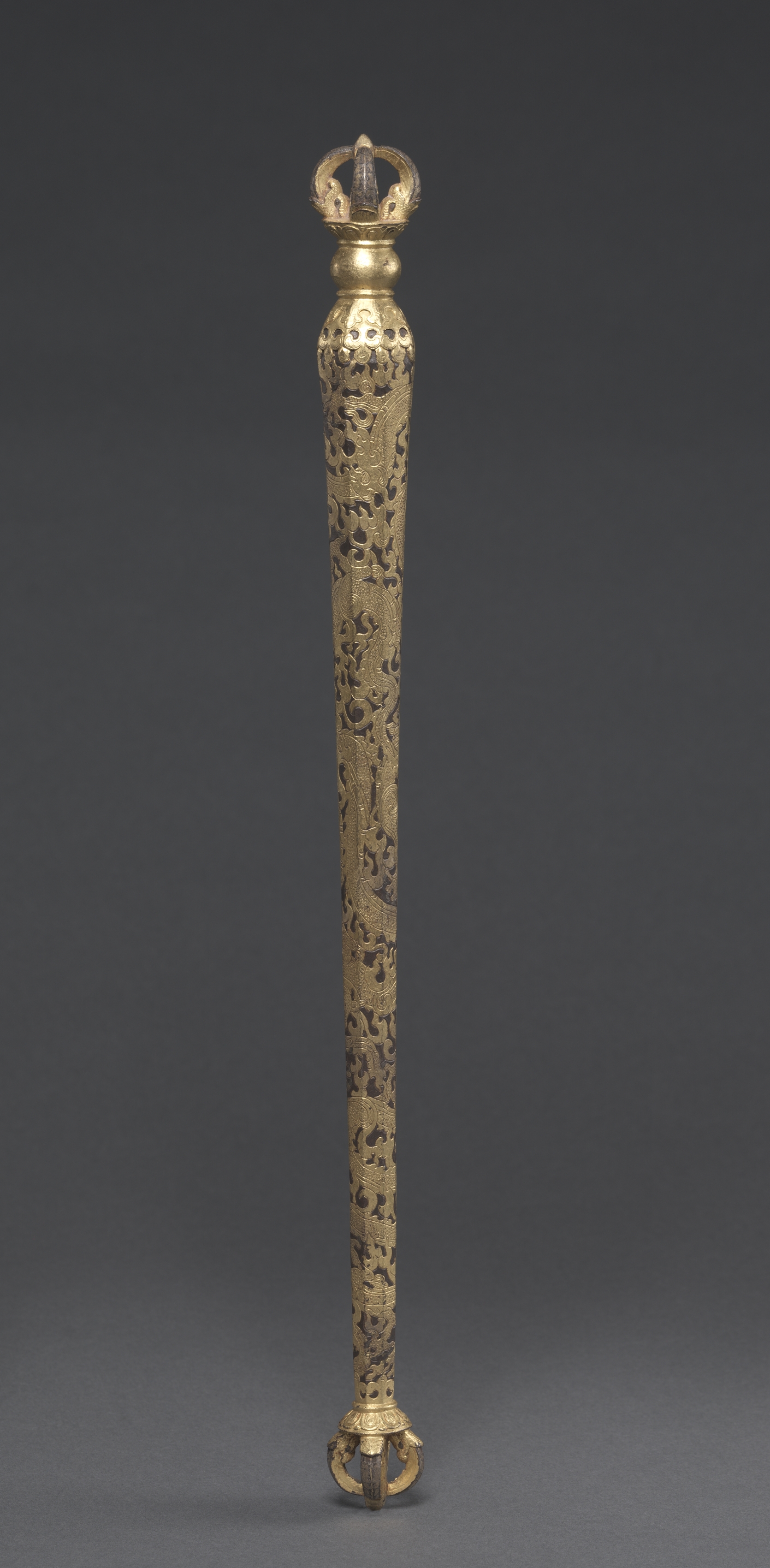
Ritual Mace from the Yongle Imperial Gift
early 1400s
A gilded ceremonial mace given by the Yongle Emperor as part of a set of gifts to a Tibetan Buddhist patriarch in 1407.
This mace was personally gifted by the Yongle Emperor in 1407, showing his diplomatic outreach to Tibetan Buddhism.
About this source
What it is
This gilded ritual mace was part of a set of ceremonial weapons used in Tibetan Buddhist tantric rituals. It was presented in 1407 by the Yongle Emperor to a high-ranking Tibetan monastic patriarch who visited his court. The mace is now held by the Cleveland Museum of Art.
Why it matters
Ceremonial weapons like this mace were used symbolically in rituals meant to overcome spiritual obstacles such as ignorance and uncontrolled passions. The gift set, which also included an axe, knife, incense burner, and a sculpture, shows the close political and religious ties the Yongle Emperor built with Tibetan Buddhist leaders, using fine imperial craftsmanship as diplomatic gifts.
Look closer
- What does the detailed lion-head decoration suggest about the skill of imperial workshops?
- Why might an emperor use religious gifts to build relationships with foreign religious leaders?
- What does this object tell us about the connections between Ming China and Tibet?
This artifact is part of the curated material that grounds the AI version of Yongle Emperor on Humy.ai — when students ask about related events, the AI can quote it and cite it.
More Yongle Emperor sources
Meet the AI Yongle Emperor →

Ready when you are
Start chatting with Yongle Emperor now.
20 messages free · No credit card · Available in 50+ languages.