


Secondary sourceSculpture2nd century AD
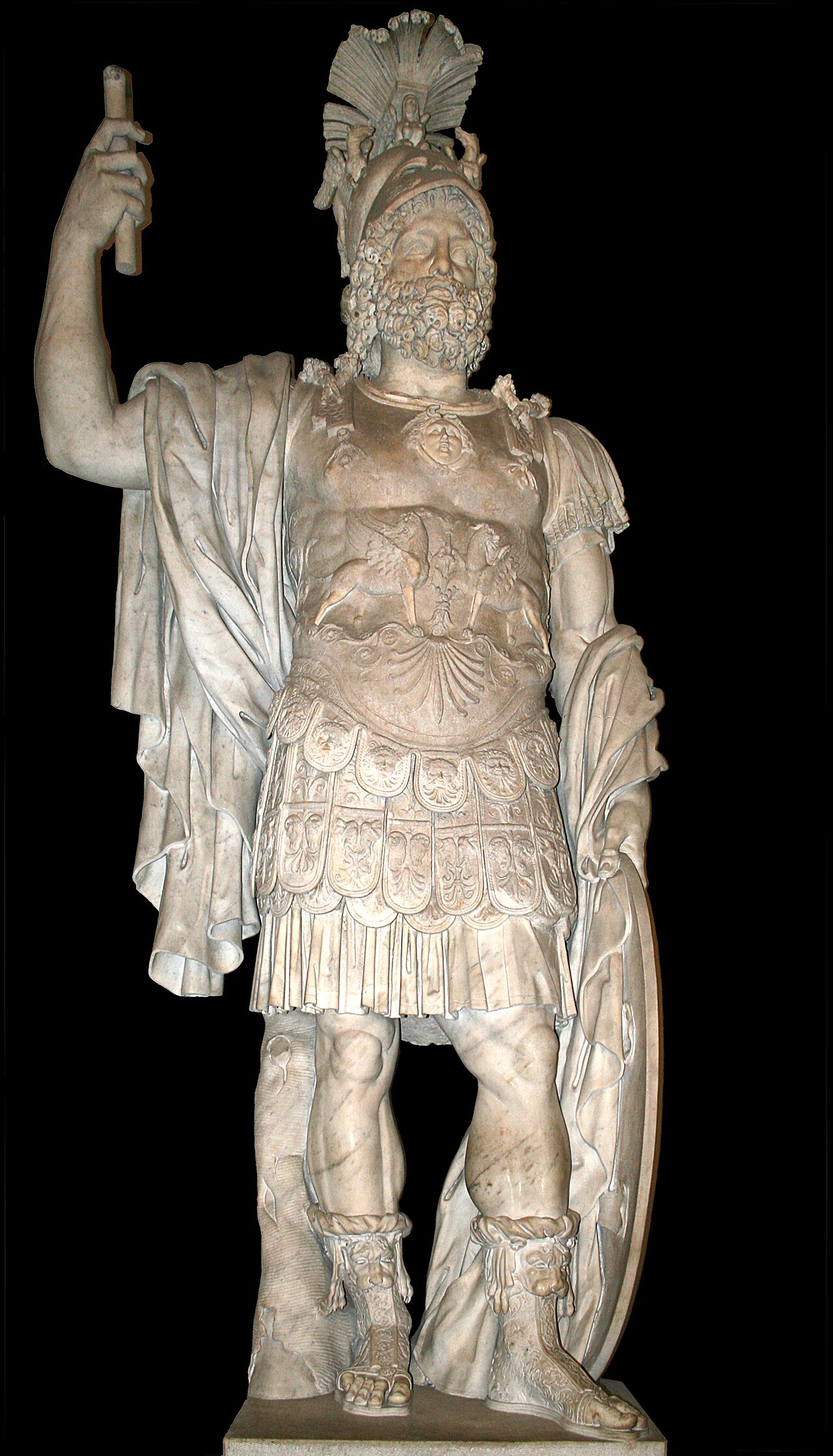
Roman statue identified as Pyrrhus
Unknown artist · 2nd century AD
A Roman marble statue traditionally identified as King Pyrrhus of Epirus, displayed at the Capitoline Museums.
A Roman statue later identified as Pyrrhus, showing how Romans remembered their former enemy as a great warrior.
About this source
What it is
This is a colossal marble statue made by an unknown Roman artist in the 2nd century AD. It depicts a bearded, armored warrior wearing a plumed helmet and holding a short staff. It has traditionally been identified as Pyrrhus, though museum records also connect it to the god Mars. It is held in the Capitoline Museums in Rome.
Why it matters
This statue shows how Romans, centuries after Pyrrhus's death, remembered him as a great warrior king worthy of being depicted alongside gods like Mars. Pyrrhus fought against Rome itself, so the Roman decision to honor his image is notable.
Look closer
- Why might the Romans create a statue honoring an enemy king who fought against them?
- What clues in the armor and pose suggest this figure is meant to look powerful or godlike?
- Why is the identification with Pyrrhus uncertain, and what does that tell us about ancient art and memory?
This sculpture is part of the curated material that grounds the AI version of Pyrrhus of Epirus on Humy.ai — when students ask about related events, the AI can quote it and cite it.
More Pyrrhus of Epirus sources
Browse all 78 →

Ready when you are
Start chatting with Pyrrhus of Epirus now.
20 messages free · No credit card · Available in 50+ languages.