


Primary sourceArtifact1913
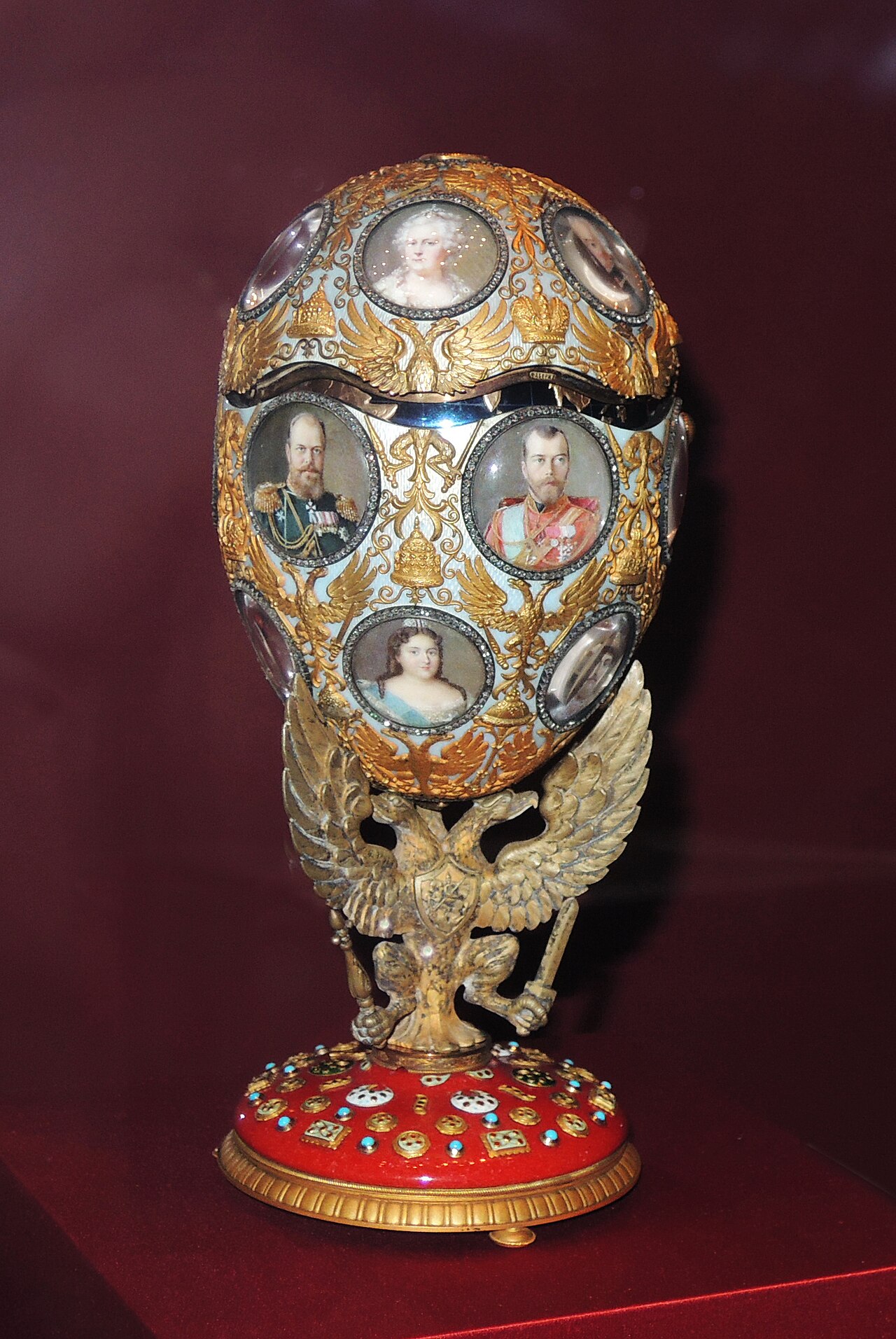
Romanov Tercentenary Egg
Henrik Wigström · 1913
A jewelled Fabergé egg commissioned by Nicholas II in 1913 to mark 300 years of Romanov rule, given as an Easter gift to his wife.
Nicholas II commissioned this egg as an Easter gift to his wife, marking his dynasty's 300th anniversary.
About this source
What it is
This egg was made in 1913 under the supervision of Peter Carl Fabergé, with work by Henrik Wigström, for Tsar Nicholas II, who gave it to his wife Empress Alexandra Fyodorovna as an Easter gift. It is covered with eighteen tiny portraits of Romanov rulers and is now held at the Moscow Kremlin Museums.
Why it matters
The egg celebrated three hundred years of Romanov rule, from the dynasty's first tsar to Nicholas II himself. Its surprise, a rotating globe, shows how much Russian territory grew between 1613 and 1913. Made only four years before the dynasty's fall, it shows the wealth and confidence of the monarchy just before revolution swept it away.
Look closer
- Why might an emperor choose portraits of all his ancestors to decorate an Easter gift?
- What does the costly material and craftsmanship tell you about the court's priorities in 1913?
- What does the egg leave out about the lives of ordinary Russians at the time?
This artifact is part of the curated material that grounds the AI version of Tsar Nicholas II on Humy.ai — when students ask about related events, the AI can quote it and cite it.
More Tsar Nicholas II sources
Meet the AI Tsar Nicholas II →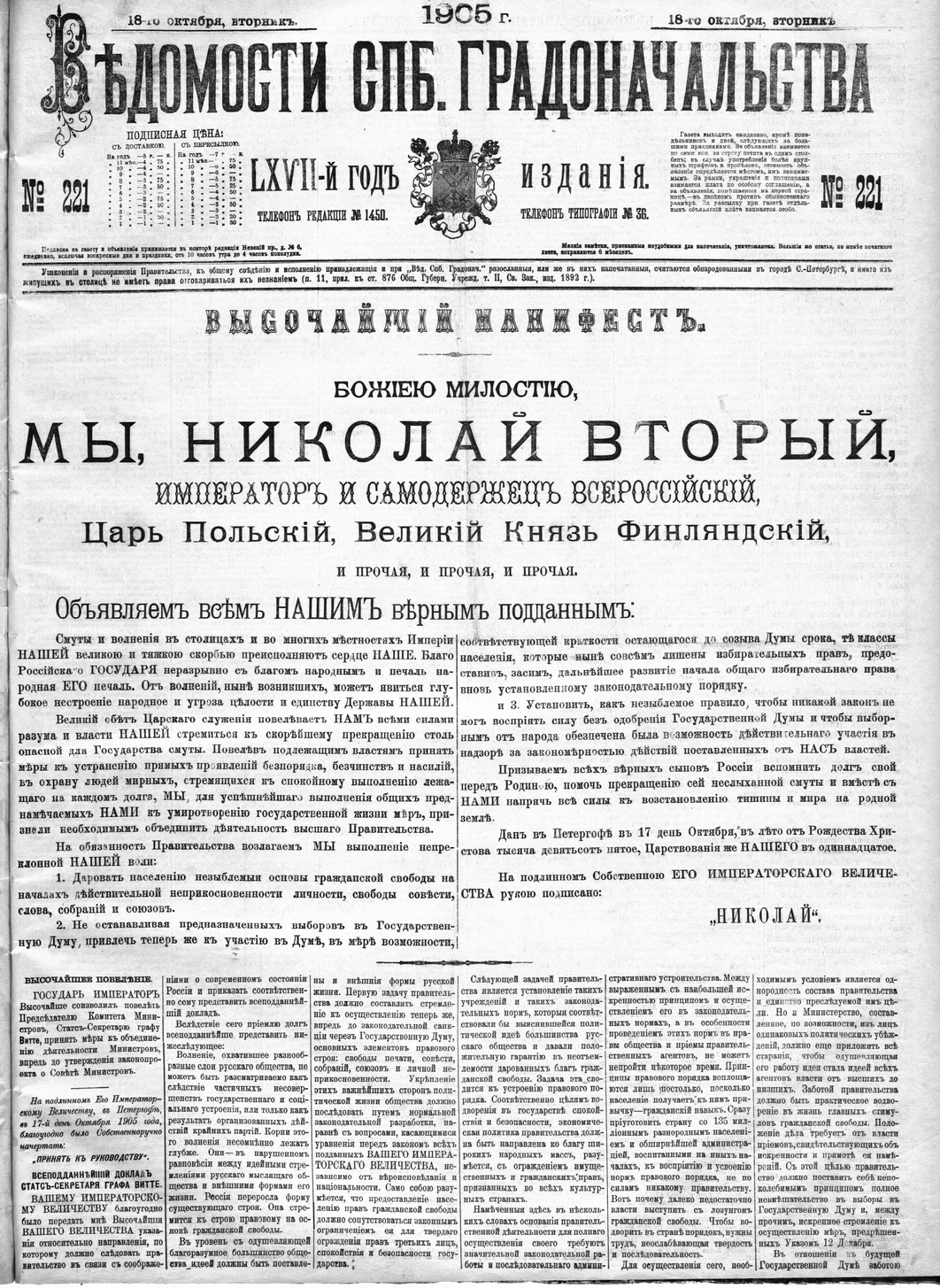 Newspaper article
Primary source
October Manifesto
Nicholas II of Russia · 30 October 1905
 Document
Primary source
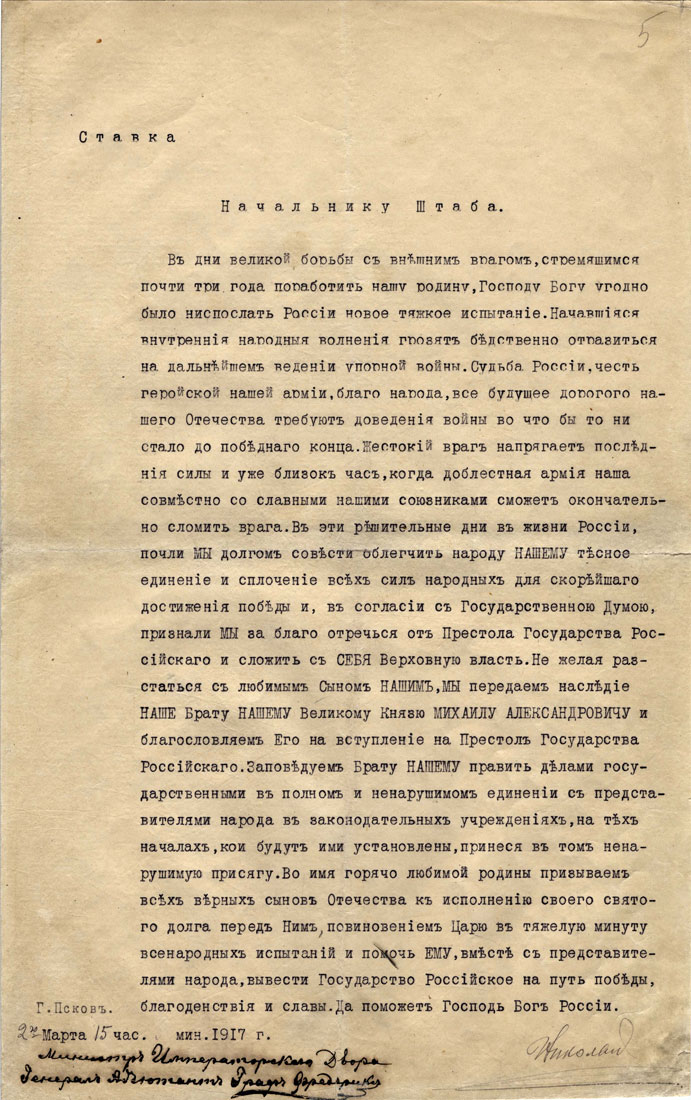
Nicholas II of Russia's abdication
Nicholas II of Russia · 2 March 1917 (O.S.) / 15 March 1917 (N.S.)
 Document
Primary source
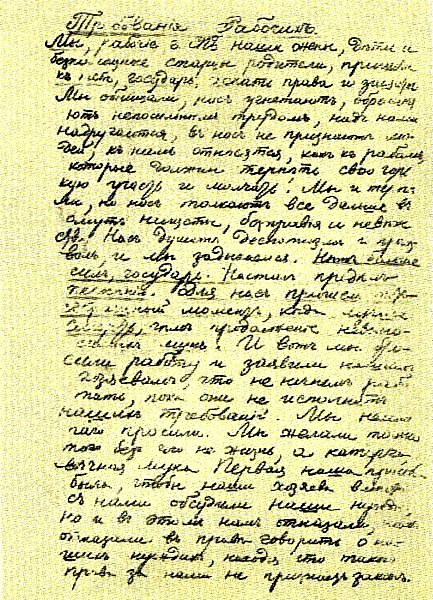
St. Petersburg Workmen's Petition to the Tsar
Georgy Gapon · January 1905
Primary source
Russian Constitution of 1906
Nicholas II of Russia · 6 May 1906
 Letter
Primary source
Willy–Nicky Correspondence
Nicholas II of Russia and Wilhelm II · July–August 1914
Ready when you are
Start chatting with Tsar Nicholas II now.
20 messages free · No credit card · Available in 50+ languages.